
“We can no longer invest in the old, fossil-fuel technology and we don’t yet know in which new technology to invest.” – Martin Gorning, GIER

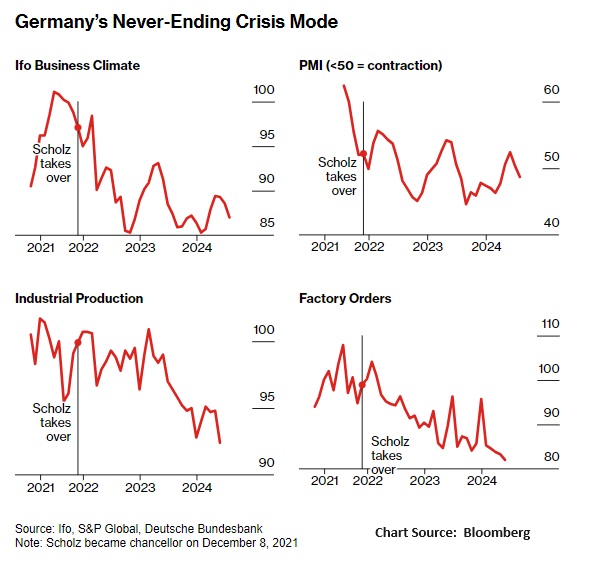
- Germany’s inability to generate meaningful growth is casting a shadow over the long-term prospects for the economy
- A country long seen as Europe’s motor of expansion is increasingly looking like a deadweight
- Of the 10 quarterly GDP readings since Scholz took office, more than half showed either nearly no growth or a contraction
- At the heart of Germany’s weakness is the manufacturing base that sustained export-led growth for much of this century
- The end of cheap gas imports from Russia was a body blow that companies are still struggling to get past, especially in energy-intensive industries
- Germany’s car manufacturers, a central pillar of the economy’s past success, are also trying to make up for lost ground as they confront China’s head start in production of electric vehicles
- Only 12% of Germany’s newly registered vehicles are electric — last year it was more than 20%
- The roots of the economy’s struggles go beyond cyclical volatility — half of an estimated 7% shortfall in industrial activity is structural
- Germany is struggling with a shrinking workforce, bureaucracy and an uncertainty over the political direction for decarbonizing the economy
- The self-imposed restrictions on government borrowing due to the so-called debt brake means there’s little leeway for public spending to address the country’s long-term economic problems – Bloomberg

 Global Macro Monitor
As climate change intensifies this will be the new reality everyone must face and in spades. It’s been a long time come’n but the tipping points are upon us. Energy will be the most valuable asset ever and we an’t seen noth’n yet. We need nuclear fusion and we need asap.