The Treasury released the latest budget data earlier today, which shows the 12-month rolling deficit at $2.3 trillion or 8.4 percent of GDP.
We are confused as to how many are worried about the deficit coming in at 6 percent for the fiscal year. According to our analysis — and it ain’t rocket science, folks — we are already there and then some. Here is CBO’s take,
CBO’s most recent baseline projections, which were published in May, show revenues totaling $4.8 trillion and outlays totaling $6.4 trillion, for a deficit of $1.5 trillion for 2023.1 On the basis of its estimate of the deficit through July and preliminary estimates of revenues and outlays in August and September, CBO now expects that the total deficit for 2023 will be $1.7 trillion, or about $200 billion larger than the estimate it published in May. Revenues and outlays alike are now anticipated to be below amounts CBO projected in May, but the reduction in revenues is larger. – CBO
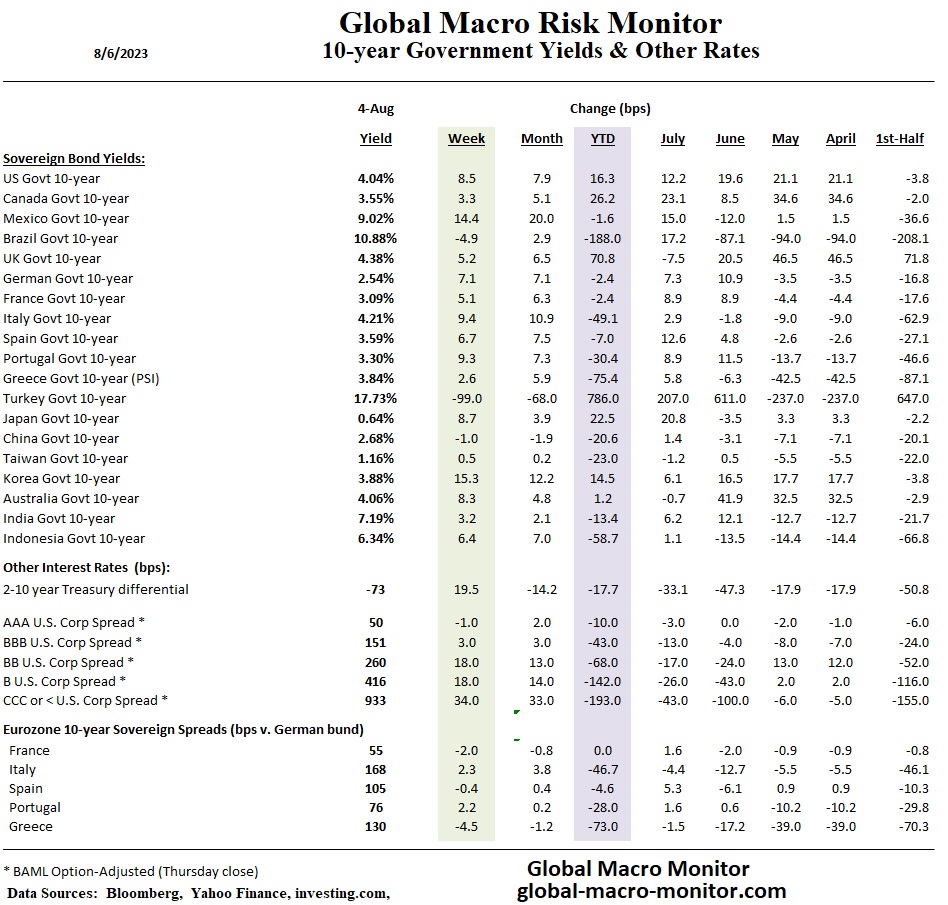
In order to hit the CBO estimate of a $1.7 trillion FY2023 deficit, the August and September deficits will have to average $50 billion. Not likely. We suspect the bond market is finally waking up.
This issue should be front and center on investors’ radar as we suspect it will become a headline issue very soon.


COTD = Chart of the Day
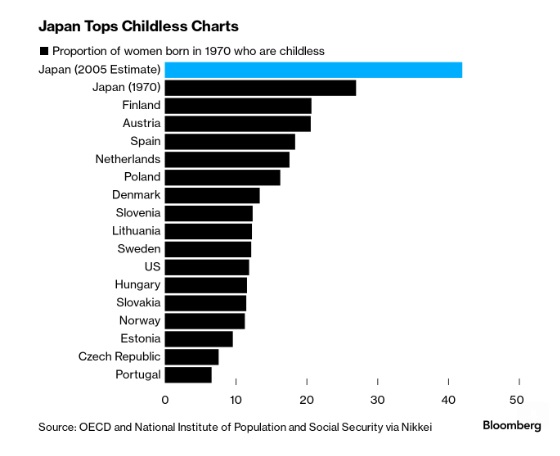
Stunning demographic data from Japan.
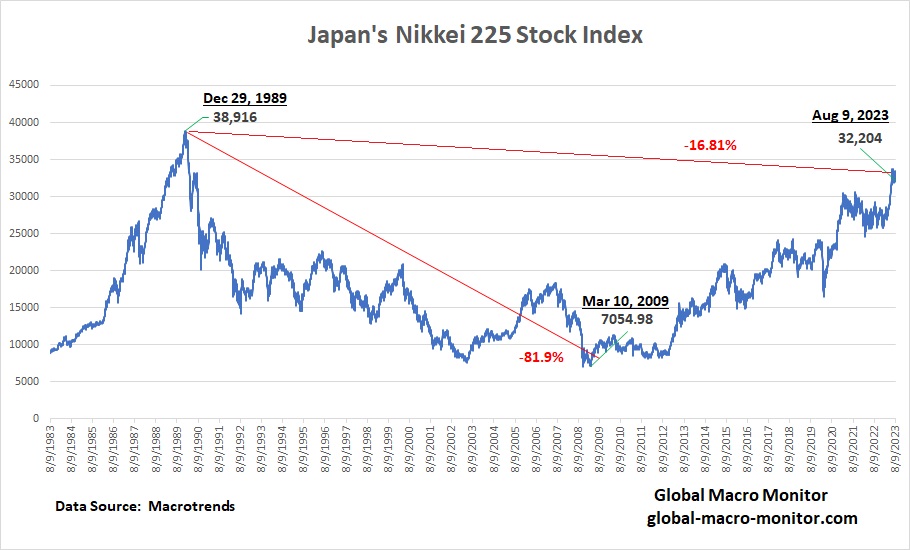
The country’s bear market in babies almost matches its 30-year plus bear market in stocks, where the Nikkei 225 is still 17 percent below its December 29, 1989 price peak. A prereq to sustainable long-term, vibrant economic growth is a growing labor force enhanced by productivity gains.
An estimated 42% of adult Japanese women may end up never having children, the Nikkei newspaper reported, citing a soon-to-be-published estimate by a government research group..
Birthrates are a critical issue for Japan and other countries with rapidly aging populations. The island nation posted the fewest births in its recorded history last year, continuing a seven-year decline. With a smaller workforce and fewer taxpayers to sustain the world’s third-largest economy, Japan has become one of the world’s most indebted countries. – Bloomberg
They will beat their swords into plowshares
and their spears into pruning hooks. – Book of Isaiah

QOTD = Quote of the Day
We’ve been sounding the alarm every month and were definitely a lone wolf.
Deficits don’t matter…until they do. – GMM, May ‘23
Yes. And it’s significant and intuitive.
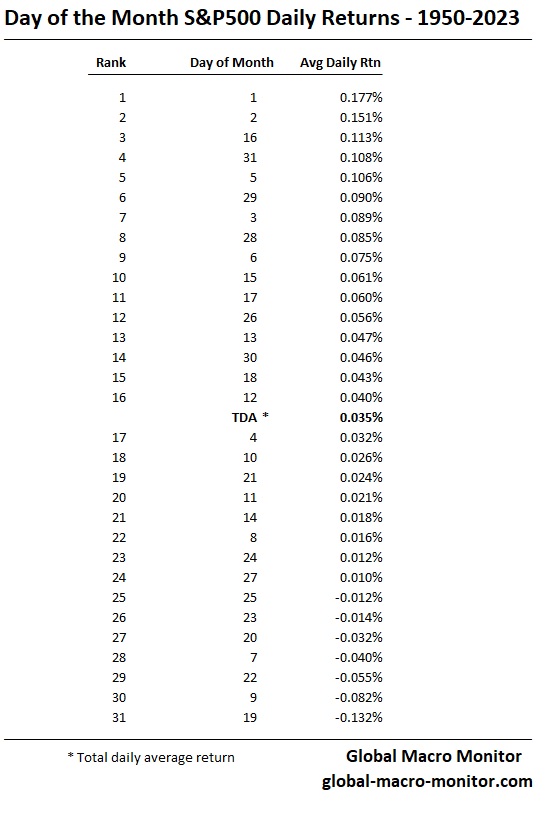
The table analyzes daily returns for the S&P500 since 1950 and illustrates the first of the month has returned on average 17.7 bps. That is 14 bps more than the daily average of 3.5 bps. Day one is followed closely by the second day of the month.
Explanation? Our priors are that it results from money flowing into stocks at the beginning of the month, and probably more so if we controlled for quarterly data. We also suspect the 19th day is last and distorted by the huge outlier of the 20 percent plus October 19, 1987 crash. Captain Obvious.
Shouldn’t efficient markets deem such large disparities in day of the month returns impossible, however?
Upshot? Don’t be short stocks on average at the beginning of the month.