KEY ISSUES
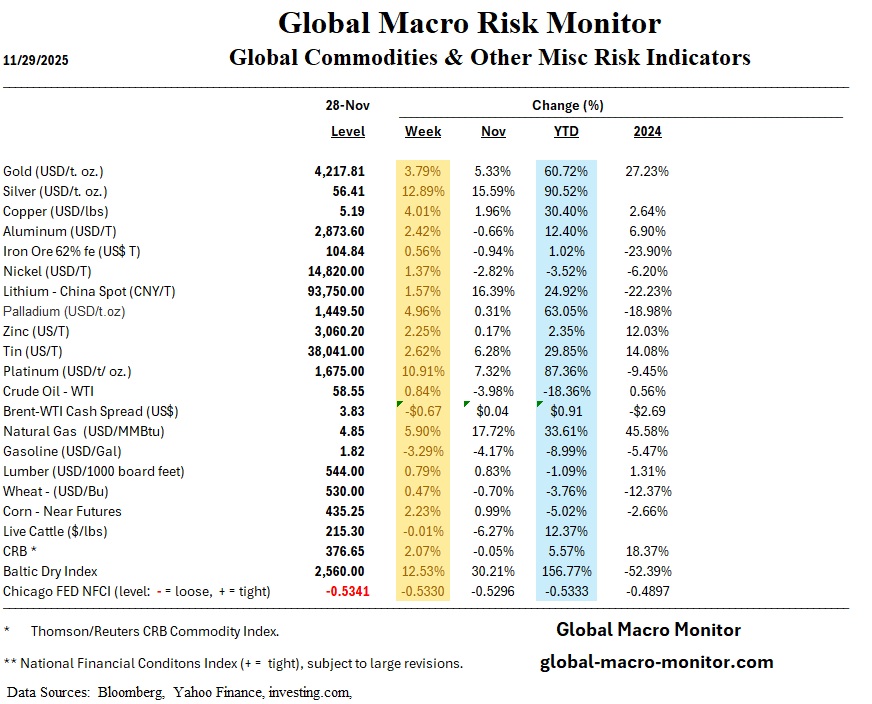
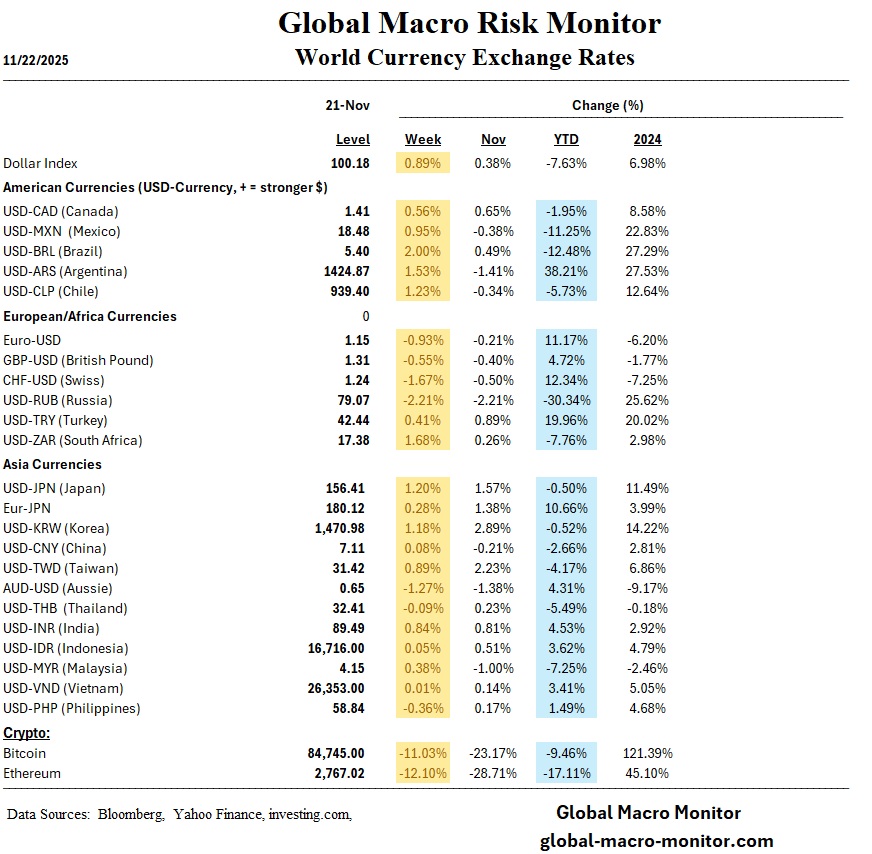
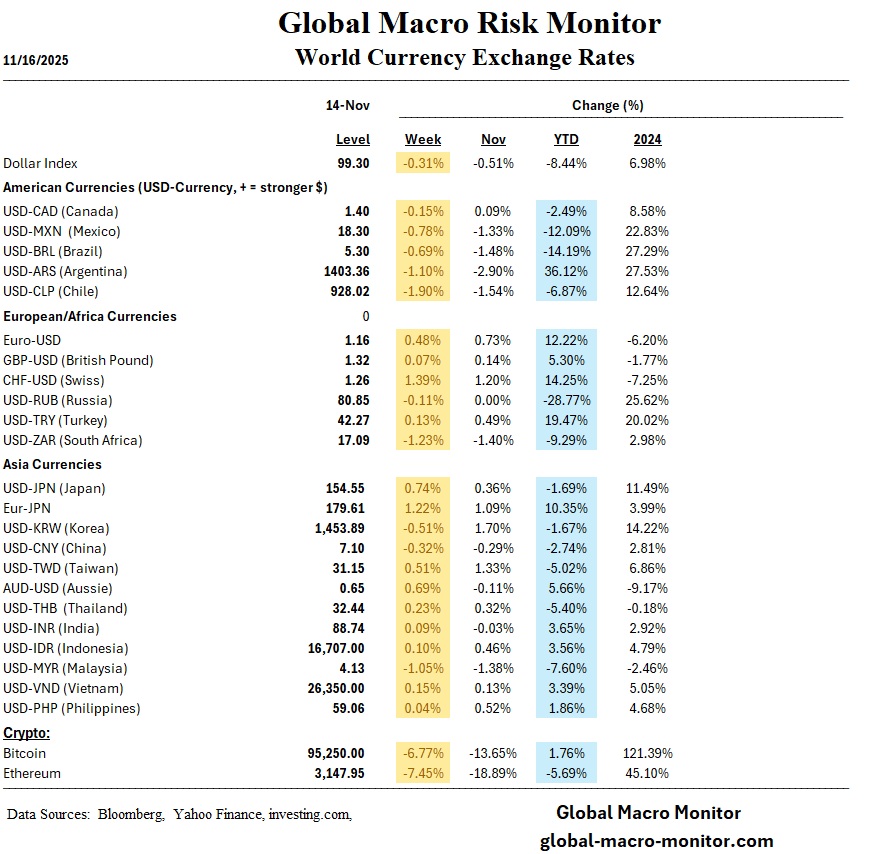
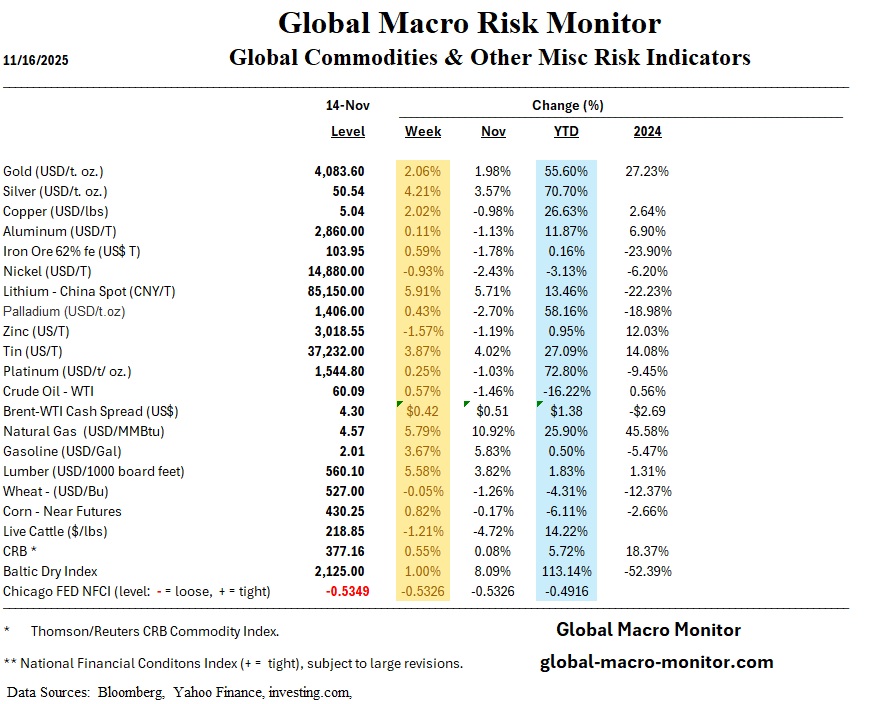
- Silver surged 13% for the week and is now up over 90% year-to-date—vastly outperforming Bitcoin, which is down 3% on the year.
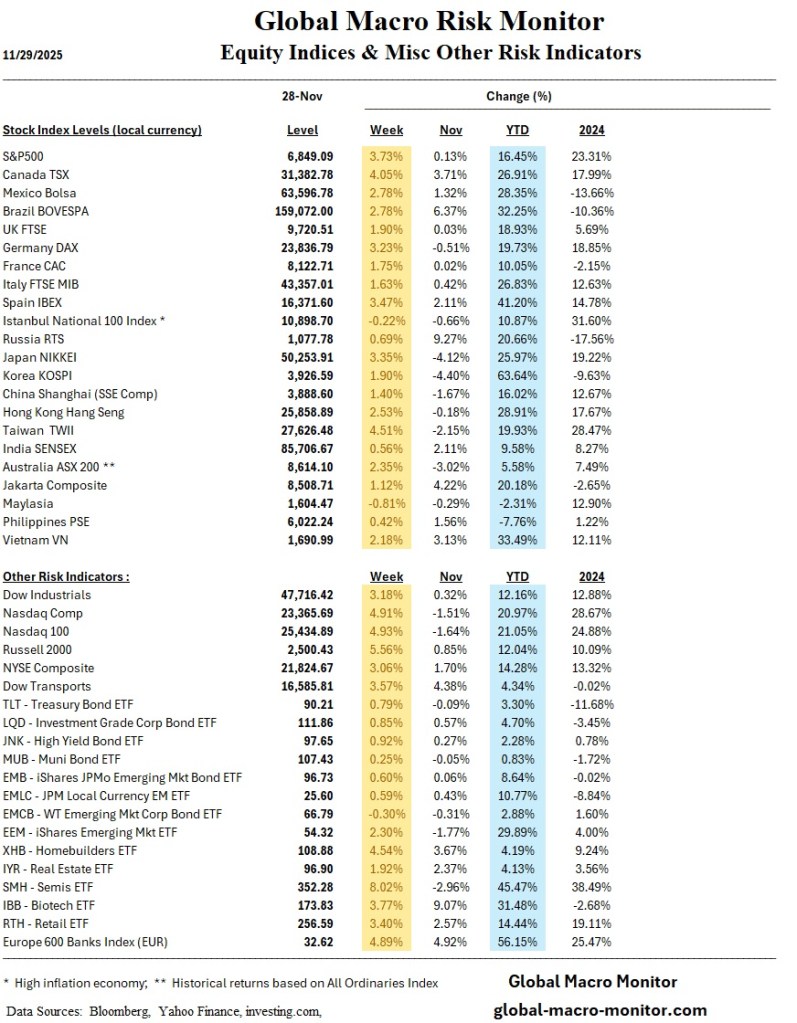
- Eurozone banks climbed 5% during the week and are now nearly 70% higher year-to-date when accounting for the currency boost.
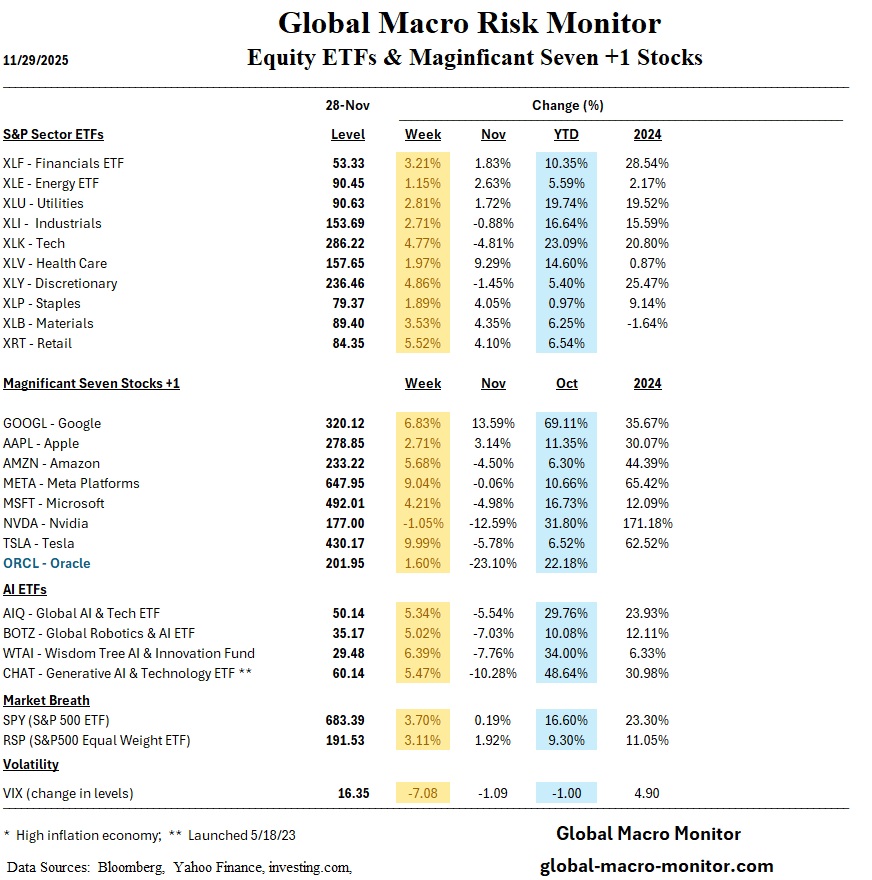
- Market volatility fell sharply, with the VIX dropping 7 points to 16, signaling stronger investor risk appetite.
These developments: precious metals momentum, European banking sector strength, and a major decline in volatility were central to global market behavior this week.
GLOBAL MARKETS SUMMARY
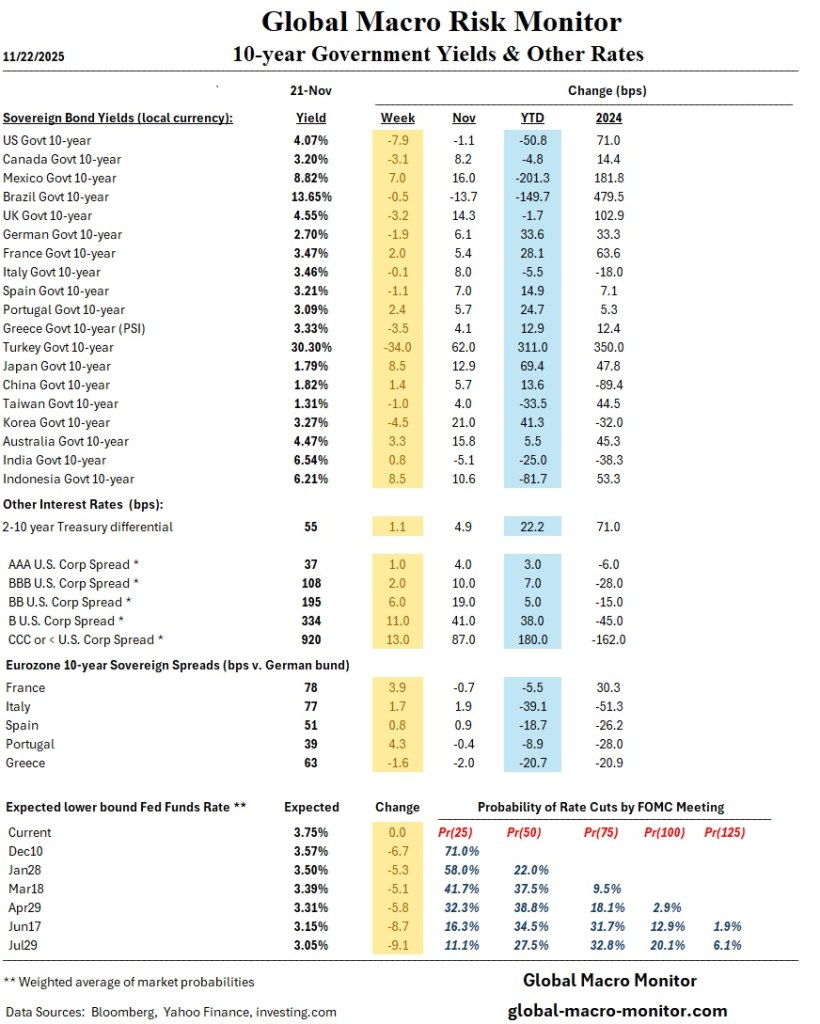
Risk assets rallied across global markets. U.S. equities posted broad gains in a holiday-shortened week, supported by softer economic data and dovish messaging from Federal Reserve officials. The markets have priced an 86% probability of a 25 bps rate cut by the Fed at its December 10th meeting. Small caps outpaced large caps, and technology shares rebounded strongly.
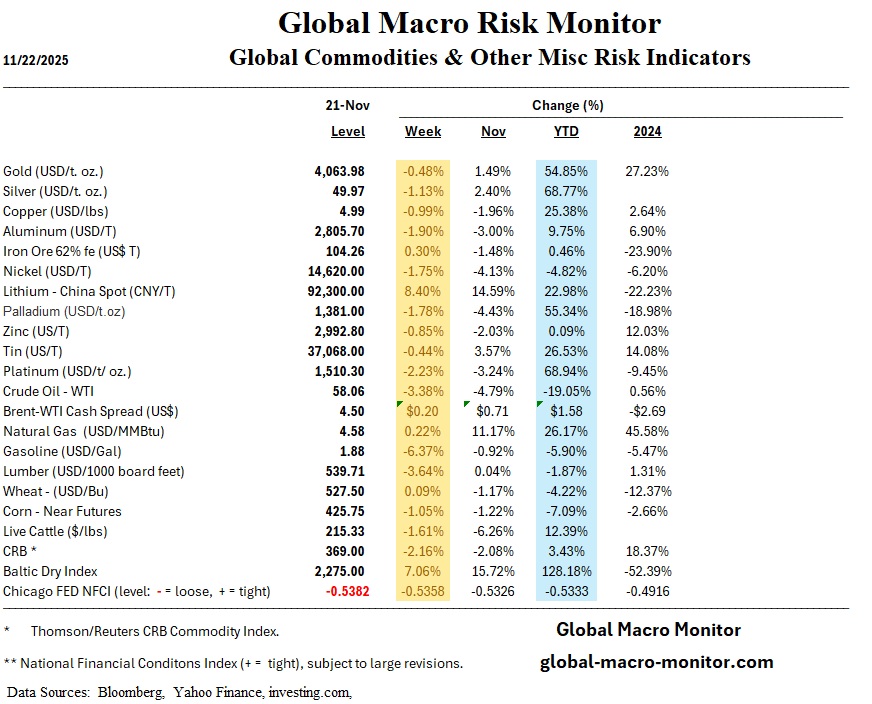
The standout move came from silver, which surged 13%, a move reflecting both inflation concerns and increased demand for safe-haven or alternative assets.
European markets also strengthened, with a notable rally in bank stocks. Meanwhile, volatility dropped substantially, creating a supportive backdrop for equities and credit.
UNITED STATES
Equities & Markets
- Major indices posted weekly gains:
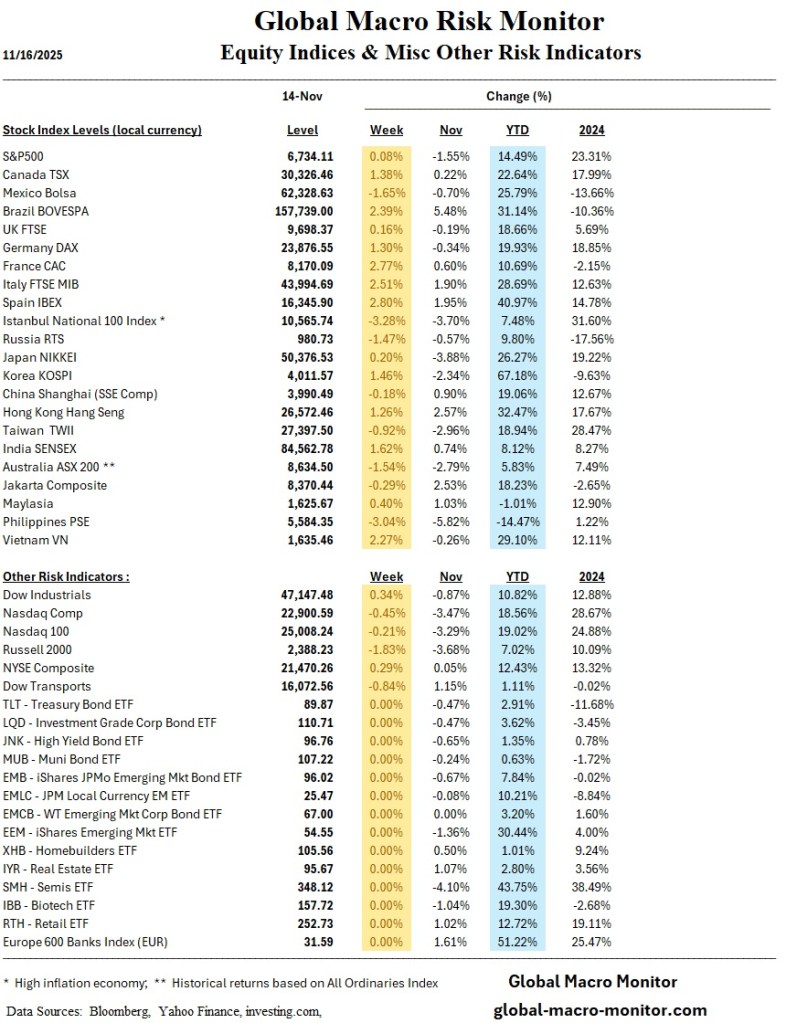
- Dow: +3.18%
- S&P 500: +3.73%
- Nasdaq: +4.91%
- The Russell 2000, a gauge of smaller companies, rose 5.52%, reflecting a shift toward risk-on sentiment.
Economic Data
- Retail sales: +0.2% for September, below expectations.
- PPI: +0.3% headline; +0.1% core.
- Jobless claims: Declined to 216,000, the lowest since April.
- Consumer confidence: Fell to 88.7, signaling growing economic caution.
Policy & Rates
- Fed Beige Book:
- Employment edged lower.
- Prices continued moderate increases.
- Consumer spending weakened further.
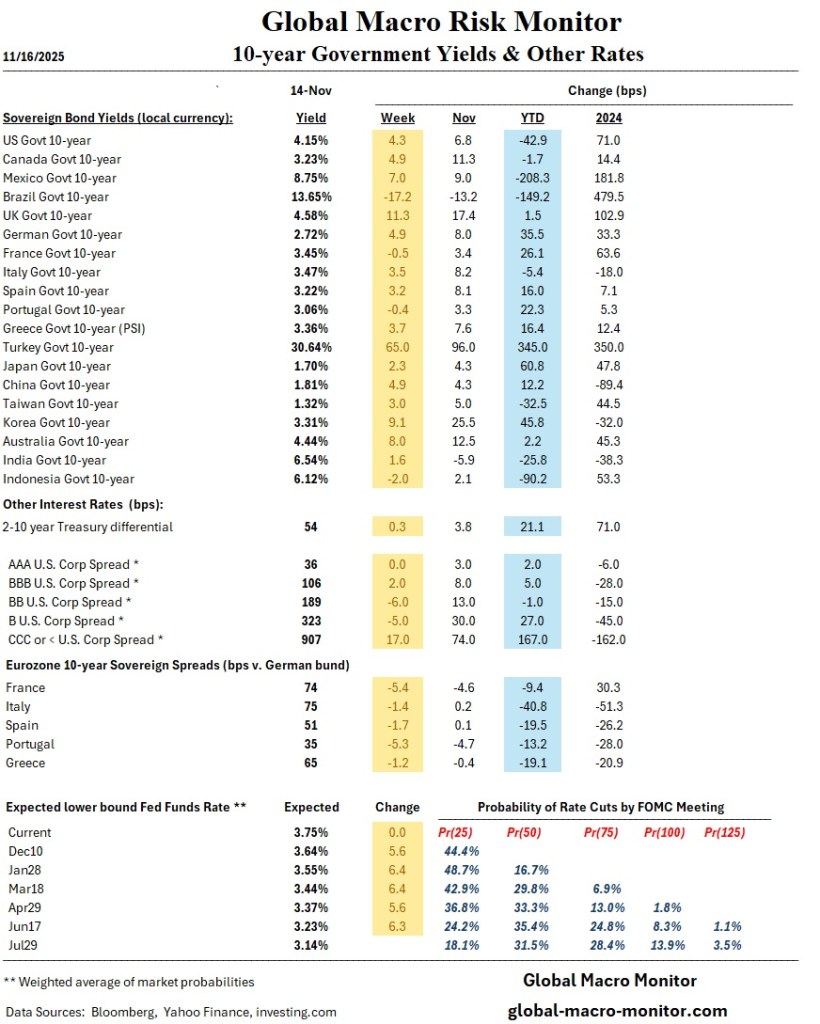
- Treasury market: Yields fell as investors priced in a likely December rate cut. The yield on the 10-year Treasury note fell 5 bps to 4.02%
EUROPE
Equities
- STOXX Europe 600: +2.35%
- DAX: +3.23%
- CAC 40: +1.75%
- FTSE 100: +1.90%
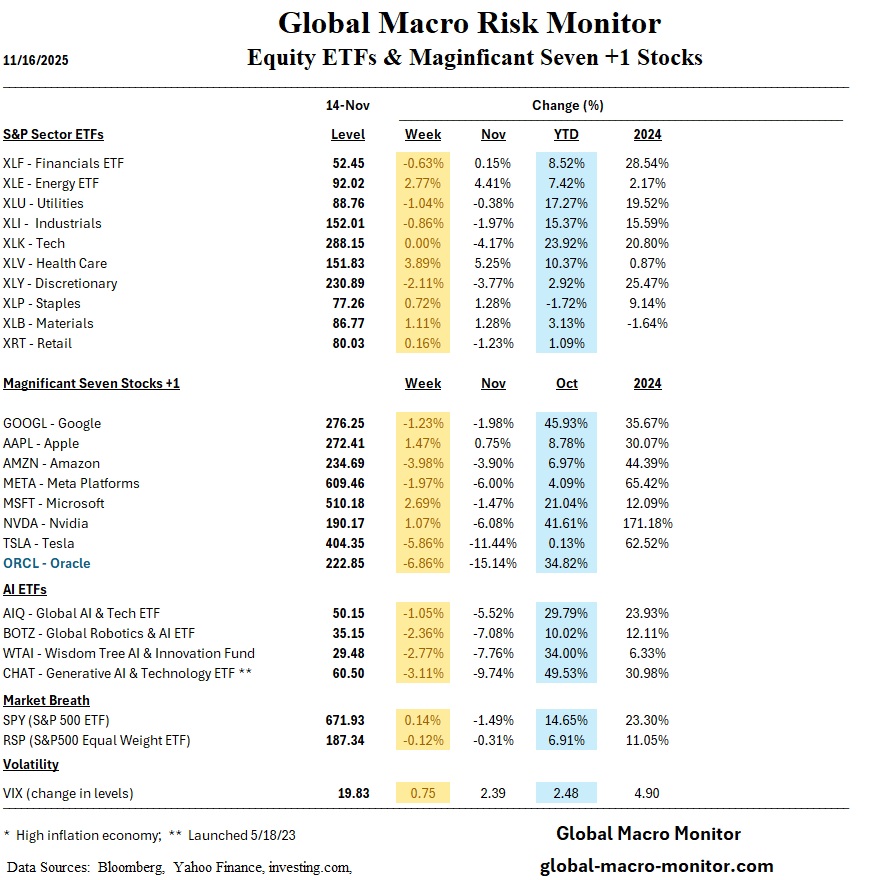
Eurozone Banks: Weekly and Year-to-Date Standouts
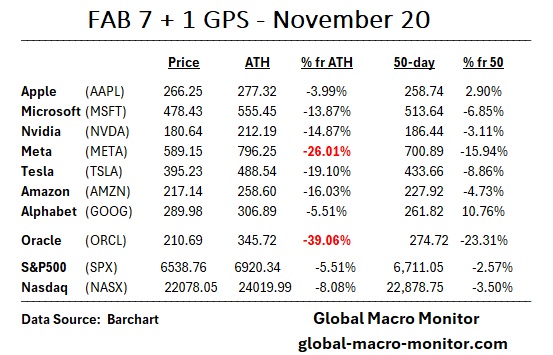
Banks in Europe rallied roughly 5% for the week and are now nearly 70% higher year-to-date when currency gains are factored in. We doubt anyone believed at the beginning Euro banks would outperform Nvidia by a factor of 2x by December 1st.
Key drivers included:
- Higher net interest margins
- Strong capital positions
- Stable inflation near ECB target
- Improved sentiment toward European financials
Macro Developments
- Inflation across major eurozone countries remained subdued.
- UK’s new budget introduced £26 bn in tax increases.
- Germany’s business sentiment weakened, while consumer willingness to buy improved.
JAPAN
Japanese markets rallied strongly:
- Nikkei: +3.35%
- TOPIX: +2.45%
Momentum was fueled by dovish signals about global monetary policy, a rebound in tech/AI shares, and steady Tokyo inflation at 2.8%, reinforcing speculation that the Bank of Japan may contemplate a future rate hike.
The 10-year JGB yield rose to 1.82%, approaching levels last seen 17 years ago.
CHINA
Chinese equity benchmarks advanced:
- CSI 300: +1.64%
- Shanghai Composite: +1.40%
- Hang Seng: +2.53%
Despite these gains, industrial profits fell 5.5% year over year, indicating slowing momentum and highlighting persistent structural challenges—particularly within manufacturing and real estate.
OTHER KEY MARKETS/GEOPOLITICAL DEVELOPMENTS
Russia–Ukraine Peace Framework Discussions
A 28-point U.S. proposal has gained traction among NATO and EU members, offering a potential basis for negotiations but still requiring major concessions from both sides.
South Korea Monetary Policy
The Bank of Korea kept the Base Rate at 2.50%, noting rising inflation but maintaining flexibility for future cuts amid global uncertainty.
MARKET VOLATILITY TRENDS
The VIX dropped sharply to 16, falling 7 points in one week.
This move signals:
- Declining hedging costs
- Renewed appetite for equities and credit
- Possible overconfidence if economic data fails to stabilize
The drop in volatility was one of the most influential forces shaping global risk sentiment the past and upcoming week.
PRECIOUS METALS: SILVER’S POWERFUL SURGE
Silver’s 13% weekly rally has pushed its year-to-date gain beyond 90%, dramatically surpassing Bitcoin’s –3% performance.
Key catalysts include:
- Strong industrial demand
- Elevated geopolitical tensions
- A softer U.S. dollar
- Growing investor preference for tangible, inflation-resistant assets
EUROPEAN FINANCIAL SECTOR: BANKS BREAK OUT
Eurozone banks delivered another standout performance this week.
Their strong gains reflect:
- Stabilizing macroeconomic conditions
- Attractive valuations
- Positive earnings momentum
- Enhanced foreign interest due to currency strength
This sector remains a cornerstone of the European equity story in 2024.
OUTLOOK: WHAT TO WATCH NEXT
- Federal Reserve: Market expectations remain aligned with a possible December rate cut.
- Eurozone Inflation (Dec 2): A reading near target could support earlier ECB easing.
- Bank of Japan: Investors await guidance on potential tightening.
- China: Markets look for signs of additional stimulus as growth softens.
- Volatility: With the VIX at 16, markets could be vulnerable if data surprises to the downside.