
Commodity prices closed at two year highs. Bloomberg writes,
The Reuters/Jefferies CRB Index of 19 raw materials jumped as much as 2.7 percent to 295.17, the highest level since Oct. 15, 2008. Every price advanced. Wheat, soybeans and corn led the gains, each jumping the most allowed by the Chicago Board of Trade. Copper climbed to a 27-month high, and crude oil topped $83 a barrel.
The question now is this the type of inflation the Fed desires? We don’t think so.
In fact, all other things held constant (don’t you just love economists?), unless nominal wages increase to offset the spike in food and fuel prices, the net result is a reduction in real income and deflationary for other goods and services. Consumers must reduce expenditures on other items to pay for the higher priced necessities. Note, the Aug’07-July’08 commodity price spike was more inflationary as abundant credit allowed consumers to monetize the price increases through borrowing.
Inflation in financial assets, i.e., stocks and bonds, which helps pension funds meet their liabilities and make consumers feel wealthier, increasing their propensity to spend, now, is the Fed’s modus operandi for jump starting the economy, in our opinion. The dustbin of history is filled with bond market vigilantes who have fought the Fed. Our dingy has little chance against the QE2 and we won’t fight the markets here.
Monetary policy is more an art more than a science and is tantamount to trying to thread a needle wearing boxing gloves. What we’re witnessing in commodities is an unintended consequence of current policy and, surely, only one of many. We are deep into this experiment and there is no turning back. Stay tuned. 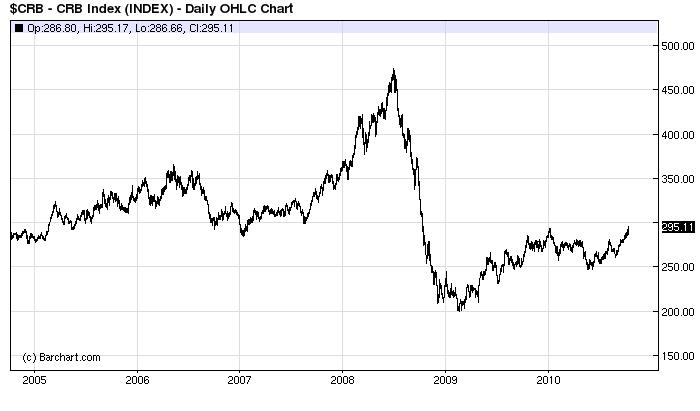

 Global Macro Monitor