Those are the words of Matthew Shay, the CEO of the world’s largest retail trade association on CNBC today (1:07 minutes in). Does that sound familiar, folks?
Mr. Shay notes the consumer remains strong despite the recent inflation spike. He also added this zinger, making him sound like an analyst at GMM.
“The excess demand is driven by all the money that is out in the marketplace.” [48 seconds in]
Refreshing view rather than the typical obfuscation of “the supply chain disruptions are causing the inflation.” The stimulus-driven demand has swamped the supply chain, though we do concede there are real supply chain disruptions, which are affecting inflation. Not the predominant factor, however.
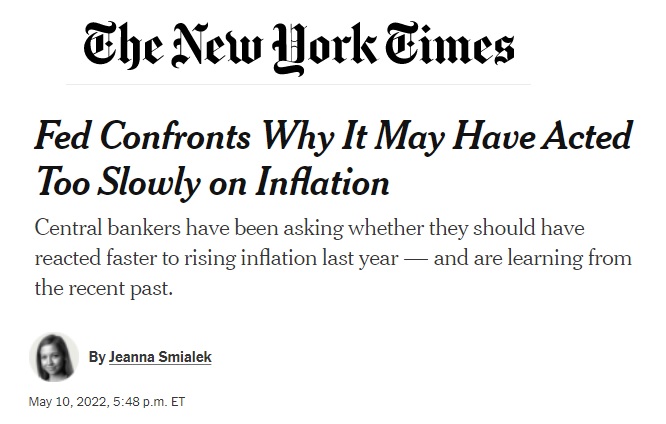
The Fed is under a lot of heat for letting inflation get out of control, which is now generating super hawkishness even among the most gentle of monetary doves. The scorching is illustrated in the above NY Times headline.
We are reposting our piece from last April 2021, Just In Case, You Think The Fed Has A Clue, in which we questioned the Fed’s economic sanity to keep buying mortgages while the housing market was in a massive bubble.
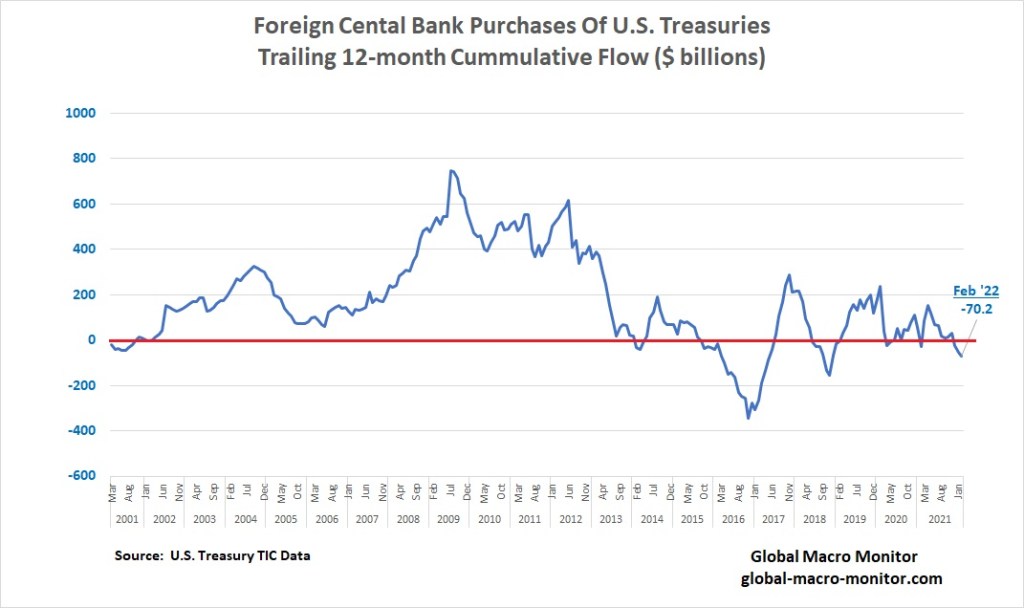
Bond yields are now spiking, and the stock market suffers because of the monetary authorities’ ineptitude as the economy contemplates a bond and stock market without central banks. The major buyers of Treasury securities since the beginning of the century have now morphed into net sellers in aggregate.
Nevertheless, making monetary policy is difficult, especially in the last few years, so we grant policymakers considerable grace.
Valuations and multiples have to come down as interest rates rise.
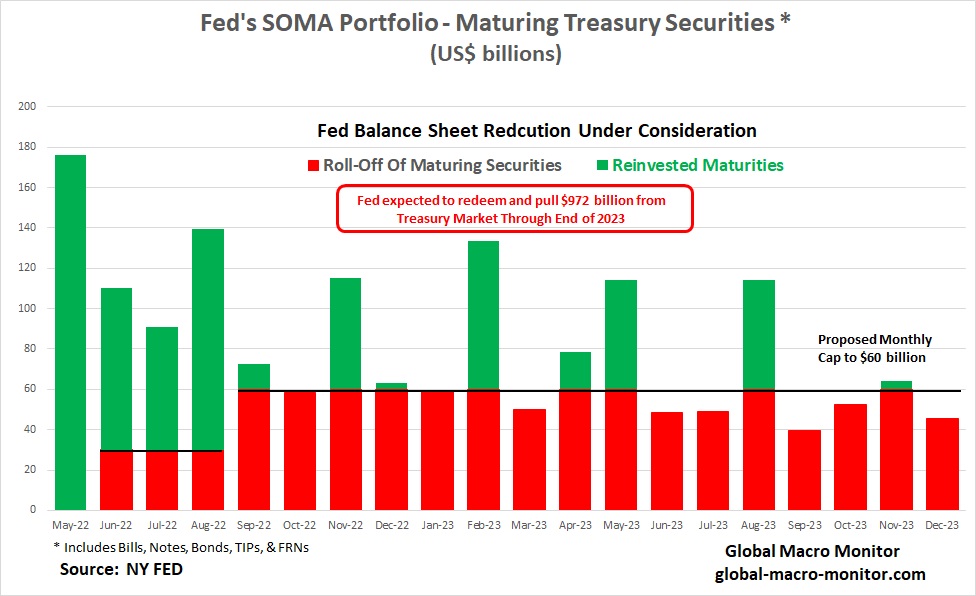
Given the FOMC’s latest statement on balance sheet reduction, we estimate the Fed will be extracting almost $1.5 trillion from the economy throughout 2023, approximately $972 billion from the Treasury market, and a maximum of just over $500 billion in mortgages.
Inflation As The End Game
However, we doubt the Fed and the American body politic have that high of a pain threshold for the subsequent economic and financial pain such a monetary tightening will bring. We, therefore, expect inflation will be the end game but only after, at the very least, a few deflation scares. When the going gets tough, the Fed will default to the mantra of most central banks and monetary authorities throughout history,
Print [debase], baby, print [debase]!
Housing Is Now The Problem, And Its Measurement Is Fatally Flawed
We estimate the Fed bought over $525 billion in mortgages between March 2021 and March 2022. During this period, the housing market was in Fuego with FOMO panic buying, driving up the National Price Index by 18 percent during the same period.
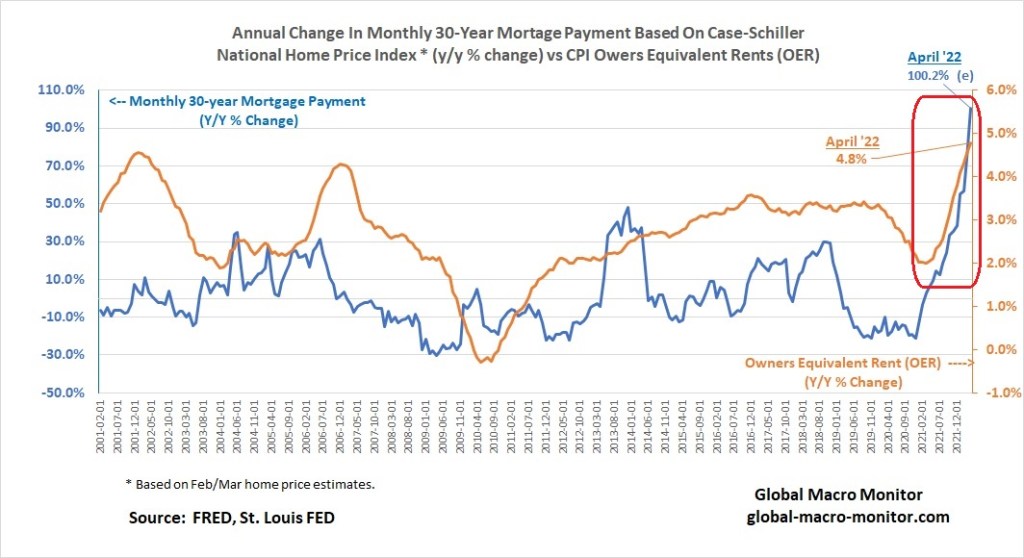
Moreover, the 30-year fixed-rate mortgage rate was up 150 bps, or 47.3 percent, driving up the cost of the monthly mortgage payment on the average house price in the United States by almost 75 percent. Let’s repeat that, folks, our best approximation of the cost of a monthly 30-year fixed-rate mortgage payment is up 75-100 percent in the past year.
The official measure for owners’ residential home inflation in the CPI basket is up a relatively measly 4.5 percent year-on-year as measured by Owners Equivalent Rent (OER), 24 percent of the CPI basket. What a complete joke.
Watch this space in tomorrow’s CPI release. [OER came in today up 4.8 percent y/y, which kept the overall number hotter than expected.]
The spike in mortgage payments has priced out most first-time buyers, forcing them into the rental market (7.4 percent of the CPI), raising rents by over 4 percent in the past year.
Different Housing Market Than The GFC
Of course, the housing market is in a much different condition than it was at the onslaught of the Great Financial Crisis (GFC), as all cash payments — an acute reflection of too much “money” in the system — have replaced the funky, highly levered subprime mortgages.
The result should be the reverse of the GFC, where housing prices collapsed almost overnight. This time, we expect a slow and chronic leak in housing prices with fewer forced bankruptcies, and less sensitivity to mortgage rates as they continue to climb until the Fed gets rolling in draining the excess money from the economy.
OER Starting To Track Real Housing Costs
Let us beat this dead horse one more time.
The above chart also illustrates that OER is starting to track the monthly mortgage payment for the first time, which is not a positive for the Fed or inflation.
The reason for this apparent disconnect is that most homeowners and renters did not move in 2021. They thus did not have to pay the spot price for shelter as it rose rapidly. Instead, many had to pay the rate that they signed for earlier in the year or the rate they signed for years earlier that had been modified slightly by their landlord or bank. These prices should tend to converge to the market price, but the lag time may be significant and the convergence incomplete. – VOX.eu
If homeowners have changed their perfunctory answer to the BLS survey question used to calculate 24 percent of the CPI
“If someone were to rent your home today, how much do you think it would rent for monthly, unfurnished and without utilities?” – BLS
to one where homeowners perceive themselves as real renters that track real mortgage costs, or if they get the Airbnb bug, the measured inflation rate for shelter will continue to rise. This may or may not be happening but keep it on the radar.
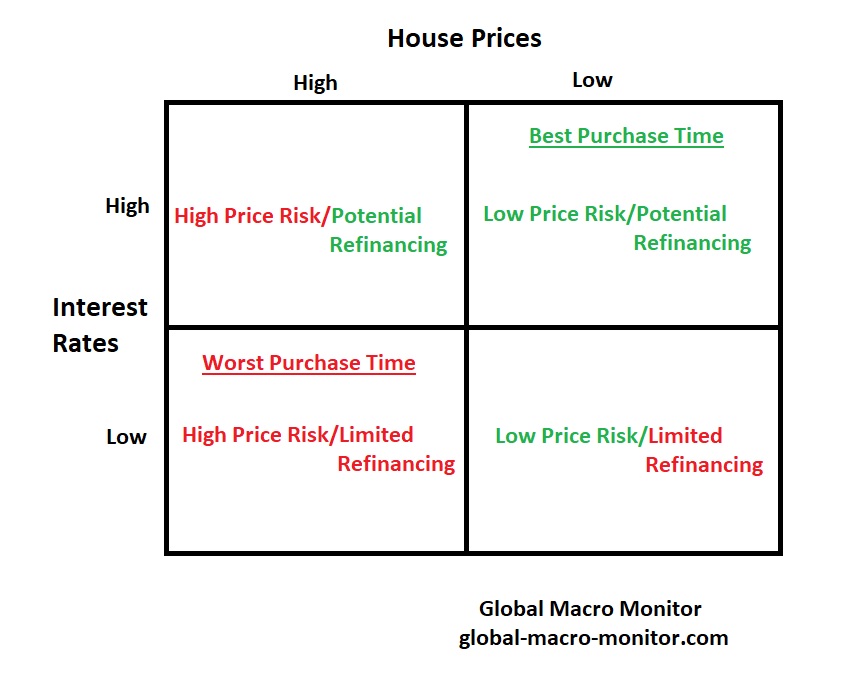
We feel for first-time homebuyers caught up in the FOMO bubble of the past year. We concede they may have some inside knowledge of a potential spooky inflation to come, but stretching to buy a starter home on a limited budget when interest rates are at artificial and historic lows, and prices at record highs can, and most likely, will be a toxic cocktail. Of course, we are not talking about the properties or “LifeStyles Of The Rich And Famous.”
Can’t wait to hear the Chairman justify zero rate policy and deficit monetization with inflation roaring at > 5 percent. It would be entertaining if it weren’t so damaging.
Watch Jay Pow stumble over this question of why they are buying $40 billion a month in mortgages when there is a dearth of supply in housing.
Here’s a pretty good theoretical model (follow the entire thread) estimating that U.S. inflation may reach double digits by Q1 2022. One of the premises is that monetary authorities have no way out of this rabbit hole and are constrained by the risk of severely disrupting financial markets in an asset dependent economy.
Recall our view that deflation/inflation is a corner solution and Wall Street’s “Goldilocks” scenario is still just a marketing gimmick. Deflation as markets try to move back to mean valuations – a lot lower – or inflation, and lots of it.
1/n How much excesss liquidity has US monetary easing created? And how much inflation will it create?
Anyone with a better model, lay it on the table. Stop with the “fake news” or “don’t worry” nonsense. CPI prints > 4 percent in May and you heard it here first.
GMM’s HealthWars
CK and I are battling some serious health issues. Mine, an acute skirmish, which I am now recovering.
CK’s, a three-front protracted war. Her courage to get up and fight everyday has been such an inspiration during my little battle. She also saved my life by forcing me to “ignore my primary doctor’s diagnosis of “all is well” and aggressively pursue my symptoms.” If not for that, the Grim Reaper would have liquidated my position and GMM would be no more. Thanks, CK.
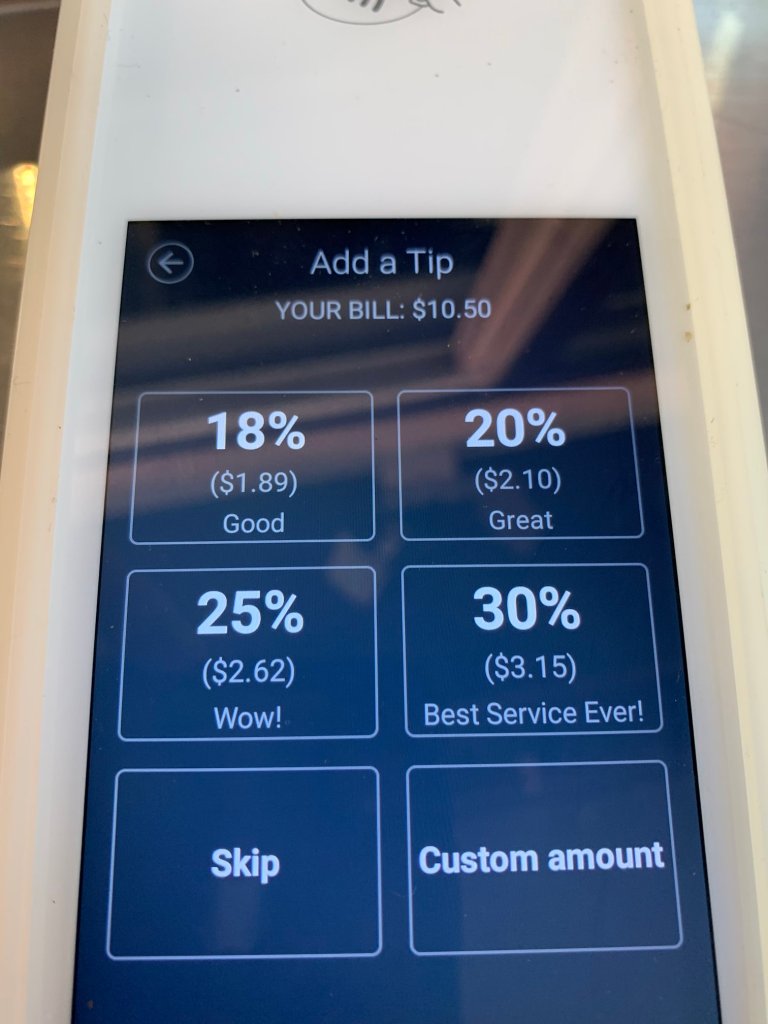
When your fave local coffee house has eliminated the 15 percent gratuity option on Square. That is today relative to a fortnight ago, folks.
Racking my brain to find the Gruatity supply chain disruption here. Anyone?
Classic case of inflationary expectations becoming deeply imbedded in the economy or is it possibly a relative price shift as political power moves to favor labor vs. Das Kapital? We think a bit of both.
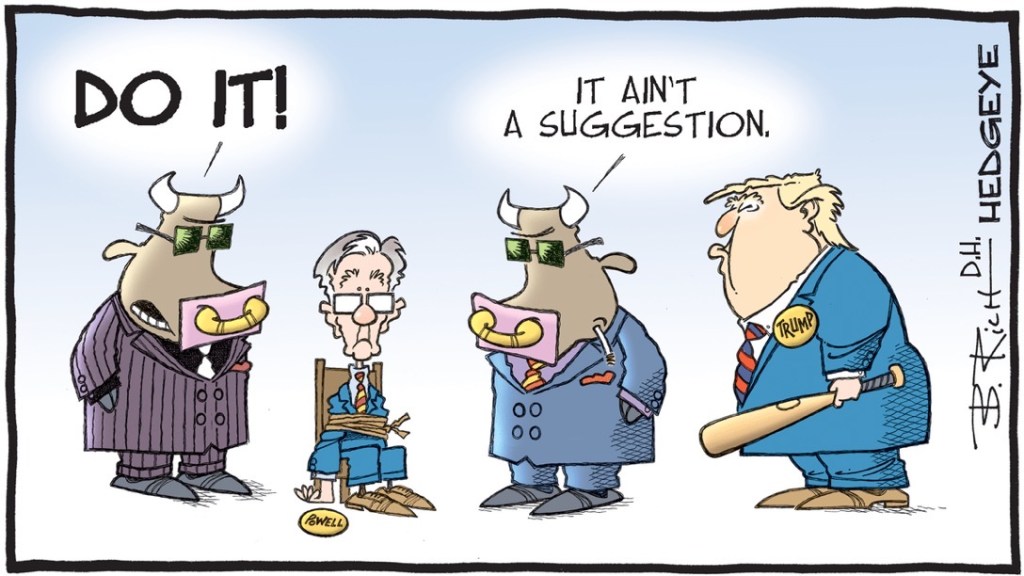
Mr. Powell has a lot of wood to chop, if he could chop wood. But can and will he?
Serious doubts about the number and strength of his and the FOMC’s vertebrate when the going gets tough. And it will get tough.
We suspect today’s stock market mega ramp is not exactly what the Fed wanted. “Reducing demand to dampen inflation?” Total the oppo today, folks. Wealth effect.
The Fed needs asset prices lower in the near term.
A Slave To Goods & Serivces Inflation vs. Asset Inflation
That is the economic trade-off now, folks.
You can’t serve two masters: reducing inflation while serving asset inflation.
No one can serve two masters. Either you will hate the one and love the other, or you will be devoted to the one and despise the other. – Gospel of Luke
In their discussion, all [FOMC] participants agreed that elevated inflation and tight labor market conditions warranted commencement of balance sheet runoff at a coming meeting, with a faster pace of decline in securities holdings than over the 2017–19 period. – FOMC, March ’22 Minutes
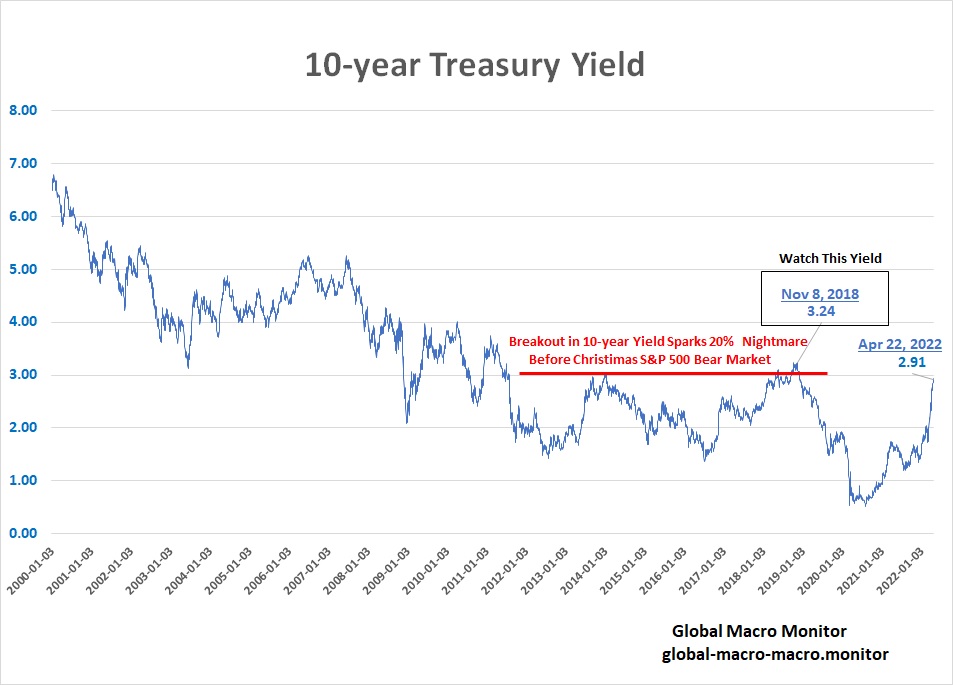
The 10-year bond yield certainly is:
The 10-year yield is up 172 bps (144 percent) since our July 2021 post, Ignore The Bond Market Flapdoodle. Bond yields had collapsed almost 40 bps in less than a month, bringing out the “doom and gloom” crowd preaching “the bond market is signaling something bad is about to happen in the economy.” Like, inflation?
To which we countered,
Longer-term Treasury yields are so distorted by central bank buying they are now and have been for years worthless in providing any sound economic signal. – GMM, July 2021
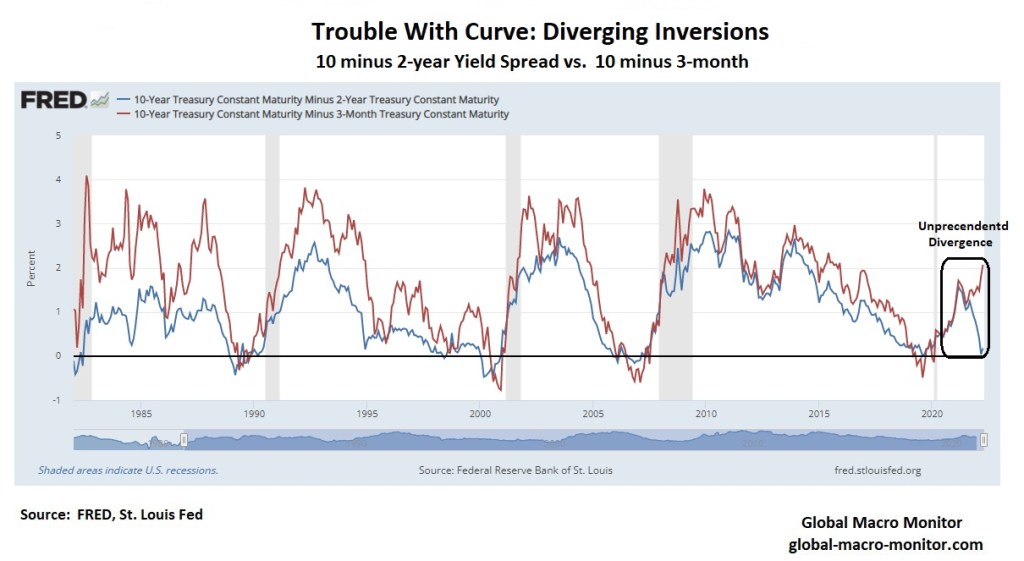
The 10-year is up 37 bps since the April 6th FOMC release of their minutes detailing a more aggressive balance sheet reduction. Before the announcement, the doom and gloomers were out with their “recession is imminent” call as the 10 minus 2-years spread inverted (went negative). Someday there will be a recession, but we doubt we will divine it from a severely distorted yield curve. Until then the bond market will be busy pricing in a new inflation and monetary regime.
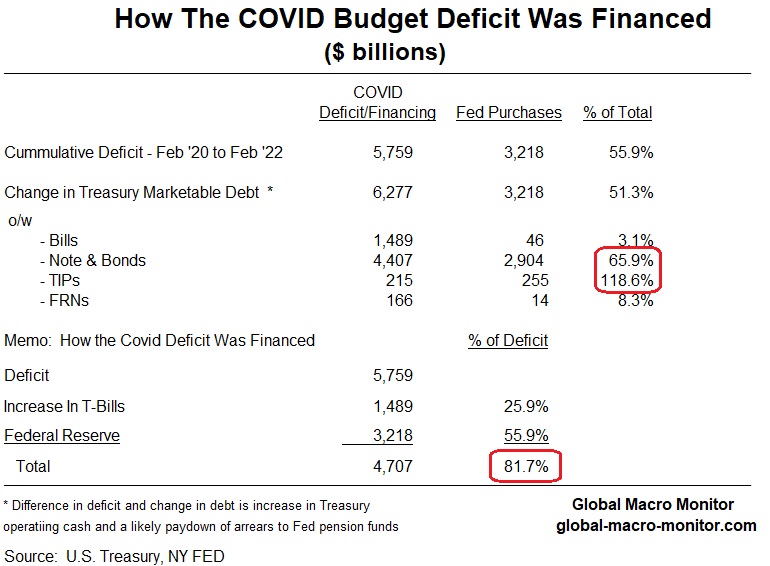
Eighty-two percent of the COVID deficit was financed by the Fed and an increase in T-Bills. The Fed purchased, albeit indirectly, 66 percent of the notes and bonds and 119 percent of the TIPs issued during COVID. Though extraordinary circumstances often call for extraordinary monetary policy, the massive intervention to finance the COVID deficit, which the Fed and global central banks overshot – by no fault of their own — but overstayed their welcome and is THE primary reason inflation has spiked. Market interest rates? Laughable. Deficit without tears, then came nontransitory inflation.
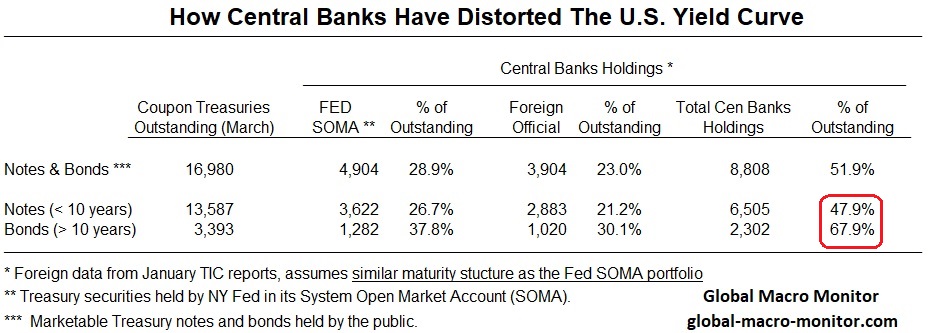
Central banks have been the major buyers of Treasury coupon securities. The Fed and foreign central banks hold almost 70 percent of outstanding marketable Treasuries longer than ten years, ergo an engineered shortage of risk-free duration.
Our analysis assumes that the maturity structure of foreign central banks’ U.S. Treasury portfolios match the Fed’s – about 74 percent in securities less than ten years and 26 percent longer than ten years. It may be off slightly, but it’s the best approximation we can find.
Foreign Central banks, which are not price or market-sensitive with their securities holdings, are now net sellers of Treasuries. During the last decade, central banks held almost 75 percent of total foreign holdings of Treasury securities as they recycled their current account surpluses back into the Treasury market to protect their exchange rates from strengthening and becoming overvalued. Today, the central banks hold a little more than 50 percent of foreign holdings of Treasuries.
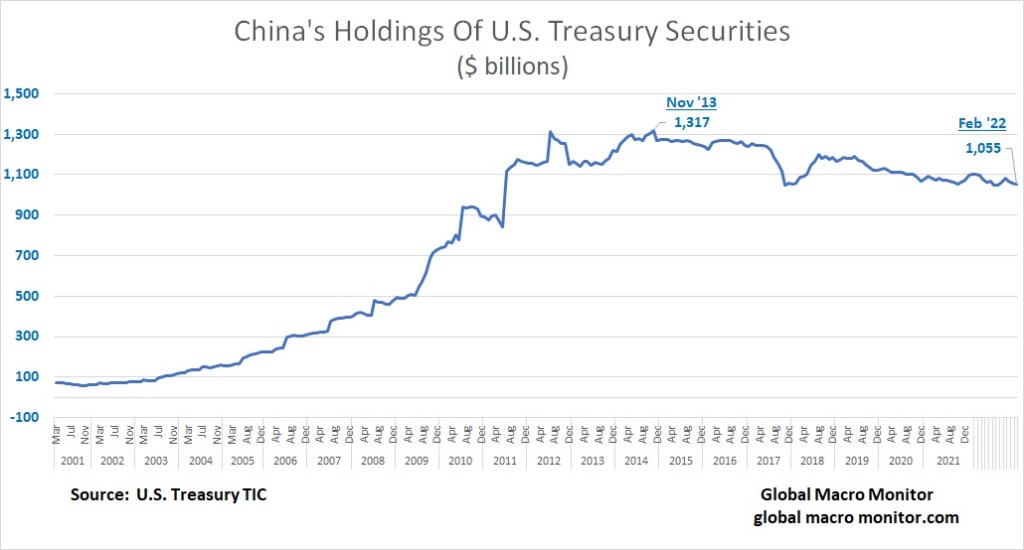
Will China Dump Their $1 trillion in Treasuries after the sanctioning of the Russian Central Bank? February is the latest TIC data, so we don’t know yet but suspect they will. It would be foolish for them to keep $1 trillion of their $3 trillion in reserves in Treasuries in a country they perceive as an increasingly hostile power.
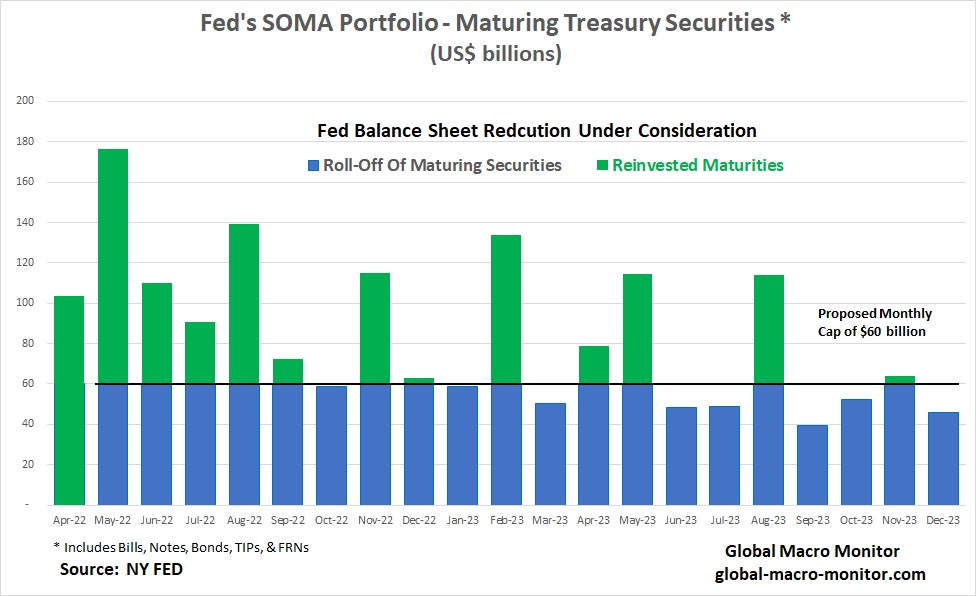
The FED is about to become net sellers of Treasuries in aggregate — unlikely in individual securities, however – in May or June of a maximum of $60 billion per month. The monthly cap of a $60 billion roll-off its Treasury portfolio is not set in stone quite yet.
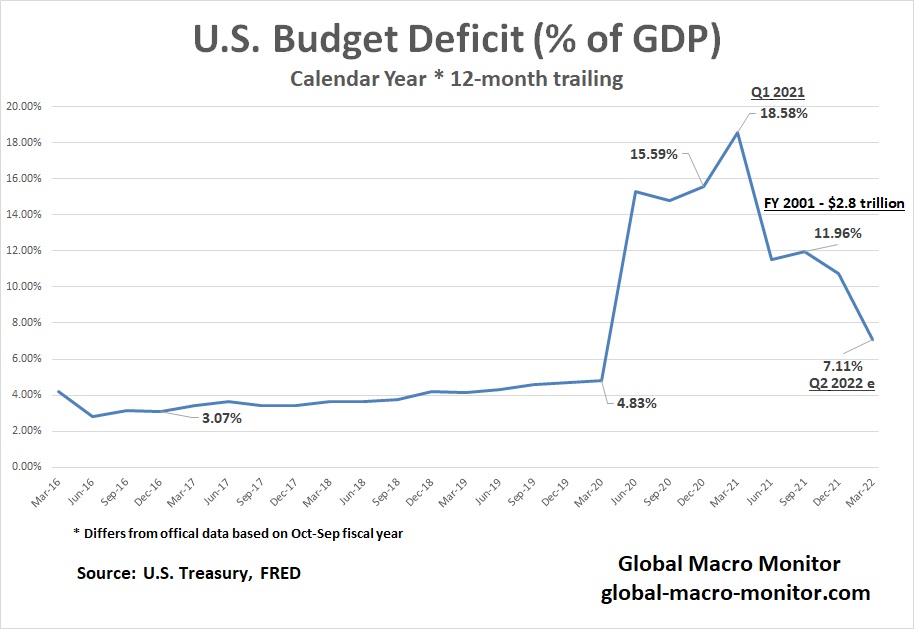
U.S budget deficit is declining rapidly from the astronomical COVID highs but remains significantly elevated on a historical basis. This should relieve some pressure off yields but is unlikely to offset the exit of central bank buyers.
The recent 10 minus 2 year yield spread inversion (negative) was not validated or confirmed by the 10 minus 3-month spread. Unprecedented. Yield curve weirdness happens.
This peculiar behavior in the yield curve leads us to believe that the the entire yield curve is about to shift much higher.
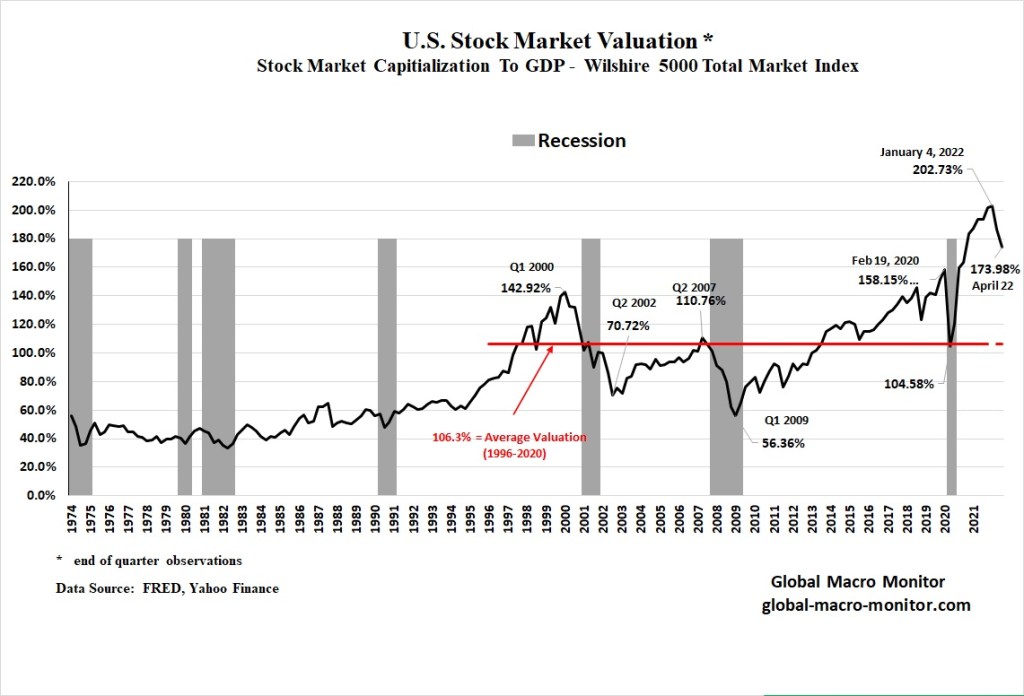
Stock valuations as a whole have come in a bit due to price reductions and inflation but remain at extreme valuation levels. The rise in Treasury yields is doing a number on valuations, particularly growth stocks, as equity premiums rise with interest rates.
Why we are experiencing high inflation? I spent half my career asking finance ministers and central bankers, especially in high inflation emerging market countries, “What will be your budget deficit this year and how do you plan to finance it.” Large deficits financed by digital money printing without a corresponding increase in production almost always leads to inflation.
Inflation is always and everywhere a monetary phenomenon in the sense that it is and can be produced only by a more rapid increase in the quantity of money than in output. – Milton Friedman
Yes, supply shocks matter but much of the supply shocks result from too much demand. Supply shocks generally result in relative price shifts and not a general rise in the price level.
Money is an elusive concept and difficult to define, even more so as technology progresses. Still, many dismissed the link between the monetary aggregates and inflation as nominal GDP began to diverge from the official money figures in the mid-1980s.
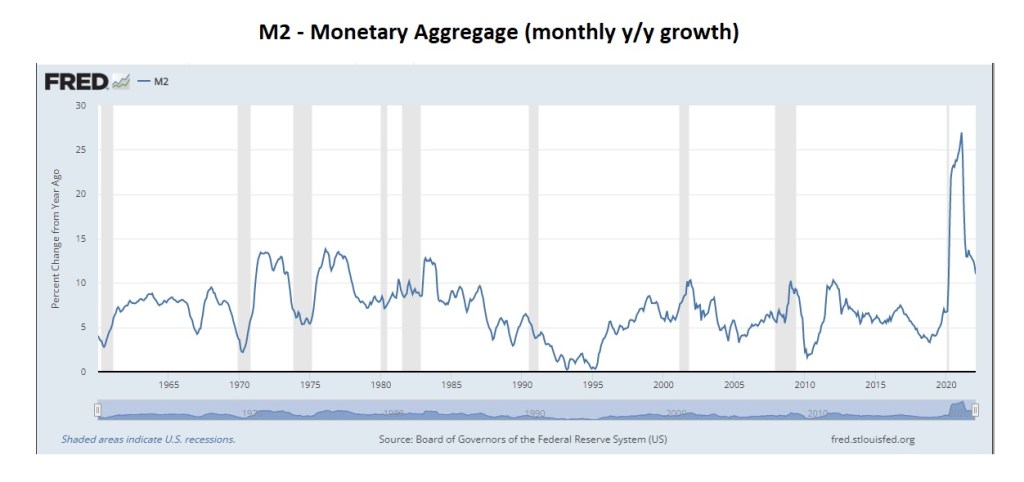
We define money as base money, deposits, cash, credit, global wealth, crypto, and among other things, which allow economic agents to purchase goods, services, and assets. M2 — demand deposits, cash, and near money — doesn’t do service to the concept of money but is one of the best official approximations we have.
What about my securities margin account that I can write checks on?
Upshot
Yields are set to move higher in search of their actual market value as the nonmarket buyers have exited stage left and become net sellers.
We could be wrong if asset markets collapse (doubtful in the short-term given the vast amounts of money in the system) or another economic shock hits the global economy, bringing the duration jockeys, safe haven buyers, and hedge funds, who use the long Treasury market as a safer proxy to stock shorts, back into the Treasury market.
Beware of recency and complexity bias, folks. Globalization, which is about to accelerate and we rid ourselves of denial, and the inflationary forces are real and hazardous to the global economy and valuations. We are in a new era.
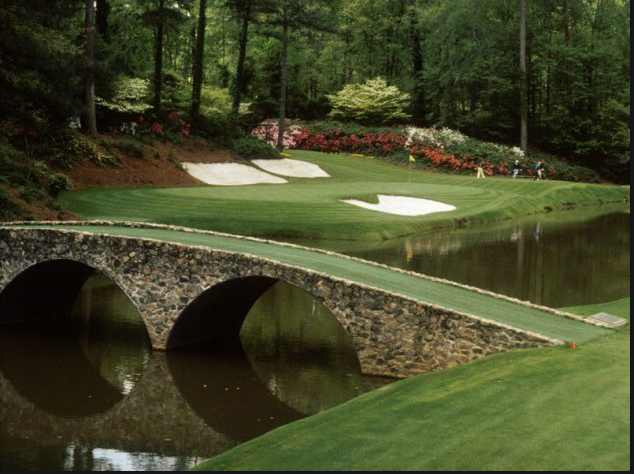
German POWs from nearby Camp Gordon built the bridge over Rae’s Creek next to the 13th tee box during WWII. They were part of Rommel’s Panzer division in North Africa responsible for building bridges to enable tanks to cross rivers.
While Augusta National is famed for its almost unnaturally beautiful flora, as it turns out some rather interesting fauna once called the course home as well: 200 heads of cattle and more than 1,400 turkeys. From 1943 until late 1944, Augusta National was closed for play and transformed into a farm of sorts to help support the war effort. Some of the turkeys were given to club members during Christmas (meat rations were in effect) while the rest were sold to local residents to help fund the club. And the cows? Well, they acted as natural lawnmowers but also inflicted quite a bit of damage to Augusta National, devouring many of the course’s famed plants and shrubs.
To help repair cattle-related damage and revive Augusta National for its reopening, 42 German prisoners of war from nearby Camp Gordon were shuttled back and forth to work on the course.
“The POWs had been with the engineering crew serving Rommel, the Desert Fox, in North Africa, part of the Panzer division responsible for building bridges that enabled German tanks to cross rivers. It was a useful skill for the renovation work to be done at Augusta National. The Germans were asked to erect a bridge over Rae’s Creek adjacent to the tee box at the thirteenth hole.”
The Masters resumed at Augusta National — now free of German prisoners and barnyard animals — in 1946. And interestingly enough, the Supreme Commander of the Allied Forces in Europe during World War II, Dwight D. Eisenhower, later became a member of Augusta National. Two Augusta National landmarks bearing Eisenhower’s name still stand today: the Eisenhower Tree (a loblolly pine at the 17th hole that the former president and avid golfer repeatedly struck with golf balls and requested be cut down; photo above) and the Eisenhower Cabin (built in the 1950s according to Secret Service security guidelines by the club for the former president’s visits).




 Global Macro Monitor