1. Crack Spreads At Record High
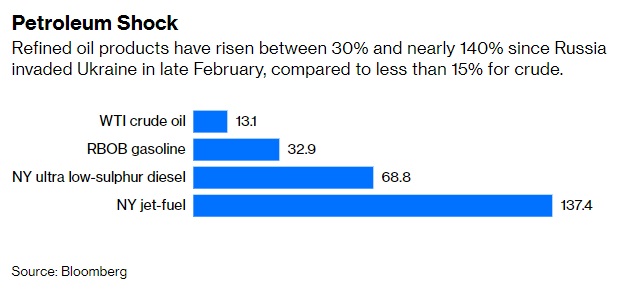
- The traditional relationship between crude and refined products is broken. WTI is anchored around $100-$110 a barrel, suggesting that — in barrel terms — gasoline, diesel and jet-fuel prices shouldn’t be much higher, once you add the average refining margin.
- Take jet-fuel: in New York harbor, a key hub, it’s changing hands at the equivalent to $275 per barrel. Diesel isn’t far away, at about $175 a barrel. And gasoline is at about $155 a barrel.
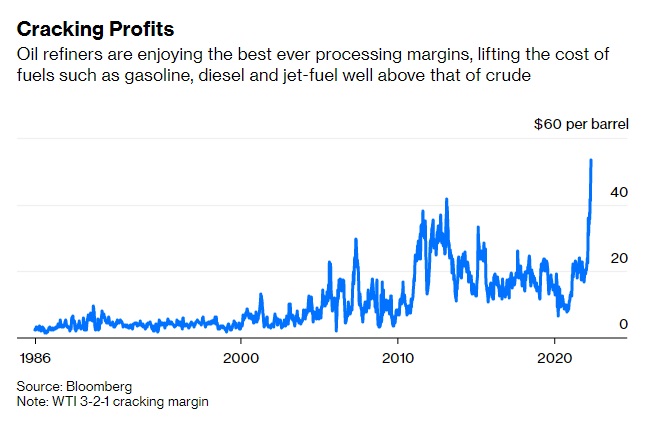
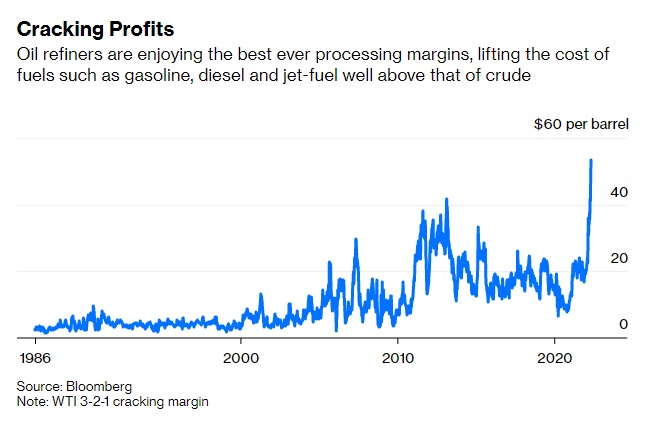
- The industry measures refining margins using a rough calculation called the “3-2-1 crack spread”: for every three barrels of WTI crude oil the refinery processes, it makes two barrels of gasoline and one barrel of distillate fuel like diesel and jet-fuel.
- From 1985 to 2021, the crack spread averaged about $10.50 a barrel.
- Last week, however, the margin jumped to a record high of nearly $55. Crack margins for diesel and other petroleum products surged much higher. – Bloomberg
2. Student Debt
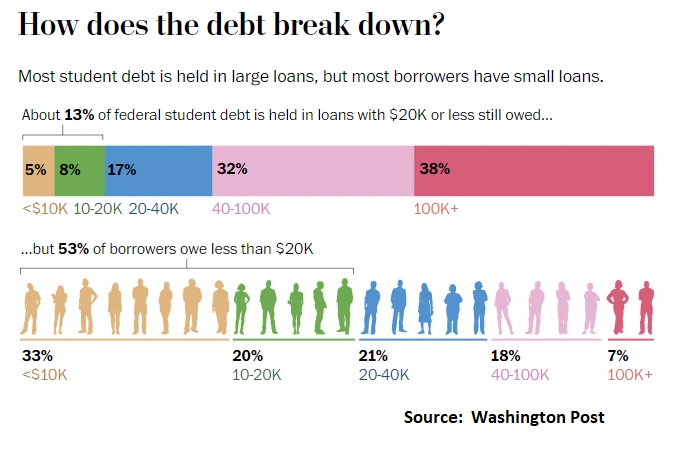
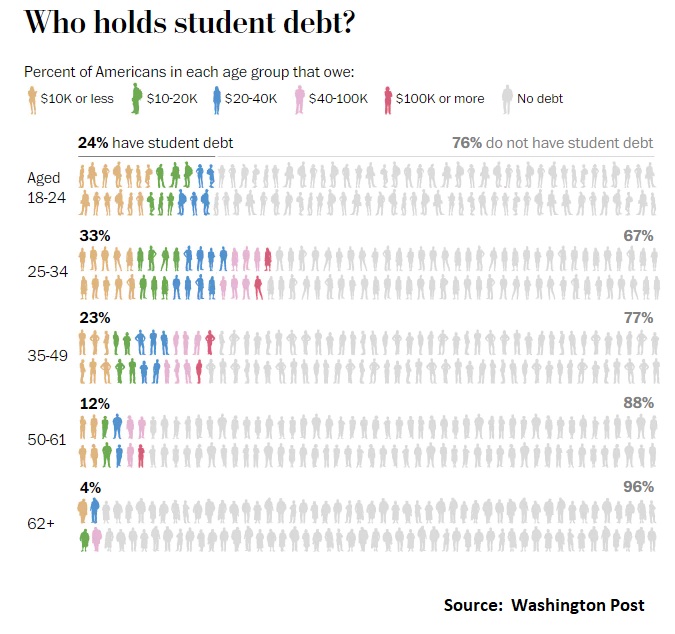
- Soaring college costs, higher enrollment, changes to the federal lending system, labor market demand for credentials and paltry wage growth have all contributed to the $1.6 trillion in outstanding federal student debt. This does not include debt originated in the private market.
- Most student debt is held in large loans, but most borrowers have small loans.
- 1 in 5 Americans hold student loans. More than half of those 45 million people with federal student loans have $20,000 or less to pay, with about a third of all borrowers owing less than $10,000. Seven percent of people with federal debt owe more than $100,000
- Economists at the Federal Reserve say borrowers with the least amount of debt often have difficulty repaying their loans, at times because they did not complete a degree.
- Conversely, people with the highest loan balances are often current on their payments likely because of their higher education levels and associated earning power, according to the Federal Reserve.
- Among the fastest-growing categories of student loan borrowers over the past two decades are Black students and people ages 50 and older. – Washington Post
3. Central Banks: Global Hawks, China Dove
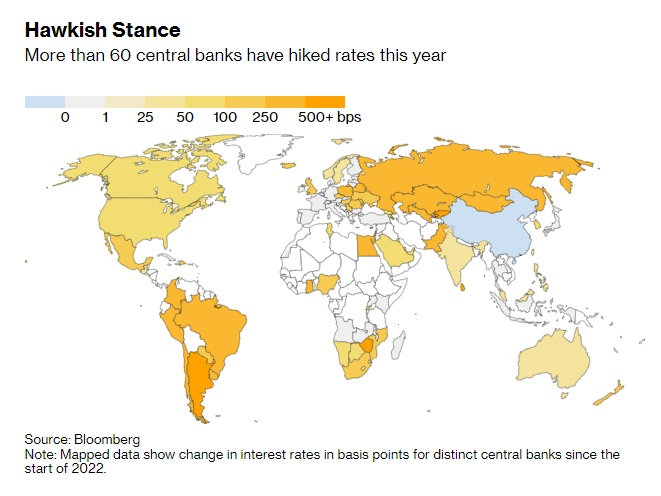
- Central banks in Pakistan, Ghana, Israel, Nigeria, New Zealand, South Korea and Guatemala hiked interest rates this week.
- Policy makers in Russia cut rates in an effort to prop up its economy, but it has still boosted more than lowered rates for the year.
4. The Dusenberry Effect: Is The American Consumer Tapped Out?
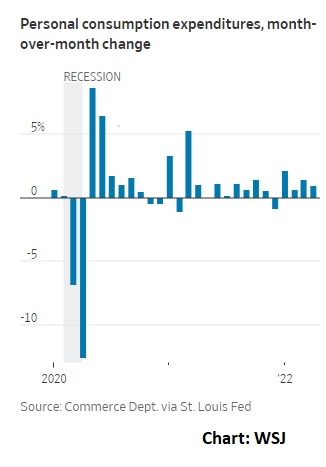
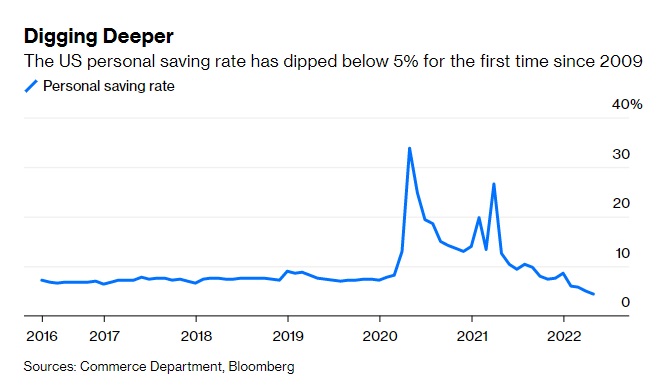
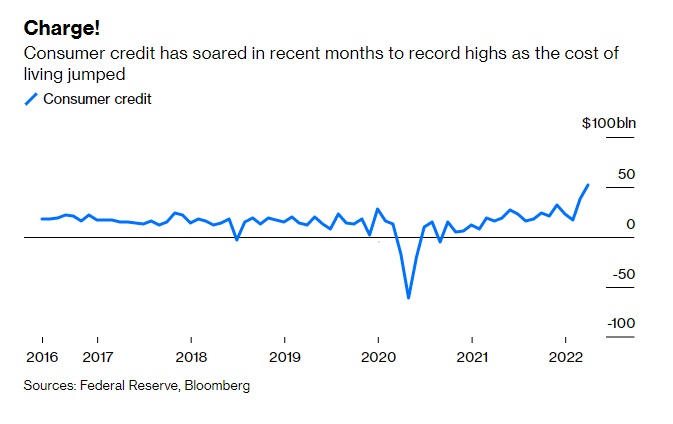
- U.S. households boosted spending for a fourth straight month in April.
- The savings rate fell to the lowest in 14 years.
- “We have finally reached the point where households are dipping into their $4 trillion of excess savings,” said Stephen Stanley, chief economist at Amherst Pierpont.
- Personal income rose a seasonally adjusted 0.4% last month. Adjusted for inflation, disposable income was flat during the month, showing that wage increases are struggling to keep up.
- Consumers are taking on more debt to maintain their spending habits. The Fed said earlier this month that total credit rose a record $52.4 billion in March from April after a revised $37.7 billion gain in February.
- Our dissertation research was on the “Dusenberry Effect,” where consumers slowly ratchet down their spending habits and are stubborn to maintain their standard of living, even if it means using debt to do so. – WSJ & Bloomberg
5. Nvidia’s Valuation Is In A “Mean” Reversion To The Mean
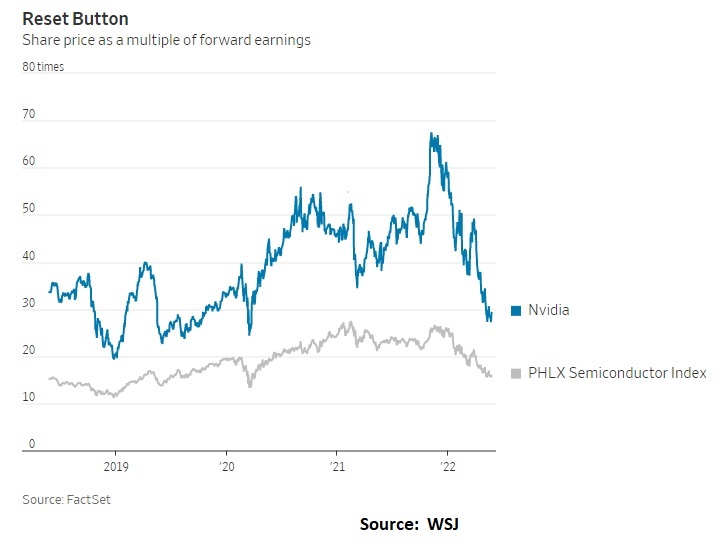
- Financial results for Nvidia’s fiscal first quarter ended May 1 came in ahead of expectations, at least in the key business segments of videogames and data centers. Revenue surged 46% year over year to about $8.3 billion and adjusted operating earnings jumped even more, by 55% to a record high of nearly $4 billion.
- Nvidia’s revenue forecast for the current quarter was about 4% below Wall Street’s targets—a notable miss for a company that has projected above the consensus view for the last nine quarters by an average of 10% each time.
- The disappointing forecast stems from a projected $500 million hit from lost sales in Russia and Covid-19 lockdowns in China.
- The market’s brutal tech correction has cut that multiple in half, and Nvidia’s premium to the PHLX Semiconductor Index is now well below what it has averaged to the peer group over the last four years. – WSJ
6. More Seniors Unretiring
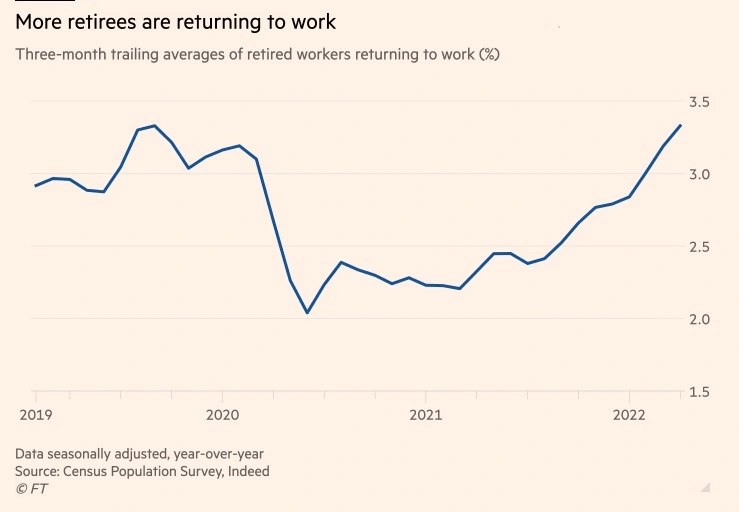
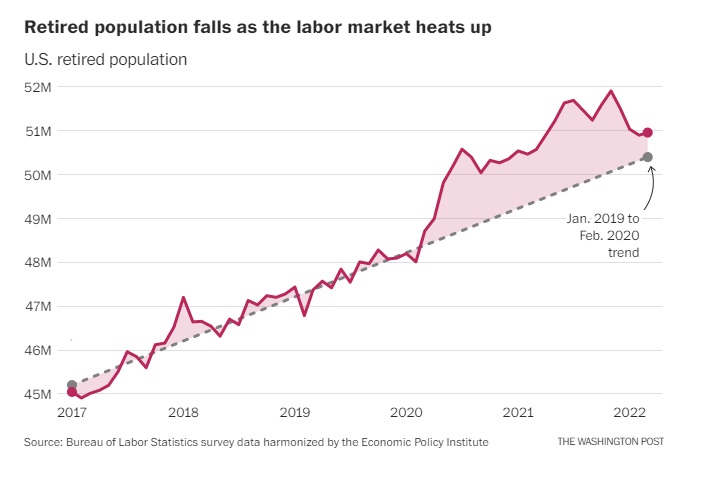
- An estimated 1.5 million retirees have reentered the U.S. labor market over the past year, according to an analysis of Labor Department data by Nick Bunker, an economist at Indeed.
- Many retirees are being pulled back to jobs by a combination of diminishing covid concerns and more flexible work arrangements at a time when employers are desperate for workers.
- Roughly 2.4 million additional Americans retired in the first 18 months of the pandemic than expected, making up the majority of the 4.2 million people who left the labor force between March 2020 and July 2021.
- The bounce back comes as U.S. employers continue to complain of widespread labor shortages, with twice as many available positions as there are unemployed Americans, according to the Labor Department. – Washington Post
7. Polyester Overtakes Cotton & Requires Petrochemicals To Produce
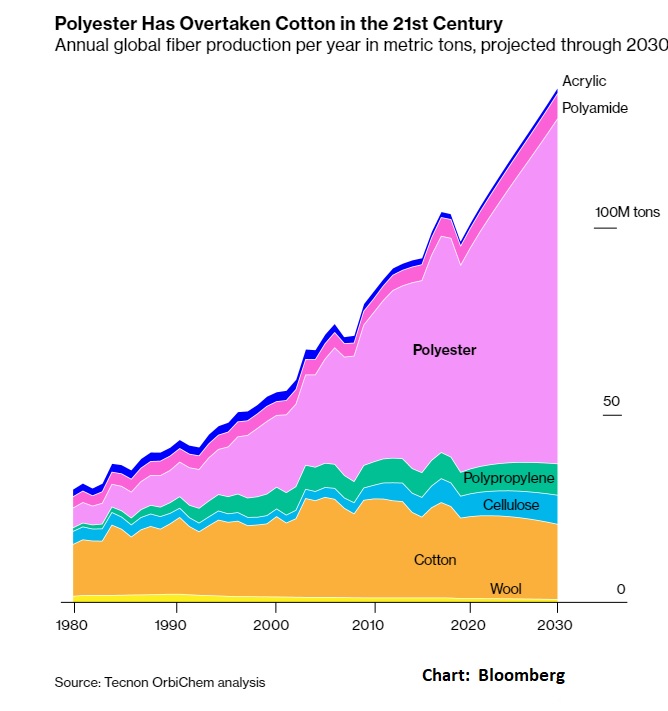
- Modern textiles rely heavily on petrochemical products.
- Most clothing around the world is made with polyester, the synthetic fiber derived predominantly from petroleum. It has overtaken cotton as the main textile fiber of the 21st century, ending hundreds of years of cotton’s dominance.
- Fashion accounts for up to 10% of global carbon dioxide output—more than international flights and shipping combined, according to the United Nations Environment Programme.
- The global market for polyester yarn is expected to grow from $106 billion in 2022 to $174.7 billion by 2032.
- Only a fraction of what’s manufactured gets recycled. Eighty-seven percent of the total fiber input used for clothing is ultimately incinerated or sent to a landfill.
- Yearly polyester fiber production is projected to exceed 92 million tons in the next 10 years–an increase of 47%.
- Not all polyester is produced from petroleum; it can also be made from natural polymers, like bioplastics, but those alternatives only make up a small fraction of polyester in the fashion industry.
- It’s been marketed as more sustainable than some natural fibers because the production process doesn’t require as much water or land as growing natural fibers like cotton.
- In 2015, polyester production for clothing emitted 282 billion tons of carbon dioxide, triple that of cotton.
- Synthetic textiles like polyester shed tiny pieces of plastic with every wash and wear. These plastic particles, called microplastics, pollute the oceans, freshwater and land and pose a danger to the animals that consume them. – Bloomberg
8. Emerging Market Bonds Suffering Worst Losses In Three Decades
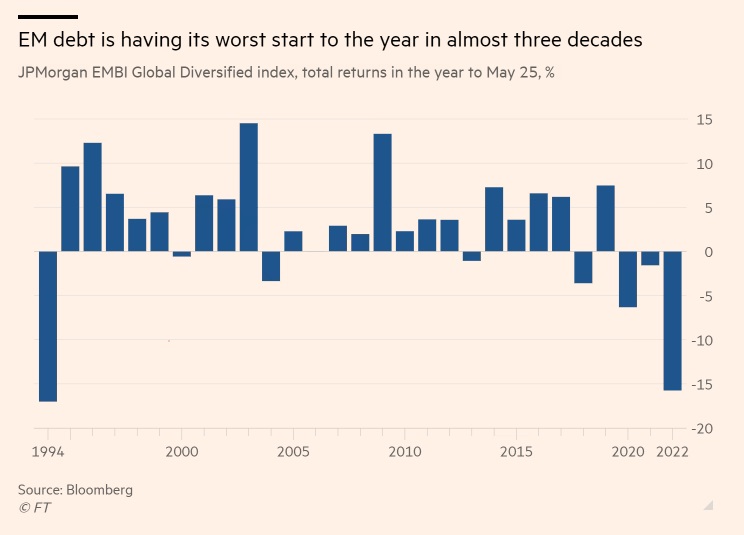
- The benchmark index of dollar-denominated EM sovereign bonds, the JPMorgan EMBI Global Diversified, has delivered total returns of around minus 15 per cent so far in 2022.
- Nearly $36bn has flowed out of emerging market mutual and exchange traded bond funds since the start of the year.
- China, the world’s biggest emerging market, has faced some of the heaviest selling.
- The shock to commodity prices caused by the war in Ukraine has added to the strain on many developing countries that rely on imports to meet their needs for food and energy.