
 Sometimes we like to channel our inner bull, as in bovine, which is rare for ex-bond traders. Trying to see all angles of the dimly lit statue we call the market is a necessity to manage the risk that: a) our view may be wrong; and b) we end up broke. So perma-bears, hang with us, for moment, as we still are hammering out our 2011 market view.
The common theme is we’re in a “new normal” or balance sheet growth recession — the U.S. consumer is saddled with too much debt and can’t spend, housing is weak and headed south, and the FED is monetizing a massive deficit, which, eventually someday “will come home to roost.” All true. All known. Not all fully priced if the roosters decide to come home sooner rather than later.
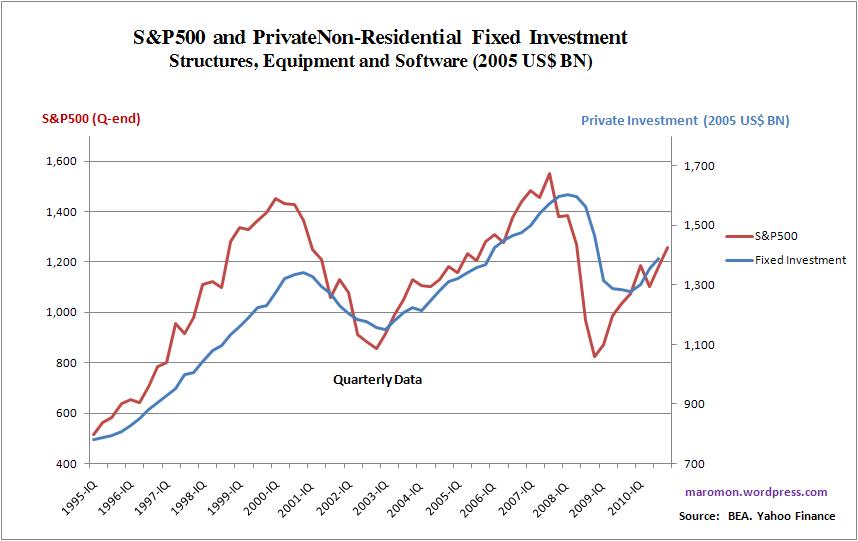
But take a look at this chart and see how the S&P500 leads U.S. real private non-residential investment by about two quarters. The balance sheet of the corporate sector is in relatively good shape with some companies possessing massive piles of cash, larger than even the GDP of some countries.
If the stock market continues to rise and businesses start spending and hiring, a reinforcing feedback loop may develop, if it already hasn’t, and the economy could reach what the economists call “escape velocity“. Remember, it was business investment that drove the 1990’s boom.
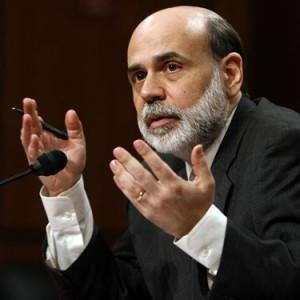
Bet the ranch? Absolutley, not. But, maybe, we’ve sold Chairman Bernanke too short, thinking he is just trying to reflate the old housing and consumption bubble. He did write,
Easier financial conditions will promote economic growth. For example, lower mortgage rates will make housing more affordable and allow more homeowners to refinance. Lower corporate bond rates will encourage investment. And higher stock prices will boost consumer wealth and help increase confidence, which can also spur spending. Increased spending will lead to higher incomes and profits that, in a virtuous circle, will further support economic expansion.
Interest rates are higher than when he wrote on November 4th, but would a 2 percent 10-year bond rate instill or reflect growing econonomic confidence? We recall when the bond was at 2.5o percent in August, one prominent British strategist stating, “we’re in a depression. That is what the bond market is telling us.”
Benanke’s call on interest rates just proves he is no better than us, or anyone else, at guessing the direction of interest rates in the short-term. And they would be higher if not for the Fed’s bond purchases. The fact, is the S&P500 is 5 percent higher than when the Fed moved and when he wrote, and a 2 percent bond with a 1250 S&P500 is about as compatible as oil is with water. His end-game is to spur spending and revive the economy, not to drive rates lower.
So in fact, what if he is thinking the above and trying to unleash the strength of corporate balance sheets with QE2? Sure, all this can be derailed by the ugly events that are on our 2011 radar, which we’ll discuss in later posts. But, the stage is set. All we need is a story to get the “animal spirits” fired up. A new technological breakthrough and/or bipartisan agreement in dealing with the long-term structural deficit? Your’re guess is as good as ours as to what it will be.
If it unfolds, it will be hailed as the financial equivalent of Apollo 13 beating the odds and returning home safely. And remember, folks, it’s all about the journey, not the destination.

 Global Macro Monitor

Strong post dude. Clearly I am not long enough US equities if this plays out.
What about inflationary expectations? Does inflation ever factor into anything?