
A new Wall Street Journal piece by Konrad Putzier and Justin Lahart (“The AI Build-Out Is Becoming the Biggest Economic Bet in U.S. History,” Sept. 23) puts hard numbers on what our website has been flagging for a while: the U.S. economy has become a leveraged wager on a single theme.
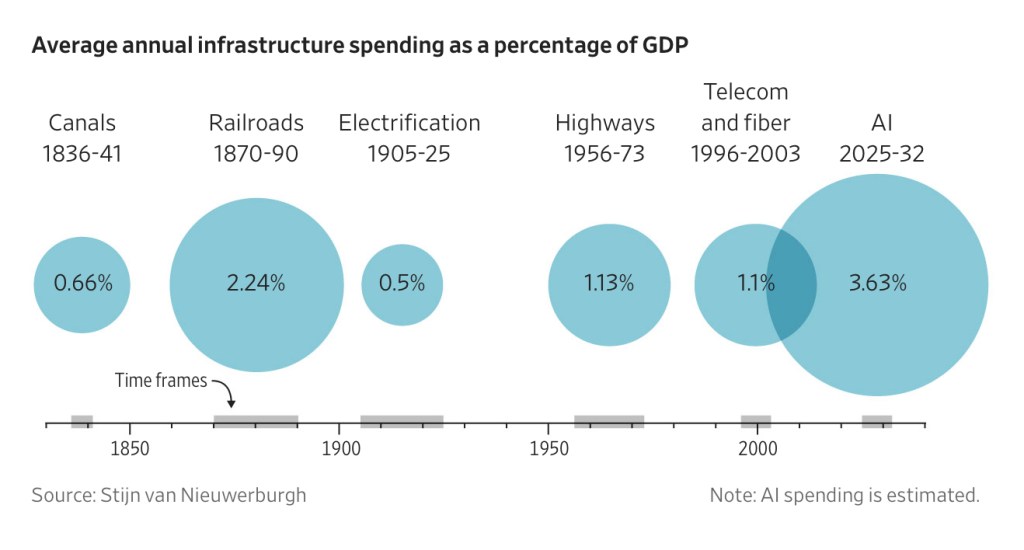
Citing new Brookings estimates from economist Stijn van Nieuwerburgh, the Journal reports that data-center and AI infrastructure spending is projected to reach $10.3 trillion from 2025 to 2032, roughly 3.6% of GDP per year. On an average-annual basis, that dwarfs the canals, railroads, electrification, the interstates, and the ’90s fiber build. Goldman puts 2026 AI investment alone at 1.9% of GDP.
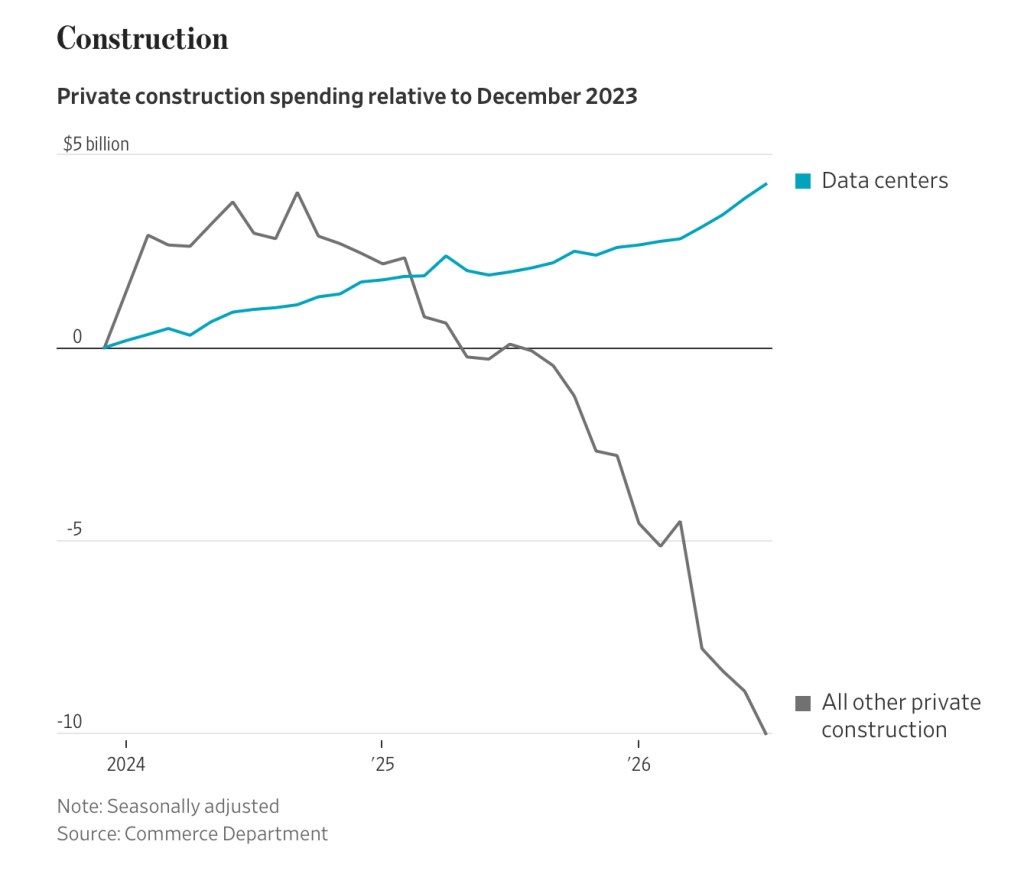
Crowding out is real. Private data-center construction ran about $9 billion ahead of last year through July, while all other private construction fell roughly $46 billion. Hyperscalers are soaking up electricians, land, and power. The Journal notes a Mississippi aluminum smelter, and its roughly 1,000 jobs, went to Oklahoma after a nearby data center claimed the electricity. The capital cycle is picking winners, and it’s not picking manufacturing.
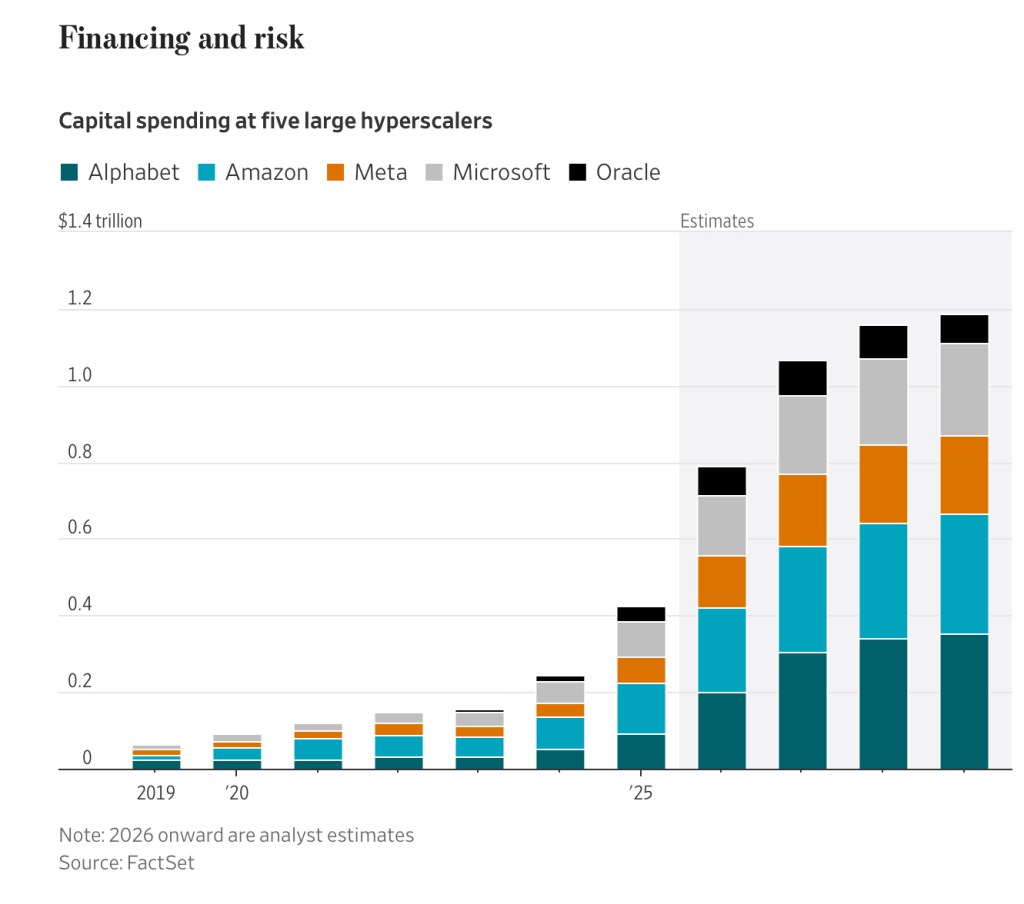
The financing is the tell. FactSet analysts see $4.2 trillion of capex from Alphabet, Amazon, Meta, Microsoft, and Oracle over the four years through 2029, with a rising share funded by debt. Much of that runs through off-balance-sheet vehicles with banks and private credit, where disclosure is thin. Opacity plus leverage plus a single end-market: we’ve seen that movie before.
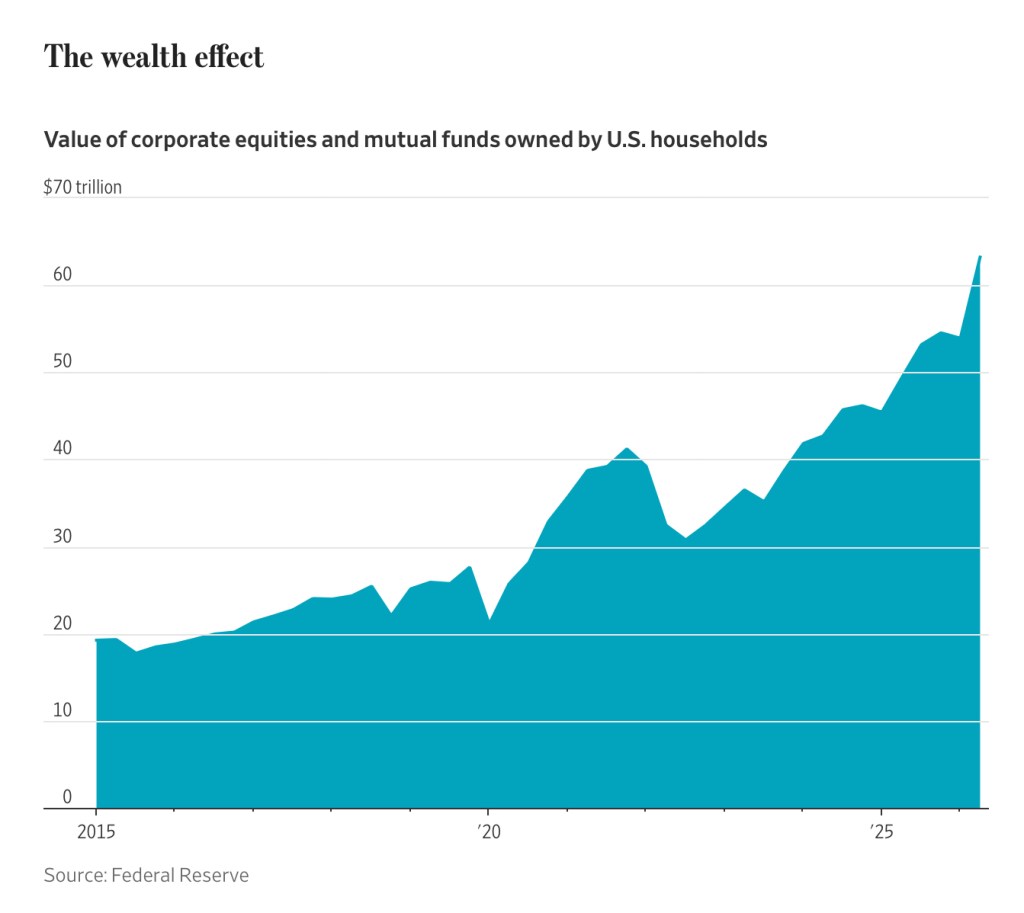
The wealth effect is propping up the consumer. Household equity and fund holdings hit $63 trillion in Q2, nearly double end-2022. That is carrying spending even as real wage growth stalls, but the gains skew heavily toward the top. It’s K-shaped consumption financed by an AI-driven equity rally.
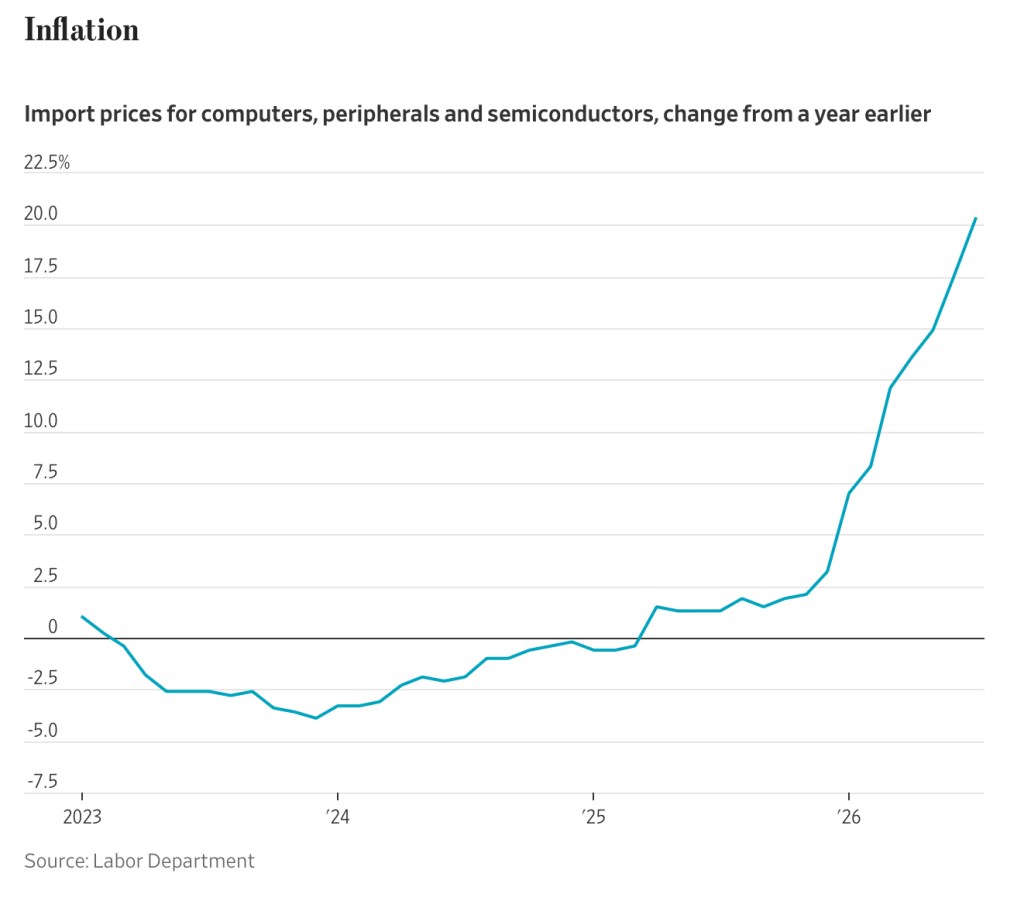
And it’s inflationary. Import prices for computers, peripherals, and chips were up 20% year over year in August. Austin Goolsbee has flagged wage pressure in AI-adjacent trades, and Fed Chair Warsh has pointed to hyperscaler borrowing as one driver of higher long-term rates. Electricity bills are climbing wherever the server farms cluster.
The GMM take: The risk isn’t that AI fails. It’s that monetization arrives slower than debt service comes due. Growth, household wealth, and the long end of the curve are now all correlated to one capex cycle. We’ll be watching hyperscaler credit spreads, private-credit marks, the term premium, and forward capex guidance. Any wobble in that guidance is no longer a tech story. It’s a macro event.



I don’t like seeing this at all. It’s like the Dot com boom/bust scaled up by 2-3 orders of magnitude. If the timing of the debt service overwhelms the monetization as noted in the post, the implosion will be massive. God help us all.