Millennials Rising, Market Risk Increasing

Righteous!

Check out today’s cover of the Economist.

Economist_Cover


It confirms our ongoing analysis and illustrates why you should read the Global Macro Monitor, folks.

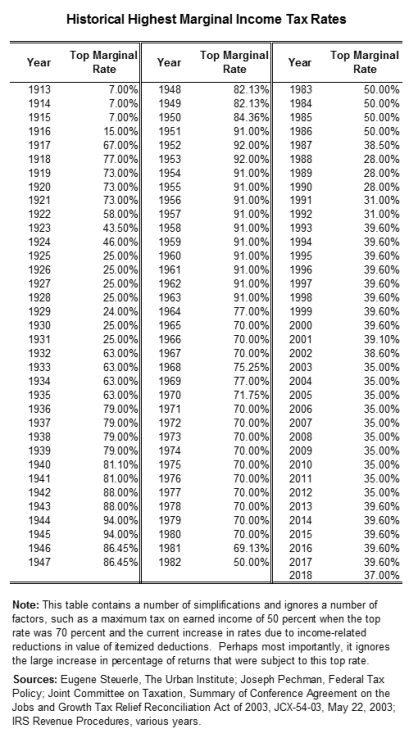
It’s been almost exactly one year to the date since we posted,  Karl, The Comeback Kid?  We warned the 1-percenters to “Wake The F&*k Up” to what was coming — a move to Nordic Capitalism — especially if the millennials started to show up at the ballot box.

They did in November by increasing their turnout by more than 50 percent.

Poll_Youth Turnout

Just a few days before the midterms we posted,

We sense a political earthquake coming Tuesday.   Female, young, and left.   Brace yourself, folks. – GMM, October 31

Enter AOC & Co.   A warning:  she/they will take a big political hit — fair or not — on Amazon’s flight from NYC, and they really do need to learn and learn fast, that the private sector is the main engine of job growth and wealth creation.

Similar to using fire to cook your food and warm your house, use and harness market forces to accomplish your social and economic goals.  Markets, like fire, are amoral.  Corporate socialism, people’s socialism,  socialism for the rich, socialism for the poor – hey, it’s hard to be pure.

Nevertheless, we were way out in front before others began jumping on the Karl Train.

Prairie Fire

The movement only gets stronger, in our opinion, as deep structural demographic, economic and political forces are driving the underlying social dynamics of the nation and many other countries in the West.  Trump had his chance and deserves credit for reading what most pols missed, but he is increasingly viewed as a Trojan Horse for the elites — as he is or, at least, claims to be an elite — and is despised by the young.  Not to mention his political and legal problems.

One political party believes they can win 2020 with a party of old white men scaring the middle by conflating  Nordic Capitalism, which the millennials advocate, with “Venezuelan and Cuban socialism.”

Go ask a millennial if they prefer Caracas to Copenhagen?  ‘Nough said.

The Rise Of Bernie

Think about it folks.

Bernie Sanders would be president today if Hillary and the Dems had not rigged the 2016 primaries in HRC’s favor.  We believe almost one-third of Trump voters felt the Bern, especially in the mid-West, and Bernie would have brought out the younger voters en masse.  Trump would not have had a chance.

Trump’s own pollster, Tony Fabrizio, stated flatly at a recent Harvard University Institute of Politics event that Sanders would have beaten Trump. He said Sanders would have run stronger than Clinton with lower-educated and lower-income white voters. I could not agree more, on both counts.

The real working-class hero candidate was always Sanders, not Trump, who has always been a crony capitalist pretending to be a populist.  – The Hill, November 3, 2017

Now think five years back, and ask yourself if you ever, in your wildest imagination or fantasies, would have believed a no-name “socialist” independent from Vermont could become president?  Or, for that matter,  a 12 handicapper reality television star?

We are not advocating jack all here at GMM, as we are often accused,  just making inferences from the economic, polling and demographic data, and trying to find our way along the foggy path into the future.

Socialism is storming back because it has formed an incisive critique of what has gone wrong in Western societies. Whereas politicians on the right have all too often given up the battle of ideas and retreated towards chauvinism and nostalgia, the left has focused on inequality, the environment, and how to vest power in citizens rather than elites (see article). Yet, although the reborn left gets some things right, its pessimism about the modern world goes too far. Its policies suffer from naivety about budgets, bureaucracies and businesses.   – Economist, Feb. 14

Look What QE Has Wrought? 

Bernie and Co. (the MMT crowd) now think that much or let’s say, some,  of the increased spending, can be financed by the Fed’s printing press.  That reflects a total lack of understanding of monetary policy, monetization, and quantitative easing.

The Fed injected reserves into an impaired financial system to purchase Treasury and MBS bonds in order to inflate asset prices, mainly,  but not totally,  through hyping animal spirits, without increasing interest rates during a mass asset reallocation and explosion of fiscal deficits.   The impact on demand was relatively inefficient and, at best, indirect.

Though a counterfactual can never be proven,  nobody knows how much aggregate demand (AD) would have collapsed without QE.  We maintain its better to be safe than sorry and it sure beats living under a freeway and eating bark for dinner — surely almost all of our fate if the system had collapsed.   So kudos to Ben & Co. for saving the global financial and economic system.

The impact on AD came indirectly through the economic recovery plan’s fiscal spending and the wealth effect. and thus had little impact on goods and services inflation.   This also happened during a period of household deleveraging, mainly in mortgage debt, and therefore, the massive reserve injection was not converted to endogenous money through bank credit expansion.

However, corporate and fiscal debt increased, mainly through bond issuance,  and asset prices did hyperinflate.

People’s QE

The next big quantitative easing will be a “Peoples QE’ and we believe will go to finance consumption and investment directly.  Money demand may not decline, especially at its genesis, but the People’s QE will definitely increase inflation.   Its impact on real money demand will determine its length, efficacy, and ultimate fate.

We don’t worry so much about increases in the monetary base, especially when a financial system and credit is impaired, we worry more about the collapse in real money demand, which results from a loss of confidence in the central bank’s commitment to maintaining the purchasing power of the currency.   That’s how hyperinflation begins and societies end.

This is our view of the end game, a ways off, however.

Difficult To Understand Monetary Policy

We now have a president who doesn’t understand free trade and certainly has no clue about monetary policy.

“Just run the presses — print money,” Trump said, according to Woodward, during a discussion on the national debt with Gary Cohn, former director of the White House National Economic Council.

“You don’t get to do it that way,” Cohn said, according to Woodward. “We have huge deficits and they matter. The government doesn’t keep a balance sheet like that.”

Cohn was “astounded at Trump’s lack of basic understanding,” Woodward writes.  – CNBC

Scary clueless.

I read sometime, somewhere as an undergraduate that President Kennedy, a high IQ POTUS, had trouble remembering the difference between fiscal and monetary policy, and had to write cheat sheet notes on his hands during pressers.  Fiscal policy on one hand and monetary policy on the other.

I am still trying to find the documentation for you, folks.

In his last presser Chairman Powell stated even the best and the brightest at the Fed does not know what is the right level of reserves to maintain a stable financial system.   Alan Greenspan believed making monetary policy was a black box.

There is, regrettably, no simple model of the American economy that can effectively explain the levels of output, employment, and inflation. In principle, there may be some unbelievably complex set of equations that does that. But we have not been able to find them, and do not believe anyone else has either. 

Consequently, we are led, of necessity, to employ ad hoc partial models and intensive informative analysis to aid in evaluating economic developments and implementing policy. There is no alternative to this, though we continuously seek to enhance our knowledge to match the ever growing complexity of the world economy.   – Alan Greenspan, Decemeber 1996

Imagine the two candidates in the next presidential election debating the efficacy and risks of a “People’s QE.”  Yikes!

We double down on our Soros quote posted late last night,

Most of us assume the future will more or less resemble the present, but this is not necessarily so. In a long and eventful life, I have witnessed many periods of what I call radical disequilibrium. We are living in such a period today.  —  George Soros, Feb. 12th

Radical disequilibrium, indeed.   Not market friendly.

Posted in Black Swan Watch, Bonds, Politics, Uncategorized | Tagged , , , , , | Leave a comment

Heartbreaking: Get Off Your Knees —> Action

Posted in Uncategorized | Leave a comment

Das ist nicht gut!

Posted in Economics, Germany, Uncategorized | Tagged , | Leave a comment

QOTD: George Soros

Most of us assume the future will more or less resemble the present, but this is not necessarily so. In a long and eventful life, I have witnessed many periods of what I call radical disequilibrium. We are living in such a period today. – George Soros, Feb. 12th

Posted in Quote of the Day, Uncategorized | Tagged , | 1 Comment

The Caravan On The Move Again

https://twitter.com/texas_dexter/status/1095501063850024960?s=12


Posted in Uncategorized | 2 Comments

China’s Pushback In Trade Talks Over Sovereignty

Bingo!

Note our comment from an earlier post this evening,

Seriously, folks,  do you really think the Middle Kingdom, with all its history and past glory, after climbing back to global superpower status, is now going to cave and give up some of its sovereignty because Trump demands it?

President Xi already seems to be preparing his population for the worst case scenario, warning of “challenging times ahead” possibly in the event Trump goes ahead with the tariff hikes.  Maybe we are reading too much into it and maybe not. – GMM

Posted in Trade War, Uncategorized | Tagged , | 2 Comments

QOTD: Three Kinds Of People

There are three kinds of people: the haves, the have-nots, and the have-not-paid-for-what-they-haves.  – Earl Wilson

QOTD = Quote of the Day

Posted in Quote of the Day, Uncategorized | Tagged , | Leave a comment

SOTD: Magnificent

Fantastic vid.  Love that U2 twang!

SOTD = Song of the Day

Posted in Uncategorized, Video | Tagged , | Leave a comment

S&P500 Key Levels

The S&P closed right at or just a smidgen above its 200-day moving average.   The market rally based on a government shutdown deal?  Come on, man!

Another government shutdown wasn’t priced, so why should stocks move on a deal?

We wrote this weekend,

China back online this week,  Mnuchin and Lighthizer to China for negotiations, mo earnings, CPI, and government funding deadline on Friday.

Senate Appropriations Chairman Richard Shelby (R-Ala.) acknowledged on Sunday that negotiations had stalled, and he put the odds of getting a deal at 50-50.  – Politico, Feb 10th

It will get done.  They are not that foolish.  – GMM, Feb. 10th

Seems to us, the noise traders and ‘bots were caught offside.

Three Green Candles

The price action over the next few days will be key.

As we posted earlier, three green candle closes above the 200-day sets the S&P500 up to challenge the yuuge level at 2800 (see table).

China Deal

The announcement of some sort of convoluted China trade or extend and pretend will be one of the biggest sell the news events in recent history.  Trump is going to take some big hits for caving on the big issues after causing mucho pain to the U.S. and global economy, and American farmers, in particular.  All for the promise of a few soybeans and a “pig in a poke.

Kudos for trying though but no strategy, no disciplined message, a divided team, and telegraphing fears of a stock market meltdown advantages the Chinese negotiators.

Seriously, folks,  do you really think the Middle Kingdom, with all its history and past glory, after climbing back to global superpower status, is now going to cave and give up some of its sovereignty because Trump demands it?

President Xi already seems to be preparing his population for the worst case scenario, warning of “challenging times ahead” possibly in the event Trump goes ahead with the tariff hikes.  Maybe we are reading too much into it and maybe not.

Selling strength higher prices.


S&P

S&P_Chart


Posted in Equities, Trade War, Trades, Uncategorized | Tagged , | 8 Comments

Venezuela: Failed Petrostate & The Roosevelt Corollary

Interesting piece in The Hill yesterday on Venezuela by former U.S. Senator Judd Gregg, Venezuela, the Monroe Doctrine and the Roosevelt Corollary.  

A must read for those interested in all things Vennie.

He refers to the Roosevelt Corollary to the Monroe Doctrine, which originated in the Venezuela debt default before last, a subject of our recent post,  Venezuela, Debt, and Gunboat Diplomacy 2.0.

The Roosevelt Corollary of December 1904 stated that the United States would intervene as a last resort to ensure that other nations in the Western Hemisphere fulfilled their obligations to international creditors, and did not violate the rights of the United States or invite “foreign aggression to the detriment of the entire body of American nations.” As the corollary worked out in practice, the United States increasingly used military force to restore internal stability to nations in the region. Roosevelt declared that the United States might “exercise international police power in ‘flagrant cases of such wrongdoing or impotence.’” Over the long term the corollary had little to do with relations between the Western Hemisphere and Europe, but it did serve as justification for U.S. intervention in Cuba, Nicaragua, Haiti, and the Dominican Republic.  –  U.S. State Department

Recall in that piece we stated Venezuela busted sovereign bonds were tradeable but investable.  Now, after U.S. Treasury restrictions, the bonds are not even tradeable.

“It is a difficult call.”

Back to Judd Gregg.    It is hard to decipher what he is advocating and there is no mention of a foreign power, such as China or Russia, mingling in Venezuelan affairs which would definitely be an antecedent to invoke the Monroe Doctrine and Roosevelt Corollary for the use of force in Venezuela.

He also concludes other Latin American countries will not intervene and the U.S. will most likely have to go it alone if the Trump administration chooses military intervention.

The most interesting interpretation of the doctrine, however, came from President Theodore Roosevelt, who added what became known as the Roosevelt Corollary.

He essentially proclaimed that when there was flagrant or chaotic or despotic leadership of a Latin American country, the United States could intervene to re-establish the rule of law and democracy.

…Now we are confronted with Venezuela.

There can be no question but that Venezuela is being led by a tyrannical group of people. 

…But it is fairly obvious that Maduro and his cadre are not departing. In fact, they appear to be doubling down on the oppression of the opposition.

It could not be more apparent that if the Roosevelt Corollary is applied, the Maduro cabal qualifies for American intervention.

But is this a good course to pursue?

This is the issue that President Trump must decide. One suspects he is getting a variety of views from people such as national security advisor John Bolton and the Joint Chiefs of Staff.

It is a difficult call.  – Judd Gregg,  The Hill, February 11th

Sounds like things are about to get hot in Caracas.  Then again, geopolitics are always hot with John Bolton at the helm of the NSC.

I miss pounding Polars in Caracas but my heart really aches for the Venezuelan people.  Let’s hope their pain is almost over and Ricardo Hausman, one of my intellectual heroes as a young economist in the World Bank’s Latin American department, gets the support he needs after regime change.  He and the Venezuelans will need lots.

Stay tuned.

Venezuela

Source:  The Polish Rifle

Posted in Emerging Markets, Energy, Uncategorized | Tagged , | Leave a comment