
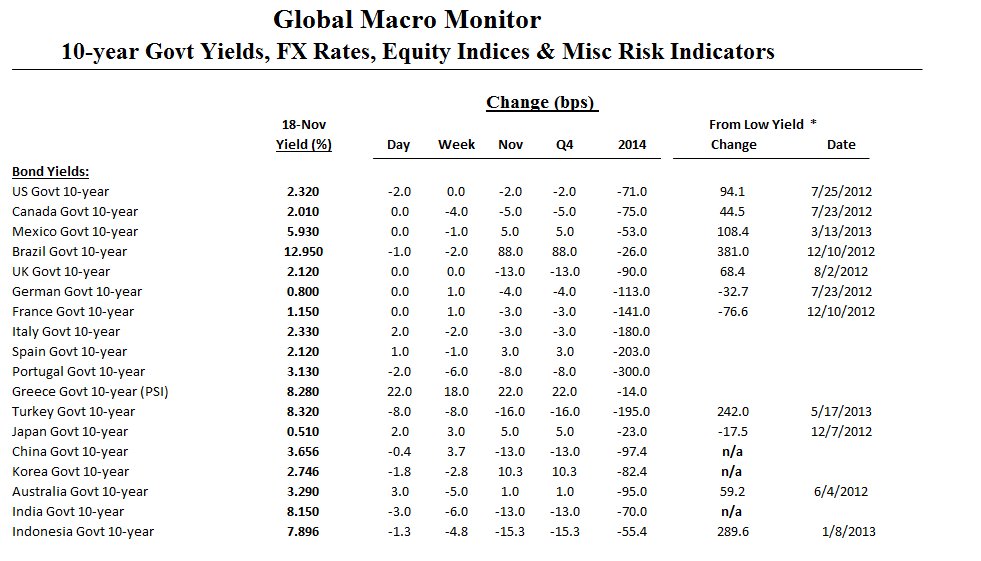
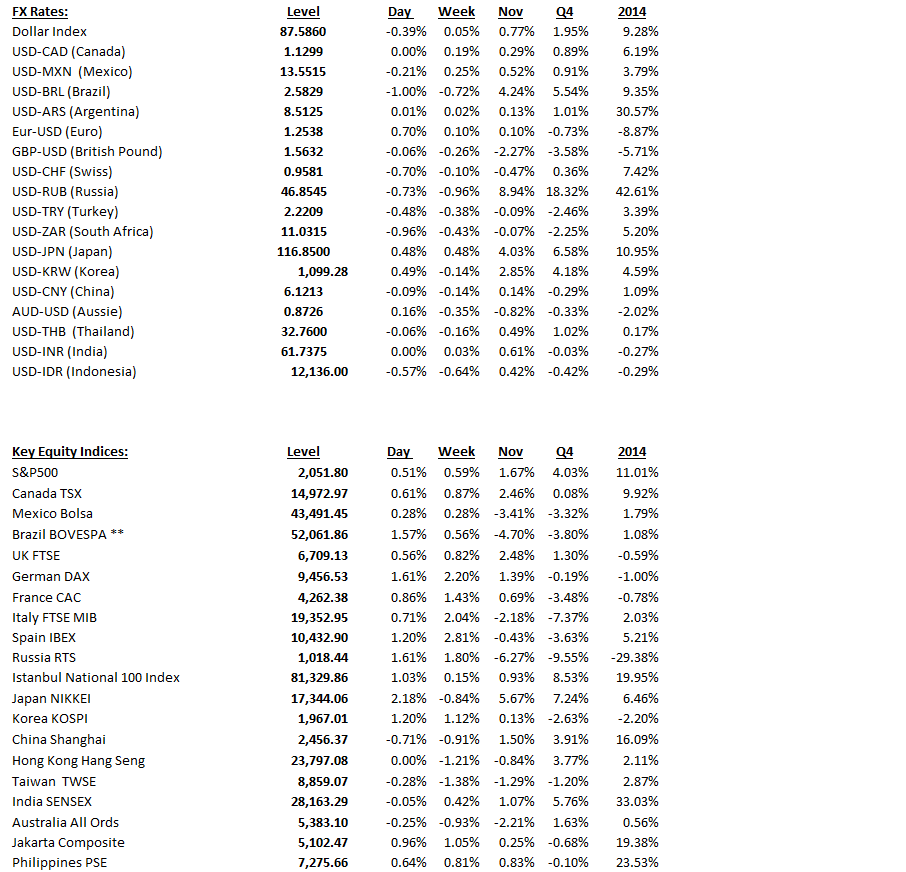
Click on table to enlarge and for better resolution

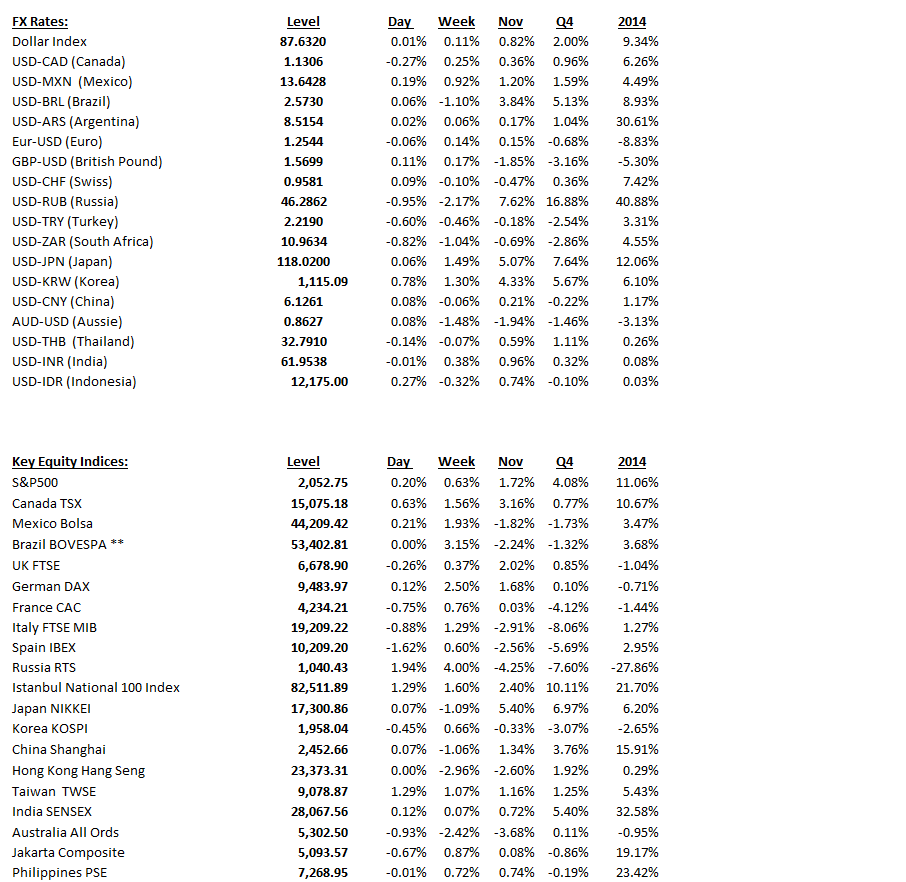
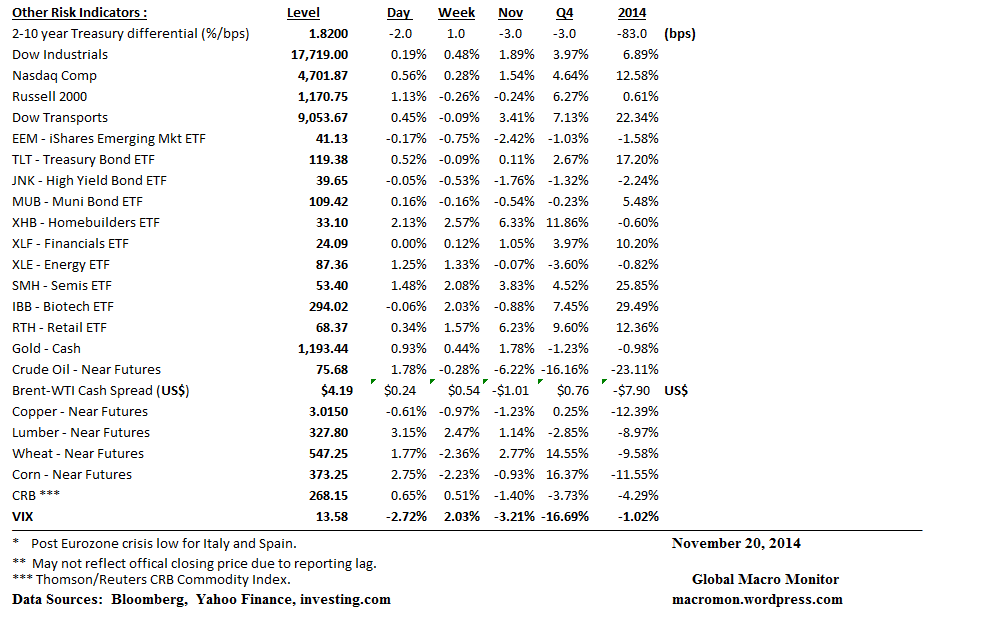
(click here if table is not observable)
The Philadelphia Federal Reserve reported its Business Outlook this morning,
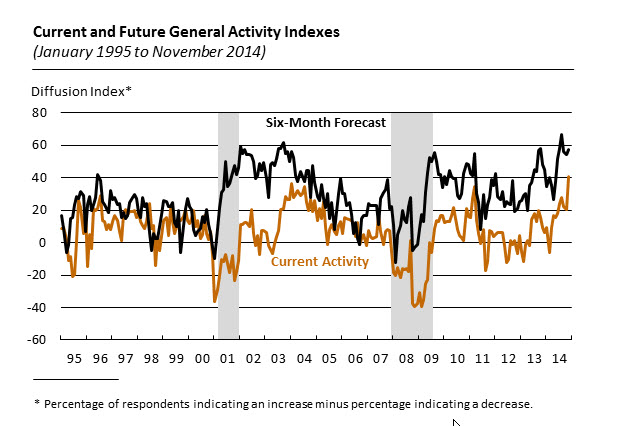
The survey’s broadest measure of manufacturing conditions, the diffusion index of current activity, increased from 20.7 in October to 40.8 this month and has now been positive for nine consecutive months (see Chart). This was the highest reading since December 1993. The percentage of firms reporting increased activity this month (49 percent) was significantly greater than the percentage reporting decreased activity (9 percent).
Both the current new orders and shipments indexes rose from their readings in October. The current new orders index, which reflects the demand for manufactured goods, increased 18 points, to 35.7. Over 44 percent of the firms reported a rise in new orders, compared with 36 percent last month.
Labor market indicators showed improvement this month. The current employment index rose 10 points in November, to 22.4, and hit a 3½ year high. Twenty-nine percent of the firms reported increases in employment compared with 20 percent that reported increased employment last month. Firms also reported higher work hours, with the average workweek index rising from -1.3 to 7.8 this month.
There are some caveats to the report, however. CNBC notes,
Economists were quick to pour cold water on the number, suggesting it was an aberration unlikely to hold up.
…this particular number would indicate expansion faster than anyone is imagining.
In fact, the reading would be consistent with a 6.5 percent growth in the gross domestic product in the fourth quarter, according to Capital Economics, which said the reading likely will fall back to reality in December.
(click here if chart is not observable)
South Korea’s corporate model of tightly knit companies that act in concert under family control is under scrutiny after Hyundai’s $10bn purchase of a plot of land in Seoul’s Gangnam district. The FT’s Simon Mundy weighs the model’s pros and cons.
The latest on companies news
http://www.ft.com/companies
(click here if video is not observable)
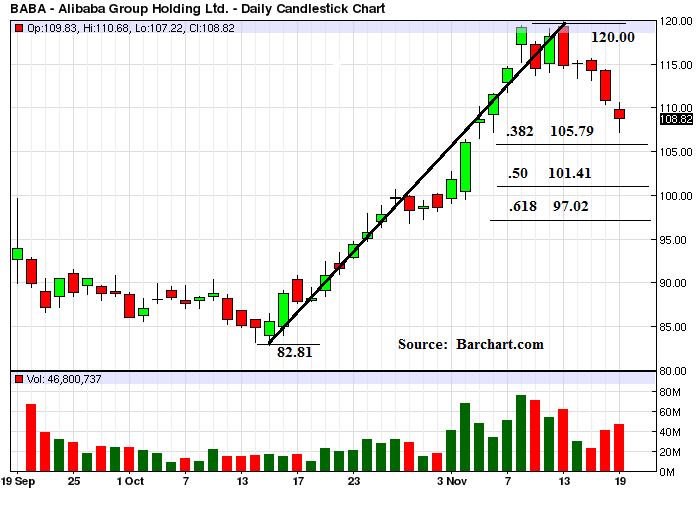
Alibaba has been selling off hard over the past week to the surprise of many, including, painfully, us. It’s now down 9.3 percent from last week’s high at 120. The stock bounced near its 20-day moving average today, closing off 1.80 percent. The 20-day moving average is at 107.08 and rising and the key Fibonacci retracement levels are shown below. Stay tuned.
(click here if chart is not observable)
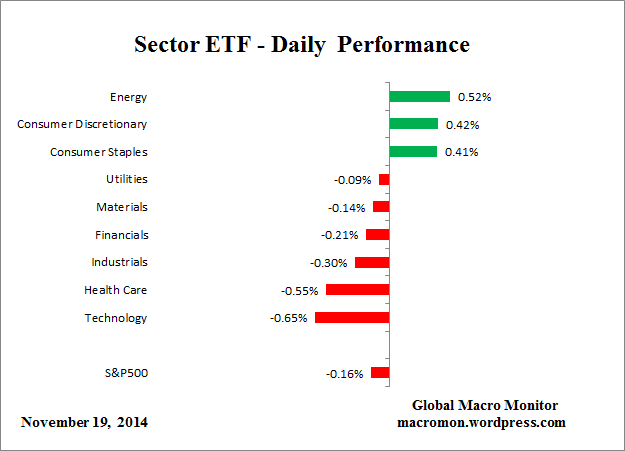

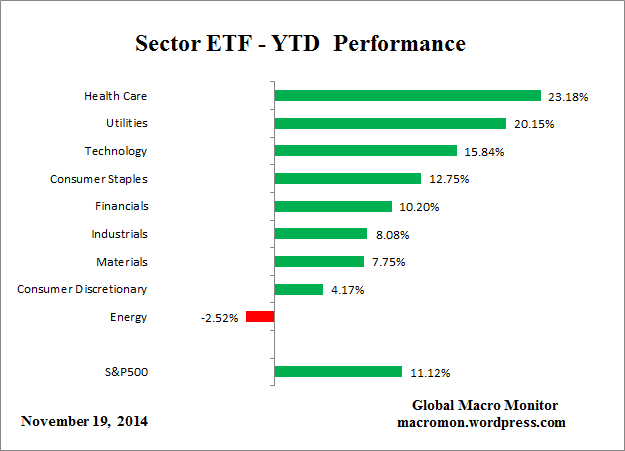
(click here if charts are not observable)
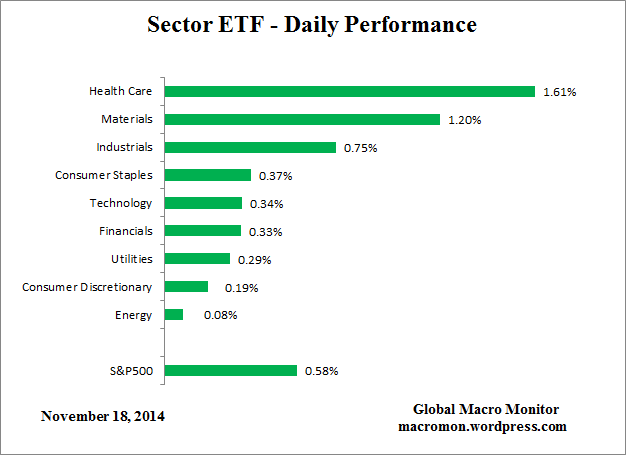

(click here if charts are not observable)
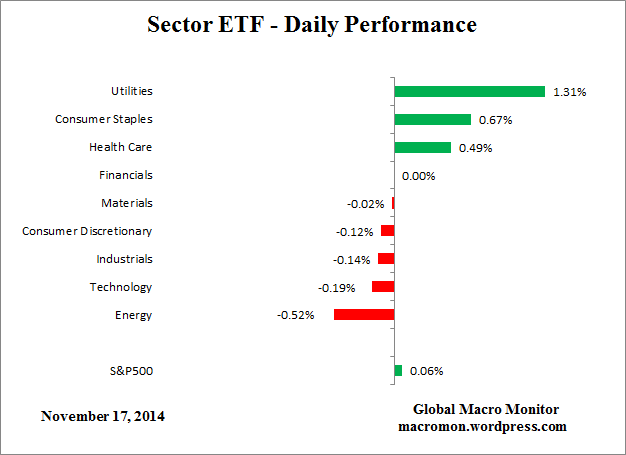
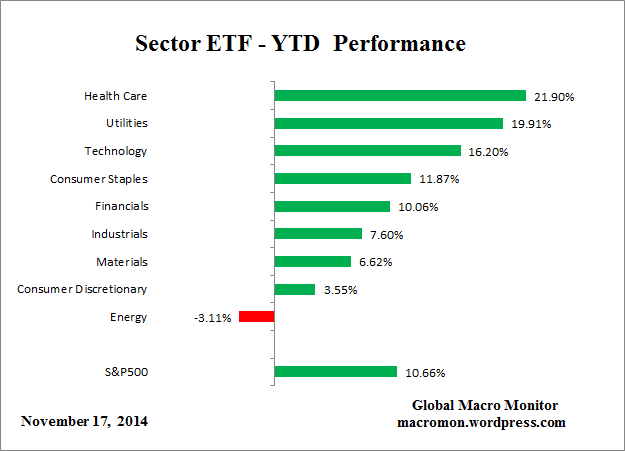
(click here if charts are not observable)

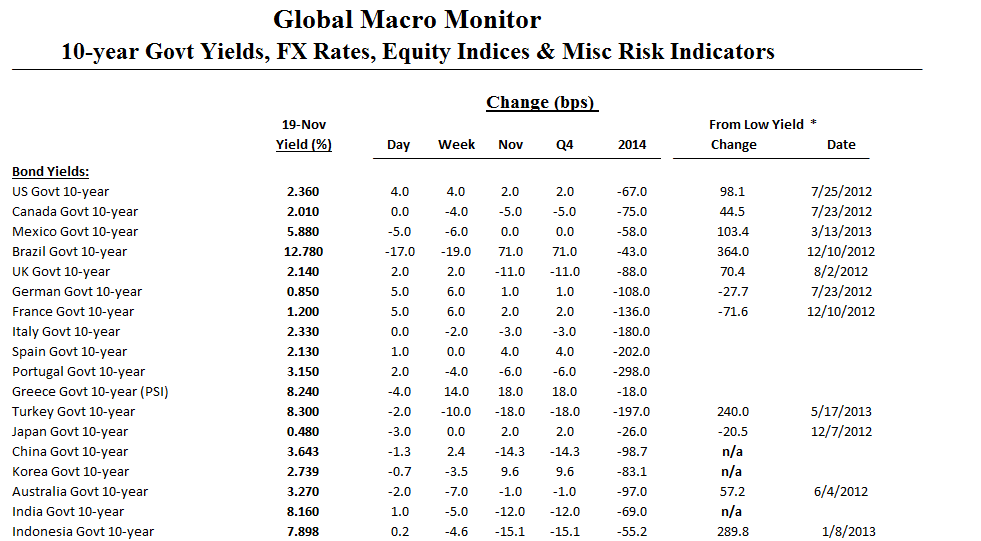
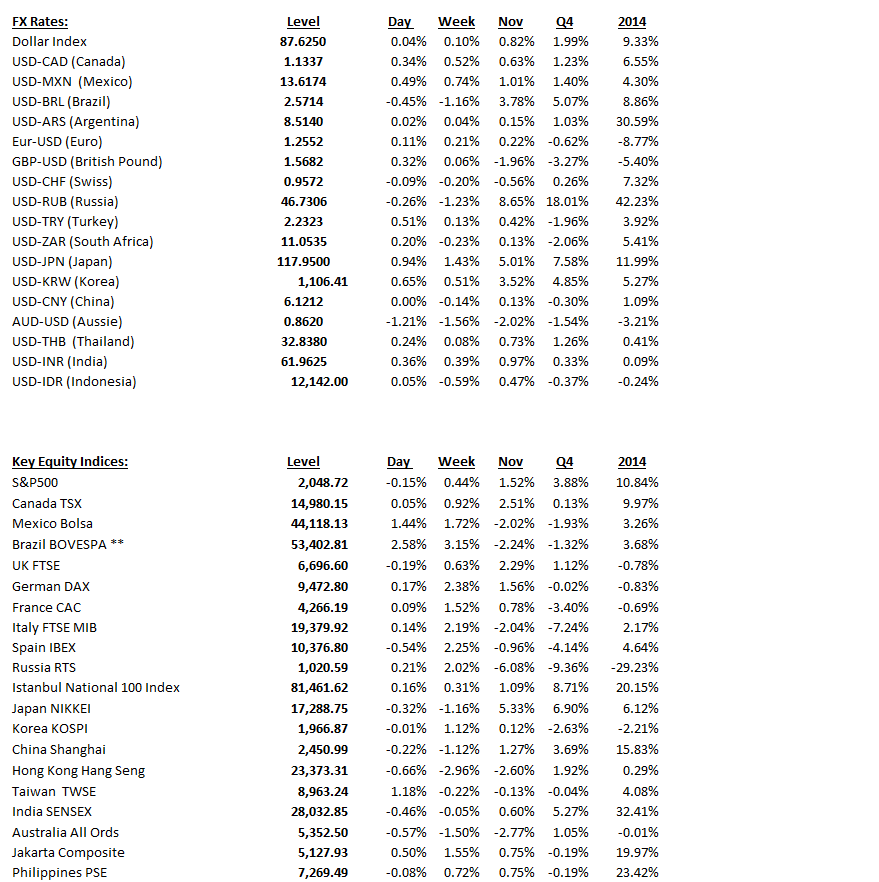
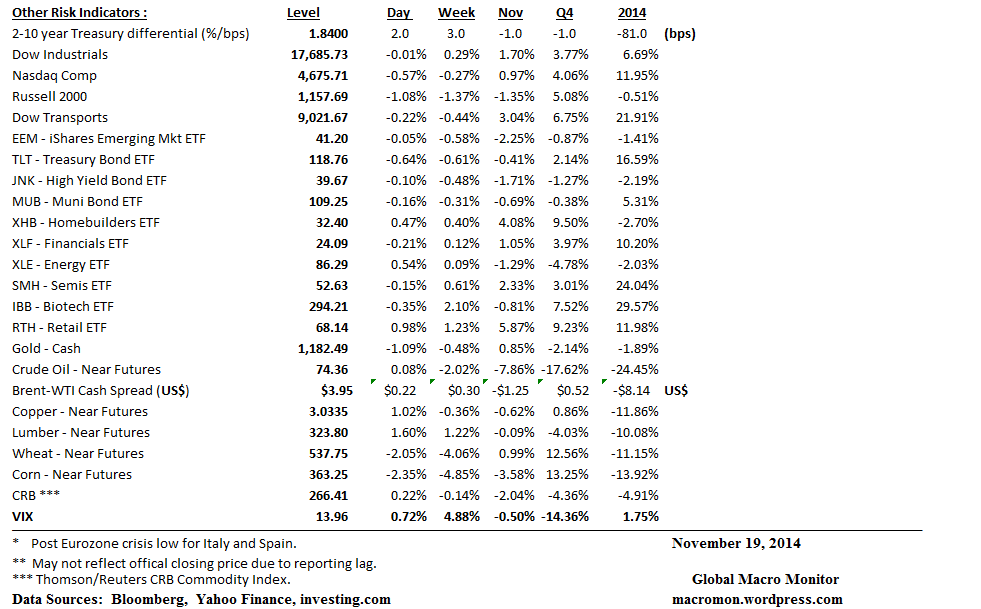



 Global Macro Monitor
