
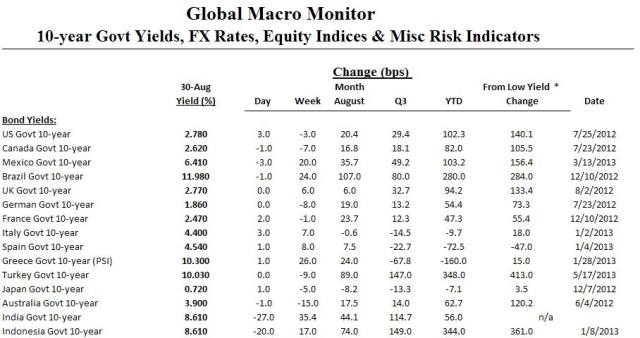
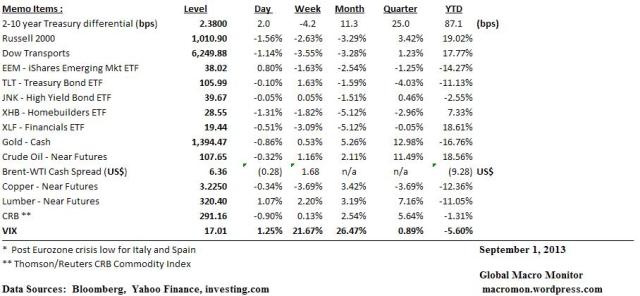
The U.S. equity market couldn’t hold the open and India continues to melt.
Click on table to enlarge and for better resolution
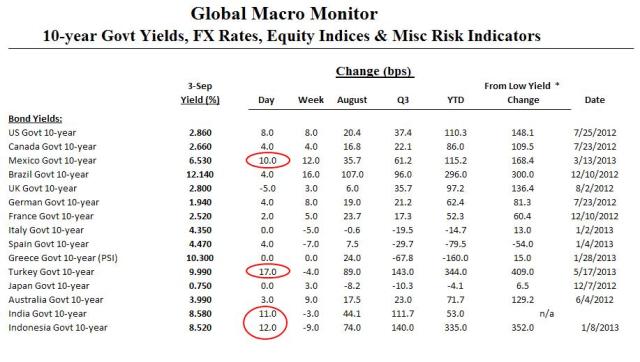

 (click here if table is not observable)
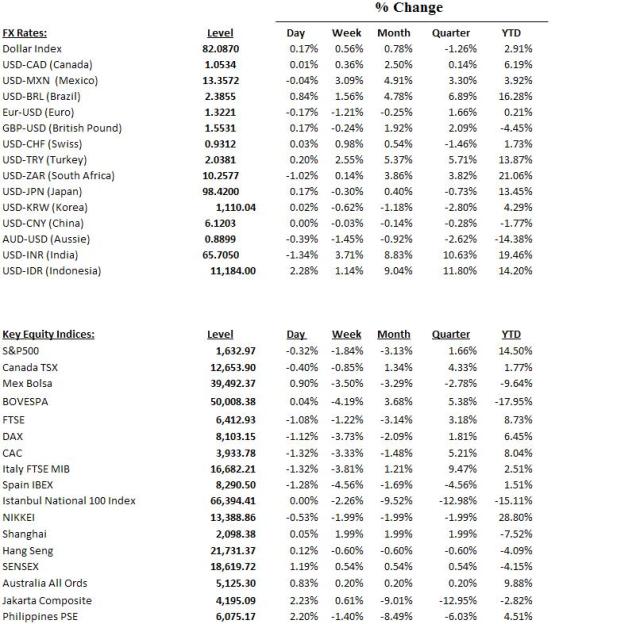
The U.S. equity market couldn’t hold the open and India continues to melt.
Click on table to enlarge and for better resolution
(click here if table is not observable)


(click here if charts are unobservable)
The FT video below does good job explaining China’s continued addiction to debt. This is why we remain bears on China even as the recovery in the country’s manufacturing sector accelerates (apparently).
Monetary policy and the financial sector are still in the firm grip of the Party and dominated by China’s big four banks even though nontraditional sources of financing are on the rise.
Imagine President Obama, for example, having the power to order Citibank, Bank of America, and JP Morgan to, say, triple lending to CalTrans or Toll Brothers funded by deposits from savers at rates well below inflation. Then imagine the consequence – a gross misallocation of resources resulting in an economic and financial bust.
Foreign banks remain shut out of any meaningful market share, owning only about 2 percent of total domestic financial assets the last we looked. Note, BofA sold its stake in the China Construction Bank (CCB) over the weekend. The Wall Street Journal reports,
HONG KONG—Bank of America Corp. BAC +0.99% is selling its entire remaining stake in China Construction Bank Corp. 0939.HK +1.89% for up to US$1.5 billion, marking the end of an era for the Wall Street banks that piled into major Chinese banks in the last decade in hopes of having an edge in China.
Bank of America is the last of the major American banks that are selling out of the big Chinese banks they bought into before those banks went public in Hong Kong, a time when China, and these lenders, were booming. These banks, most recently Goldman Sachs Group Inc., GS +1.66% have been disposing of their Chinese bank stakes since the financial crisis five years ago, raising billions of dollars in the process, while reducing the effects on their balance sheets from financial holdings.
Finally, we leave you with a couple of informative graphics from the IMF’s Article IV report released in July.

(click here if video is not observable)
Strong PMIs out of China and Europe drove equities higher. Brazil’s BOVESPA ramped over 3 percent with the manufacturing PMI, though still contracting, rising to 49.4 from 48.5 in July. S&P500 futures were up about one percent in GLOBEX. Nothing really resolved with Syria x/ more uncertainty. Stronger global PMIs and a rebound in the emerging markets makes Fed tapering a done deal, in our opinion. Tough for us to get all lathered up over U.S. equities on this bounce as it looks like fast money got caught leaning the wrong way over the long weekend.
We’re watching the quality of this bounce and don’t expect it to hold. The S&P500 is likely, at the very least, to test its 200-day moving average at 1560-ish sometime in early September, in our opinion. Stay tuned.
Click on table to enlarge and for better resolution


(click here if table is not observable)
(click here if video is not observable)
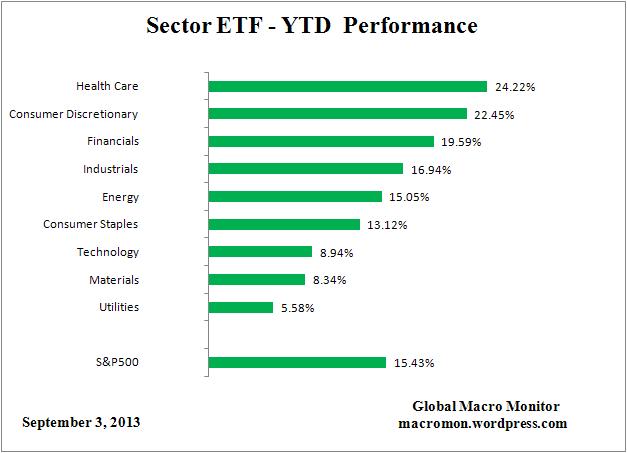
The U.S. sector ETFs head into September with relatively weak technical positions. Nevertheless, all but the Utes are above their 200-day moving average (SMA), which are now the levels to watch, in our opinion.


 (click here if charts are not observable)
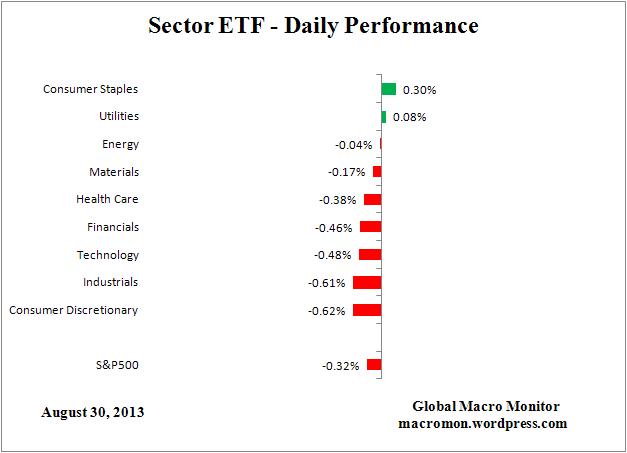
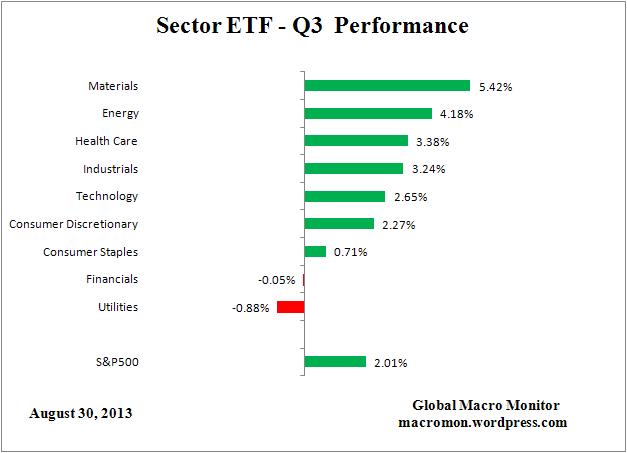
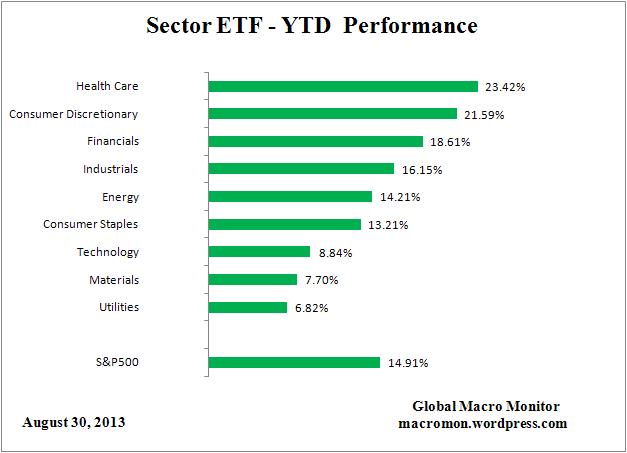 (click here if charts are not observable)
The Global Macro Monitor has been down for the summer (since early May). We hope to ramp up the posts in the coming months as markets move into, in our opinion, a very interesting and critical seasonal period.
We blog because it makes us more disciplined traders and investors and hope that sharing our work adds value to those interested in the global economy and financial markets. Our opinions are just that and shouldn’t be taken as investment advice.
Thanks for staying with us.
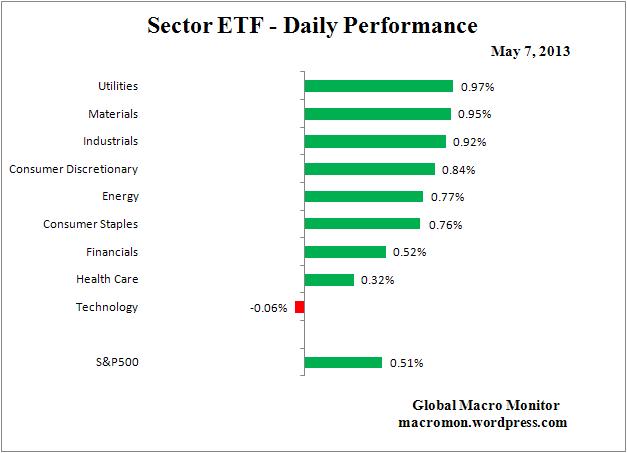
(click here if chart is not observable)

 Global Macro Monitor