

Tommy Lasorda passed away last week, and I can’t let him go without sharing two of my favorite memories of the man.
In earlier posts, I’ve written about my Walter Mitty childhood in L.A., working as a kid for the Los Angeles Dodgers. Tommy was the Dodgers’ third-base coach, and later their manager, during my years with one of baseball’s most storied franchises. He was loud, profane, hilarious, and larger than life, and underneath all the noise he was a master of his craft. That mastery eventually took him to Cooperstown.
Tommy was always ready, willing, and able to put on a show in The Show.
1) The Benedict Arnold Show
I had just left the Dodgers in the middle of the summer of my gap year, back when almost nobody took one. USC wasn’t exactly kicking down my door with a baseball scholarship, and no one was throwing a million-dollar bonus at me to turn pro.
Back then, a big signing bonus for a top draft pick was around $100,000, roughly half a million in today’s dollars. For context, one of my daughter’s classmates went third overall in the 2019 draft and signed with the Chicago White Sox for $7.2 million. Inflation, or a massive repricing of baseball talent? You decide. (I know where I’d put my money.)
So why not take a year off and hang with the Dodgers? I caught Tommy John in the bullpen during his comeback season, threw batting practice, and handled my other duties around the clubhouse. It was living in The Show without the pressure of playing in The Show. A teenager living the life most kids only dream about.
The Demise Of MLB’s Reserve Clause
The prior offseason, Andy Messersmith, the great Dodger pitcher who was like a big brother to me, won his landmark arbitration case against baseball’s reserve clause. The ruling shattered the monopsony the owners had held over players for nearly a century.
“a well-paid slave is, nonetheless, a slave.” – Curt Flood
Freed from what some called a form of slavery, players could finally sell their services on the open market to the highest bidder.
It was the dawn of the big-money, multi-year contract, and baseball has never been the same.
Ted Turner, the young, swashbuckling media mogul who had just bought the Atlanta Braves, pounced on Messersmith and signed him to a multi-year, multi-million-dollar deal. That same offseason, the Dodgers and Braves swung a blockbuster trade that sent Dusty Baker west and shipped several of my close friends and adopted big brothers to Atlanta, including Jimmy Wynn, Lee Lacy, Tom Paciorek, and Jerry Royster.
When Andy and the boys heard I’d left the Dodgers, they got on the phone and talked me into joining the Braves for the rest of the season. The plan was to meet them in San Diego on their West Coast swing.
When we rolled into Dodger Stadium for a three-game series, it felt strange pulling on a Braves uniform in the visitors’ clubhouse of my old home. My good buddy Possum, the Dodger batboy (and yes, he still looks and drinks like one), met me as I came out of the visitors’ dugout.
We were walking across the field together when Tommy Lasorda came flying out of the Dodger dugout at full speed, arms flailing, bellowing at the top of his lungs for all of Chavez Ravine to hear:
“Benedict Arnold! Benedict Arnold! You are a f__king Benedict Arnold! Get the ____ out of our house!”
It was hilarious. Players on both teams doubled over laughing, yours truly included. Tommy had delivered another Oscar-worthy performance.
I knew it was his schtick. Tommy putting on his show in The Show.
2) Watching Tommy Dress Down an Arrogant Rookie
A couple of years earlier, the Dodgers called up a young, promising left-handed hitter in midseason. He had some early success and quickly became a fan favorite. One night I was working as the batboy while he was in the on-deck circle, and manager Walter Alston called him back to the dugout for a pinch hitter.
Furious, the rookie made a cardinal mistake. He showed up his skipper by slamming his bat and helmet down in the on-deck circle in front of 50,000 fans. Alston, a man who rarely showed emotion, didn’t react.
When the inning ended, I ran up to the clubhouse to grab something from my locker. The rook was there changing clothes. Just him and me, alone.
Then the door flew open and Tommy Lasorda stormed in, screaming:
“You mother f__ker, don’t you ever show up your manager like that again. Never, ever! You ain’t s__t. You couldn’t hit your way out of your underwear, much less hit big-league pitching. You sock sucker. If you ever do that again, I will rip your head off and crap down your throat!”
‘Nuff said. I think the rookie got the message and learned to respect his managers.
I never heard a dressing-down like that again until my first job on Wall Street, working for the Human Piranha of Michael Lewis’s first book, Liar’s Poker.
The Piranha was the best boss I ever had. I took my share of shelling from his tirades, but they never really bothered me. Lasorda had already taught me that it was all part of the act. Like Tommy, the Piranha practiced his craft at the highest level, and he taught me how to trade.
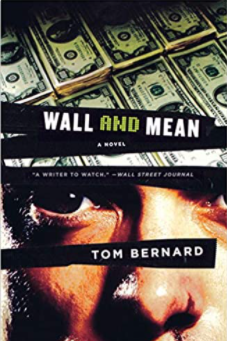
He even wrote a novel, Wall and Mean, based on the bond trading desk I ran for him.
The 1988 World Champions
Tommy knew how to develop young players into major league stars. He managed Garvey, Lopes, Russell, and Cey as minor leaguers and through much of their big-league careers. That group became the longest-running infield in baseball history and one of the most famous of all time.
What I saw in that clubhouse was Tommy beating the false arrogance out of a young player, the kind of arrogance that has ended many a promising career. It wasn’t personal. He did it to make the kid better.
Tommy could also do the opposite. He could take a player of middling talent and fill him with belief, convincing a career .250 hitter he was the second coming of Babe Ruth.
Nowhere was that gift more obvious than in 1988. Sure, that team had Kirk Gibson and Orel Hershiser, but on paper there was no way in hell they should have won the World Series. They were heavy underdogs to the Mets in the NLCS and to the mighty Oakland A’s in the Series. Lasorda convinced them they were the 1927 Yankees, and they played like it.
Tommy used to say he bled Dodger blue and that when he died he’d go to the Big Dodger in the Sky. I hope they had a seat waiting for him in the dugout.
Rest in peace, Tommy. I’m honored to have known you. Baseball, and the world, will miss you.
Skip to 1:31 to see and hear the real Tommy (warning: strong language)



Fantastic write up! And videos too. Thanks for telling these wonderful stories. Having grown up in Downey and Bellflower, a Catholic pony league player in primary (grammar) school and a life long Dodger fan, I always loved attending Dodger games. My first when my Dad took me to the LA colosseum when I was just a little kid, when Sandy Koufax pitched his no hitter. I grew up with a transistor radio stuck in my ear. either listening to Vin Scully or Rock and Roll on KRLA and KFWB. Of course, I attended many games at Dodger Stadium in Chavez Ravine as a teen and over the years going forward. Later I worked in the process industries as an instrument engineer, and a salesman used to take us to the games on occasion—great seats on the field, between home plate and 3rd base. Anyways your stories, hearing the player names again, brings back the memories of good times back in the day. I always thought a great deal of Tommy Lasorda, who though I never met him seemed like a great guy. Bud Furillo and his family lived across the street from my best friend in high school, and so I grew up with the Furillo clan and remain good friends to this day. Anything Dodgers is A-okay by. me.
-MG
👍👍