
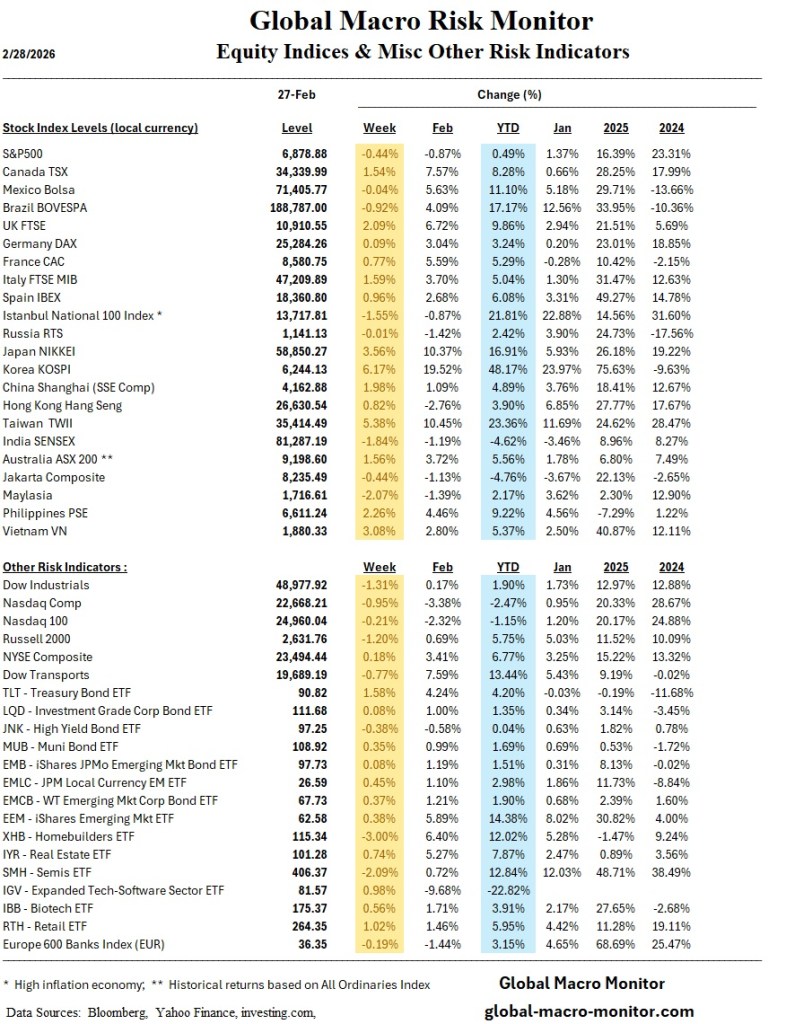
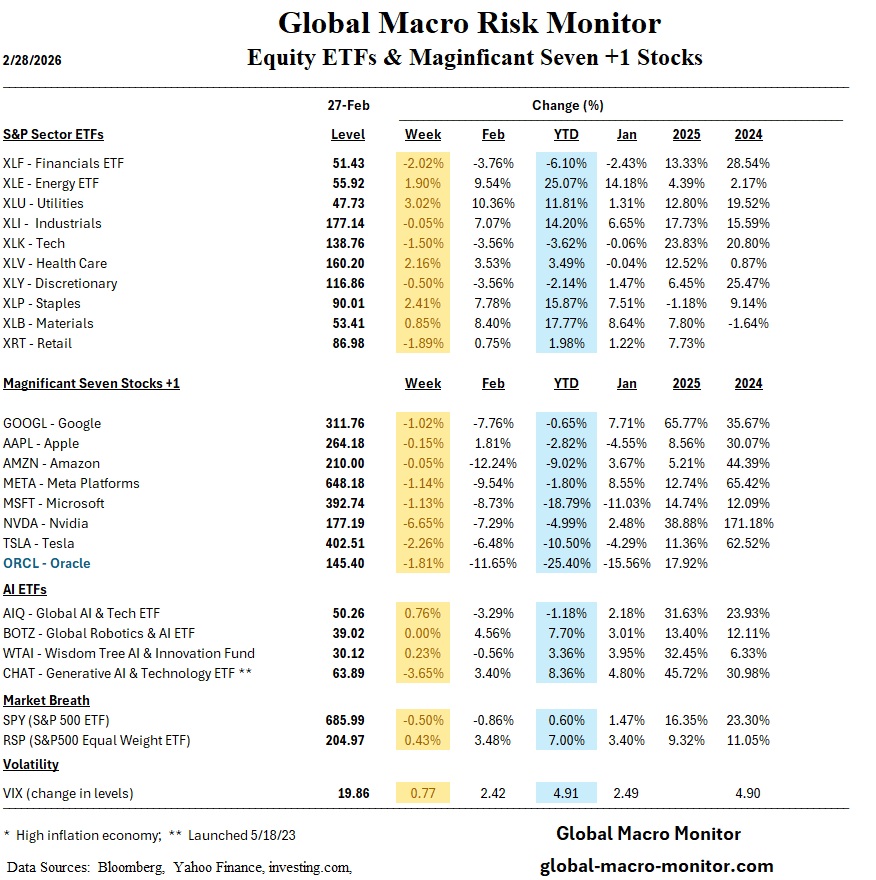
Global markets are no longer simply trending lower, they are fracturing under policy uncertainty and headline-driven volatility. The U.S. market has suffered its fifth consecutive weekly decline in major U.S. indices, with the S&P 500 down ~7% YTD and the Nasdaq entering correction territory. Yet what stands out is not the direction, but the erratic path: sharp rallies repeatedly reversed by conflicting geopolitical signals.
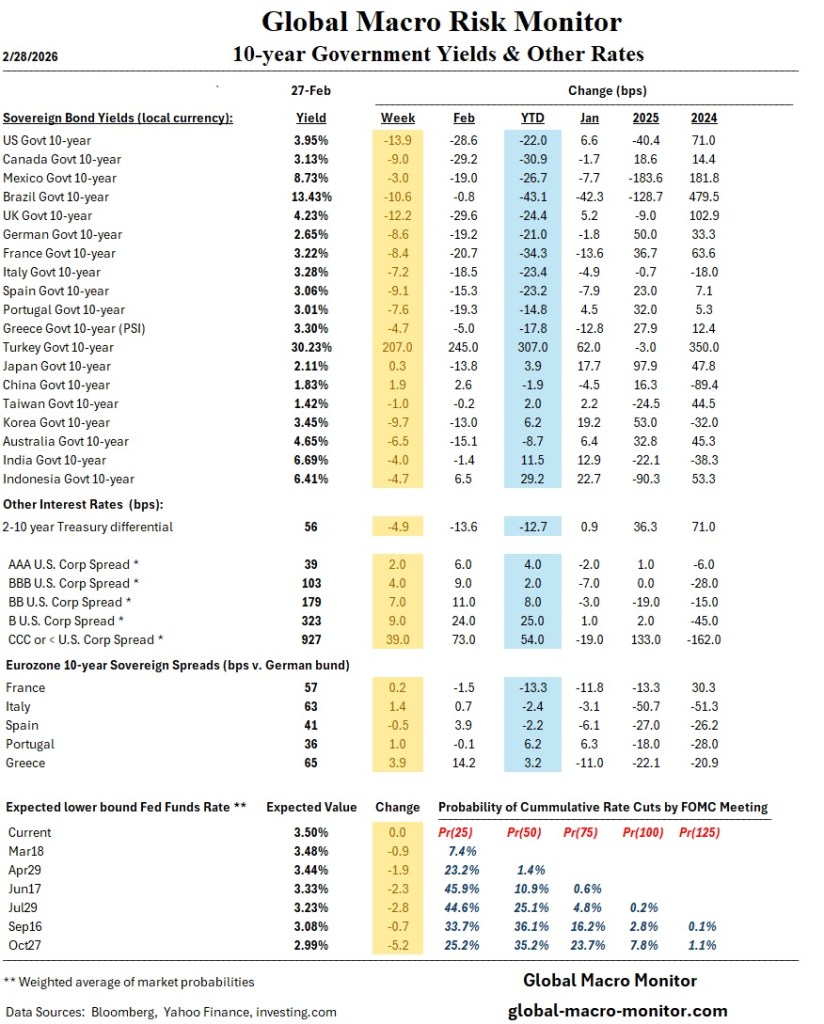
Bond markets reinforce this instability. A global rout has pushed yields sharply higher (U.S. +50 bps, UK +70 bps, Italy +80 bps), while rate expectations have flipped from cuts to a non-trivial rate hikes. This is a classic late-cycle stress signal: tightening financial conditions colliding with weakening growth.
The VIX above 30 confirms that volatility is no longer episode, it is systemic.
Trump as Market Catalyst-in-Chief
Markets are now trading less on fundamentals and more on Trump’s signaling function. His pattern of announcing delays, pauses, or escalations in the Iran conflict has created a reflexive loop:
- Monday rallies on perceived de-escalation
- Midweek reversals as credibility fades
- Late-week selloffs as uncertainty dominates
This is not random. His messaging appears intentionally calibrated to arrest market declines, particularly given his long-standing tendency to equate equity performance with political success.
However, this strategy is backfiring. Markets are now delivering a “blunt rebuke,” with investors increasingly doubting his ability to resolve the conflict . The result: policy communication is losing its marginal impact, requiring ever more dramatic interventions to stabilize sentiment.
Insider Trading Concerns: Structural Erosion of Trust
There is a far more troubling dynamic: systematic suspicious trading preceding major announcements.
Key examples include:
- A $580 million spike in oil futures just minutes before Trump announced a strike delay
- Hundreds of predictive bets correctly anticipating military action
- Prior equity surges ahead of tariff pauses
While direct culpability is unproven, the pattern is persistent and statistically improbable. More critically, institutional safeguards have weakened: enforcement actions have been reduced, and regulatory oversight diluted .
For markets, perception is reality. The implication is profound: price discovery is increasingly viewed as compromised.
Personal Trading Impact: A Case Study in Policy Risk
Last Monday provided a textbook example of this dysfunction.
Positioned short into what appeared to be a technically confirmed breakdown, I was caught offside by a Trump tweet signaling a delay in Iranian strikes. The market ripped 105 S&P points beyond my stop, resulting in a $4,000 loss.
This was not a failure of analysis—it was a failure of predictability.
The consequence has been behavioral:
- Reduced position sizing
- Faster stop discipline
- Reluctance to re-enter trades
Ironically, this caution led to missed profits later in the week, as the market resumed its downward trajectory. This is the hidden cost of policy-driven volatility: it suppresses risk-taking even when setups are correct.
War on Short Sellers: Liquidity Implications
Trump’s increasingly hostile rhetoric toward short sellers is another destabilizing force. By framing them as adversarial actors, policy risk is being selectively applied to one side of the market.
This has three implications:
- Reduced participation from systematic and discretionary short sellers
- Lower liquidity during rallies
- A structurally weaker bid
Markets require shorts—not just for price discovery, but for buy-side support during declines (short covering). If this cohort withdraws, rallies become shallower and less durable.
The logical outcome:
Expect weak, at, best low-conviction rallies in the near term.
Regional Performance
United States
- Five consecutive weekly losses; sentiment deteriorating
- PMI data weakening; inflation pressures rising
- Consumer sentiment at multi-month lows
Europe
- STOXX 600 modestly positive, masking underlying fragility
- Growth forecasts downgraded (OECD: 0.8%)
- ECB signaling potential hikes despite weak demand
Asia
- China equities declining amid oil shock
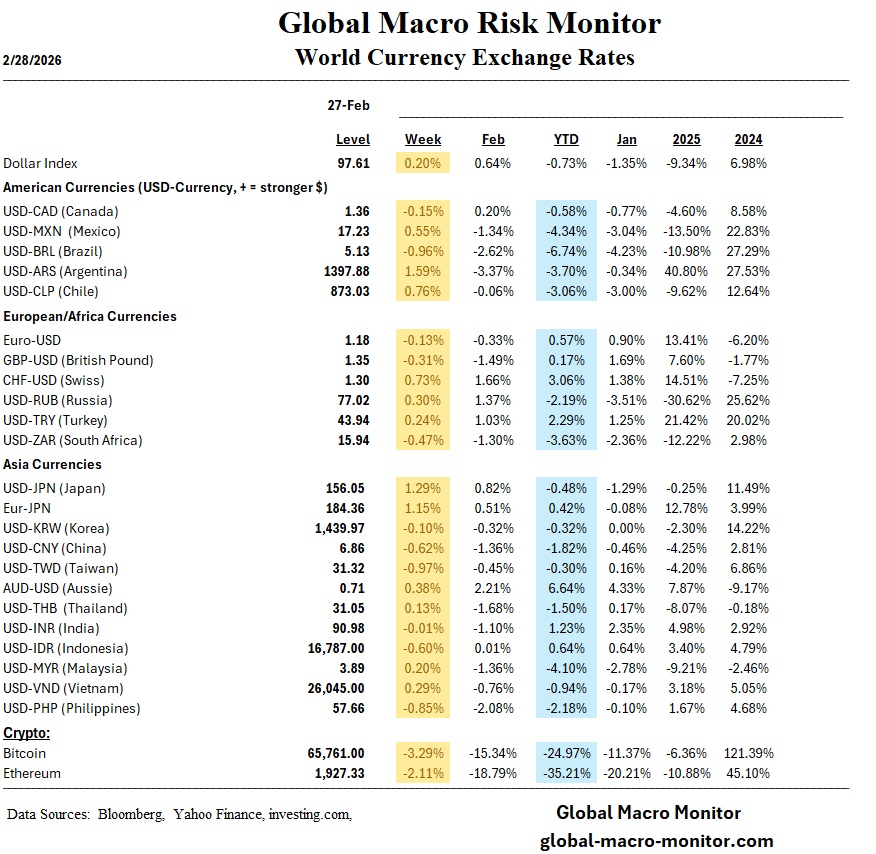
- Japan facing currency instability and rising yields
- Policy intervention increasing across energy-importing nations
Emerging Markets & LatAm
- Mexico surprising with rate cuts despite inflation
- Asia broadly in “crisis management mode” due to energy shock
Structural Outperformance (Prototype Insight)
Asia—particularly Korea and Taiwan—remains a structural outperformer, driven by AI capital flows and global manufacturing dominance . However, even these markets are not immune to global liquidity tightening.
Week Ahead: Fragility with Event-Driven Upside Risk
The market enters next week in a technically oversold but fundamentally unstable position.
Key Catalysts:
- U.S. Nonfarm Payrolls (delayed reaction due to holiday)
- ISM data (growth vs. inflation tension)
- Oil price trajectory
- Iran conflict headlines (primary driver)
Base Case:
- Continued volatility with downward bias
- Defensive sectors outperform
- High-beta and tech remain under pressure
Tail Risk (Upside):
A credible ceasefire announcement could trigger a violent short-covering rally, given oversold conditions and elevated cash levels.
Bottom Line
Markets are no longer governed by traditional macro inputs—they are being distorted by political signaling, eroding institutional trust, and asymmetric policy risk.
- Volatility is structurally higher
- Liquidity is deteriorating
- Confidence is weakening
In this environment, the correct strategy is not prediction—but survival and optionality.
Or put differently: This is no longer a trader’s market. It’s a headline battlefield.
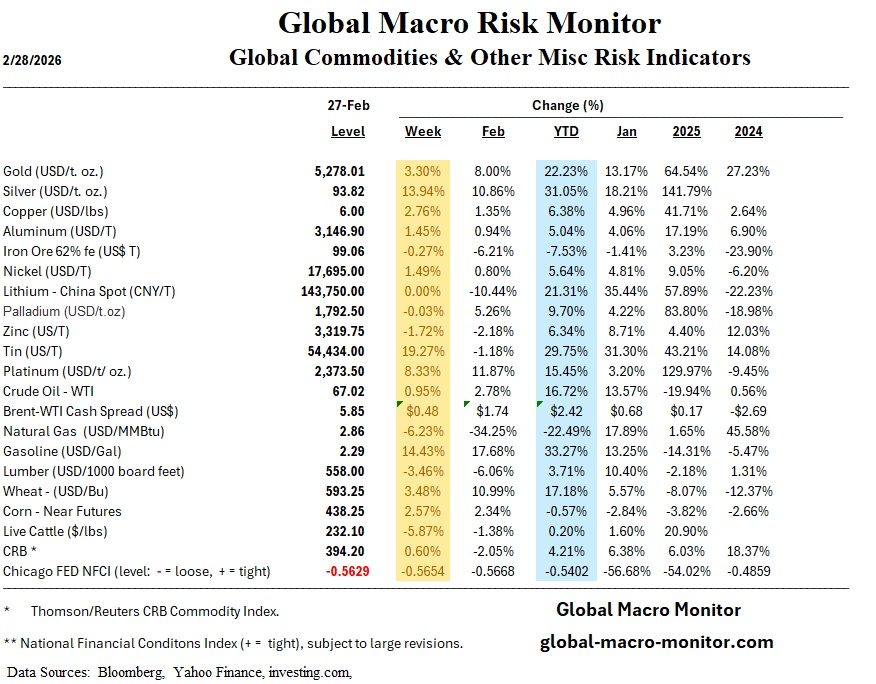

 Global Macro Monitor