The BLS out with the employment report this morning,
Total nonfarm payroll employment increased by 201,000 in August, and the unemployment rate was unchanged at 3.9 percent, the U.S. Bureau of Labor Statistics reported today. Job gains occurred in professional and business services, health care, wholesale trade, transportation and warehousing, and mining. – BLS
Historically average employment growth coupled with an acceleration in average hourly earnings.
Nevertheless, job growth was impressive given the tightening constraint on labor supply, which is starting to show up in higher nominal wage growth.
Ideally, wages grow based on productivity gains and not supply shortages, which are inflationary in nature. The real average hourly earnings growth was pretty much about flat, although relative earnings in some sectors, such as construction, are accelerating. We expect inflation to accelerate x/ a major financial shock.
Political Implications
We have been tracking the Trump labor market relative to the Obama labor market for several months now. Though the economy is now growing at almost double the rate than during President Obama’s last six quarters in office, the gains are not being equitably distributed to labor. The size of the surplus labor pool is also shrinking, forcing potential employers to begin to raise wages and pass it on to consumers, creating generalized inflation, or, if possible, choose to automate.
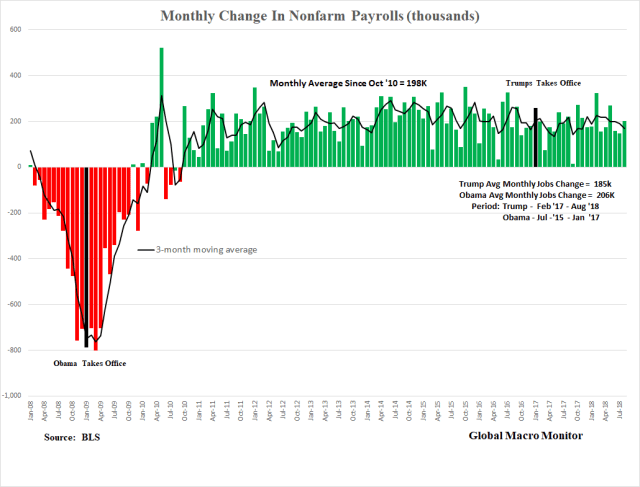
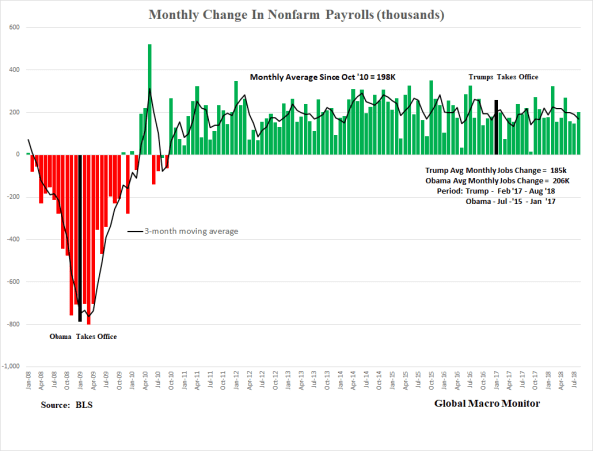
The chart above and following table illustrate our point.

During the last 19 months of the Obama administration, the monthly change in nonfarm payrolls averaged 208k, totaling 3.96 million, versus 185k per month, or 3.58 million, during the first 19 payroll reports of the Trump Administration. There are three more employment reports before midterms and monthly nonfarm payroll gains will have to average 392k in order for the Trump jobs market to catch the Obama job increases, and that just ain’t gonna happen folks.
The latest 3-mo moving average of monthly job gains is now running at 168k versus 204k when President Obama’s left office at the end of January 2017.
The labor market is supply constrained and continued strong economic growth is going to translate into wage inflation, which will be passed on in general price increases.
The Trump administration deserves kudos for reviving manufacturing employment, but, surprisingly, wage growth in that sector is much lower under Trump. We suspect this has to do with relatively greater slack in the manufacturing labor market.
Retailgeddon
Also note the zero job growth in the retail since Trump took office. The new rust belt.

This could result in some political pressure on Republicans during the midterms as retail trade is the fourth largest employment sector among private employers. Also note that in many of the red states, WalMart is the largest private employer.
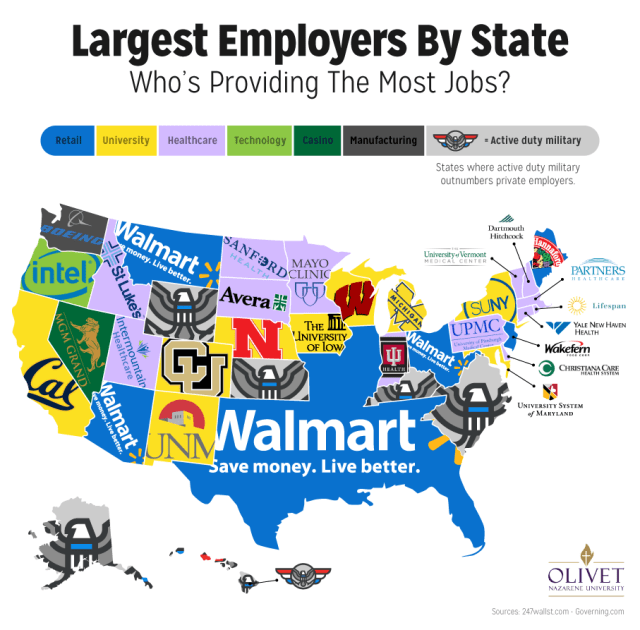
The retail subsector — warehouse clubs and supercenters — the category where WalMart lives, has experienced negative job growth under President Trump, losing 25k (last data point is July) jobs since January 2017. We suspect automation forced by competition from Amazon as the main jobs destoryer.
The retail average hourly earnings have grown at a compounded annual rate of 2.92 percent under President Trump.
Earnings Growth
The overall nominal average hourly earnings growth rate is running about 46 bps higher under Trump, but the relative purchasing power is offset by higher inflation. Real wages are slightly higher under Obama than Trump.
Nevertheless, we think the economic impact on the midterm vote is asymmetric from now until the election. That is only negative shocks will impact the vote on the margin.