
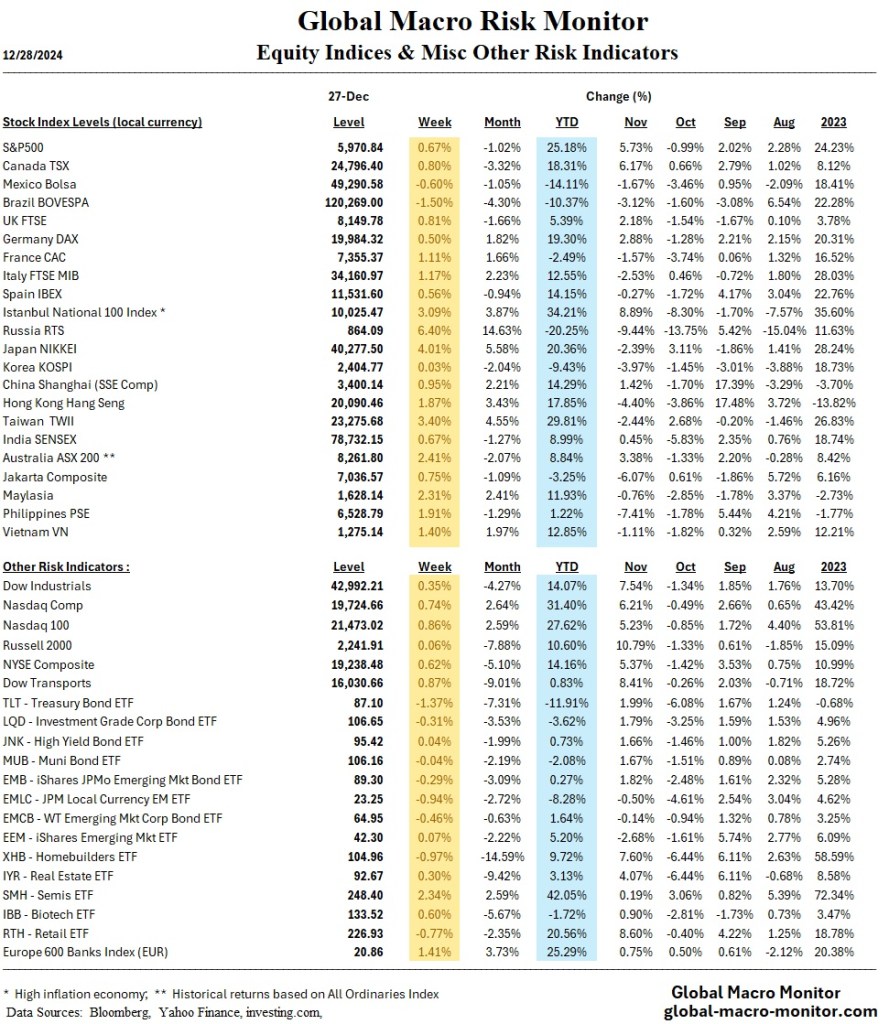
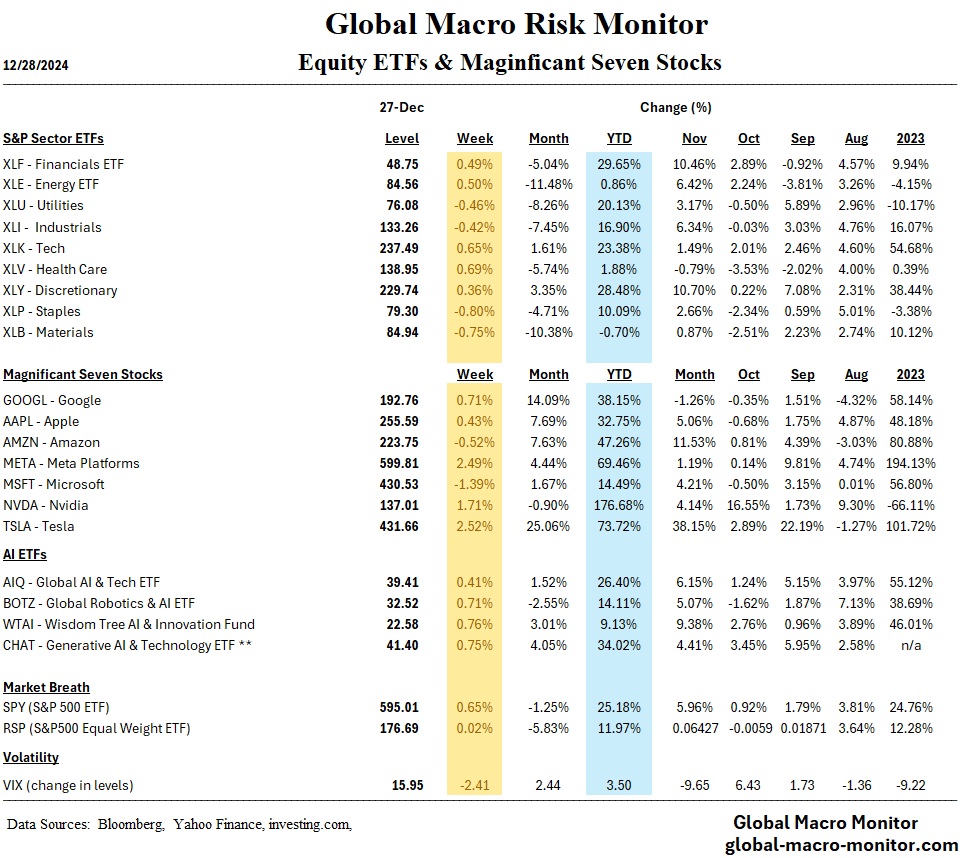
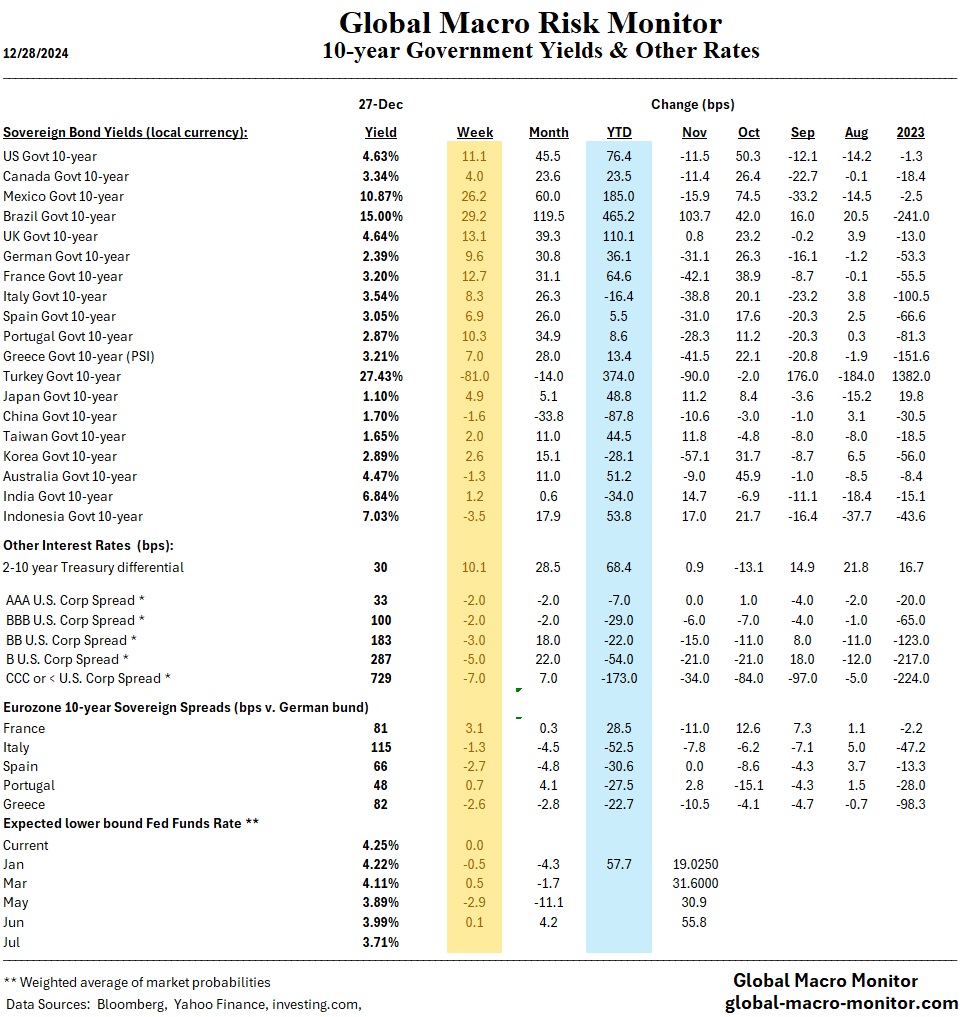
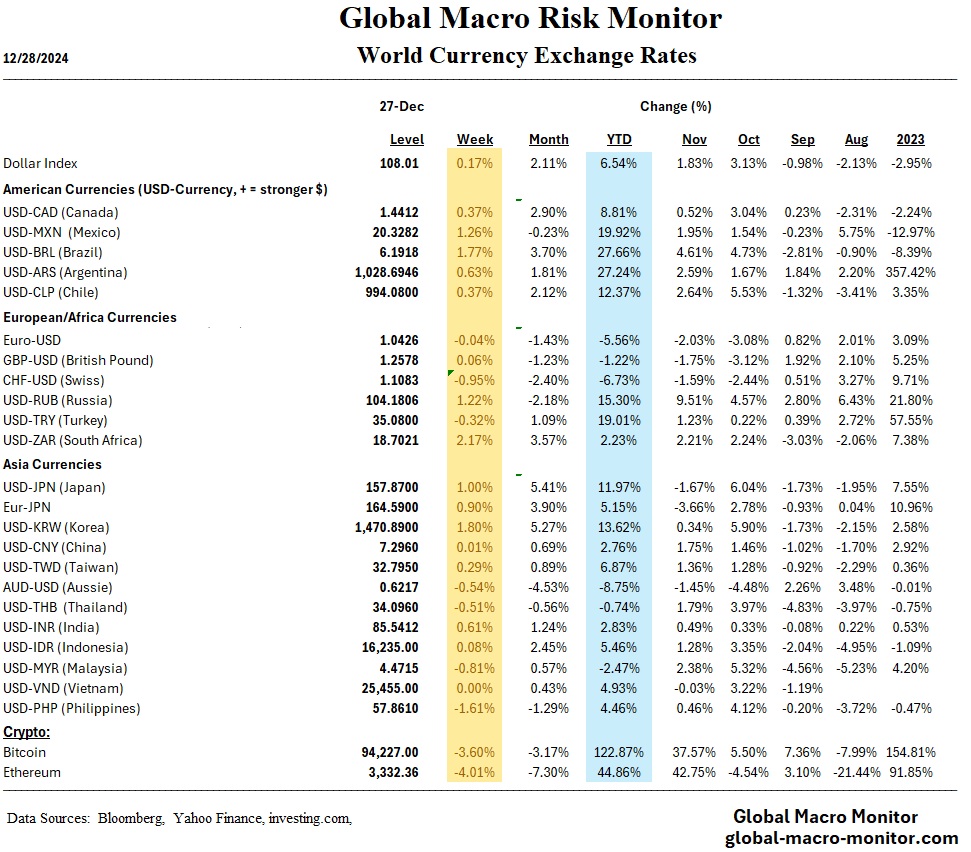
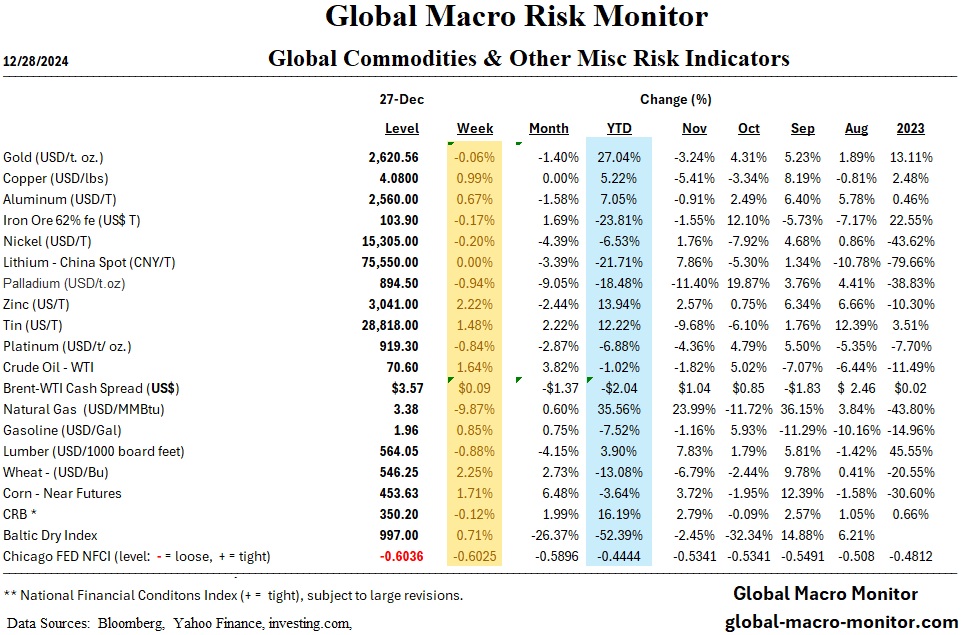
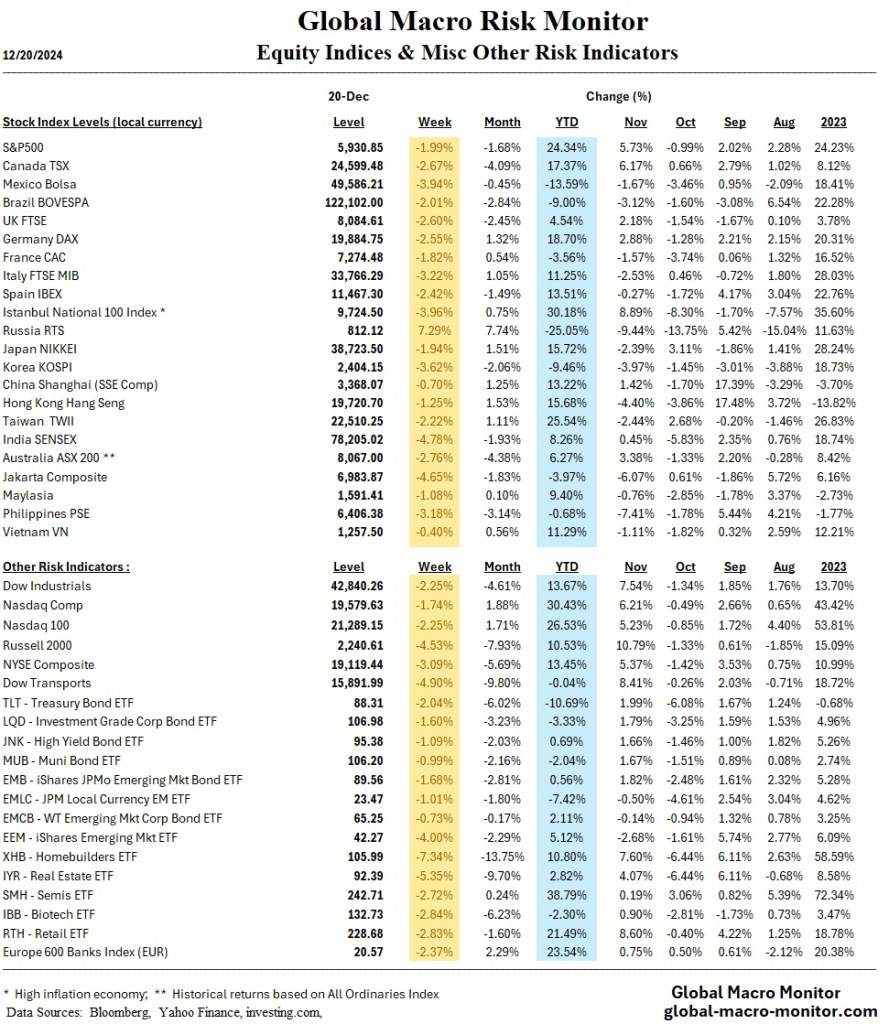
Everything down this past week x/ the dollar. Can’t recall seeing every global stock index (x/ Russia – special case) we track being negative on the week.
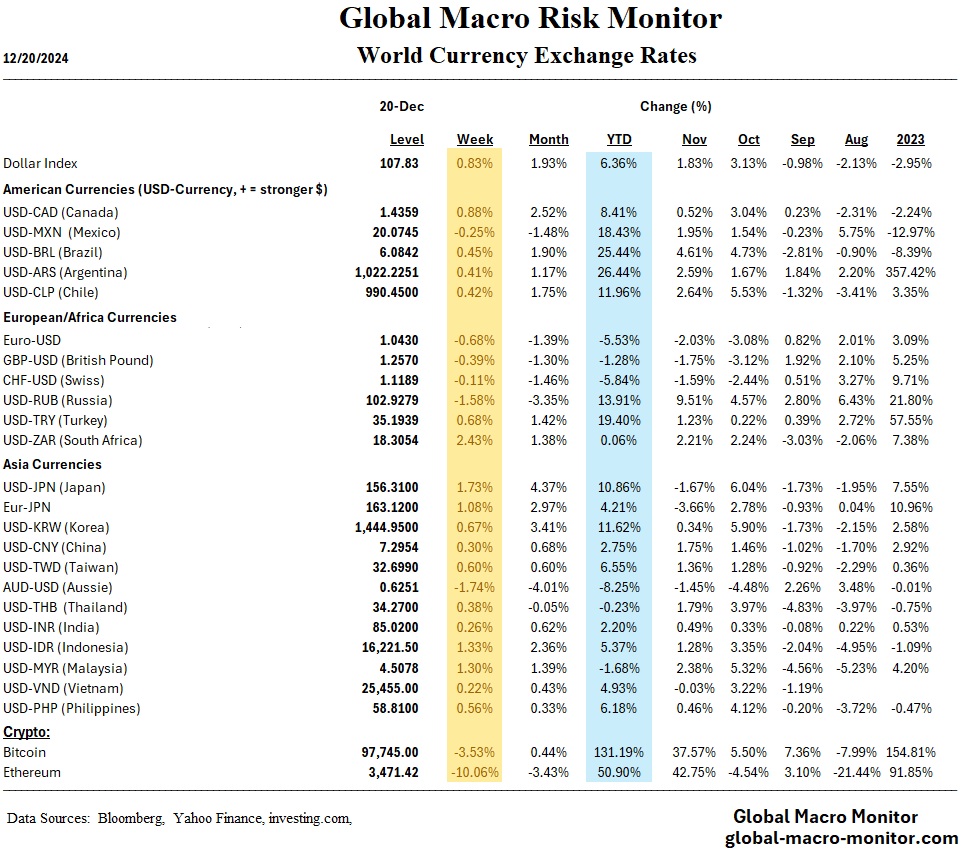
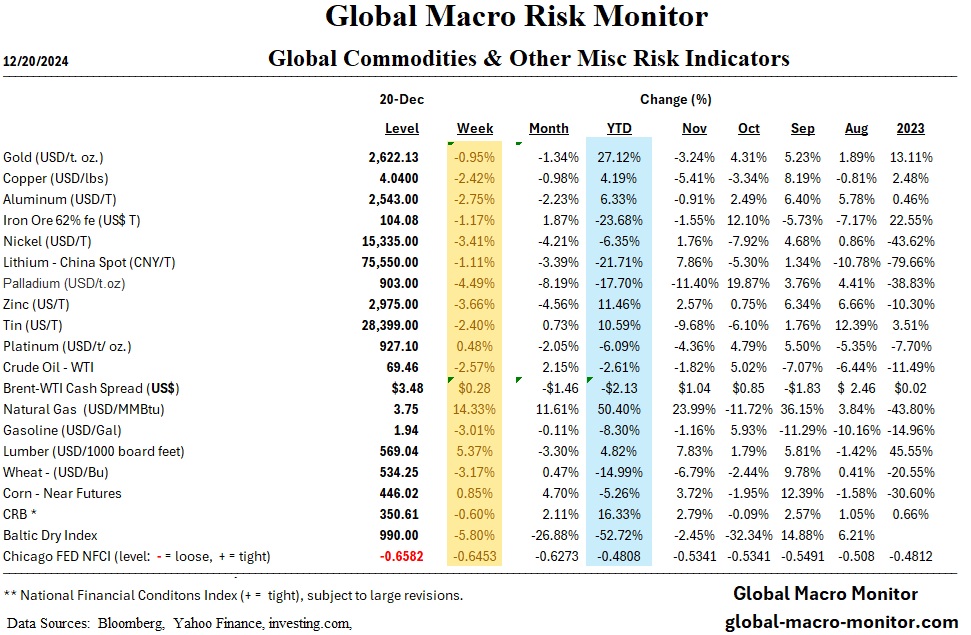
WTF! How did we get here? So much for faux Crypto scarcity.
Fartcoin, a flatulence-themed meme coin on the Solana blockchain, rose to a new all-time high price above $0.52 on Wednesday, topping the previous high set overnight with a market cap of over $520 million.
As of this writing, Fartcoin (FARTCOIN) has seen a 69% increase in the last 24 hours and a 154% gain in the last seven days.
Its price jump comes amid a broader gain in the AI sector, and particularly AI-related meme coins, a category that has climbed more than 20% in the last 24 hours. That’s vastly outpacing the overall crypto market gain of 7% during the span, beating top assets like Bitcoin and Ethereum in the process. – decrypt.co

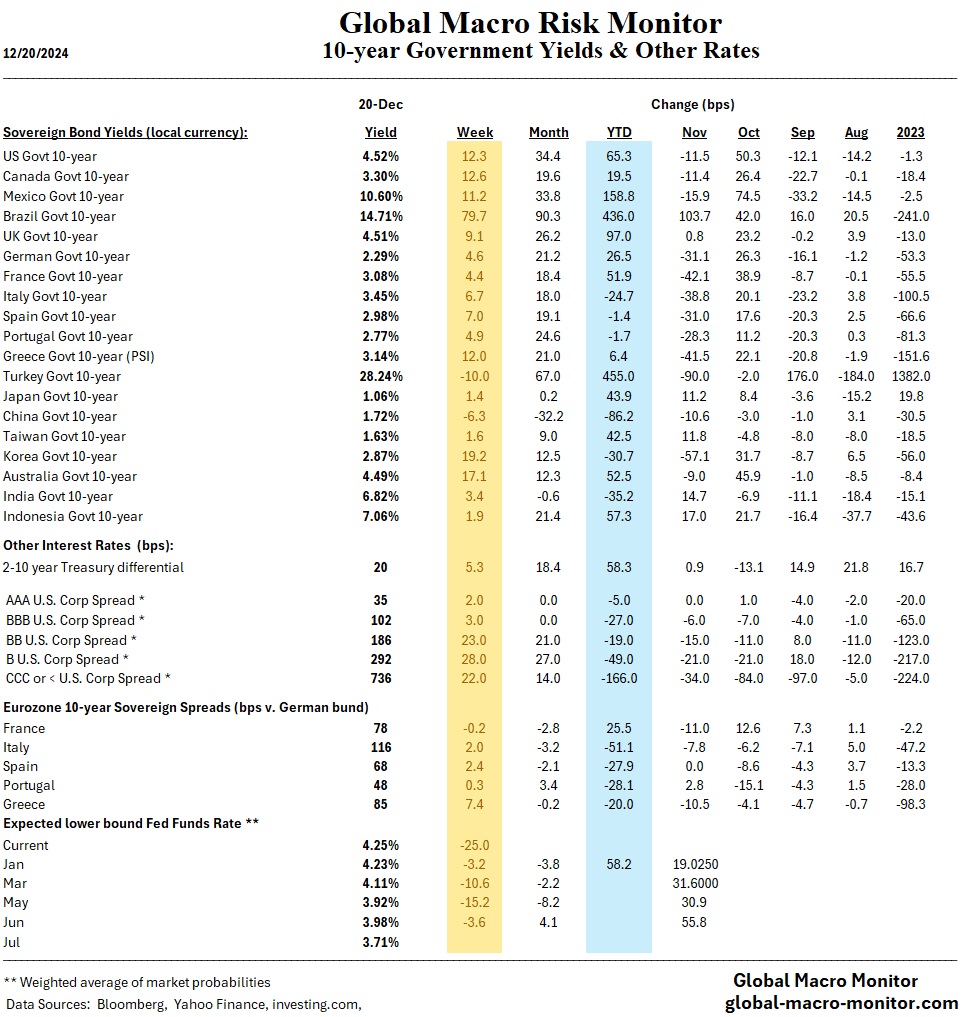
Global monetary policy remains mixed as central banks navigate inflationary pressures, growth slowdowns, and geopolitical shifts. The European Central Bank (ECB) and Swiss National Bank (SNB) eased rates amid economic concerns, while the U.S. Federal Reserve signals a hawkish rate cut next week. Inflation in the U.S. remains sticky, with November’s core CPI showing resilience, pushing Treasury yields higher. Asian markets reacted to China’s promise of fiscal stimulus, though details were scant. Japan will likely delay its next interest rate hike to January, while Turkey and Brazil diverge, with Turkey expected to ease and Brazil maintaining a hawkish stance.
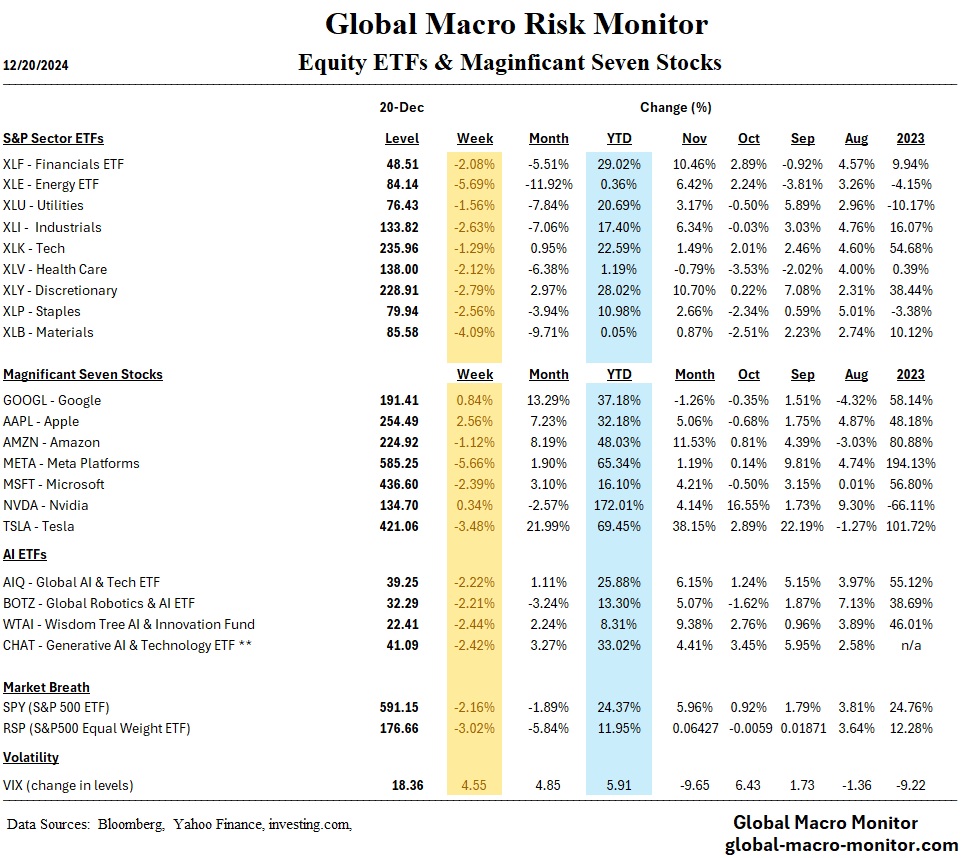
Equity markets showed mixed performance, with the Nasdaq reaching record highs due to tech sector strength, while most other indices dipped. Global bond markets sold off with the yield on the U.S. 10-year rising by over 20 bps for the week. Oil prices rebounded but face long-term bearish pressures. Central banks in emerging markets, including Latin America and Asia, are aligning easing cycles cautiously amid global headwinds.


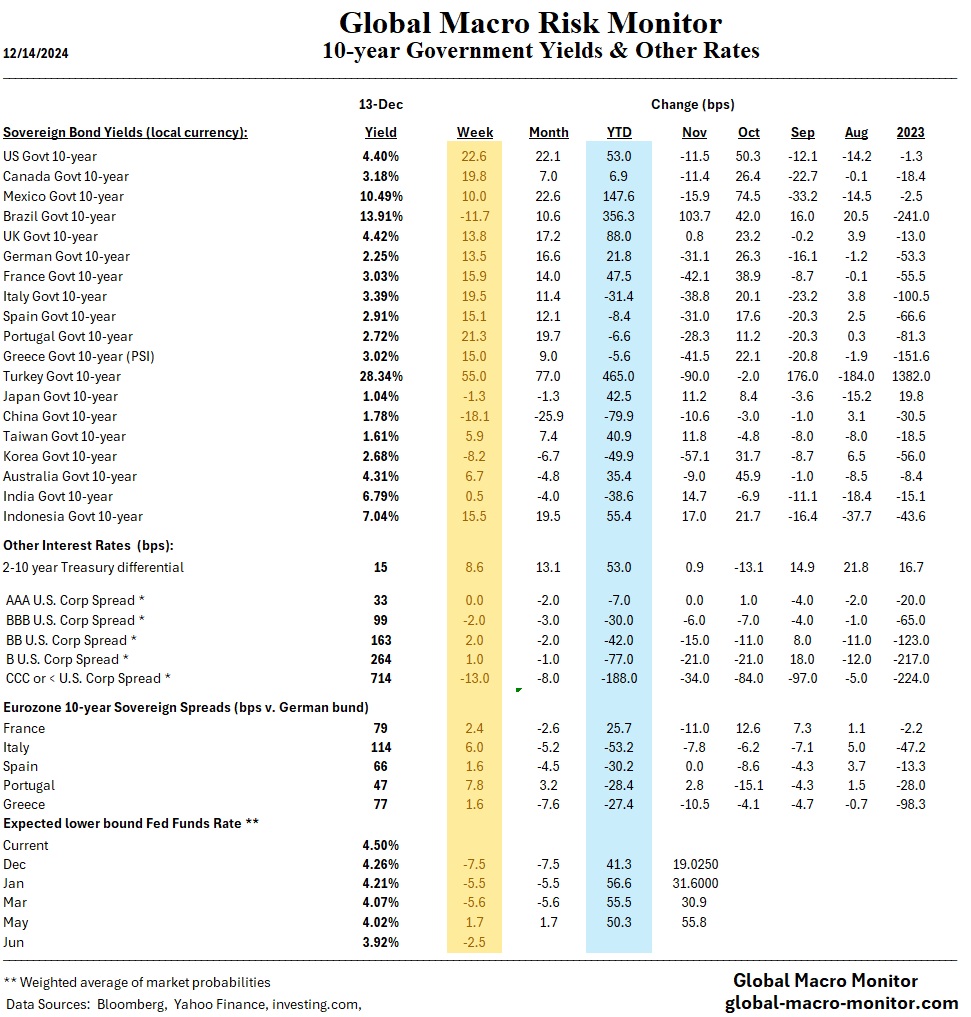


Check out our Global Risk Monitor’s currency table in the post below, which shows Mexico and Brazil’s currency down 20 percent plus against the dollar in 2024.
A surging US dollar and a “confluence of bad news” have sparked the biggest sell-off in emerging market currencies since the early stages of the Federal Reserve’s aggressive rate-raising campaign two years ago. A JPMorgan index of EM currencies has fallen more than 5 per cent over the past two-and-a-half months, putting it on course for its biggest quarterly decline since September 2022. The decline has been broad, with at least 23 currencies tracked by Bloomberg falling against the dollar this quarter. – FT
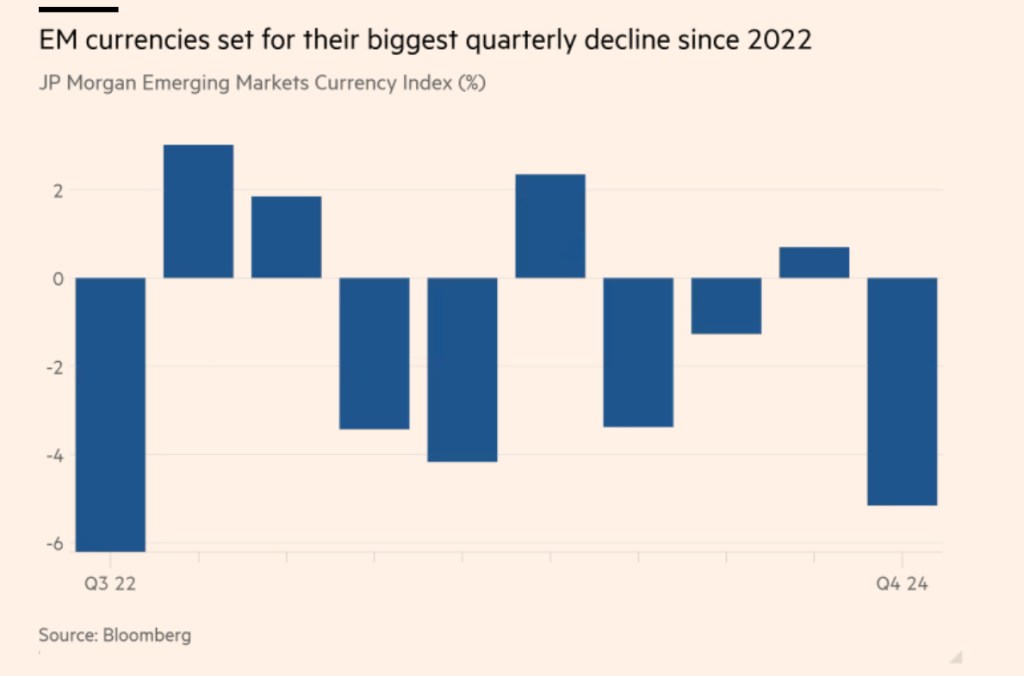
Chart Source: FT

 Global Macro Monitor