

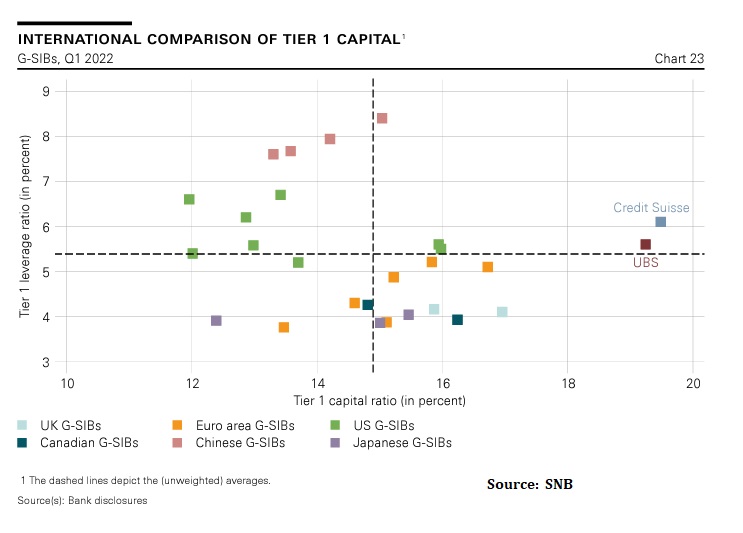
Stare, or should we say, “glare” at the following chart from the 2022 Swiss National Bank (SNB) Financial Stability Report, then you decide. The chart is an update from an earlier post, which included an outdated version.

The SNB also notes,
The Swiss banking sector is distinguished by its size, the dominance of a small number of banks and its international integration. At the end of 2021, total banking sector assets stood at roughly CHF 3,900 billion. This is equivalent to about 520% of Swiss GDP – a high ratio by international comparison (cf. chart 15). A look back over the last 25 years shows that this ratio climbed steadily to over 800% until the beginning of the global financial crisis of 2007/08. Then it fell sharply before rebounding a little recently (cf. chart 16). While both the pre-crisis rise and the post-crisis decline are exclusively attributable to foreign assets – especially those held by the two largest Swiss banks, Credit Suisse and UBS – the recent rebound has been driven by an increase in domestic assets. Against this backdrop, domestic employment in the Swiss banking sector has remained relatively stable. – SNB, Financial Stability Report
The data show that Europe is still ginormously overbanked and needs a further deepening of its capital markets.

Capital Ratios, Smack Those Ratios
Credit Swissie, where art thou? Always question, dig deeper, and be skeptical and contrarian, folks.
Largely Contained
Here’s to hoping, and our priors are, though we have not been following the situation closely, that the deposit instability of the past few weeks and the banking “mess is largely contained.” Wait, that sounds familiar.
Stay frosty, folks.
Excellent video on China’s demographic bomb. An outsized cerebral return on your 15-minute investment. Must view, folks.
Traders apply the term widow maker to financial investments that cause catastrophic losses or are risky enough to do so…Another famous example of a widow maker trade occurred in natural gas futures, which professional traders have long considered widow makers because of their price volatility. – Investopedia
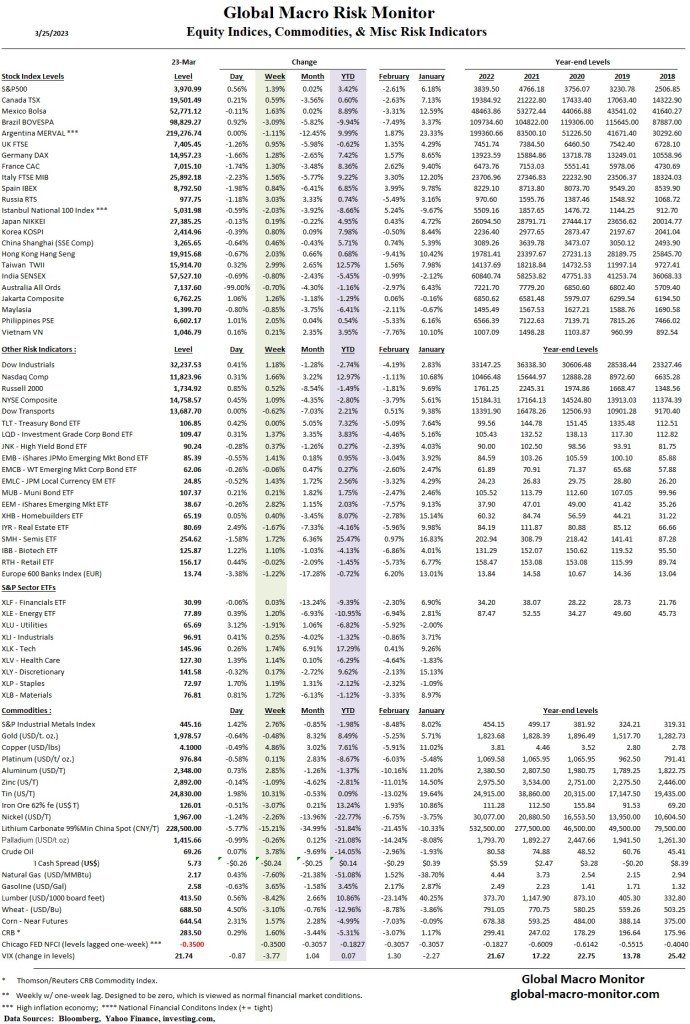
Jaysus (h/t CG), U.S. natural gas (Nattie) futures are down 76.7 percent from last August’s peak. Moreover, European Nattie prices are down 87 percent from the highs.
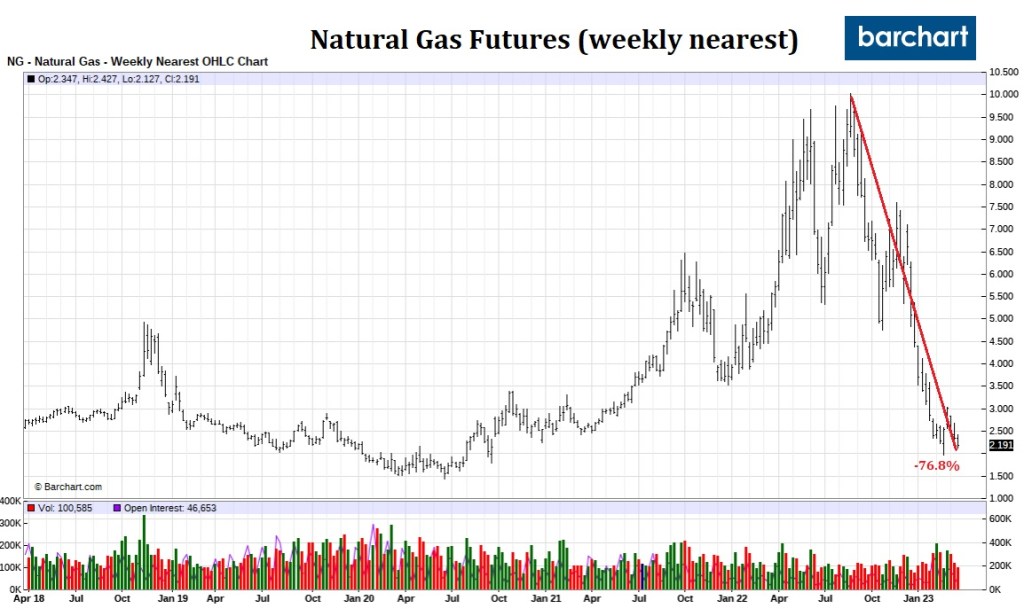
Remember the pundits predicting Europe was going the way of Pompei as the Russians cut off their natural gas supplies?
Europe may be about to experience its first winter without Russian gas, risking even higher prices, gas shortages, and a major recession. – IMF
Not so fast. Mother nature had different plans.

Warm weather and a sharp downward shift in demand have contributed to the fall in prices in Europe. At the same time, higher prices also sparked efficiency gains, lower consumption among businesses, and in some cases reduced industrial activity. In the United States, warmer weather also reduced the demand for natural gas. – World Bank
California Reamin’
It is said that everything is bigger in Texas. We will match and raise that and tell you everything is [more] expensive in California, including Nattie.
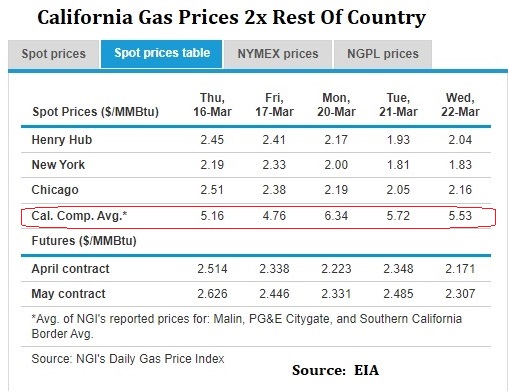
California imports 90 percent of its gas from other states and Canada, so it’s reliant on pipelines. But many of those pipelines were closed for unplanned maintenance in November and December, limiting supply flowing to California and other Western states… A pipeline explosion in 2021 had already reduced capacity to move gas from Texas and neighboring states, where much of California’s supply comes from.
Additionally, the past few months in California have been especially cold, creating an unusually high demand for heating…That came after a historically hot summer strained the state’s electricity grid, which is largely powered by natural gas… NY Times

Thank You, Natttie
We do owe Nattie a big debt of gratitude. The widowmaker, after almost causing us to have a widowmaker, forced our trading book into retirement. We now sleep better at GMM. Thank you, Nattie!
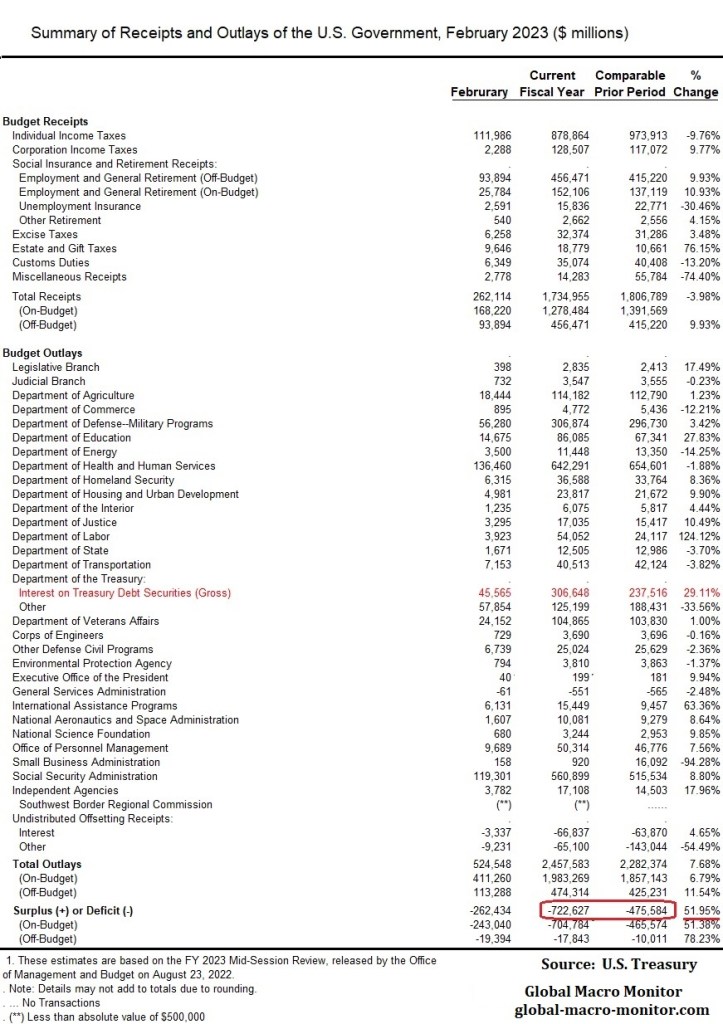
Here is a follow-up on last week’s chart with some excellent granular detail.
Interest payments on the national debt during the current fiscal year (October to February) are up 29 percent y/y, one of the fastest-growing expenditure components of the Federal budget (see table).
Revenues are down, especially individual income taxes, which may reflect the slowing economy. Theory dictates (ceteris paribus) that government tax revenues should be rising with inflation, however. Hmmm.
The fact income tax receipts are lower but self-employment tax revenues (1099 employees) are higher, coupled with what is happening with the employment data, can we hypothesize that high income earners are leaving the workforce (or getting fired) and starting their own businesses, such as consultants, for example? Or could it be just a timing issue?
The overall deficit is exploding, btw, up 50 percent.
If the current situation normalizes and Treasury securities lose their flight-to-quality bid, interest rates are going to spike faster than one of Elon’s rockets.

Here’s a repost to keep on your radar, given the expected fireworks on Tuesday. Getting long water canons and the National Guard.
The question is which side does the National Guard side with in the Red States? Will Biden have to federalize the Guard? Arkansas, redux?
On September 23 [1957] President Eisenhower issued Executive Order 10730, which put the Arkansas National Guard under federal authority, and sent 1,000 U.S. Army troops from the 101st Airborne Division to Little Rock, to maintain order as Central High School desegregated. – History Channel
Remember Sarah? Trump’s former press secretary, and now governor of Arkansas. Hmmm….
I used to go home every night as a young Wall Street trader worried about how instability on the “Arab Street” would adversely impact my long unhedged positions. If you have been a reader of the Global Macro Monitor over the past few years, you know we have been concerned about U.S. political stability.
All good traders worth their salt worry 24/7 about just about any and everything, which, by the way, was one of the first traits I would look for in hiring a new trader. A high propensity to worry about losing money but not afraid to pull the trigger.
POTUS Gone Wild
Now we are really getting worried
Rather than being a stabilizing force and a voice of reason and calm, the President of the United States delights in stoking the divisions and tensions in the country while spewing his conspiratorial garbage 24/7.
In the words of Anderson Cooper, “Man, we are in trouble.”
It’s totally outrageous and moves the country closer to a critical tipping point.
November To Remember
Here’s to hoping we can limp to a fair election in November. Let’s not let the Russian GRU and China’s MSS take a victory lap, America.
We owe it to the men and women in uniform making great sacrifices for us and what America has stood for, and, more importantly, to our children and grandchildren.
Fear The Street
It’s time for investors to fear the “American Street” or to, at the very least, keep it on your radar. If that is, markets are still a market and not a tool of the state, which is becoming increasingly debatable.
Stay tuned, folks

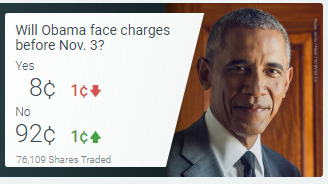
Source: PredictIt



 Global Macro Monitor