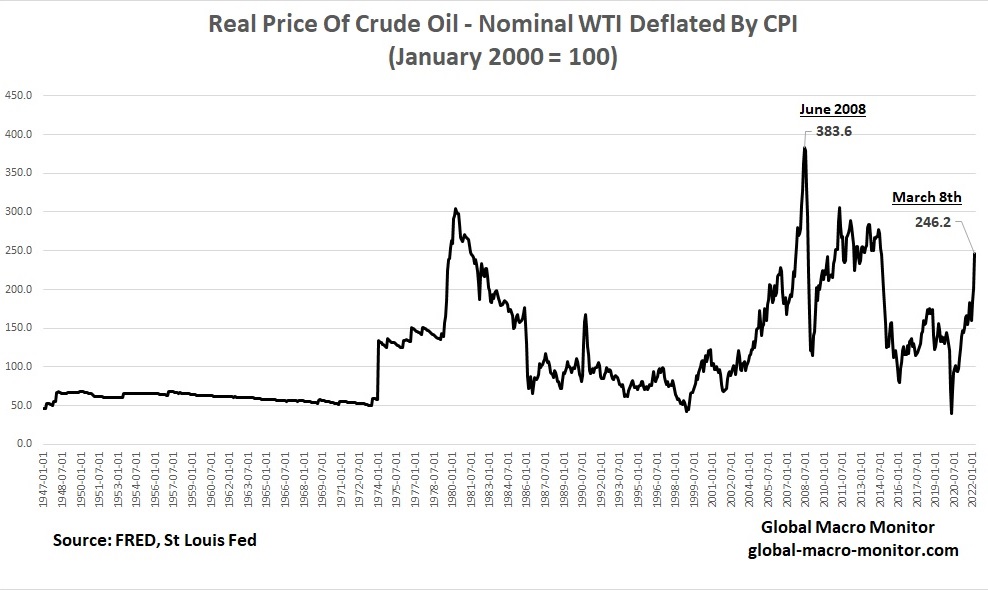
At the Tuesday closing price, the real price of crude was 36 percent below its peak in June 2008, when speculation was rampant as it is today.
In other words, real crude oil prices would have to increase 56 percent from the Tuesday close to top its 2008 peak. Surprised?
It behooves the regulators to increase the margin requirements on commodity futures, especially wheat, which, if it continues to march higher, will most certainly cause global food riots.
We Tweeted this out yesterday in response to reports that the Russians were warning of $300 per barrel crude prices.
Joke. Demand destruction taking place. As D curve shifts, prices move down. Ceteris paribus think – all other things equal – only works w/ chalk & blackboard. Still, painful getting there. https://t.co/3PJxSvQhT6
Today, the average gas price in America hit an all-time record high of over four dollars per gallon.
OKAY, that stings, but a clean conscience [burden sharing with Ukraine] is worth a buck or two…I am willing to pay $4 a gallon. Hell, I’ll pay $15 a gallon ‘cuz I drive a Tesla. – Stephan Colbert (2:40 minutes in)
How about President Biden setting aside some of the oil-rich land held by the BLM for sale or lease to fund that relief program? Please, God, no more monetizing deficit spending lest we will be looking at a 25 percent inflation next year.
It’s Not About Us
When I catch myself complaining about the recent spike in gas and food prices, I think of this baby. Heart
A Ukrainian woman holds a crying baby at the Slovak-Ukrainian border crossing on 25 February (AFP via Getty)
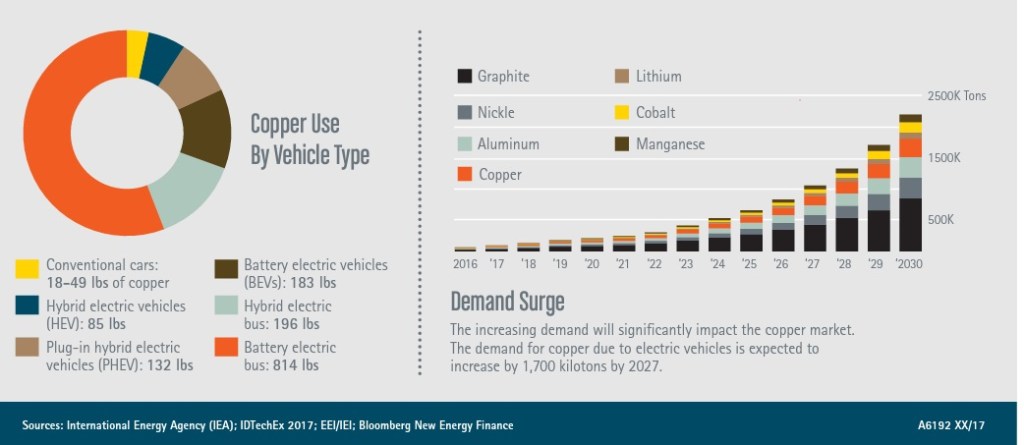
By the way, battery metals – cobalt, lithium and nickel – play a big role in EV production. Have you seen the price of nickel in the past week?
The London Metal Exchange (LME) was forced to halt nickel trading and cancel trades after prices doubled on Tuesday to more than $100,000 per tonne in a surge of sources blamed on short-covering by one of the world’s top producers. — Reuters
However, the role to be played by copper on the way to a green economy should not be underestimated. Not just in EV production but also intrinsic in the various elements of the EV infrastructure. Is there enough copper in the world to make the transition?
I will try and talk my 18-year old into majoring in material sciences. Watch that space – material science.
Hold those emails until reading this post’s title in the correct context. Also, maybe reconsider your criticisms as you see your leaders jumping in bed with strange bedfellows.
It happened after a day of listening to analysts speculate about Vladimir Putin’s mental health,
The efforts come as longtime Putin-watchers have publicly speculated that his behavior has become increasingly erratic and irrational. Since he launched Russia’s invasion of Ukraine last Wednesday, senior US officials have asked intelligence agencies to gather any new information they can on how the Russian leader is faring and how his mindset has been impacted by the unexpectedly unified and tough response from European neighbors and allies around the world. – CNN
Battle Of The Bulge
Here’s the excerpt from Morgan’s post that floored us,
Historian Will Durant once said, “logic is an invention of man and may be ignored by the universe.” And it often is, which can drive you mad if you expect the world to work in rational ways. A common cause of everything from divisive arguments to bad forecasting is that it can be hard to distinguish what’s happening from what you think should be happening.
…[a] short war story to show you want I mean.
The Battle of the Bulge was one of the deadliest American military battles in history. Nineteen thousand American soldiers were killed, another 70,000 missing or wounded, in just over a month as Nazi Germany made an ill-fated last push against the Allies.
Part of the reason it was so bloody is that Americans were surprised. And part of the reason they were surprised is that in the rational minds of American generals, it made no sense for Germany to attack.
The Germans didn’t have enough troops to win a counterattack, and the few that were left were often children under age 18 with no combat experience. They didn’t have enough fuel. They were running out of food. The terrain of the Ardenne Forest in Belgium stacked the odds against them. The weather was atrocious.
The Allies knew all of this. They reasoned that any rational German commander would not launch a counterattack. So the American lines were left fairly thin and ill-supplied.
And then, boom. The Germans attacked anyway.
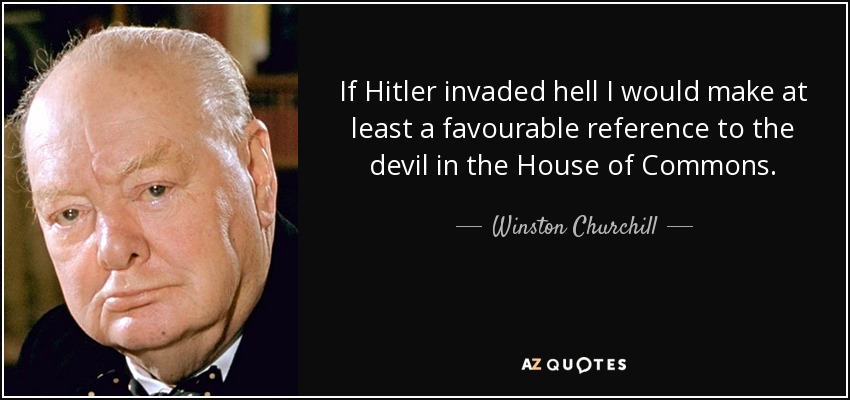
What the American generals overlooked was how unhinged Hitler had become. He wasn’t rational. He was living in his own world, detached from reality and reason. When his generals asked where they should get fuel to complete the attack, Hitler said they could just steal it from the Americans. Reality didn’t matter.
Historian Stephen Ambrose notes that Eisenhower and General Omar Bradley got all the war-planning reasoning and logic right in late 1944, except for one detail – how irrational Hitler had become. But that mattered more than anything. – Morgan Housel, Jan 5th
More Dangerous Than October 1962?
I had a debate with a Polish friend the other night if the current crisis is more dangerous than the October 1962 Cuban Missile. My position was it is infinitely more dangerous if Putin is not rational. The short-term stakes are existential and the future of the world depends on assessing the mental health of one man.
I suspect it’s why the administration is slow walking it’s response and, what seems, a “too careful” policy to address the atrocities being committed against the Ukrainians. Eventually, the West will have to call Putin’s nuclear bluff, if, we hope and pray, it is a bluff.
It’s generally not wise to infer anything from monthly data as there is so much noise and so many revisions to come.
Nevertheless, in February, wage growth was negative for almost all industries across the board, which will raise many suspicions that the BLS Chef was working overtime with the data. Not sayin’, just thinkin’.
There was positive wage growth in some industries, led by textile and product mills, up 0.9 percent, and transportation and warehousing, coming in a close second with 0.7 percent wage growth in February. Apparel and financial activities led to the downside at -3.3 and -1.8 percent, respectively.
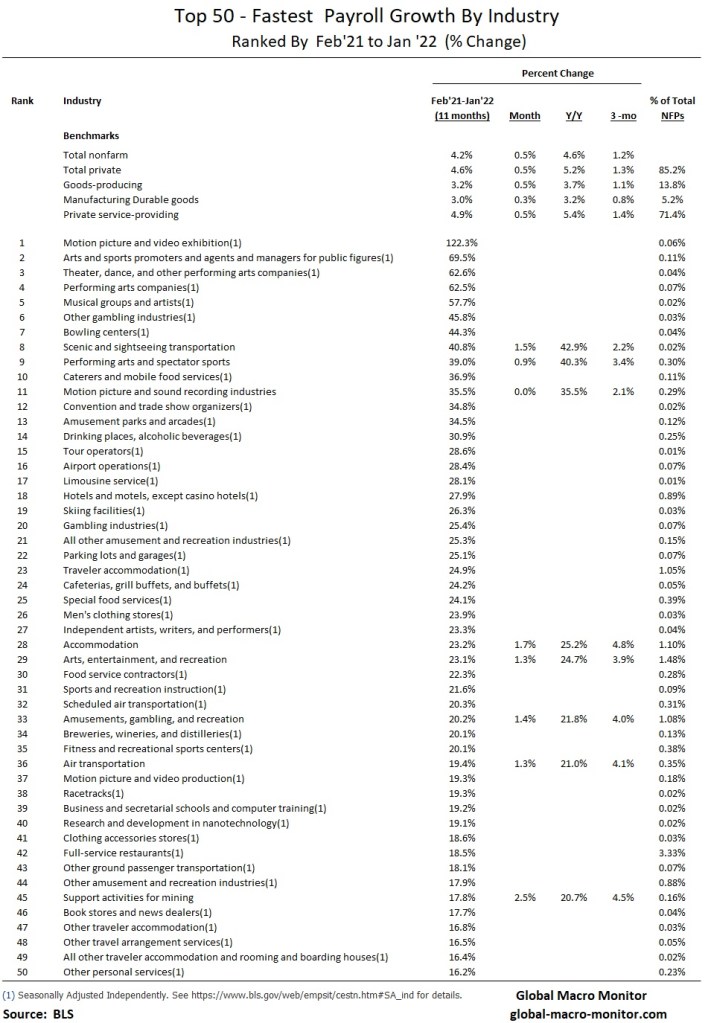
Another thing that stands out to me, personally, with the rank data — Feb ’21 to Jan ’22 growth rate — is the wage growth in barbershops and beauty salons, the second-highest over the 11 months.
Many will conclude it is most likely a measurement illusion as barber shops and salons were bouncing back from being shuttered for a few months at the beginning of the pandemic. Not in my experience, however.
The price I pay for a haircut is now is up 40 percent from what I paid before the pandemic, $25 to $35. It never included a shampoo and the place is not exactly a Foofoo salon.
Supply Chain Issues? Not!
O Lordy, she must have one helluva supply chain problem. Wondering if her scissors are stuck in one of those containers ships off the SoCal coast?
She deserves the raise, however, a dreamer who has raised three wonderful boys and just opened her own shop. God bless our immigrants, always the entrepreneur.
Missing Data
Note that all the industries in the tables are missing the February data as it takes more time to gather the more granular the sector, and is especially true for the wage data. AHE for most sub-industries are delayed at least a month from the headline NFP release.
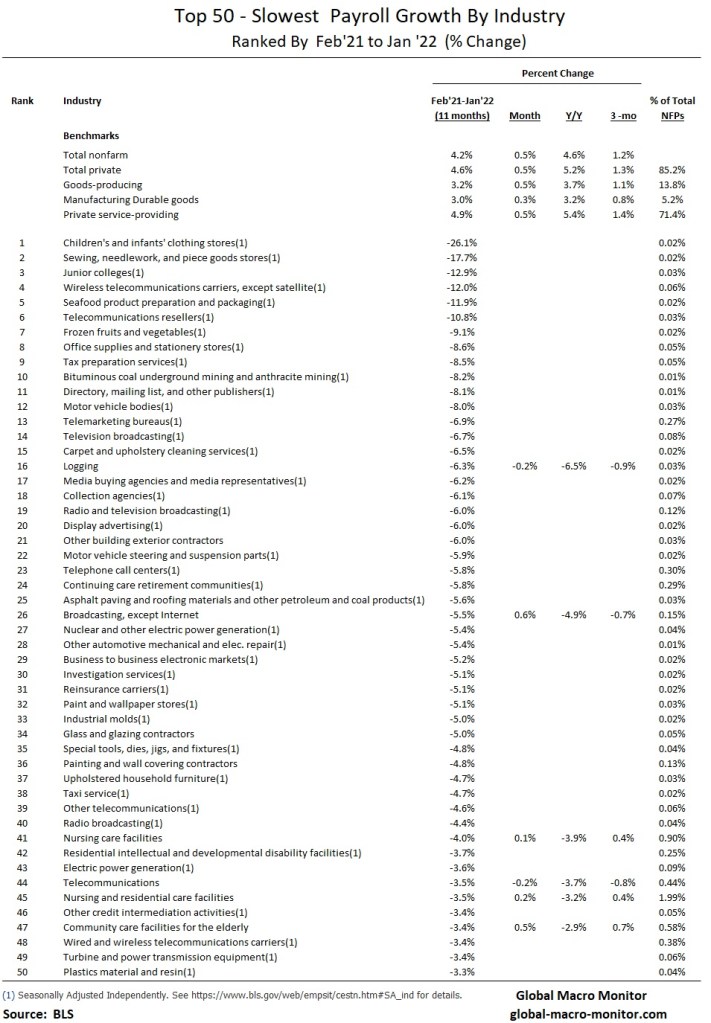
We’re providing a deeper dive into Friday’s payrolls report with the Top 50 industries with the fastest and slowest payroll growth. It’s still difficult to discern any new trends or secular shifts in the makeup of the payroll data. Most of the Top 50 industries with the highest growth in payrolls appear to be in those hit hardest by COVID.
However, the household data is a different animal with the fluctuating labor participation rates and what many call “the Great Resignation.”
Payrolls are still in bounce mode, but the 50 industries with the slowest jobs growth deserve a closer look and deeper analysis. Our priors are that many of these sectors experiencing job losses in such a strong labor are Woolly mammoths headed for the tar pits.
Lack Of Visibility
There is still is a lack of clarity and uncertainty in the labor market from the initial COVID shock, now complicated by the economic shock caused by the invasion of Ukraine.
The COVID shock hit the labor market with such brute force it is still traumatized almost two years after the first case was discovered in the United States.
Molecules Still Haven’t Stabilized
It reminds me of when I was a sophomore in high school. My brother threw a pencil and hit me square in the eye about a centimeter from the pupil.
Long story short, the eye contracted an infection, and it was touch and go for a while as to whether my vision would be fully restored.
I spent two weeks in the hospital and received daily treatments at my ophthalmologist for over a year. I also had to sit out the baseball season because my vision was too cloudy to be an effective hitter, even several months after the initial injury.
I asked the doctor why the eye wasn’t healing. He explained that it suffered such penetrating trauma that the molecules were still moving around inside the eye and it would take several more months to stabilize.
It was over a year before I could see clearly, and I still had trouble with the curve.
Ditto for the economy, ditto for the labor market.
Later today we will post who is bringing home the bacon by looking at the industries with the fastest growth in average hourly earnings. Wait for it.
Missing Data
Note that many industries are missing the February data as it takes more time to gather the more granular the sector.
Sir Ernest John Pickstone Benn, 2nd Baronet, CBE (25 June 1875 – 17 January 1954) was a British publisher, writer and political publicist. His father, John Benn, was a politician, who had been made a baronet in 1914. He was an uncle of the Labour politician Tony Benn. – Wikipedia
The instant immiseration of a big economy [by sanctions] is unprecedented and will cause alarm around the world, not least in China, which will recalculate the costs of a war over Taiwan. The West’s priority must be to win the economic confrontation with Russia. Then it must create a doctrine to govern these weapons in order to prevent a broader shift towards autarky. – Economist
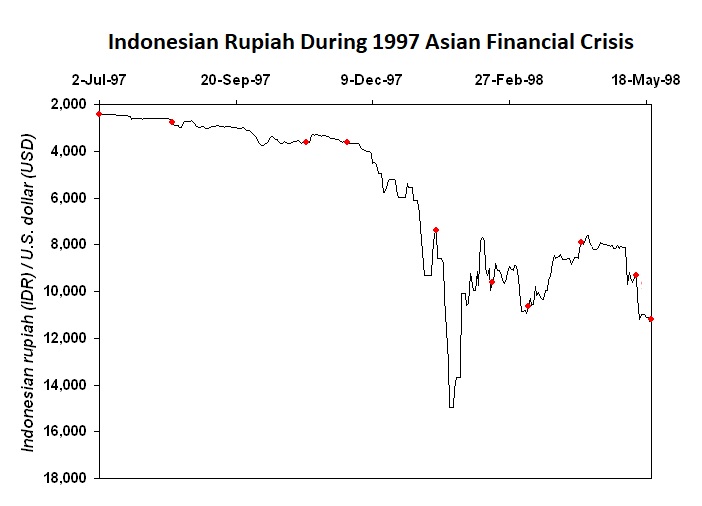
1997 Asian Financial Crisis Forces Indonesia’s Dictator From Office
During the 1997 Asian Financial Crisis, Indonesia was hit hardest. The economic and political chaos that ensued forced Indonesia’s Suharto government from power in May 1998, after ruling unopposed for 31 years. Something that domestic political pressure and periodic military unrest could not.
Suharto consolidated his power in 1967 after the 1965 military coup, which is the basis for the excellent Australian movie, The Year of Living Dangerously.
Massive capital flight from Indonesia coupled with its current account deficit caused the rupiah to lose 80 percent of its value against the dollar from August 1997 to January 1998.
By 1998, Suharto became increasingly seen as the source of the country’s mounting economic and political crises, and prominent political figures began speaking out against his presidency…Rioting and looting across Jakarta and other cities began over the following days…On 20 May, there was a “massive show of force” from the military, with soldiers and armored vehicles on the streets of Jakarta. Facing a threat of impeachment from Harmoko, and having received a letter from 14 cabinet members rejecting the formation of a new cabinet, Suharto decided to resign. — Wikidpedia
Unlike Putin, Suharto didn’t have a real external enemy to deflect blame for the country’s economic woes, though the Malaysian Prime Minister Mahathir Mohamad did single out Geroge Soros. Sound familiar?
However, not himself personally, Soros’ firm did go after the vulnerable Asian currencies, as did Morgan Stanley and almost all the big Wall Street firms and hedge funds. But that is what they do. As one trader told me during the period, “these economies are so out of balance, it was like shooting fish in a barrel.”
Moreover, Indonesia was in a current account deficit and highly dependent on foreign capital. Russia, by comparison, runs a large current account surplus and is hardly dependent on the “hot money” foreign capital as they were, which led to their infamous 1998 default.
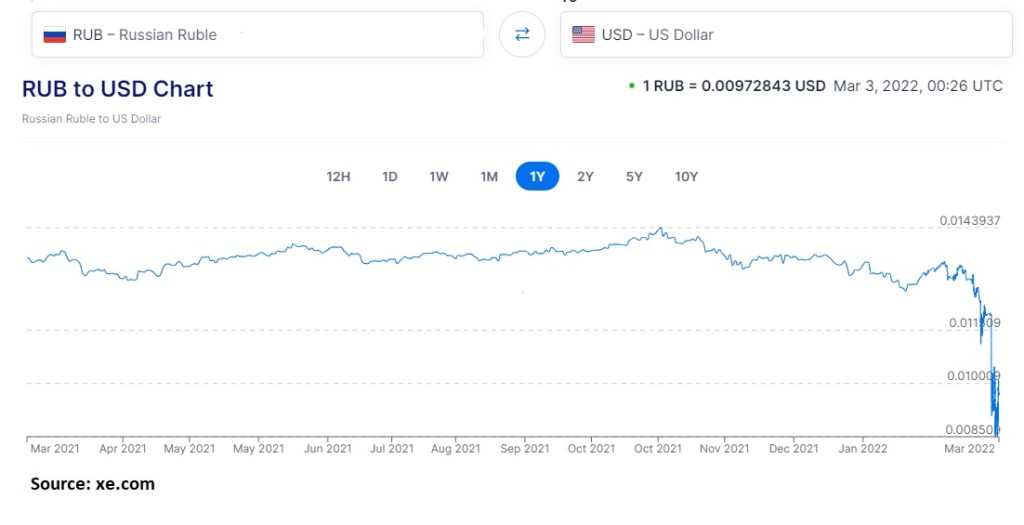
The head of Russia’s central bank, Elvira Nabiullina, is one of the world’s best, so we doubt the ruble is heading the way of the rupiah during the 1997 crisis though it’s too early to be sure.
It’s too early to speculate, and the two countries couldn’t be more different.
Russia and Indonesia during 1997 are two very different situations. Indonesia collapsed due to market forces exploiting the country’s economic vulnerabilities. Russia’s case, however, is similar to what happened during the first few quarters of the pandemic when the world’s policymakers flipped the global economy’s lights off. Similarly, Western government sanctions are flipping off Russia’s outside lights, and the darkness is rapidly spreading to the domestic economy.
Short-term Putin’s fate most likely depends on the support of his inner circle, the heads of the intelligence agencies, for example, which will be dependent on how the war unfolds.
Who knows, it’s way too early but we are highly doubtful the younger population will have much patience as they watch their country morph into another North Korea. Time will only tell.
One Last Thing – China
The Economist also writes,
Autocracies will be most nervous: they own half of the world’s $20trn pile of reserves and sovereign wealth assets. While China can inflict huge economic costs on the West by blocking supply chains, it is now clear that in the event of a war over Taiwan, the West could freeze China’s $3.3trn reserve pile…Over the next decade technological changes could create new payments networks that bypass the Western banking system.u
…Some of this fragmentation has become inevitable. But by applying sanctions to ever more countries over the past two decades, and now also raising their potential severity, the West risks pushing more countries to delink from the Western-led financial system than is desirable. — Economist
Will China Dump Its Treasury Securites?
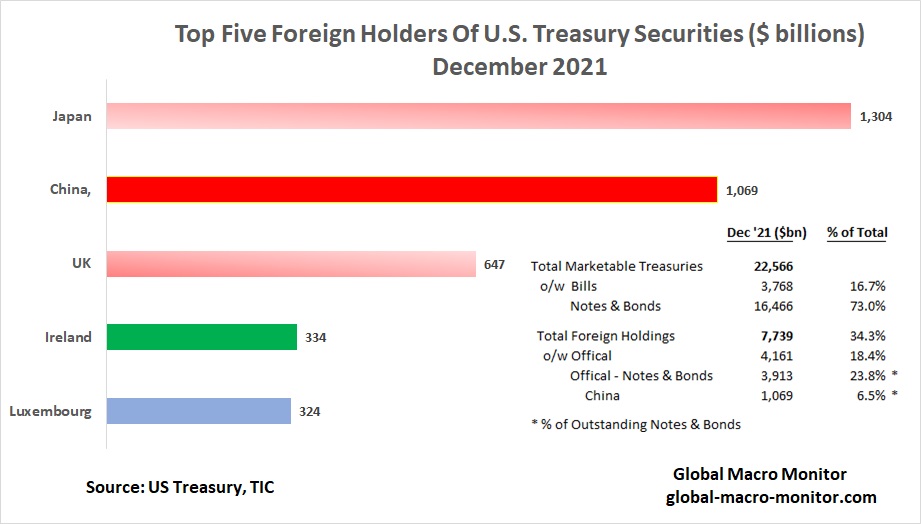
The primary reason why nominal interest rates, and real rates, for that matter, are so low in the United States is that central banks, who are price insensitive, own 53.2 percent of all outstanding coupon Treasury securities as of the end of last year. The Fed held $4.9 trillion (29.4 percent) and foreign central banks $3.9 trillion (23.8 percent). In other words, similar to housing, there is an engineered shortage of coupon Treasuries relative to the amount of money in the global financial system, distorting interest rates.
Of the total foreign holdings of Treasuries, China is the second-largest, just behind Japan, owning over 27 percent of the foreign-held. The data are illustrated in the chart below.
We also suspect leaders in China are getting very nervous after seeing the West’s harsh sanctions on Russia, including the freezing of its central bank assets.
Is China Still Comfortable Holding Treasuries?
Seriously, folks, do you think the regime in China is as comfortable as it was at the beginning of the year, holding almost one-third of their foreign reserves in U.S. Treasuries after the events of the past ten days? We doubt it.
Watch This Signal
I began my professional career in the private sector, negotiating the sizeable commercial bank sovereign debt restructurings. If negotiations hit a snag, as they often did, we would watch the government’s action regarding their foreign reserves held in custody in the United States. If they began to move them out of the country, it was a signal they may be preparing to declare a debt payment moratorium and suspend payments to gain leverage in the negotiations — the nuclear option.
If, say, China begins to dump their Treasury holdings rapidly, it could very well signal they are preparing to take Taiwan. Just a theory and a hypothetical, or it could be they are becoming more politically risk-averse and hedging after observing what happened to Russia’s central bank.
If our speculation is correct, U.S. interest rates will be moving closer to a market-driven price. That is, much higher or forcing the Fed to step in to keep a lid on interest rates, which cause inflation to move higher.
The more they [sanctions] are used, the more countries will seek to avoid relying on Western finance..It would also lead to a dangerous fragmentation of the world economy.
…Today it is hard to park trillions of dollars outside Western markets, but in time more countries may seek to diversify their reserves by investing more elsewhere. – Economist
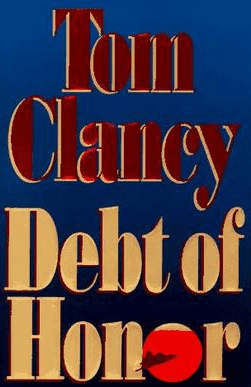
Dayam, the current world situation is starting to read like a Tom Clancy novel.
…the second phase of the Japanese offensive: an economic attack, where Japan engineers the collapse of the U.S. stock market by hiring a programmer who is a consultant for an exchange firm to insert a logic bomb into the system, which when triggered blocks the storage of all trade records made after noon on Friday. They also assassinate the President of the Federal Reserve Bank. – Wikipedia
The Times They Are a-Changin’.
Here’s to hoping the policymakers have thought this through and have a contingency plan.






 Global Macro Monitor