One death is a tragedy; one million is a statistic. — Joseph Stalin
Man, our spending priorities are out of whack. Connect the dots.
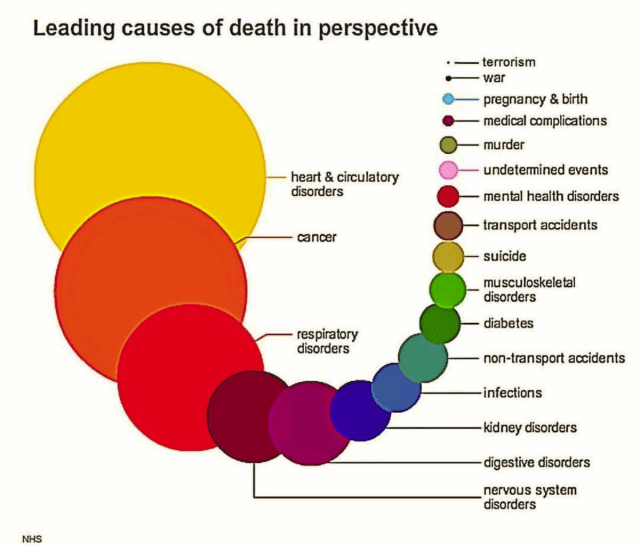
One death is a tragedy; one million is a statistic. — Joseph Stalin
Once upon a time, currencies had intrinsic value. But now the dollar slouches towards Bethlehem Wampum.
Ever wonder where the term “buck” comes from?
As in “Ray Nichols, you owe me 100 bucks for our bet the Golden State Warriors would sweep the Cleveland Caviliers in the 2017 NBA Finals?” And “the buck stops here?”
Animal Skins
Animal skins have a surprisingly important history as currency in different parts of the world.
In Russia and Finland, squirrel pelts were a key medium of exchange during medieval times. Even today, the Finnish word “raha”, which now refers to money, originally meant the “fur of squirrel”.
In North America, the European settlers and First Nations tribes found skins to be one commodity they both agreed had value.
In 1748, Beaver pelts became the “standard of trade” in the north. One pelt could buy two pounds of sugar.
Lastly, the use of buck skins in trade gave rise to “buck” as a slang word for currency, which we still use to describe dollars today. – Visual Capitalist
.

Or how about the etymology of the term “salary” or the phrase Lebron is “not worth his salt?”
Salt
The importance of salt to ancient civilizations cannot be understated. The first written record on salt appears in 2700 BCE in China.
Salt was highly valued for food preservation, but its production was very limited. As a result, in many places of the world, salt was used as currency.
- As early as the 6th century, Moorish merchants in sub-Saharan Africa routinely traded salt and gold at the same value per ounce.
- In what is now modern-day Ethiopia, slabs of rock salt were used as coins. Each coin was 10 inches long and two inches thick.
- Salt was also used as pay soldiers in Ancient Rome. This became known as “solarium argentum”, from which we now derive the word “salary”
- A soldier’s salary was cut if he was “not worth his salt”, a phrase that still exists today. – Visual Capitalist

Interesting stuff, no?
Go Dubs! I will trade you one Steph Curry and one Kevin Durant basketball card for ten Lebron James cards. How is that for an exchange rate?
PPP, over or undervalued?
Click on table to enlarge and for better resolution
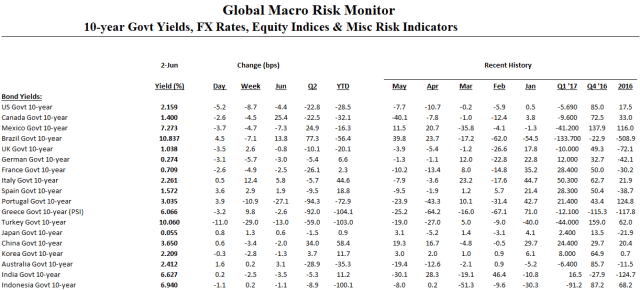
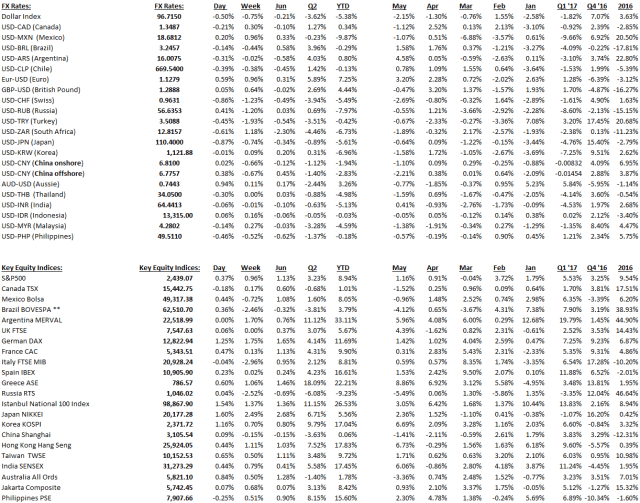
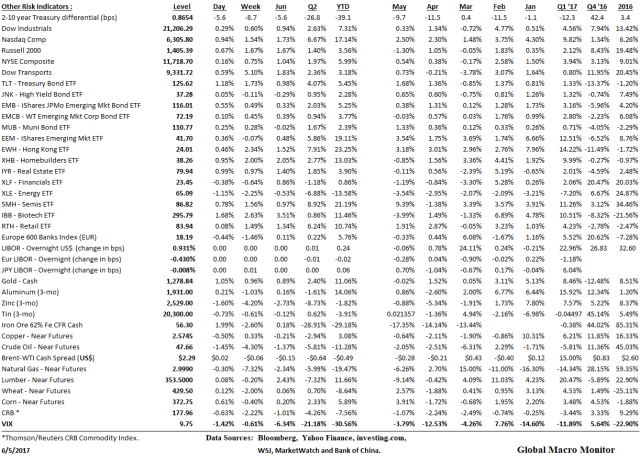
If there is one thing we have learned over the past few years, “the algos will find you out”. Add to that, always bet against the fast money crowd.
According to Bloomberg, the shorts have been upping their positions again in the S&P500. Though not yet at extreme levels.
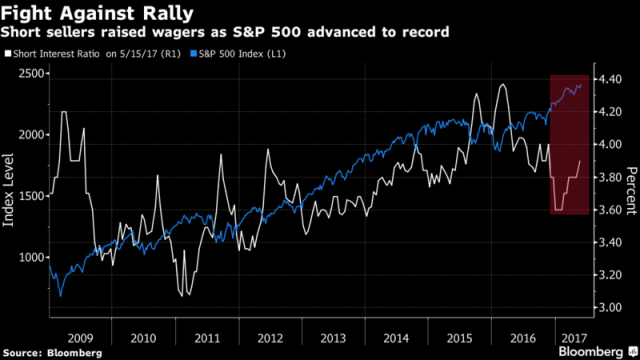
Why not just wait for the break? That day will surely come. Maybe soon or maybe later.
And why short a trending bull market? Maybe for a scalp, but a trending market, which looks like it is starting to break out of a consolidation? Are you out of your freaking mind?
Stocks Are Expensive
Absolutely stocks are expensive, but nobody knows when the bull market will end. Alan Greenspan gave his “irrational exuberance” speech 3 1/2 years before the market topped. Stocks are expensive for a reason.
Too Much Liquidity
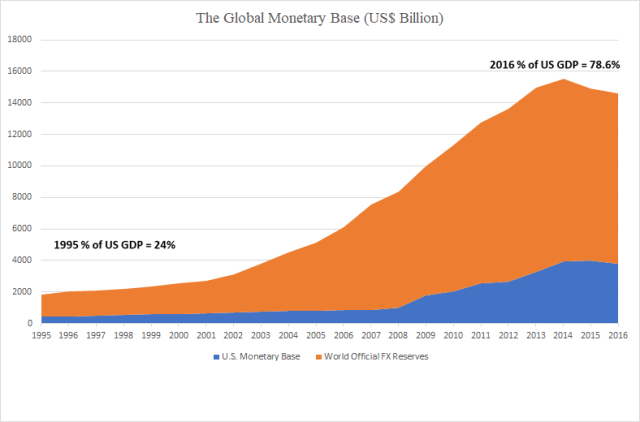
There is so much liquidity and money in the U.S. financial system today versus any time in history. Markets just aren’t functioning normally. Therefore the default scenario for the markets are lower than normal interest rates and higher than normal asset valuations.
We have estimated a global liquidity concept called the “global monetary base” which is simply the sum of the U.S. monetary base and the world’s official foreign exchange reserves. Since most of the official FX reserves — about 65 percent — are held in dollars most of the global monetary base is in the U.S. financial system.
Note that in 2007 the global base was at about 50 percent of U.S. GDP compared to almost 80 percent at the end of 2016. — Global Macro Monitor, April 26, 2017
.
If you don’t believe us, go ask the bond market vigilantes, for example, if there are any still alive. Let us know, by the way, if you can find one.
Technological Advances
Not to mention the rise in algorithmic and HFT trading that are notorious for setting short-term bear and bull traps. And how about those trading ‘bots that spoof the bid and the offer and probe the market until they find the real buying or real selling then quickly reverse?
There will come a day when all this new technology short circuits and creates a 1987-like flash crash. Please tell us that date, however.
Where Will The Real Sellers Come From?
Who is going to sell stocks unless we have some catalyst and Black Swan event? A global military conflict, or, say, a series of surprise 3-4 percent inflation prints that set off panic rate hikes and Fed rapid balance sheet reduction, for example — both, of which are pretty much unpredictable. Or maybe something like our Six Sigma political event?
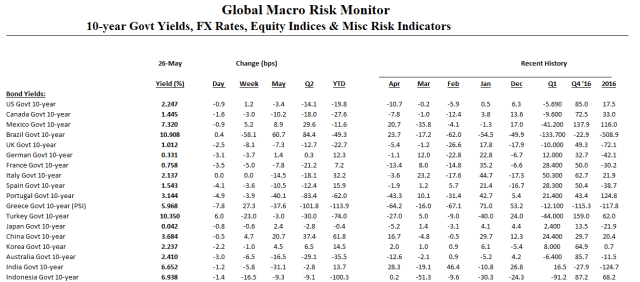
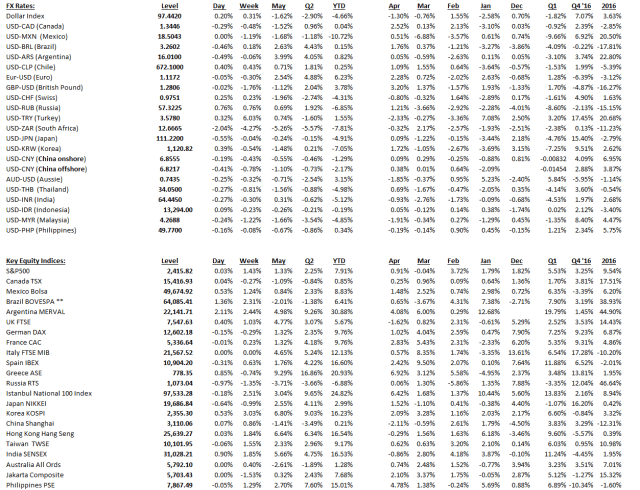
By the way, the South Korean Kospi stock index is up over 16 percent and the currency has strengthened over 7 percent versus the dollar year-to-date, all while the missiles continue to fly up north. Talk about climbing a real “wall of worry.”
Pension Funds Underfunded
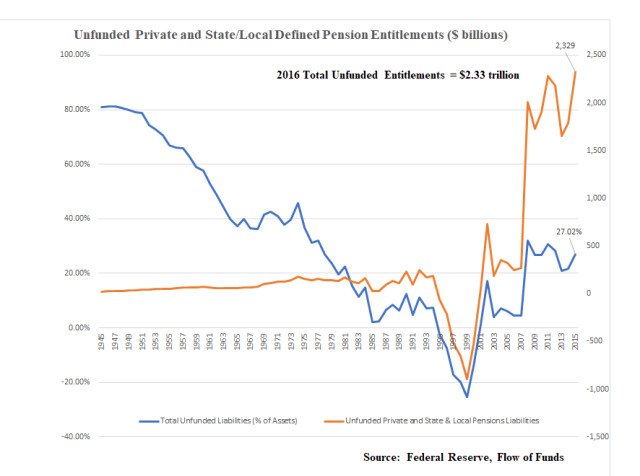
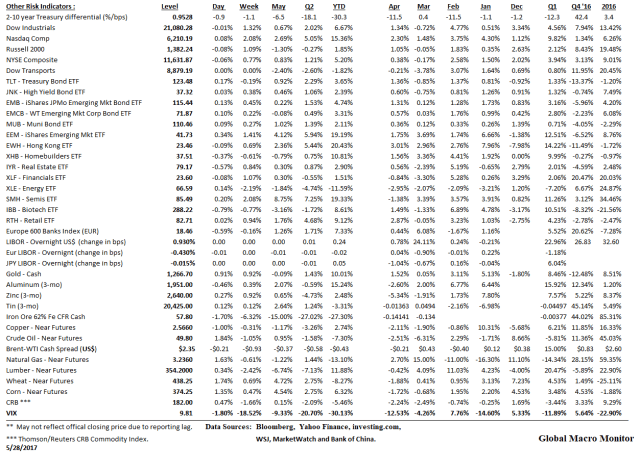
Unfunded pension fund entitlements are going parabolic and their managers have no choice but to reach for yield and return and, definitely, will not find it sitting in cash or the 10-year at 2.25 percent.
Earnings Resurgence
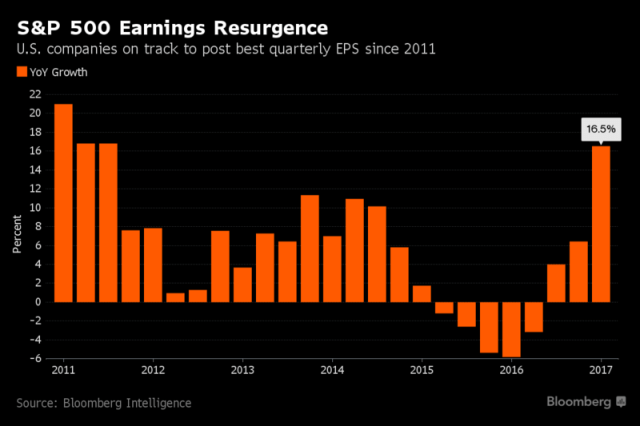
The U.S. stock market has just emerged from an almost two-year earnings recession — granted much ado about crude oil prices — but the S&P500 has kept moving higher.
Now the fundies are turning, earnings are increasing — even on the top line — albeit at higher stock prices. Stocks don’t trade levels, but on first and second derivatives of those levels.
Capital Flows
So we ask you, folks, where is the global flood of money going to go? Could be “money heaven” if all markets crash if they wake up one morning and decide to reprice and regress to their mean longer-term valuation levels. Good luck on that.
A global margin call like 2007-08 as housing credit began to contract? Not there and nowhere near the economy wide credit growth we saw in the early to mid-2000’s.
German 10-year bunds at .35 percent? The Japanese 10-year JGB at .04 percent? The 10-year U.S. T-Note at 2.25 percent (though attractive relative to European and Japanese bonds, which keeps the 10-year note well anchored below 2.60 percent)?
Though credit expansion has been relatively lackluster or weak recently, just imagine if velocity starts to reverse and the banking system really begins to extend credit. This will create an additional tidal wave of money, albeit leveraged, and a subsequent further boost to asset and real inflation. The upside scenario, but most likely a lower probability event, in our opinion.
Risks
The impeachment trade? In the words of President Obama, “come on, man!” Presidental scandals alone are not sufficient to crush stocks. Hope you read our piece, Beware Shorting Impeachments.
If the Trump agenda stalls into year-end, this will only increase the risk and our conviction of an October correction. But Republicans may fear losing the House in 2018 and move to the “two-minute” drill trying to expedite legislation.
Don’t get us wrong, we are not raging bulls, are relatively bearish medium to long-term, and at these valuation levels not expecting blockbuster returns for the rest of the year. Just kind of a boring summer trading range that slowly drifts higher and shorts are forced to cover. Once again.
A relatively larger cash position in the event of a correction? Understandable, for sure.
Pain Trade
Maybe the increase in shorts is a pairs trade, say, shorting the S&P500 against emerging market or European stocks. Nevertheless, the pain trade is higher for S&P500, in our opinion, and the shorts will once again have their family jewels caught in a vice that slowly tightens in on them.
Ouch! We have been there many times.
The challenge for short sellers is how long they can stay solvent before being forced to buy back the shares that they have borrowed and sold. And the pressure to cover is building. A Goldman Sachs Group Inc. basket of most-shorted stocks has jumped 6 percent this quarter, almost triple the return in the S&P 500. – Bloomberg, May 26, 2017
And beware of the “seek and destroy bots“, Mr. Short.
Conclusion
Patience, our friends, until the global central banks start draining the swamp or the Fed funds rate hits a tipping point — we think at around 3-4 percent if no Fed balance sheet reduction.
Those kind of rates will do some ugly damage to the U.S. budget deficit with higher interest payments on a much larger debt stock, which will beget an even higher debt stock and ever higher interest payments and larger budget deficits. A nasty positive feedback loop and we are not so sure the Fed will allow it and will thus choose to begin to reduce their balance sheet instead.
Nobody Knows Mr. Market
The bear market can start next week, or in five years. We have no idea, nor does anyone else. Though we do expect a nice buying opportunity in the fall.
Some expect the Fed may begin to reduce their balance sheet in the fall, China’s 19th National Congress of the Communist Party will conclude in October and the country’s economic policy put will implicitly expire. Then a possible nasty economic or policy surprise out of China creating a catalyst for some temporary global risk aversion. Maybe.
We just don’t think we have topped quite yet.
Professional money managers are not paid to sit with high cash levels and shorts, as you know, are an impatient lot.
Calculated risk and good money management, comrades. Stress test those old sleeping dogmas. Remember, asset bubbles don’t easily pop. That is until they do.
Click on table to enlarge and for better resolution
Just a little update from the FT on Mozambique, which was highlighted in our last piece, World Current Account Balances (CAB).
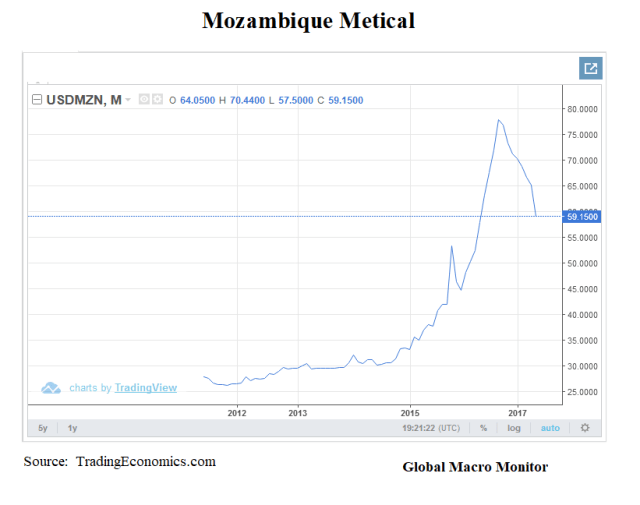
Note first, Mozambique is a very small economy with a nominal dollar GDP of only $11 billion in 2017 or about 1/7th the size of the economy of Memphis, Tennessee. The exchange rate has been weak over the past five years, though strengthening recently, which has reduced nominal $GDP and has made external debt service more burdensome.
It began four years ago, with money meant to herald the start of a modern fishing industry for one of southern Africa’s poorest nations — a fleet of new boats to trawl the sparkling waters off the coast of Mozambique.
This month, one of the most controversial government debt scandals in Africa this decade neared its denouement as Kroll investigators delivered a much-delayed forensic audit into an $850m “tuna bond” and more than $1bn in hidden loans to opaque state-affiliated companies.
When these loans — and more purchases of naval vessels and security equipment than tuna boats — were uncovered last year, international donors cut off aid. Investors in huge offshore gas discoveries were also rattled as Mozambique plunged into a financial crisis.
Now donors, who funded about a quarter of the budget, are asking if Frelimo, the former liberation movement that has ruled with a tight grip since independence in 1975, can punish those within its ranks implicated in the audit.
“It’s the $2bn question,” says one diplomat in Maputo, referring to the debt defaults that last year undermined Mozambique’s status as one of the fastest-growing economies in Africa and threatened plans to develop the gasfields.
– FT, May 27, 2017
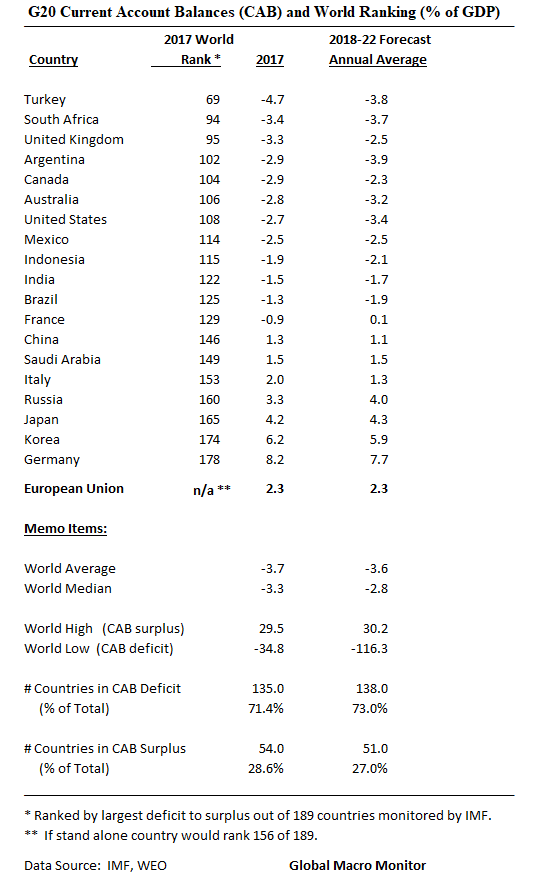
We have updated our ranking of the world’s 2017 Current Account Balances (CAB) by country from largest deficit to largest surplus in the ginormous table below. The data are from the April 2017 IMF’s World Economic Outlook database. Note, 2017 are IMF estimates and the 2018-22 annual averages are forecasts from the IMF country desks.
But, first, check out the current account balances of the G20. Germany under big political pressure for its 8 percent surplus.
In 2016, Germany ran a current-account surplus of roughly €270 billion ($297 billion), or 8.6% of GDP, making it an obvious target of Trump’s ire. And its bilateral trade surplus of $65 billion with the United States presumably makes it an even more irresistible target. Never mind that, as a member of the eurozone, Germany has no exchange rate to manipulate. Forget that Germany is relatively open to US exports, or that its policymakers are subject to the European Union’s anti-subsidy regulations. Ignore the fact that bilateral balances are irrelevant for welfare when countries run surpluses with some trade partners and deficits with others. All that matters for Trump is that he has his scapegoat.
Back in the real world, the explanation for Germany’s external surplus is not that it manipulates its currency or discriminates against imports, but that it saves more than it invests. The correspondence of savings minus investment with exports minus imports is not an economic theory; it’s an accounting identity. Germans collectively spend less than they produce, and the difference necessarily shows up as net exports. – Barry Eichengreen, May 11, 2017
.
.
Large current deficits are not always a bad thing. It largely depends on their cause and how they are financed. For example, Mozambique runs very large current account deficits and with robust economic growth, ranking 24th in 2017 world GDP growth out of 189 countries monitored by the International Monetary Fund. The country’s CAB mainly reflects large imports of capital goods for large energy projects and is financed primarily by fairly stable capital flows – Foreign Direct Investment (FDI).
Nevertheless, large current deficits usually result in negative economic consequences and Mozambique is not excluded. Its accumulated external deficits, coupled with a domestic political/debt scandal, has created much blowback with its external creditors and made the country more vulnerable to such events. Mozambique missed a coupon payment in January on its dollar-denominated Eurobond or so-called “Tuna Bond” and continues to miss debt payments on selected debt instruments.
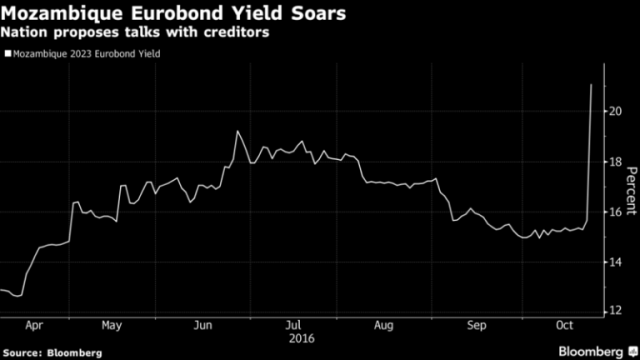
Mozambique is facing serious economic and political blow back as its evolving hidden debt scandal continues to shake international confidence and domestic stability. Investigators uncovered $1.12 billion in fraudulent loans to Pro Indicus and Mozambique Asset Management (MAM) in 2015, implicating the previous administration of President Armando Guebuza. Pro Indicus and MAM secured loans, primarily from Credit Suisse and VTB of Russia in 2013-2014, loans which were then guaranteed by the Mozambique government.
This revelation – which also implicated tuna operator Ematum – led to to the suspension of IMF aid as well as assistance from 14 foreign governments in 2016, putting serious strain on Mozambique’s finances. Pro Indicus, together with MAM and Ematum – all owned by the Mozambique government and run by the country’s security services – racked up more than $2 billion in dubious loans, loans which Mozambique is now obligated to pay.
…Efforts to improve finances (the current account deficit is estimated at 30% of GDP for 2018), including reductions in oil and bread subsidies mean citizens are not benefiting from cheaper imports. To make matters worse, government efforts to raise the minimum wage have done nothing to ease cost of living pressures, instead angering both the public and international partners. Resident IMF representative Ari Aisen notes that Mozambique has “no clear overview or strategy” concerning minimum wage legislation, as the country boasts 16 different minimum wages across various sectors. – Global Risk Insights
Large current deficits financed by hot money or short-term flows = Bad News.
.

We are with you during these dark days. Only time can heal and then never fully. I know, my family experienced a similar tragic hate crime several years ago. Try not to let the bitterness, which is only natural, eat you up and ruin the rest of your lives. Easier said than done.
How many times I have dropped my daughters off at concerts without even thinking about such a terrible tragedy what you have just experienced could happen. It’s heartbreaking to think of the pain what the families involved are now experiencing.
These people who did this are the scum of the earth and as far from the Muslim faith as one can get.
“Of all bad men religious bad men are the worst.” – C.S. Lewis