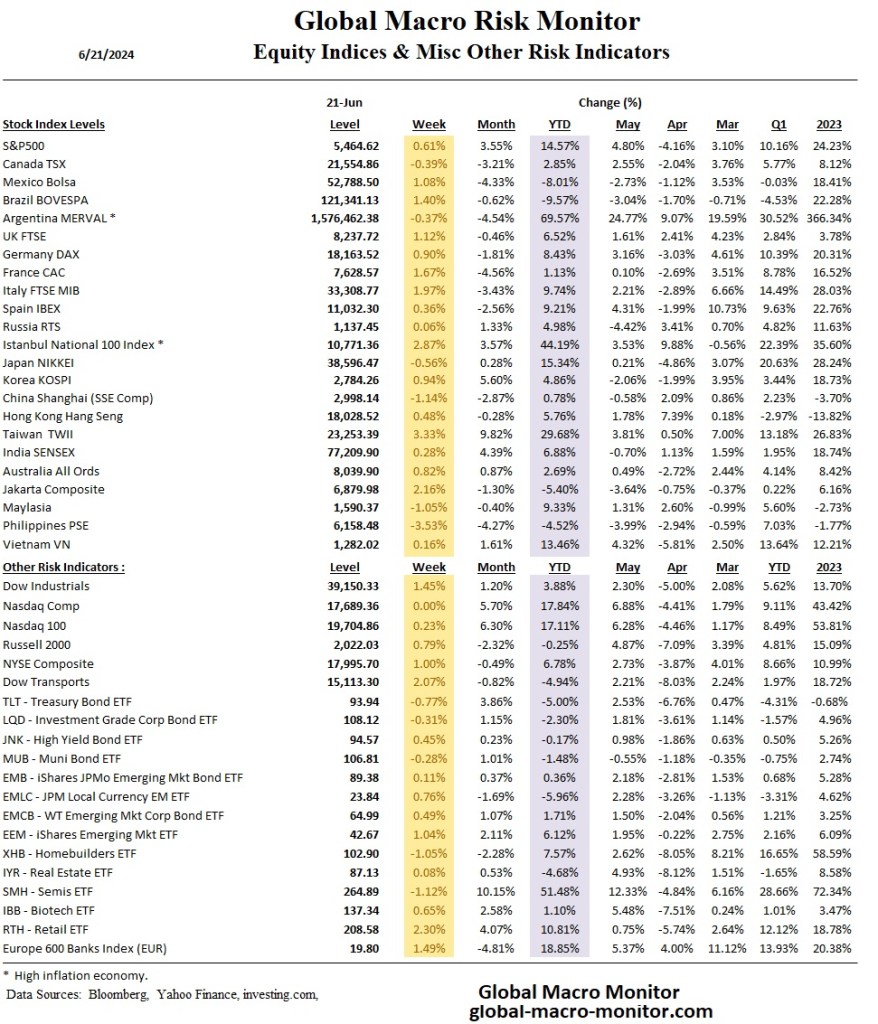
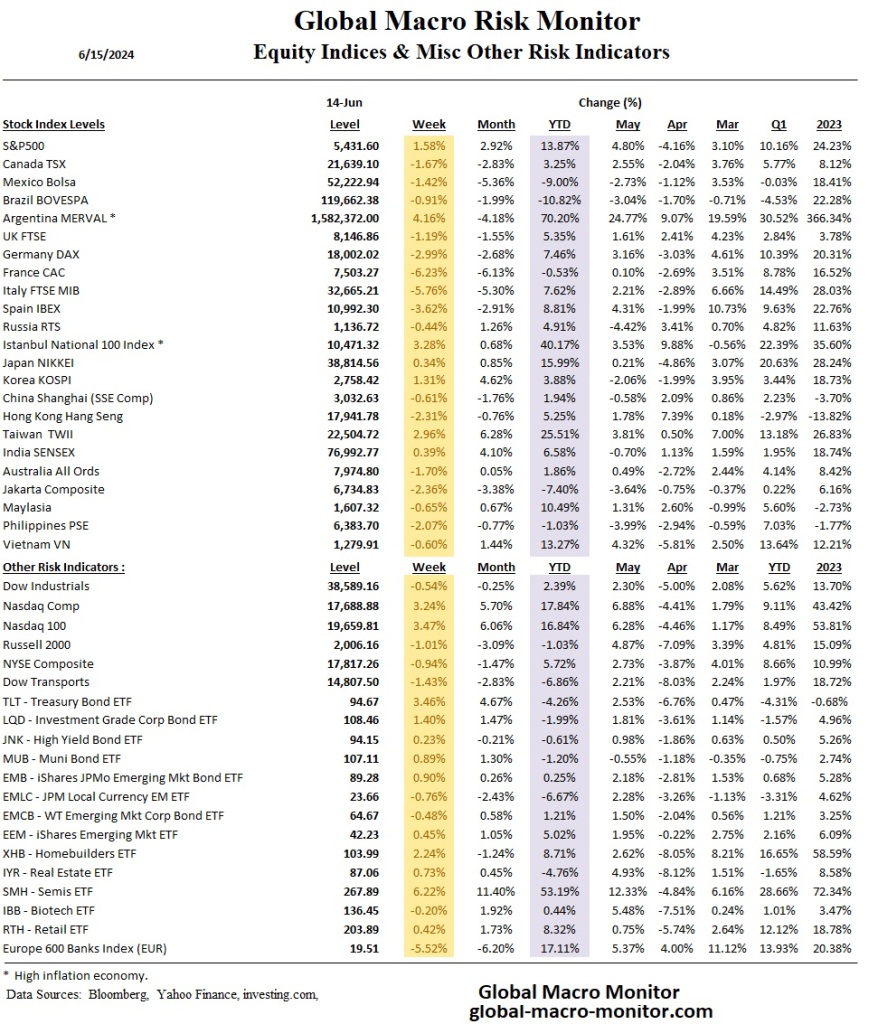
The Mexican governing party’s unexpectedly lopsided victory this week has investors concerned that it may use its mandate to sweep aside some of the checks on presidential power which have long been a source of comfort to the business community.
The possibility that current president Andres Manuel Lopez Obrador could push through some of those changes during his final month in office in September has some investors especially on edge. – Reuters
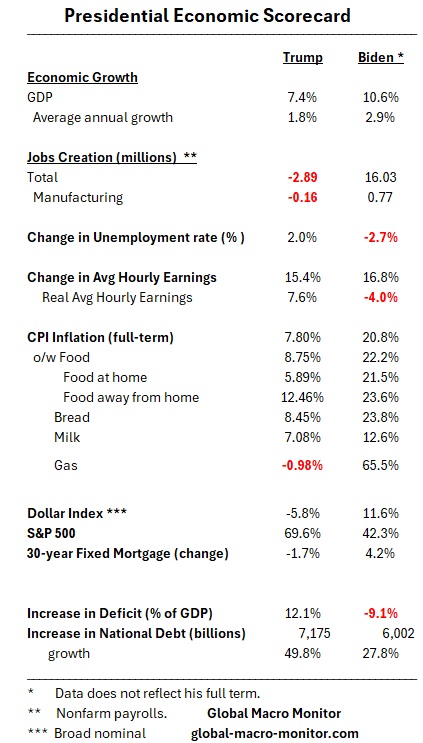
We warned about the coming wave of inflation in February 2021, when year-on-year CPI inflation was still below 2 percent, at 1.67 percent. We then followed up with this:
Inflation is way too high given exremely easy financial and monetary conditions. There will be blood…The Democrats should begin to worry. – GMM, June 11, 2021
Inflation is one of the most insidious and pervasive of all economic indicators, as it affects all Americans, albeit some more than others. We don’t second-guess the economic policy response to the pandemic, but the monetary authorities erred by keeping the liquidity spigot open for too long.
To impress upon you the effects of caffeine, I footnote esoteric research conducted in the 1980s by NASA. Their scientists exposed spiders to different drugs and then observed the webs that they constructed. Those drugs included LSD, speed, marijuana, and caffeine. The results, which speak for themselves, can be observed in the figure [below]. – Matthew Walker, Why We Sleep
Global goods trade is showing signs of accelerating after last year’s slump, pushing up shipping rates and giving some supply-chain managers flashbacks to the demand spike that disrupted international commerce three years ago…
Some of the catalysts for the monthlong advance in seaborne freight rates stem more from worry than optimism. They include concerns about port congestion in Asia, labor strikes in North America that threaten to hobble ports or rail services, and heightened trade tensions between the US and China…
Ocean shipping began the year already stretched by Red Sea attacks that forced carriers to send their vessels the longer way around southern Africa rather than through the Suez Canal. A.P. Moller-Maersk A/S, the world’s No. 2 container line, has estimated the industry’s capacity loss at 15%-20% this quarter on routes to northern Europe from Asia…
Importers and exporters across Asia, the US and Europe typically see shipments increase from July to September as retailers look to restock before back-to-school, Halloween and year-end holiday sales seasons. That spurt of orders looks to be happening now, analysts said, at a time when spare container capacity is limited.
“This early peak season is packing a major punch,” Stephanie Loomis, head of ocean freight for the Americas at Rhenus Logistics, wrote in a LinkedIn post heading into the US Memorial Day weekend. “In speaking with many carriers this week, the comments were all the same: Vessels are all completely full.”
Spot rates for containers reflect the tightness. The cost for a 40-foot container to the US West Coast from Asia jumped 13.4% to $4,915 in the week ended Sunday, according to Freightos data, the fifth straight weekly advance. That’s triple what it was in late December, but still well below the September 2021 peak of $20,586.
The spot rate for containers to northern Europe from Asia is also climbing, fetching $4,882 last week, more than three times higher than a year ago, according to Freightos. – Bloomberg
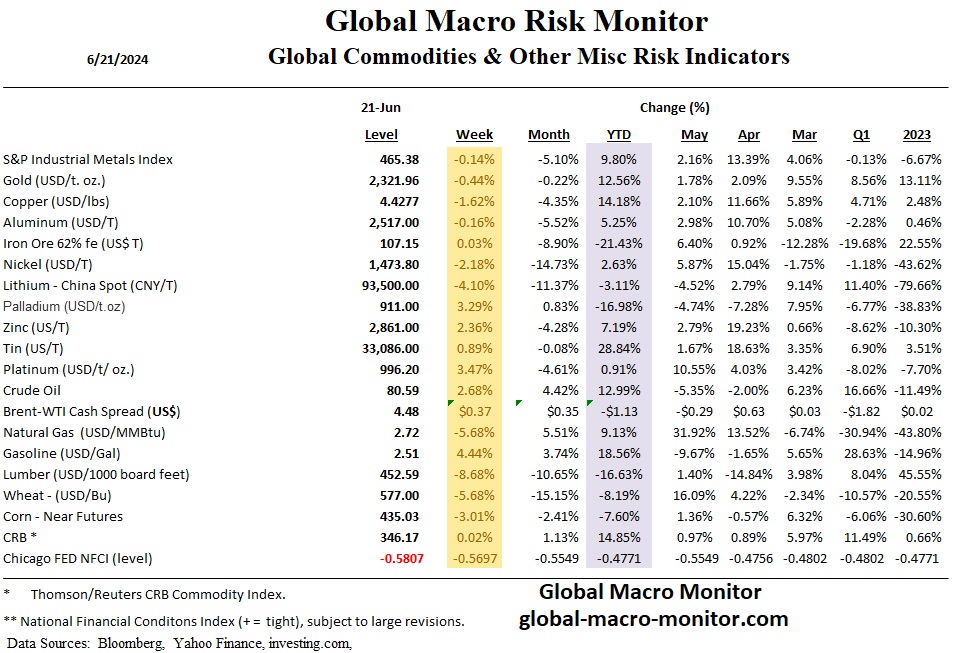
According to the Chicago Fed’s National Financial Conditions Index (NFCI), national financial conditions have eased significantly. Financial conditions are looser than when the Fed began its tightening cycle in March 2022, with the NFCI at levels last seen in November 2021.
It is not inconsequential the market has put rate hikes back on the table, albeit with a low probability. However, if risk markets continue to rally, the Fed may be compelled to respond with another rate hike.