The Ugly Chart Contest

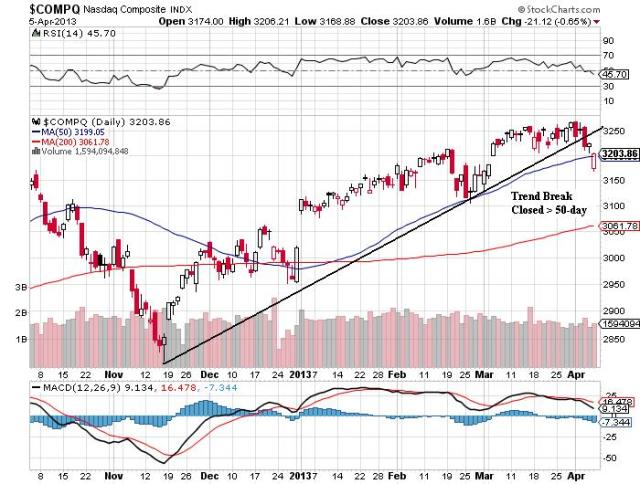
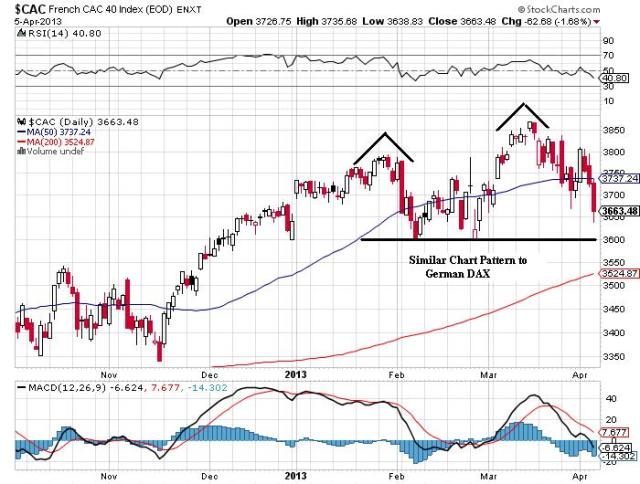
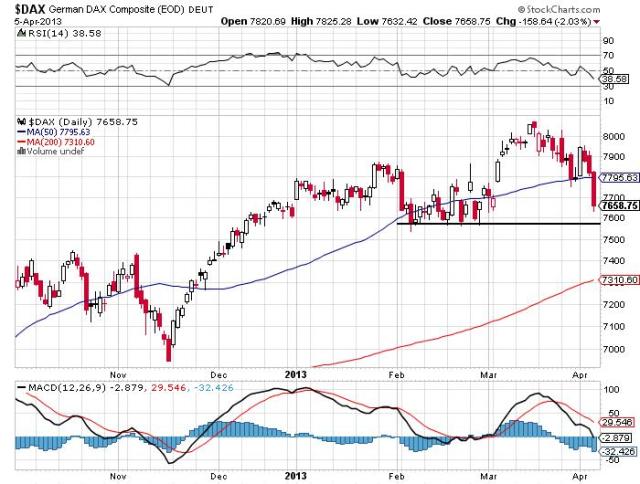
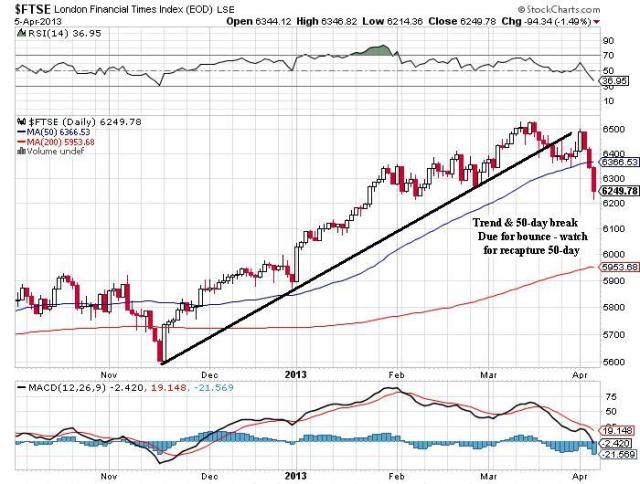
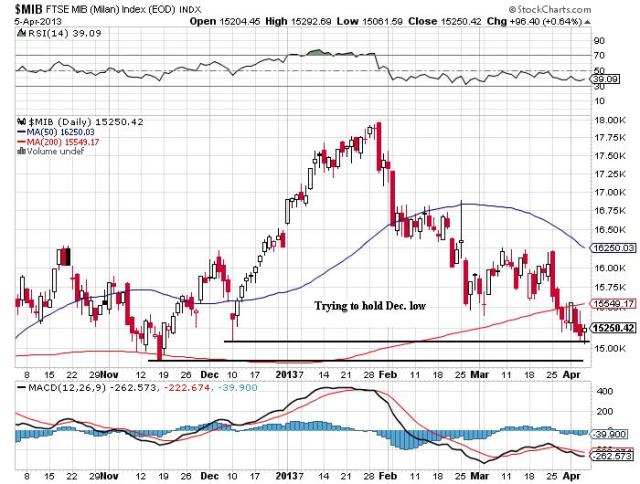
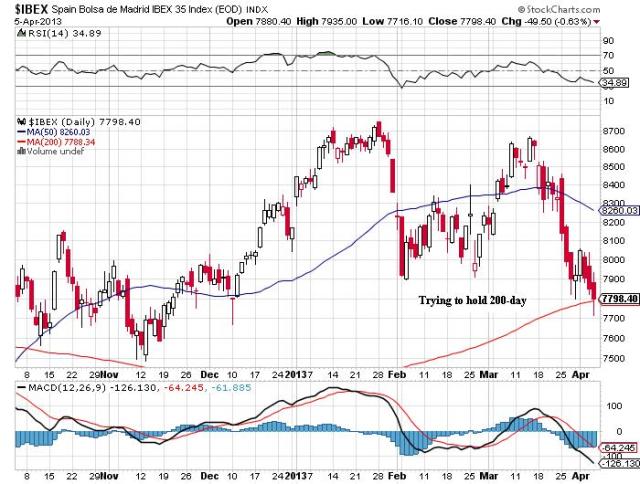
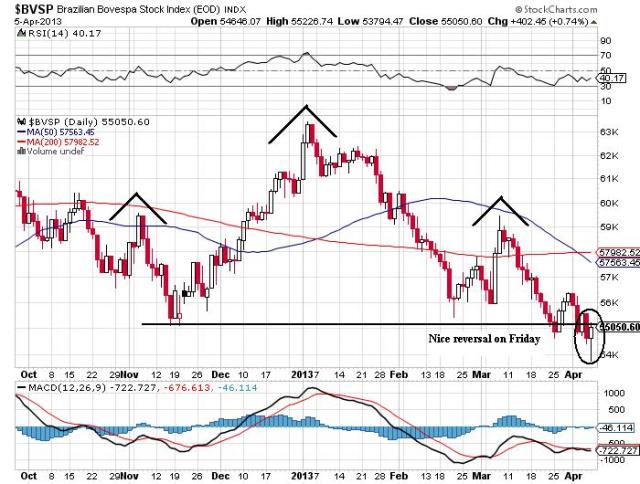
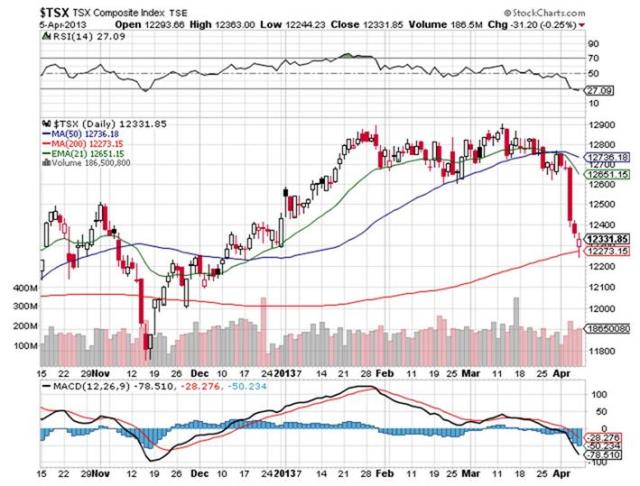
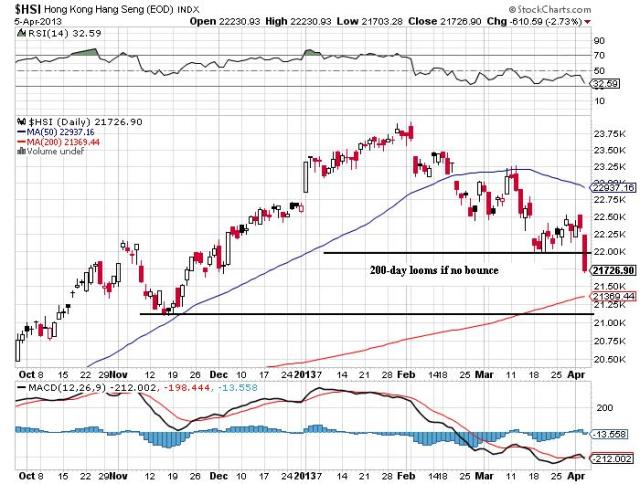
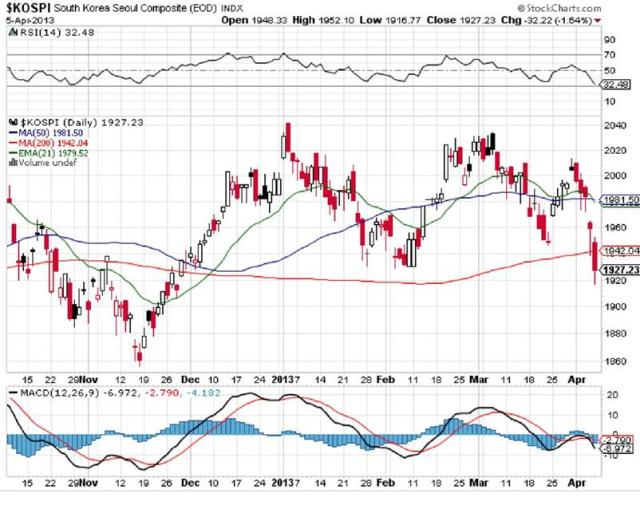
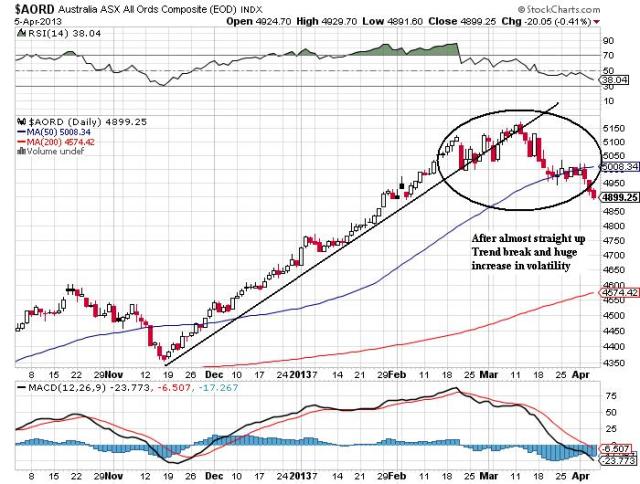
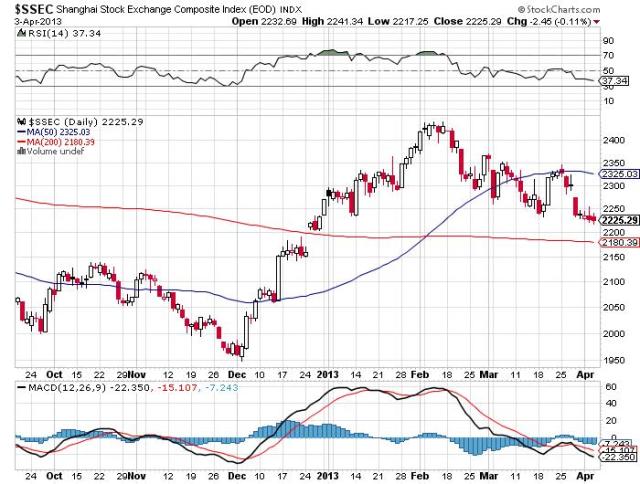
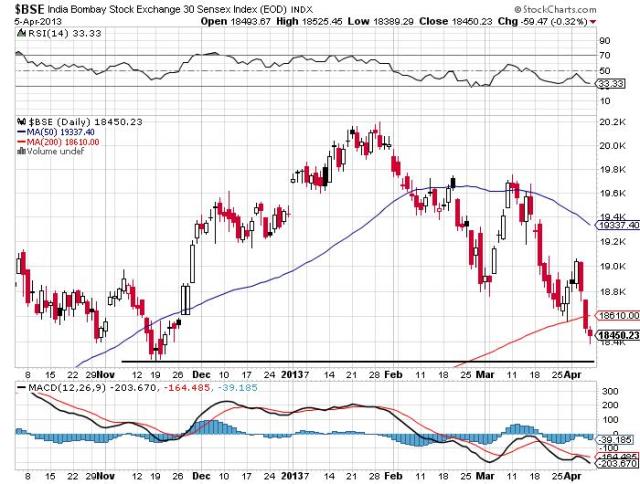
Beyond the Dow,  S&P500, and Japanese stocks the major global equity indices have been carving out some fairly ugly charts.

It’s becoming increasingly difficult to extract market signals as the massive of flood of Bank of Japan money printing begins to flow into the global tributary, which also includes the Fed’s quantitative easing.   Markets, in our opinion, are going to become incredibly gummed up and exhibit unprecedented and unpredictable behavior throughout the rest of the year.

Who would of thought the dollar/yen pair could rally 50 percent from April 1995 to April 1997?   The yen carry trade fueled massive flows into the emerging markets,  pumped up  the U.S. dotcom bubble, and distorted Asian exchange rates, which, some say, contributed to the 1997 Asian financial crisis and 1998 Russian debt default.

Buckle up.  The next year is going to make Mr. Toad’s Wild Ride look like a Merry-Go-Round!

By the way,  if your weren’t watching  on Friday sovereign bond yields came in big time.   France, for example, tightened 20 bps to the German bund last week.

Is the recent collapse in global sovereign yields, including the 10-year Treasury to a 2013 low,  signalling global recession and increased risk aversion or central bank quantitative easing gumming up markets and rendering price signals useless?   It’s tough to make the case that the recent soft patch in the data and one bad employment number can move yields down as much as they have.

No wonder corporates are confused and hesitant to expand capacity when they see depression level interest rates and record high stock prices.   WTF?

Nevertheless, we’ve assembled a mosaic of some of the ugliest charts in the world.

Where markets go from here is anybody’s guess.  The traditional flight (market) indicators and global compass have been distorted by the global central banks.    The wave of liquidity will only get larger before it crests when the Fed changes policy.

The key, then, is to pick the spots where to surf the liquidity.   Dollar/yen, Japanese equities, and U.S. large cap stocks with mature cash flows  seem to be the bonzai pipeline of financial trading for now.

We’re in uncharted waters, folks.   We have our biases to how this all ends – mostly negative — but if anyone thinks they definitively know,  avoid them and head for the hills.

Let’s go to the charts.

Apr7_RussApr7_CompApr7_CACApr7_DAXApr7_FTSEApr7_MIBApr7_IBEXApr7_BVSPApr7_TSXApr7_HangSengApr7_KospiApr7_ASXApr7_ShanghaiApr7_SENSEX

(click here if charts are not observable)

Posted in Ugly Chart Contest | Tagged , , , , , | 1 Comment

Masters Week, Baby!

Masters_ImageHaven’t picked up a club since October and may never again due to a complicated injury/illness.  Nevertheless, still get goosebumps during Masters Week.


What previously occupied the land that was purchased to build Augusta National Golf Club?

a.) Fruitland Nurseries
b.) Girl Scouts of America headquarters
c.) Waffle House

(click here if video is not observable)

Posted in Masters | Tagged , , | 3 Comments

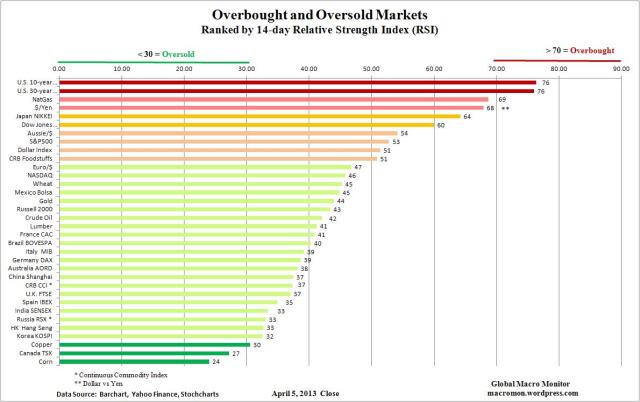
Overbought and Oversold Markets – April 5

The Relative Strength Index (RSI) is a momentum oscillator that measures the speed and change of price moves. The RSI moves between zero and 100 and is considered overbought with a reading above 70 and oversold when below 30.  Note the RSI can sustain an overbought (oversold) reading in a strong up (down) trend.

Click chart to enlarge.

WIR_Overbought

(click here if chart is not observable)

Posted in Overbought Markets | Tagged , , , , | 1 Comment

Global Trend Indicators

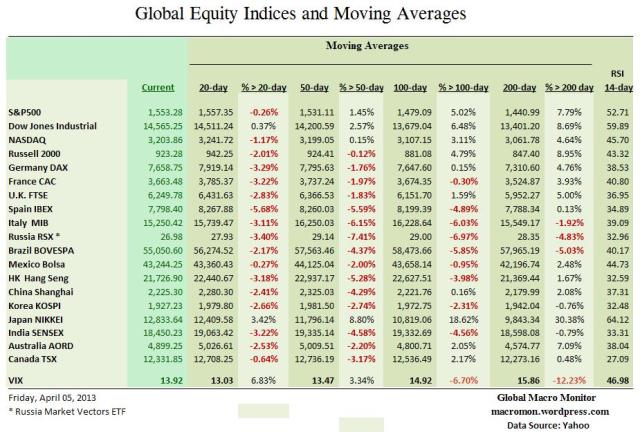
Seeing some technical breaks in the global equity indices.

Breaking 20-day moving average
S&P500, Russell 2000, Nasdaq,  Mexican Bolsa, Kospi

Breaking 50-day moving average
Russell 2000,  DAX,  FTSE

Breaking 100-day moving average
CAC,  Mexican Bolsa

Breaking 200-day moving average
Kospi, SENSEX

WIR_Global TrendWIR_Equity_MA

(click here if tables are not observable)

Posted in Global Trend Indicators | Tagged , , , , , | Leave a comment

Week in Review

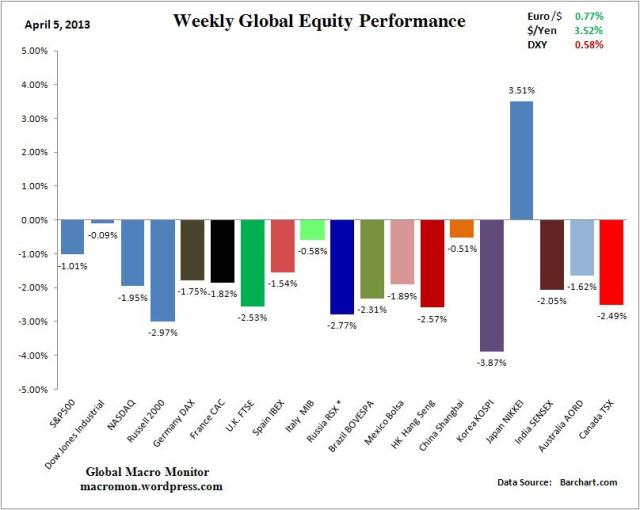
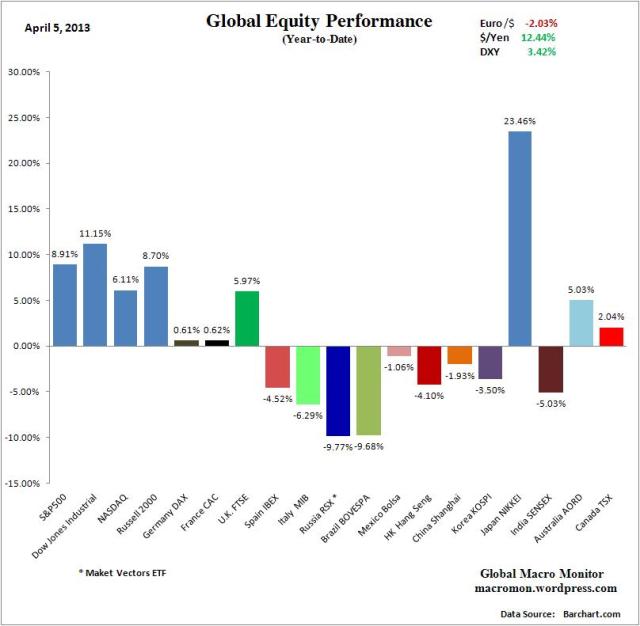
WIR_Key LevelsWIR_Equity_WeekWIR_Bond_WeekWIR_Equity_YTDWIR_Bond_YTD

(click here if charts are not observable)
Posted in Week in Review | Tagged , , , , , , | 3 Comments

Weekend Lecture: Nick D’Aloisio on Charlie Rose

Charlie RoseFascinating interview with Nick D’Aloisio, the 17-year old who just sold his mobile app, Summly,  to Yahoo for an estimated $30 million.  He’s nails a market in the age of information overload and Twitter.   Yet another another labor destroying technology.

The interviewed aired March 28th.  It’s worth your 16 minutes.

Click here for interview. 

April 6_Nick D'Aloiso

(click here if picture is not observable)

Posted in Uncategorized | Leave a comment

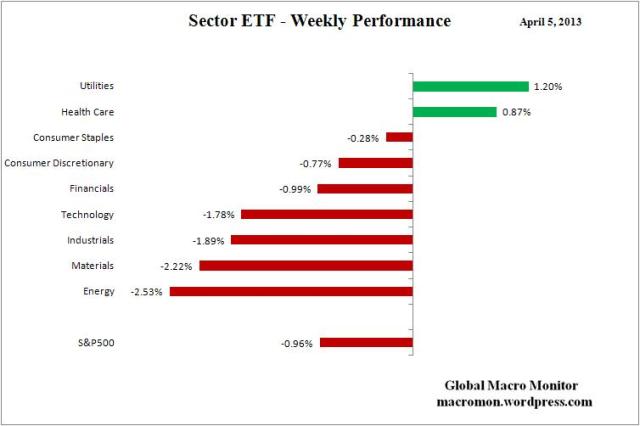
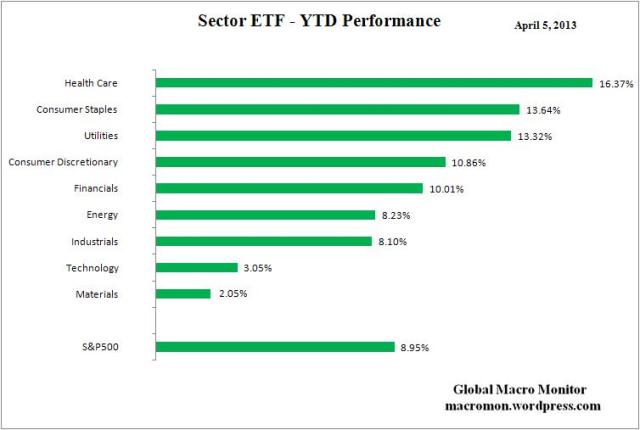
U.S. Equity Sector ETF Weekly Performance – April 5

Starting to see some technical breakdowns in selected sectors ETF this week.

Breaking 20-day moving average
XLY, XLE, XLF, XLI, XLB, XLK

Breaking 50-day moving average
XLE, XLI, XLB, XLK

Interest Rate Monitor_ETFSector ETF_WeekSector ETF_YTDSector ETF_TechnicalsSector ETF_Overbought(click here if charts are not observable)

Posted in Sector ETF Peformance | Tagged , , , | Leave a comment

Daily Interest Rate Monitor – April 5

Interest Rate Monitor

(click here if table is not observable)

Posted in Interest Rate Monitor | Tagged , , | Leave a comment

Weekly Eurozone Watch

Eurozone ImageKey Data Points
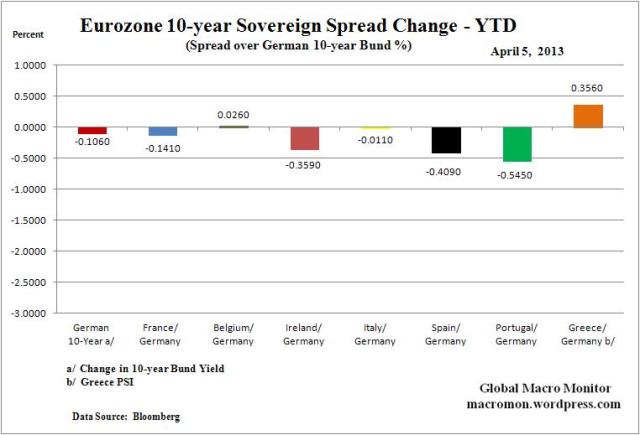
German 10-year Bund 8 bps lower;
France 20 bps tighter to the Bund;
Belgium 18 bps tighter;
Ireland 10 bps tighter;
Italy 30 bps tighter;
Spain 23 bps tighter;
Portugal 7 bps wider;
Greece 21 bps tighter;

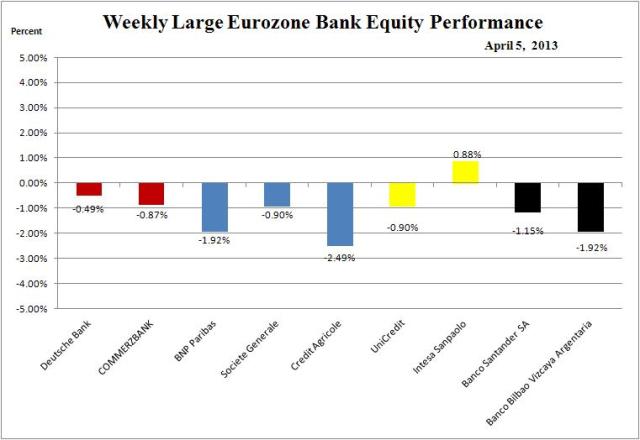
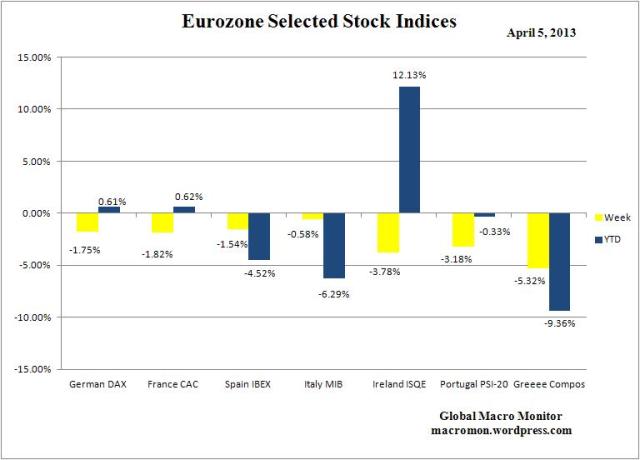
Large Eurozone banks weekly change, 1.41 to -2.49 percent;
Euro$ up,  1.41 percent.

Comments

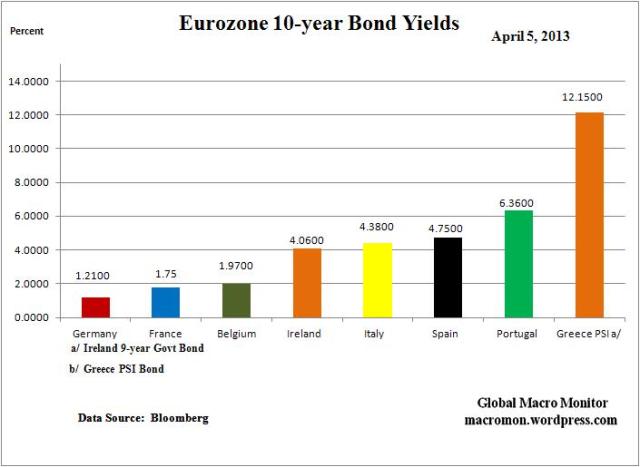
  • The yield on the German bund closed at its lowest level of the year and is now just 8 bps from the all-time low yield of 1.13 percent set last July;
  • The rally in Euro bonds and decline in yields coincides with the announcement of the Bank of Japan’s massive quantitative easing;
  • France’s spread to the bund came in 20 bps,  its lowest weekly close of the year;  
  • Cyprus finance minister, Michael Sarris, resigned and was replaced by Harris Georgiades, an economist and former labor minister.
  • Italy’s parliament will start voting for a new president to replace Giorgio Napolitano on April 18, the speaker of the lower house said on Wednesday.
  • On Wednesday, the Portuguese government survived a vote of no-confidence in parliament.
  • The European Central Bank kept its key interest rate unchanged Thursday.

**********************************************************************************

Poll boost for Germany’s Merkel as she gears up for third term bid

**********************************************************************************

…let me stress that Cyprus is not a template!

Mario Draghi,  ECB President

**********************************************************************************

WEZ_Spread_WeekWEZ_Bank_WeekWEZ_Spread_YTDWEZ_Bank_YTDWEZ_YieldsWEZ_Stock Indices

WEZ_Euro

(click here if charts are not observable)
Posted in Weekly Eurozone Watch | Tagged , , , , , | 1 Comment

U.S. Employment Situation – March 2013

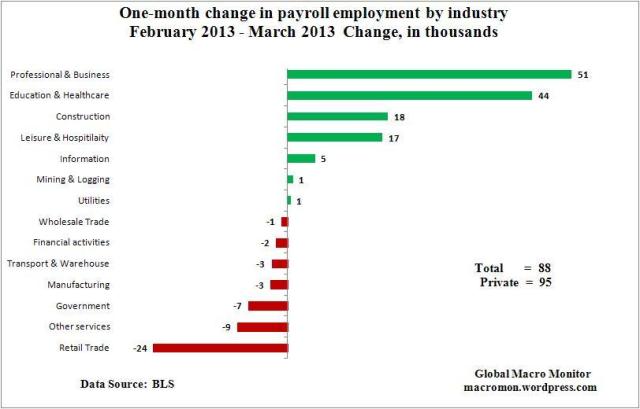
Ugly employment data.   Retail hit hard hard losing 24K compared to a gain of 24K last month.  Relatively large net losses at building/materials and clothing stores.  Construction generated 18K net jobs compared to 48K last month.  Job creation in the information industry was lower than last month’s 20K, which was pumped up by the motion picture industry,  falling to 5K in March.   Government lost 7K,  including 12K U.S. postal service jobs.

The other big headline is the civilian labor force declined by 496,000 over the month.  The debate rages why this is happening.  Demographics as the baby boomers age?  Depressed workers giving up?  Increased government incentives to stay out labor force as more workers move to disability?   Aging workforce prone to injury and disability benefits?  Probably all of the above.

Here are money quotes from this morning’s BLS release:

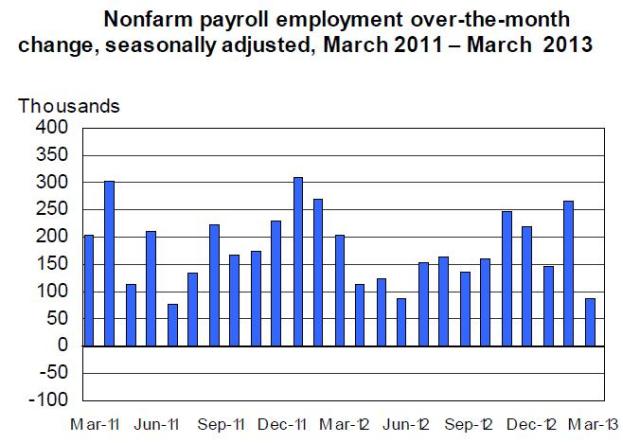
Nonfarm payroll employment edged up in March (+88,000), and the unemployment rate was little changed at 7.6 percent, the U.S. Bureau of Labor Statistics reported today. Employment grew in professional and business services and in health care but declined in retail trade…

The civilian labor force declined by 496,000 over the month, and the  labor force participation rate decreased by 0.2 percentage point to 63.3 percent. The  employment-population ratio, at 58.5 percent, changed little…

The average workweek for all employees on private nonfarm payrolls increased by 0.1 hour to 34.6  hours. The manufacturing workweek decreased by 0.1 hour to 40.8 hours, and factory overtime rose by 0.1 hour to 3.4 hours. The average workweek for production and nonsupervisory employees on private nonfarm payrolls was unchanged at 33.8 hours.

In March,  average hourly earnings for all employees on private nonfarm payrolls, at $23.82, changed  little (+1 cent). Over the year, average hourly earnings have risen by  42 cents, or 1.8 percent. Average hourly earnings of private-sector production and nonsupervisory employees, at $20.03, changed little (-1 cent) in March.

The change in total nonfarm payroll employment for January was revised from +119,000 to +148,000,  and the change for February was revised from +236,000 to +268,000.

Apr5_BLS3Apr5_BLS_1Apr5_BLS_2

(click here if charts are not observable)

Posted in Employment | Tagged , , , | Leave a comment