In his lecture at the Latsis Symposium 2012 “Economics on the Move” in Zurich, Nobel Laureate Joe Stiglitz nails the fundamental problem and crisis of modern macroeconomics, which failed to predict the financial crisis.
If you say…what is good science is prediction… and you can’t predict the most important event in 75 years, what good are you? In particular, it might be very nice you can talk about the likelihood of an one tenth increase in GDP growth rate…and you miss a major economic downturn….or worse, they said the things can’t happen…
Here are the money quotes,
We all know the shock in this crisis…was a credit bubble and we have had those credit bubbles since the beginning of capitalism…So it was remarkable the intellectual bubble led people to believe there were no such thing as credit bubbles when there was 200 years of history of that…..How could people be so stupid?
…The theory was with well functioning financial markets, spreading risk, diversifying risk, risk is contained. They came to believe the models and that’s always dangerous..
The Greek [debt writedown] was a gift to Greece. We are not asking for a gift. We are asking for understanding, and a loan on fair terms so we can overcome these financial difficulties we are facing at the moment.
IMF Managing Director Christine Lagarde talks to Chrystia Freeland, editor of Thomson Reuters Consumer News, about the challenges of regulatory arbitrage, the need to promote job-based economic growth and the dire dangers from the U.S. debt ceiling fight. – ReutersTV
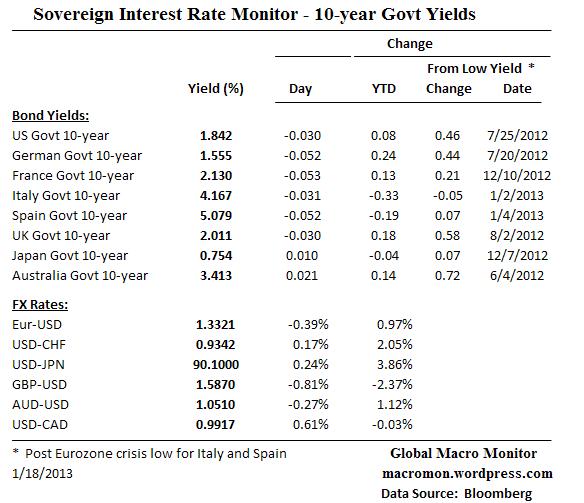
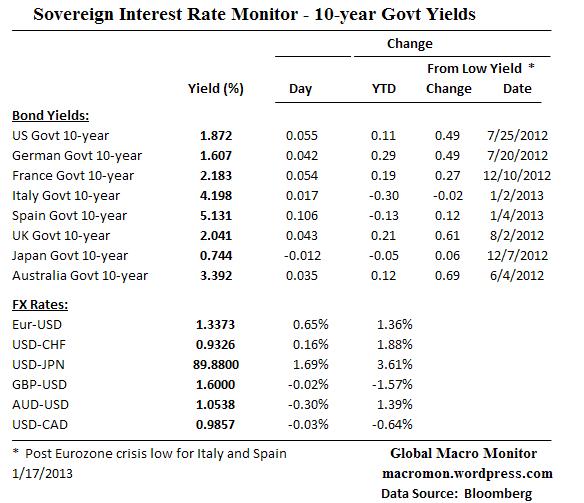
The dollar/yen traded with a 90 handle today its highest level since June 2010. Probably the most popular macro trade of 2013, the move has been supercharged by the country’s deteriorating balance of trade and expectations the Bank of Japan (BoJ) steps up quanto easing next week. The Economist noted last January,
In the 1980s and 1990s, Japan’s huge trade surplus was a popular target for American and European protectionists. No longer. Provisional estimates suggest that Japan’s merchandise trade moved into the red in 2011—its first annual deficit (excluding freight costs) since 1963. Japan remains the world’s biggest net foreign creditor. Income from its assets more than offset the trade gap, keeping its current account in surplus, equivalent to about 2% of GDP (down from 5% in 2007, see chart). That surplus, however, could also disappear within a few years.
Recall dollar/yen appreciated over 50 percent from April 1995 to April 1997. Some believe that move was one of the factors contributing to the 1997 Asian Financial Crisis.
Though extended and very crowded with “sell the news” risk going into next week’s Bank of Japan meeting, the corrections have been to brief allow longs an entry point. Looks like nothing stands in the way of a move to 95.
The Federal Aviation Administration just announced it will ground the Boeing 787 Dreamliner passenger jet after another battery failure that forced an emergency landing in Japan. They gave no details on how long but said the lithium ion batteries were safe before Boeing could resume flying. Smells like Dell.
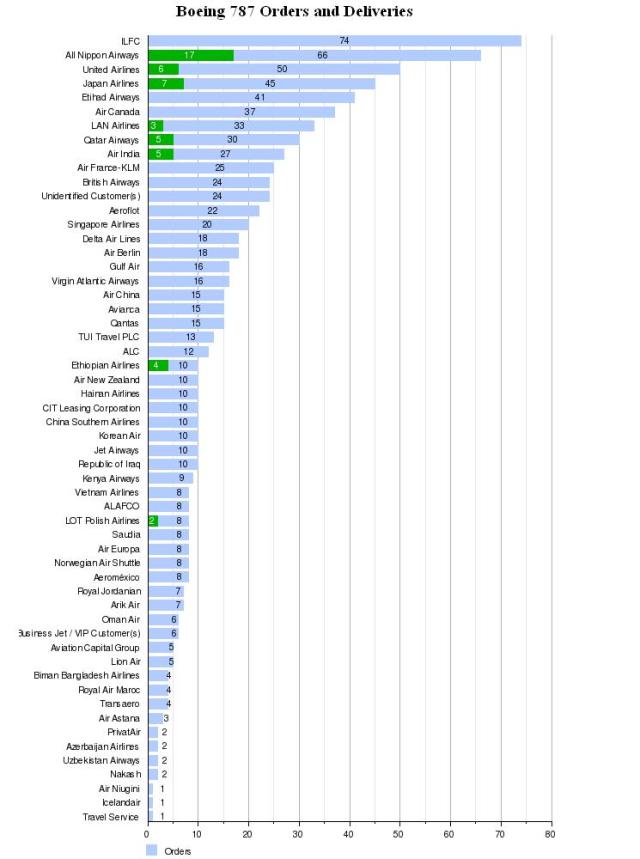
One positive is that Boeing has delivered only 49 of the 848 Dreamliners on order.
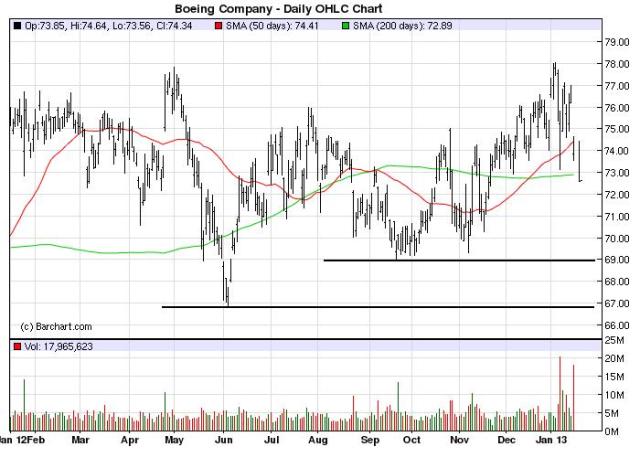
Nevertheless, the stock is down another couple bucks in after hours trading through its 200-day moving average. Our sense is a test of the September low at $69 is in the cards.







 Global Macro Monitor