Apple Defying Gravity in Today’s Downdraft

CNET does a good job summing up why the market is all lathered up over Apple.  Even after yesterday’s $7 plus move the stock is only down 0.20 percent as the overall market gives it up.   Lucky for Issac Newton this company wasn’t around during his day as this Apple just won’t fall (from the tree).

(click here if video is not observable)

Posted in Apple, Technology, Video | Tagged , , | Leave a comment

Chart of the Day: Components of the Gasoline Price

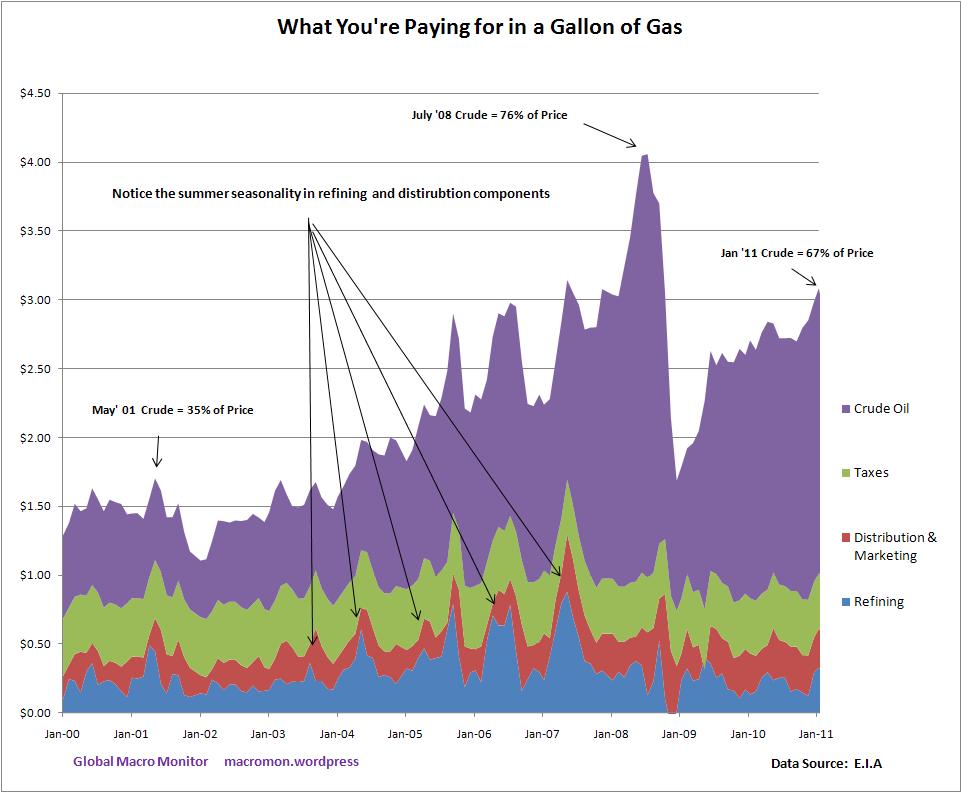
Traveling in California today we witnessed $4.00 gas and prompted us to think what makes up the price.  We constructed the following chart from a U.S. Energy Information Agency (E.I.A.)  time series.

Notice in May 2001 the crude component of a $1.71 gallon of gas was 35 percent of the price versus 76 percent during the Summer ’08 price spike.  Also interesting is the 8 cent loss per gallon for refiners in November ’08 as they were caught holding expensive crude inventories as retail gasoline prices fell 60 percent from July to December.

What a potential toxic inflation brew:  $4.00 gas price, zero percent interest rates, QE2, and an accelerating global economy.  Bonds anyone?  China better slow quickly.

The components for the gasoline are calculated in the following manner in cents per gallon:

Crude Oil – the monthly average of the composite refiner acquisition cost, which is the average price of crude oil purchased by refiners.

Refining Costs & Profits – the difference between the monthly average of the spot price of gasoline (used as a proxy for the value of gasoline as it exits the refinery) and the average price of crude oil purchased by refiners (the crude oil component).

Distribution & Marketing Costs & Profits – the difference between the average retail price of gasoline as computed from EIA’s weekly survey and the sum of the other 3 components.

Taxes – a monthly national average of federal and state taxes applied to gasoline.

(click here if chart is not observable)

Posted in Cartoon of the Day, Commodities, Crude Oil | Tagged | 8 Comments

Cartoon of the Day

We don’t believe this to be true and our friends in the Middle East and North Africa should not think it reflects America’s thinking,  but it’s worth a chuckle.   Hat tip Craig “Big B.”!

(click here if ‘toon is not observable)

Posted in Cartoon of the Day | Tagged | Leave a comment

CNBC Interviews Bridgewater’s Ray Dalio

In case you missed it,  be sure to catch a rare television appearance with hedge fund legend,  Ray Dalio, who manages $89 BN,  more than 3x Yemen’s 2010 GDP.     Bridgewater has been trashed recently in several articles Click here for the CNBC interview.

Here are the  money quotes,

Dalio on US Equities:

U.S. EQUITIES FIRST ARE STILL COMPARATIVELY CHEAP. BUT MORE IMPORTANTLY, THE FLOWS ARE BENEFICIAL TO THEM BECAUSE U.S. EQUITIES BENEFIT FROM CURRENCY DEPRECIATIONS. I THINK, AS I SAY IN 2012, THE DEVELOPED COUNTRIES’ CURRENCIES WILL DEVALUE IN RELATIONSHIP TO THE EMERGING COUNTRIES’ CURRENCIES.

Dalio on the Dollar:

I THINK IT’S INEVITABLE THAT THE DOLLAR’S ROLE AS A WORLD CURRENCY DIMINISH FROM THE DOMINANT WORLD CURRENCY TO ONE OF A FEW AND IT WILL HAPPEN OVER A GRADUAL TIME. WE’VE BEEN VERY LUCKY, BECAUSE THE DOLLAR IS THE WORLD’S CURRENCY AND CONSIDERED THE PLACE THAT’S SAFE SO FOREIGN COUNTRIES WILL SAVE THERE AND WE’VE BEEN ABLE TO BORROW AT CHEAPER RATES THAN WE COULD HAVE OTHERWISE. AND SO THAT IS DIMINISHING.

Dalio on the Emerging Market:

THE ONE WORLD IS BOOMING. THE EMERGING MARKET. INFLATION RATES AND STRONG GROWTH RATE AND TIED THROUGH THIS CURRENCY LINK TO THE U.S., EUROPE AND JAPAN. AND AS A RESULT, THEY HAVE TOTALLY INAPPROPRIATE MONETARY POLICIES BECAUSE IF YOU HAVE A CURRENCY THAT’S LINKED, YOU HAVE INTEREST RATES THAT ARE LINKED. AND IT’S CREATED TOTALLY UNECONOMIC BEHAVIOR IN THOSE COUNTRIES. THIS IS GOING TO BE THE BIG NEXT SEISMIC SHIFT, I BELIEVE. I THINK THAT PROBABLY SOMETHING IN 2012 IT WILL BECOME INTOLERABLE TO MAINTAIN THOSE CURRENCY LINKS AND WE’LL PROBABLY HAVE A BIG SHIFT.

Posted in Equities, Video, Whales | Tagged , , | Leave a comment

Presidential Line of Sucession – Geithner 5th in Line

We were speaking with a friend the other day about Presidential succession and were surprised by our ignorance.  Here is some of our homework, which , if you don’t already know, is  great info to impress over cocktails and share with international friends about the U.S. political system.

Tim Geithner is fifth in line to the Presidency!  The President pro tempore is the second highest ranking Senator  and elected by the Senate.   Interestingly, the Federalists did not want Thomas Jefferson, then Secretary of State, to be next in succession after the V.P. so they rendered SecState to fourth in line.

The following is from Wikipedia,

The Presidential Succession Act of 1792 was the first succession law passed by Congress. The act was contentious because of conflict between the Federalists and Democratic-Republicans. The Federalists did not want the Secretary of State to appear next on the list after the Vice President because Thomas Jefferson was then Secretary of State and had emerged as a Democratic-Republican leader. There were also concerns about including the Chief Justice of the United States since that would go against the separation of powers. The compromise that was worked out established the President pro tempore of the Senate as next in line of succession after the Vice President, followed by the Speaker of the House of Representatives. In either case, these officers were to “act as President of the United States until the disability be removed or a president be elected.”

Presidential Line of Succession

This is a list of the current presidential line of succession,[1] as specified by the United States Constitution and the Presidential Succession Act of 1947[2] as subsequently amended to include newly created cabinet offices.

# Office Current Officer
President of the United States Barack Obama
1 Vice President of the United States Joe Biden
2 Speaker of the House John Boehner
3 President pro tempore of the Senate Daniel Inouye
4 Secretary of State Hillary Clinton
5 Secretary of the Treasury Timothy Geithner
6 Secretary of Defense Robert Gates
7 Attorney General Eric Holder
8 Secretary of the Interior Ken Salazar
9 Secretary of Agriculture Tom Vilsack
10 Secretary of Commerce Gary Locke
11 Secretary of Labor Hilda Solis
12 Secretary of Health and Human Services Kathleen Sebelius
13 Secretary of Housing and Urban Development Shaun Donovan
14 Secretary of Transportation Ray LaHood
15 Secretary of Energy Steven Chu
16 Secretary of Education Arne Duncan
17 Secretary of Veterans Affairs Eric Shinseki
18 Secretary of Homeland Security Janet Napolitano
Posted in Politics | Tagged | Leave a comment

The Tax on Consumers of Higher Gas Prices

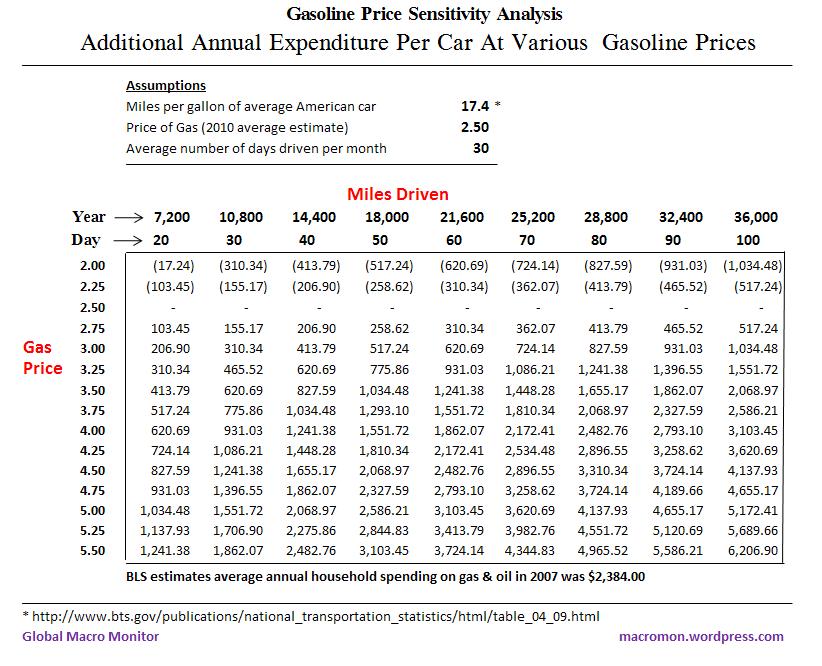
We want to re-post our gas price sensitivity matrix, which illustrates how various prices will impact individual consumers given their average miles driven per day.  We had to make an assumption on the automobile’s gas mileage so we took the national average calculated by the Department of Transportation, which is 17.4 mpg.   We also used an average price of $2.50 per gallon for 2010.

If gas prices were to average $3.75 per gallon in 2011, for example,  a person who drives on average 60 miles per day (21, 6oo annual) will spend and additional $1,551.72 on gasoline during the year.  This is more than the GDP per capita of 30% of the countries  monitored by the IMF and 130 percent of India’s 2010 GDP per capita.    Needless to say, that is some pretty big cheese, especially if there are two commuters in a family.   (click matrix for better resolution and clarity)

(click here if matrix is not observable)

Posted in Crude Oil, Economics, Electric Vehicles | Tagged , , | 11 Comments

China’s Stamp Bubble

Bubbles everywhere in Asia.   The FT’s beyondbrics blog writes,

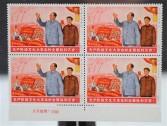
At an auction in Hong Kong this week, a rare block of four stamps from the Cultural Revolution sold for HK$8,970,000 (US$1.1m) – an all-time record for a Chinese stamp or multiple. Including a 15 per cent buyer’s fee, the anonymous buyer paid over US$1.3m for the stamps.

How many times have we seen this picture?  Remember baseball cards and beanie babies in the 1990’s?  Now we French Bordeaux and stamps in Asia.    Too much money chasing too few goods!

We’re sure some economist can explain the stamp bubble as a fundamental shift based on a new set of paradigms in the new reality of our new global economy.  A stamp specialist in the article does just that,  “The key is [the growth of] the Chinese economy.”  We say hogwash and blame it on too many pair-of-dimes printed by the People’s Bank or too much credit created by the people’s banks.

The Economist makes the astute observation and distinction between upward sloping demand curves for investment goods (momentum trading and investing, anyone?)  versus downward sloping ones for consumer goods,

But here’s the thing. When prices for consumption goods soar consumption growth falls, which limits further increses, OR rising prices feed back into wage increases and generate broader inflation. That’s not an ideal situation for the Chinese economy, but it would have some positive effect on rebalancing, it’s an easily observable process, and it’s curable with an expectations-adjusting period of monetary tightening and slower growth (or recession). But when prices for investment goods soar, demand for investment goods may increase as new buyers speculate that price rises will continue. The result is a bubble, and the impact can be extremely pernicious. In the present, serious misallocations of capital can result. In the future, the inevitable crash may lead to a deeper, more painful downturn.

Jim Chanos must be salivating as these are the stories that usually mark a top.  If you click on his interview, Chanos states that fixed asset investment in China is now 7o percent of GDP.   We would love to see some good data on China’s domestic credit.    Stay tuned!

Posted in China, Currency, Monetary Policy | Tagged , , | 2 Comments

Apple Faces Key Test w/ iPad2 Release

We’re watching Apple very closely on the release of iPad2.  The chart below shows the stock is in a testing zone.  The recent high of $355.72 needs to be taken out on the release and/or the $341.13 50-day moving average needs to hold its third test since the + 50 percent rally began last August.  The 50-day also also coincides with trendline support.

We think Apple is the best company in the world and Steve Jobs the modern day Thomas Edison,  but the stock needs to pass an important driving test here.   It is a major holding of the leveraged set.    Today should be interesting.

(click here if chart is not observable)

Posted in Apple | Tagged | Leave a comment

Cartoon of the Day

This ‘toon appears to have been doctored by someone who is not a fan of economists, no?   Can you blame them?   Hat tip,  Larry W.!

Posted in Cartoon of the Day | Tagged | 3 Comments

Joseph Nye on Charlie Rose

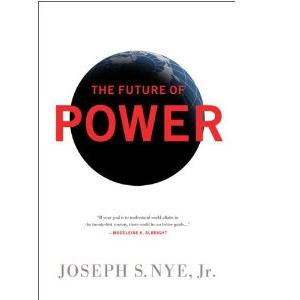
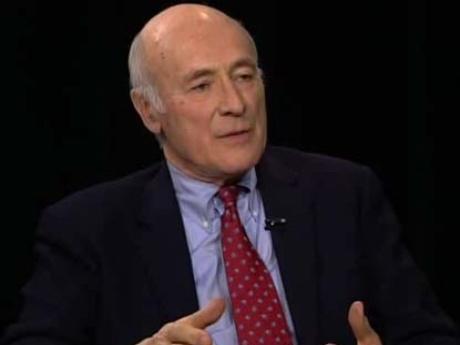
Excellent Charlie Rose interview with Joseph Nye, who talks about his new book, The Future of Power,  covering subjects such as the global power shift, technological change and the diffusion of power away from centralized governments,  China,  Egypt, and much more.

Nye is currently University Distinguished Service Professor at the Kennedy School of Government at Harvard University, and previously served as dean there.  He has published many works in recent years, the most recent of which being “Understanding International Conflicts”, “The Power Game: A Washington Novel”, “Soft Power: The Means to Success in World Politics”, and “The Paradox of American Power”. Nye coined the term “soft power” in the late 1980s and it first came into widespread usage following a piece he wrote in “Foreign Policy” in the early 1990s.

Click here for the interview.

Posted in Egypt, Geopolitical, Policy, Politics, Video | Tagged , | Leave a comment