A Happy Father’s Day! Ditto for all the single moms, who never had a father around to help with the kids. They are superheroes in my book and will be the first in the Kingdom.
I have a single mom friend, whose kids shower her with Father’s Day gifts, as she stepped up and did the job of both mother and father. She even walked her oldest down the aisle at her wedding.
Spiritual Experience
Everytime my daughters call me “daddy” – which is more scarce these days now as they grow older, and the term has morphed into just “dad” – it, still, after all these years, is a spiritual experience.
Ever since I was a young boy, I’ve followed basketball From ‘Frisco down to Oakland The ‘Dubs can whip them all But I ain’t seen nothing like them In any roundball hall That Steph, Wiggo, Dray and Klay kid Sure play a mean b-ball! They’re the Pinball Wizards There has got to be a twist The Pinball Wizards Love the sound of that three point swish!
Dub Dynasty > Duck Dynasty. Stunning season, stunning team. Great locker room chemistry. Great bunch of guys and awesome head coach. Humble, super-duper srars. Tremendous human beings. One for the GOATs.
It won’t matter until it does, and then it will matter, and really matter. – GMM
We are reposting a piece on inflation from last summer. The markets’ myopia never ceases to amaze.
If you don’t want to read the repost, here’s the above quote in context.
Upshot
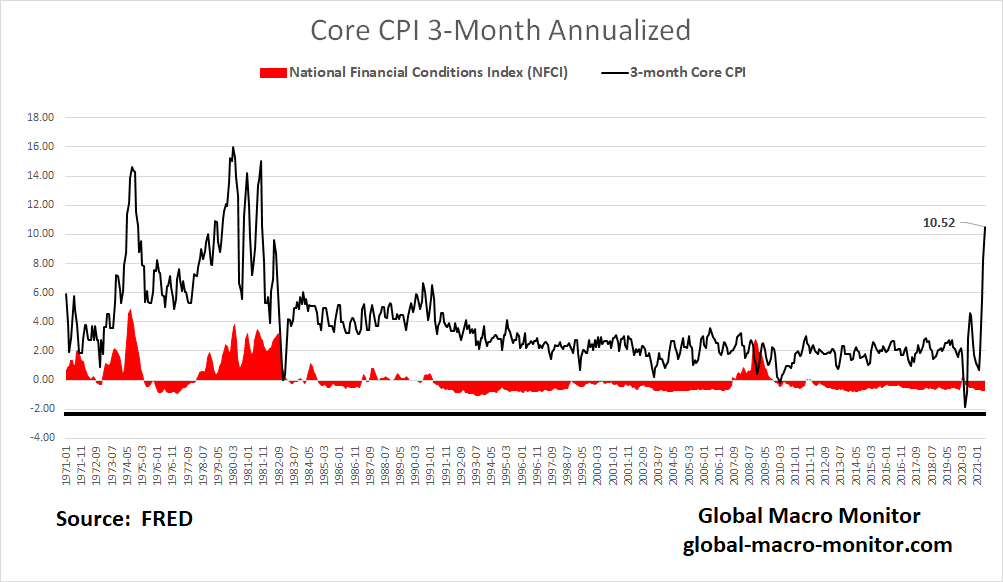
When today’s inflation print is put into the context of current financial conditions, as measured by the Chicago’s Fed Index, the U.S. economy has never seen this high short-term core inflation with such easy financial conditions, at least in the 50-year data set, we are looking at.
It won’t matter until it does, and then it will matter, and really matter.
Until then everyone’s making money, the Wall Street crowd tells us everything is awesome, and to party like its the 1920’s, maybe right off a fiscal cliff.
Wall Street and the government, who have a vested interest in low inflation prints, will promote the transitory narrative. Seniors and those on fixed-incomes will suffer until their Social Security cost of living increases (COLA) partially make them whole.
We also doubt seniors are buying used cars. Someone should go ask them if their monthly purchasing power is increasing or decreasing.
Markets
The markets?
They’ll get religion but the timing is tough. – GMM, July ‘21
The S&P500 closed at 4369.21 on the day of that post, 14 percent higher than today’s close. FOMO kills.
Our beloved Carol K. starts a new risky treatment this week to try and conquer her serious illness. Everyone at GMM and all of our readers are with you, girlfriend!
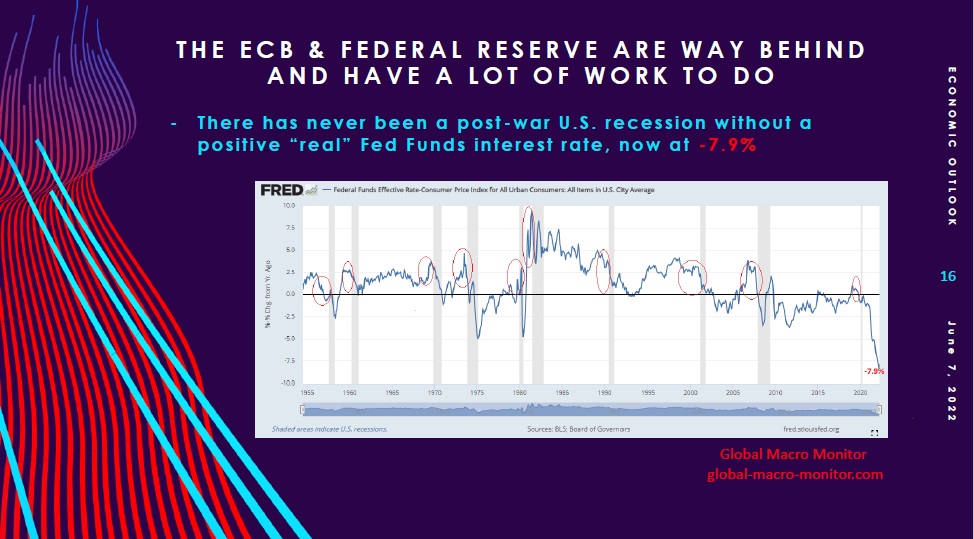
Can’t wait to hear the Chairman justify zero rate policy and deficit monetization with inflation roaring at > 5 percent. It would be entertaining, if it weren’t so damaging.
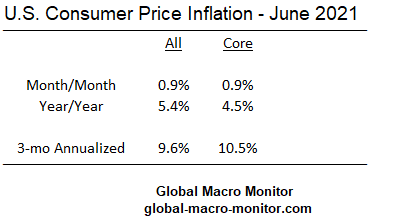
The past three months of core CPI inflation prints have been big, big, big — 0.9, 0.7, and 0.9 percent, respectively. There is zero “base effect” on these data, folks.
If annualized, as the GDP prints are, the economy hasn’t seen this type of three-month core inflation since 1981.
Sure, some have to do with the reopening, and some not.
Our priors are policymakers have distorted too many markets, over-stimulated the economy, and pumped too much high-powered money into the global economy. China rejoined the party last night.
My Lobster Roll Restaurant
We keep waiting for a new Lobster Roll (rare in Wine Country) restaurant to open up on my street, for example, and it’s taking forever. I spoke to the owner yesterday, who said he couldn’t find workers.
What the Fed believes is a demand problem to recover all the jobs lost to COVID is, in reality, a supply problem. Put the academic models down and go talk with the small businesses.
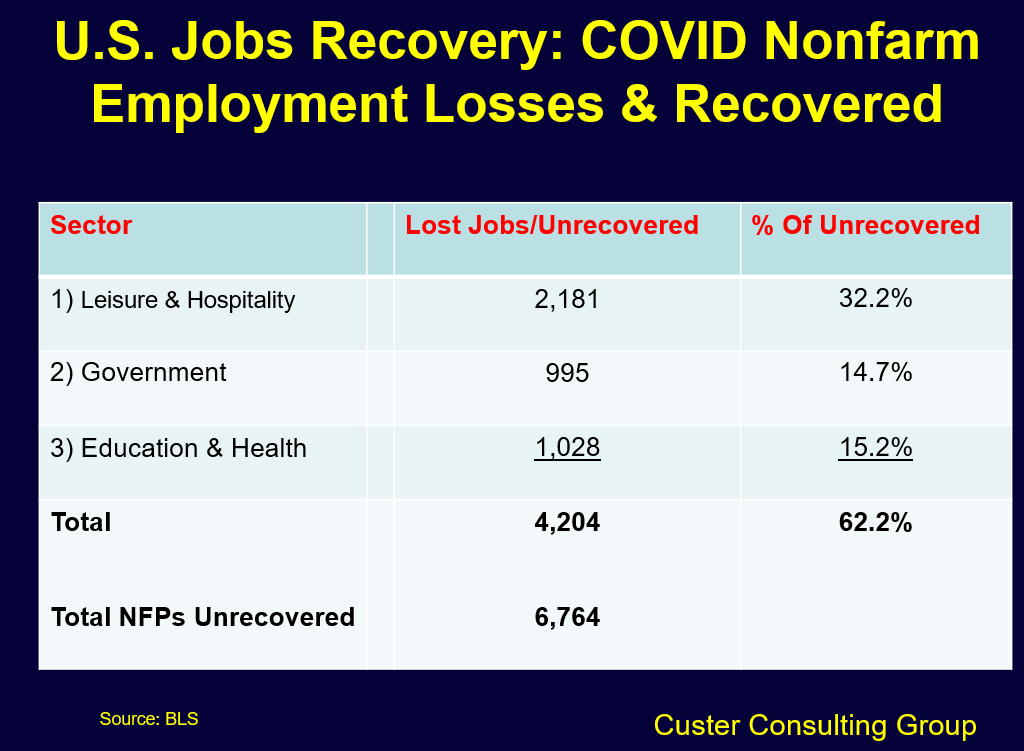
We maintain there is a shortage of labor at the given wage rates for much of the leisure and hospitality sector, which makes up about 12 percent of nonfarm payrolls yet 32 percent of unrecovered lost jobs lost to COVID. The jobs aren’t returning for lack of demand, mitigated by easy monetary policy. Still, most of the lost jobs are in three sectors, where we suspect will have to pay higher wages and benefits to attract workers.
We support higher wages if small businesses, which employ almost half the labor force, have the margins to pay and the ability to improve the productivity of their workers. Otherwise, they will pass the wage increases on with higher prices or shut the doors.
I believe we are witnessing that now.
Upshot
When today’s inflation print is put into the context of current financial conditions, as measured by the Chicago’s Fed Index, the U.S. economy has never seen this high short-term core inflation with such easy financial conditions, at least in the 50-year data set, we are looking at.
It won’t matter until it does, and then it will matter, and really matter.
Until then everyone’s making money, the Wall Street crowd tells us everything is awesome, and to party like its the 1920’s, maybe right off a fiscal cliff.
Wall Street and the government, who have a vested interested in low inflation prints, will promote the transitory narrative. Seniors and those on fixed-incomes will suffer until their Social Security cost of living increases (COLA) partially make them whole.
We also doubt seniors are buying used cars. Someone should go ask them if their monthly purchasing power is increasing or decreasing.
Markets
The markets?
They’ll get religion but the timing is tough.
When they do, however, and start selling assets, the “D” word, as in deflation will be back in the headlines because that is the kind of asset-dependent economy the U.S. has morphed into, folks.
Marx (Karl, not Groucho) was wrong on many things but had a brilliant analysis of how society progresses through conflict, explained by the Hegelian dialectic. We apply it to monetary policy analysis
In the asset-dependent economy, where asset prices need to rise to stimulate demand as wages and income are insufficient to clear the goods market, valuations eventually overshoot, consumers begin to feel like millionaires, and start to spend that wealth.
Goods and service price pressures increase, monetary authorities react — not sure if they can now given valuation and debt levels — by pumping the breaks and asset markets flop. Wash, rinse, repeat.
We concede the wealth effect is much less prominent with the uber wealthy as they have much lower average and propensities to consume than the middle class but the asset markets have a much larger outsized effect than most economists tend to believe. This is being tested in real time with the COVID as real “helicopter money” is getting to the hands that need it and spend it. But inflation…
The thesis – inflation — sows the seeds for the anti-thesis forces – deflation – when monetary policy is perceived to be about to change. From that conflict arises the synthesis, a new and more convoluted monetary policy to prop up assets.
The dialectic is probably coming to an end, however, as inflation ticks up and the Fed is now perceived as the problem and not the cavalry.
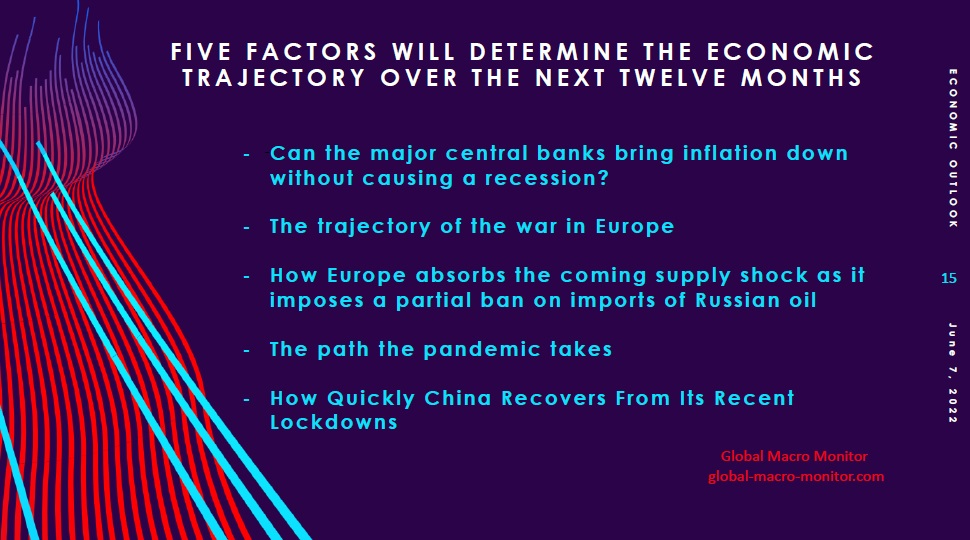
I am out of the country and thought you might be interested in my economic presentation prepared for a European manufacturing trade group (note the European bias and context).
Click here to view the full presentation. A loud shoutout to Focus Economics for helping with the quarterly forecasts.
When presenting to noneconomists the best practice is to Keep It Simple Stupid (KISS).
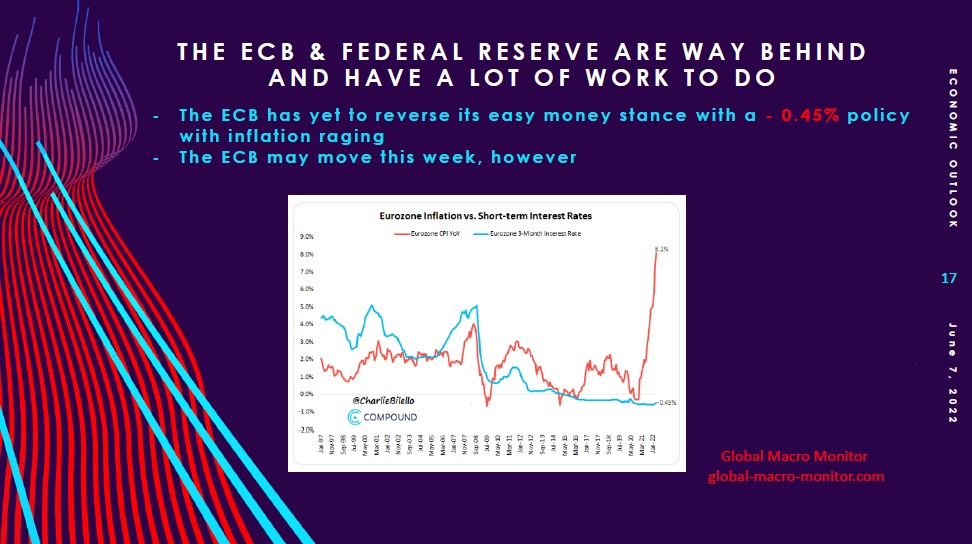
Europe is facing some big challenges ahead. The ECB still maintains a negative 45 bps policy rate as inflation rages around 8 percent. We suspect this is going to result in some major political blowback in Germany and other northern European countries toward the Eurozone.
More flybys to come during the summer. Stay tuned.
GMM will be laying low this summer, working on a special project, recharging our batteries, and working through the rest of the Five Stages of Grief after losing Carol K. We had planned a big reset and revamp of our website with her as a full partner. She was so close and fought so hard and bravely but her body was just too broken.
We are at the beginning of the end of Stage 1 – Denial. Now for the hard part.
We will be checking in on occasions, opining on the global economy and markets from time to time so keep us on your radar.
Good luck to you all in this Summer of Discontent.
The classic line from the cult movie, The Graduate, needs some updating.
Thank goodness for the creative destruction of capitalism. The following video epitomizes the answer to many of the world’s problems — private sector innovation and entrepreneurship. In many cases, a private-public sector partnership works even better. Put ideology aside and let’s get it done, folks.
If you’re wondering why we’ve been pounding the table, warning of the evils of inflation over the past 24 months, I received a text from an old college baseball buddy this weekend, which encapsulates the fiery coals and burning sulfur of inflation now raining down on the least fortunate.
Inflation is way too high given extremely easy financial and monetary conditions. There will be blood. – GMM, June 2021
Donnie J. (DJ)
First, let me tell you the backstory and an interesting baseball adventure I had with my buddy. Let’s call him Donnie J (DJ).
DJ lived only for baseball and barely attended the necessary classes to remain eligible. He never graduated and continued to play semi-pro after I graduated and was off to grad school.
Every MLB Draft Day, DJ would anxiously sit by the phone waiting for “the call” from a major league baseball club. I think he still checks his phone to see if “the call” came every year on every draft day, even decades later.
After DJ finished playing ball he banged around, partied a lot, had some odd jobs, and finally settled in as a bartender. If the guy only applied the confidence he had on the baseball diamond to developing a career, the following text would not exist.
I’m alive. Been working a lot, including from 9pm last night until 3 this morning. They raised my rent 190 dollars starting next month. I’m afraid it’s the beginning of the end. Not only for me , but for a lot of people. Thank God I’ve kept up a Adonis type body , that I can still make a living on Hollywood Blvd I’ll call you later tonight. – Donnie J.
He still has his sense of humor even in the most desperate of times. If you’re offended by his joke, you’re part of the problem that is ripping our culture apart.
The Great Adventure: Going To Prison
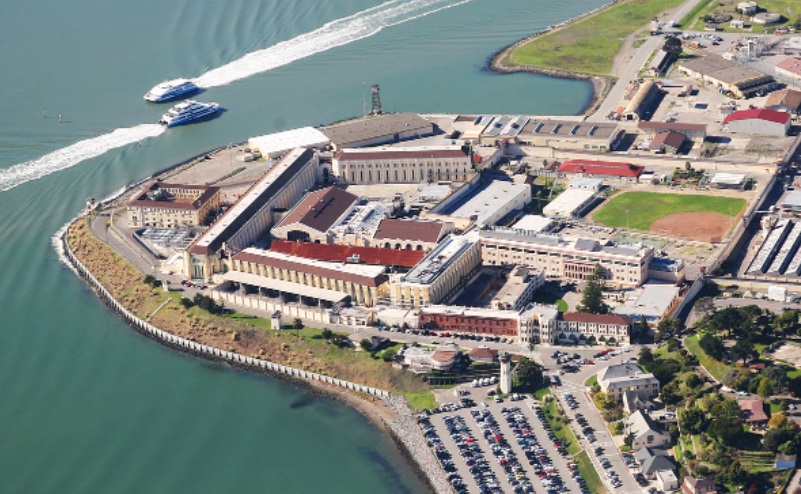
The adventure happened one spring Saturday during my sophomore year. Our college team had been invited inside San Quentin (SQ) Prison in Marin County, California, to square off against the SQ Giants.
That day, only ballplayers were allowed out of their cells because a lockdown was in place, the result of a riot in the yard a few days earlier.
The correctional officers gave a tour of the gymnasium before leading us out to the ballfield. The gym had a professional boxing ring, which DJ and I immediately jumped in and started sparring. Our teammates said it was the best boxing match since the Ali-Frazier fights.
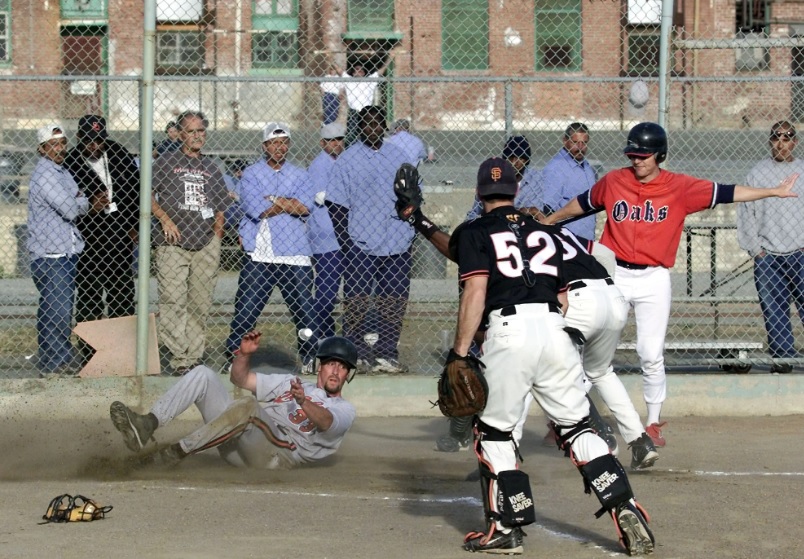
We then proceeded to the baseball field, where we crushed the SQ Giants. We both had good days at the plate.
DJ hit behind me in the cleanup position (fourth to bat). He took advantage of the short right-field porch and knocked two home runs over the prison wall.
Beanball
My takeaway memory was not that I had several hits and RBIs, but the SQ pitcher beaned me square in the head with a 90 mph fastball. I went down, and immediately, every SQ Giant, both starters and benchwarmers, ran to my aid with words of comfort,
“You OKAY, man? Should we call for a doctor?”
Laying in the batter’s box, my stereotype that all prisoners were sociopathic murderous thugs quickly melted away. Years later when President Obama became the first sitting president to visit a federal prison, his words personally rang so true when he stated,
“These are young people who made mistakes that aren’t that different than the mistakes I made and the mistakes that a lot of you guys made.” – President Obama, July 2015
Me too. What distinguishes many convicts, Obama said, is a lack of support and second chances.
I was okay, picked myself up, and gave thanks to the baseball gods for batting helmets.
Tennis Pro Doing Time For Extortion
I played third base that game and had long chats with the SQ Giants’ third base coach. He had been a tennis teaching pro at some plush country club and was doing time for extortion, and I didn’t press him for details.
He ran down the Giants lineup of what every player was doing time for — centerfielder and shortstop in for Murder One! It surprised the hell out of me because those two guys were the first to rush to my aid and showed the most grace as I was laid out in the batter’s box.
Therefore, I tell you, [their] many sins have been forgiven—as [their] great love has shown. But whoever has been forgiven little loves little.” – Gospel of Luke
That was not my last time playing ball in a petitionary, and no, I can assure you it wasn’t in pinstripes.
Making Inflation Is Fun, Profitable For Many, But Never Sustainable
Creating inflation is fun, and many have benefited from the irresponsible monetary policy that has driven asset price inflation, which usually proceeds to a burst of goods and services inflation, a monetary reversal, and mucho pain for the least fortunate.
Much like drinking too much Sambuca, it tastes great at the time but too much drink produces a long and nasty hangover, and many won’t make it through this inflationary period, as DJ’s text cries out.
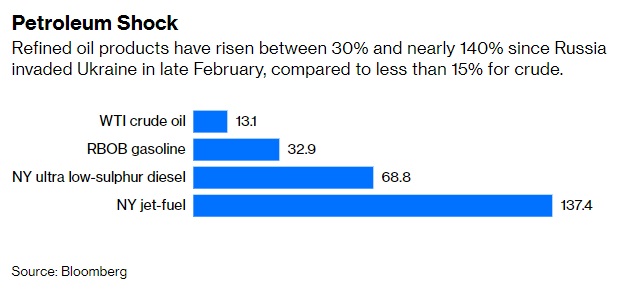
The traditional relationship between crude and refined products is broken. WTI is anchored around $100-$110 a barrel, suggesting that — in barrel terms — gasoline, diesel and jet-fuel prices shouldn’t be much higher, once you add the average refining margin.
Take jet-fuel: in New York harbor, a key hub, it’s changing hands at the equivalent to $275 per barrel. Diesel isn’t far away, at about $175 a barrel. And gasoline is at about $155 a barrel.
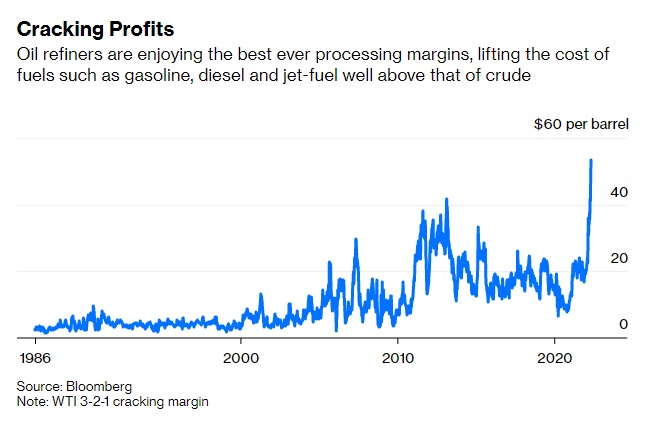
The industry measures refining margins using a rough calculation called the “3-2-1 crack spread”: for every three barrels of WTI crude oil the refinery processes, it makes two barrels of gasoline and one barrel of distillate fuel like diesel and jet-fuel.
From 1985 to 2021, the crack spread averaged about $10.50 a barrel.
Last week, however, the margin jumped to a record high of nearly $55. Crack margins for diesel and other petroleum products surged much higher. – Bloomberg
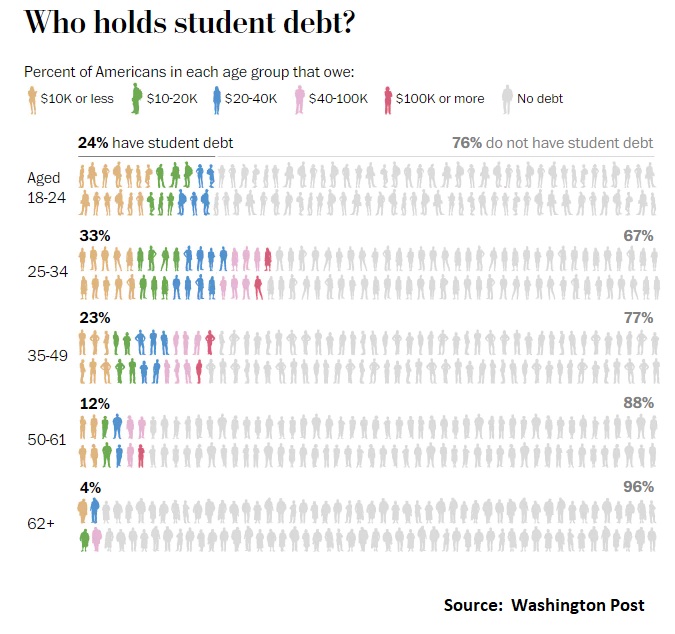
2. Student Debt
Soaring college costs, higher enrollment, changes to the federal lending system, labor market demand for credentials and paltry wage growth have all contributed to the $1.6 trillion in outstanding federal student debt. This does not include debt originated in the private market.
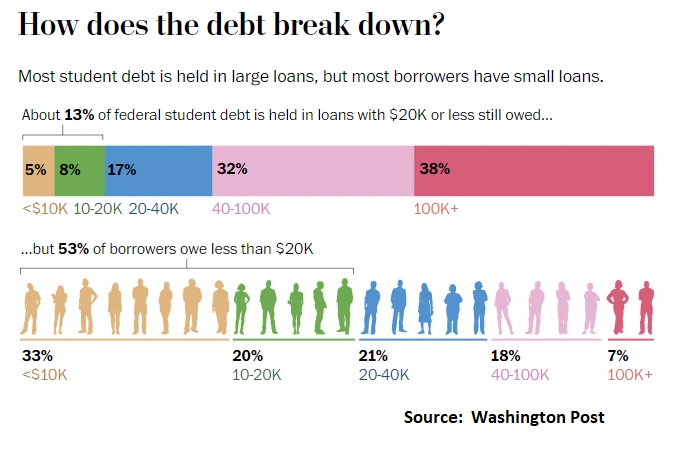
Most student debt is held in large loans, but most borrowers have small loans.
1 in 5 Americans hold student loans. More than half of those 45 million people with federal student loans have $20,000 or less to pay, with about a third of all borrowers owing less than $10,000. Seven percent of people with federal debt owe more than $100,000
Economists at the Federal Reserve say borrowers with the least amount of debt often have difficulty repaying their loans, at times because they did not complete a degree.
Conversely, people with the highest loan balances are often current on their payments likely because of their higher education levels and associated earning power, according to the Federal Reserve.
Among the fastest-growing categories of student loan borrowers over the past two decades are Black students and people ages 50 and older. – Washington Post
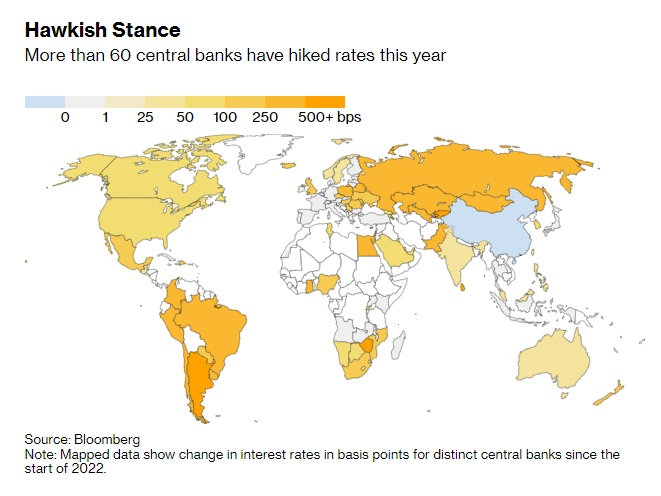
Policy makers in Russia cut rates in an effort to prop up its economy, but it has still boosted more than lowered rates for the year.
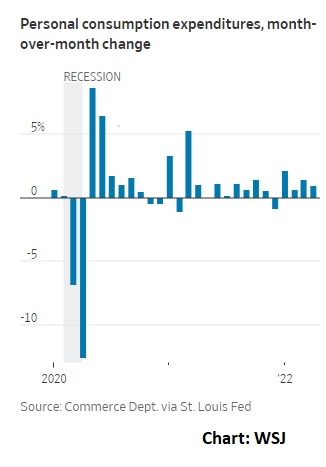
4. The Dusenberry Effect: Is The American Consumer Tapped Out?
U.S. households boosted spending for a fourth straight month in April.
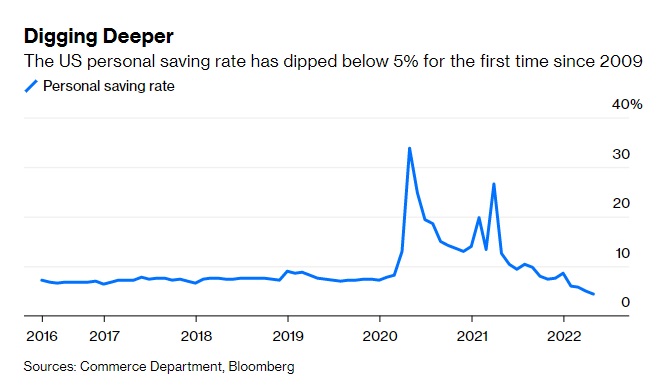
The savings rate fell to the lowest in 14 years.
“We have finally reached the point where households are dipping into their $4 trillion of excess savings,” said Stephen Stanley, chief economist at Amherst Pierpont.
Personal income rose a seasonally adjusted 0.4% last month. Adjusted for inflation, disposable income was flat during the month, showing that wage increases are struggling to keep up.
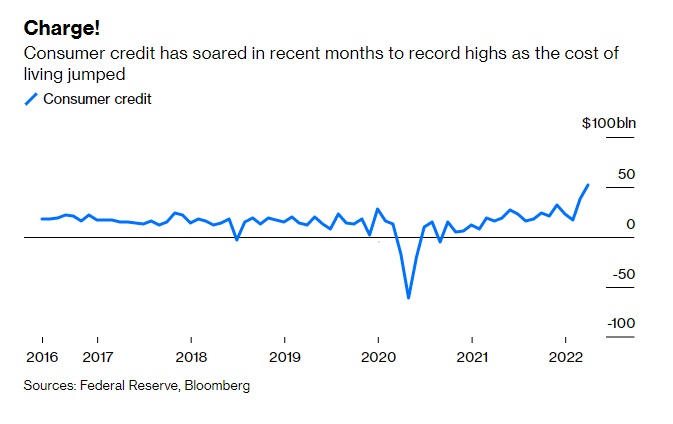
Consumers are taking on more debt to maintain their spending habits. The Fed said earlier this month that total credit rose a record $52.4 billion in March from April after a revised $37.7 billion gain in February.
Our dissertation research was on the “Dusenberry Effect,” where consumers slowly ratchet down their spending habits and are stubborn to maintain their standard of living, even if it means using debt to do so. – WSJ & Bloomberg
5. Nvidia’s Valuation Is In A “Mean” Reversion To The Mean
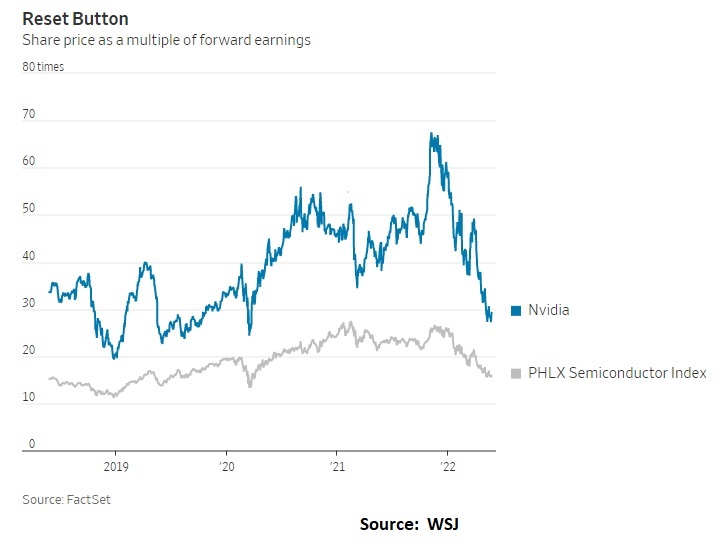
Financial results for Nvidia’s fiscal first quarter ended May 1 came in ahead of expectations, at least in the key business segments of videogames and data centers. Revenue surged 46% year over year to about $8.3 billion and adjusted operating earnings jumped even more, by 55% to a record high of nearly $4 billion.
Nvidia’s revenue forecast for the current quarter was about 4% below Wall Street’s targets—a notable miss for a company that has projected above the consensus view for the last nine quarters by an average of 10% each time.
The disappointing forecast stems from a projected $500 million hit from lost sales in Russia and Covid-19 lockdowns in China.
The market’s brutal tech correction has cut that multiple in half, and Nvidia’s premium to the PHLX Semiconductor Index is now well below what it has averaged to the peer group over the last four years. – WSJ
6.More Seniors Unretiring
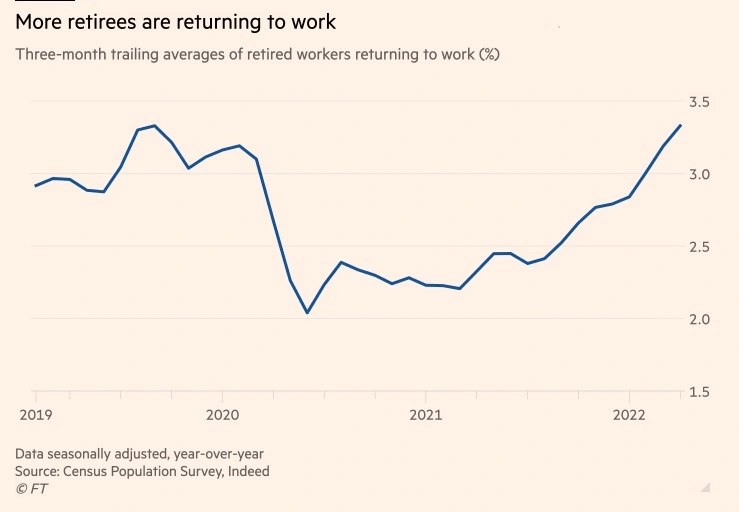
An estimated 1.5 million retirees have reentered the U.S. labor market over the past year, according to an analysis of Labor Department data by Nick Bunker, an economist at Indeed.
Many retirees are being pulled back to jobsby a combination of diminishing covid concerns and more flexible work arrangements at a time when employers are desperate for workers.
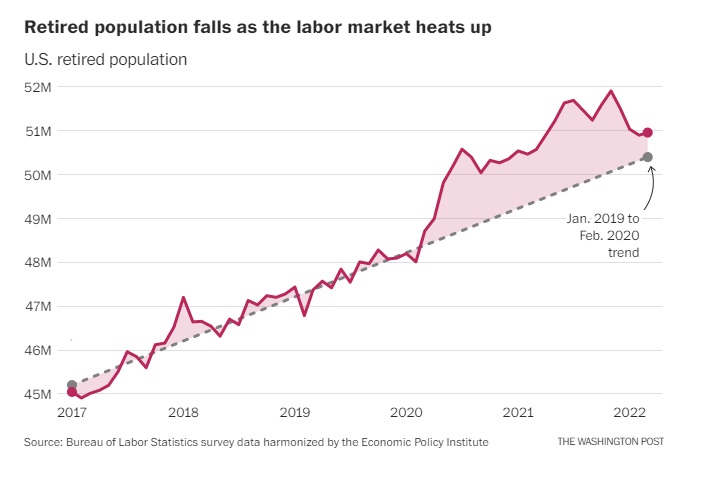
Roughly 2.4 million additional Americans retired in the first 18 months of the pandemic than expected, making up the majority of the 4.2 million people who left the labor force between March 2020 and July 2021.
The bounce back comes as U.S. employers continue to complain of widespread labor shortages, with twice as many available positions as there are unemployed Americans, according to the Labor Department. – Washington Post
7. Polyester Overtakes Cotton & Requires Petrochemicals To Produce
Modern textiles rely heavily on petrochemical products.
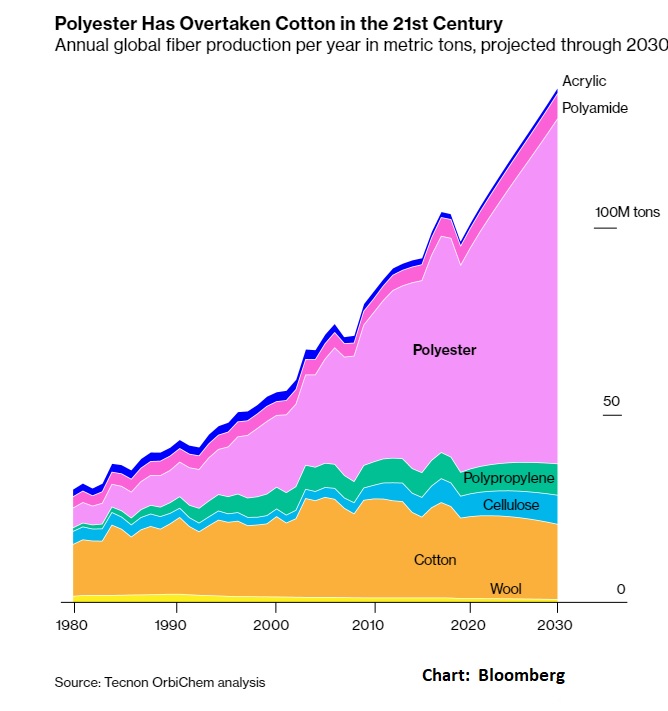
Most clothing around the world is made with polyester, the synthetic fiber derived predominantly from petroleum. It has overtaken cotton as the main textile fiber of the 21st century, ending hundreds of years of cotton’s dominance.
Fashion accounts for up to 10% of global carbon dioxide output—more than international flights and shipping combined, according to the United Nations Environment Programme.
The global market for polyester yarn is expected to grow from $106 billion in 2022 to $174.7 billion by 2032.
Only a fraction of what’s manufactured gets recycled. Eighty-seven percent of the total fiber input used for clothing is ultimately incinerated or sent to a landfill.
Yearly polyester fiber production is projected to exceed 92 million tons in the next 10 years–an increase of 47%.
Not all polyester is produced from petroleum; it can also be made from natural polymers, like bioplastics, but those alternatives only make up a small fraction of polyester in the fashion industry.
It’s been marketed as more sustainable than some natural fibers because the production process doesn’t require as much water or land as growing natural fibers like cotton.
In 2015, polyester production for clothing emitted 282 billion tons of carbon dioxide, triple that of cotton.
Synthetic textiles like polyester shed tiny pieces of plastic with every wash and wear. These plastic particles, called microplastics, pollute the oceans, freshwater and land and pose a danger to the animals that consume them. – Bloomberg
8. Emerging Market Bonds Suffering Worst Losses In Three Decades
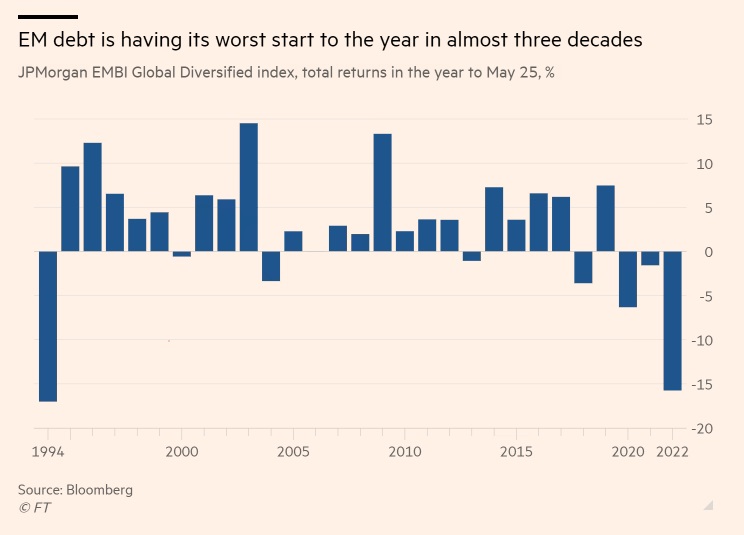
The benchmark index of dollar-denominated EM sovereign bonds, the JPMorgan EMBI Global Diversified, has delivered total returns of around minus 15 per cent so far in 2022.
Nearly $36bn has flowed out of emerging market mutual and exchange traded bond funds since the start of the year.
China, the world’s biggest emerging market, has faced some of the heaviest selling.
The shock to commodity prices caused by the war in Ukraine has added to the strain on many developing countries that rely on imports to meet their needs for food and energy.
When it rains, it pours. The COVID and Ukraine shock has ripped the veil from the “Wizard of Oz” economy. Follow the crypto brick road.
Deglobalization Cometh
Americans are beginning to experience what a world feels like as its moves toward autarky. You know, “let’s re-shore the supply chain” and the notion that erecting trade barriers will protect some American workers from foreign competition but punish all with higher inflation. Almost all structural disinflationary forces that have powered the global economy for the past 25 years are reversing.
The West Has A Demographic Problem
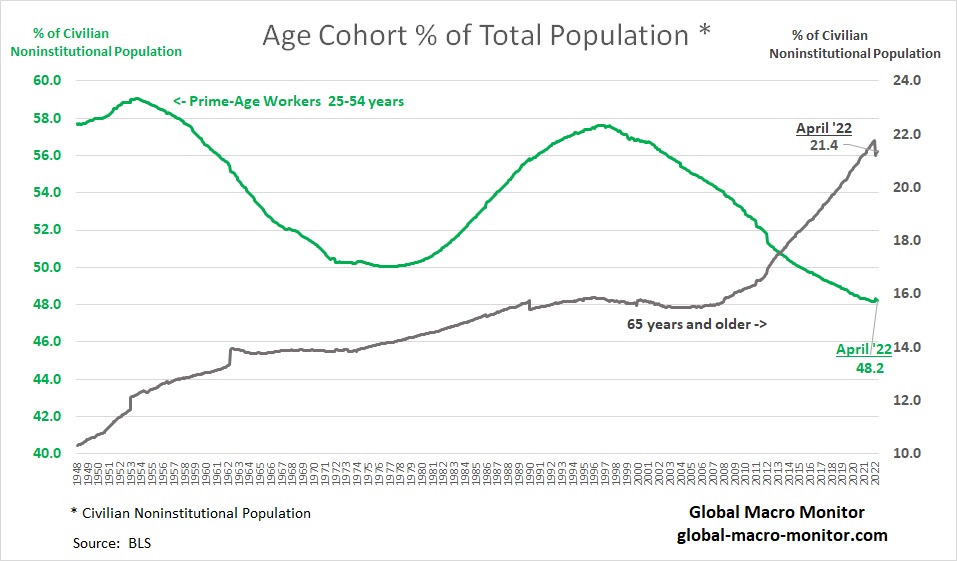
The following chart illustrates the shrinking share of the U.S. population of prime-age workers — 25 to 54 year-olds — and the spiking senior population.
We never really internalized the demographic-deflation argument, and we believe just the opposite.
Fewer productive workers shift the long-term aggregate supply left, which causes higher inflation and slower potential economic growth.
Japan’s Pensioners Wiped Out After Bubble Burst
We believe Japan is a terrible example, as the savings and pensions of their aging population were obliterated after the country’s asset bubble burst on New Year’s Eve 1989,
[More than] thirty years on from its all-time high, the Nikkei Stock Average is still languishing about 40% below the peak of 38,915 scaled on Dec. 29, 1989. The Japanese stock market’s uphill climb to regain lost ground is the longest in the history of any major economy.
The bursting of Japan’s wild asset-price bubble left a nation of disillusioned and embittered individual investors. – Nikkei Asia
The Nikkei index still sits 33 percent below its peak of over 32 years ago.
Imagine the demand destruction of a generation of American retirees if the S&P500 was trading at the Nikkei equivalent of 2785 in 2054. Simply unfathomable!
We are still working on our labor market piece, which we hope to post on Memorial Day, and are not quite ready to submit the above to a peer-reviewed economic journal. Not yet.









 Global Macro Monitor