S&P500’s Five Hottest First Two Months Since 1950

The final trade is in for February and the S&P500 is up 11.07 percent in the first two months of the year.  It is the fourth strongest start for the S&P since 1950.

The table shows that such strong Jan/Feb price momentum has historically carried over into March.  In three of the other four years — 1987 the exception — the index finished the year higher than the February close.   Three of the top four are bounce years, where the S&P return was negative in the prior year.

The S&P is having trouble clearing and closing above the 2800 level, the December high and the last of the key Fibo retracement levels of the recent bear market.  In addition, 2815 is formidable resistance.

There you go, folks.  Ready to continue with the  momo challenge?


S&P500_JanFeb


S&P500_Chart

Posted in Equity, Uncategorized | Tagged , | 4 Comments

QOTD: Free Trade, Please…

Free_trade


The only policy that left- and right-wing populists can agree on to address economic decline is trade protectionism, which will make the world poorer.  A new type of populism that puts more trust in local communities may well have a greater chance of success – Raghuram Rajan

Posted in Quote of the Day, Trade War, Uncategorized | Tagged , , , | Leave a comment

BFTP: Pass The NorKo, My Back Aches

BFTP = Blast From The Past

Trump_Kim


As POTUS travels back to the States after his meeting with the North Korean leader, we are reposting a piece we wrote last April.  We were kind of lone rangers and took some wrath as almost everyone was lathered up about a North Korean peace deal and chants of “Nobel Peace Prize!” were ubiquitous at Trump rallies.

Our quick analysis of the recent summit is that both leaders badly misjudged each other leading up to Vietnam summit.  Trump, in his chummy relationship with Kim, and Kim, probably receiving bad advice from China and Russia that Trump was desperate for a “win” and was willing to give away the store.

A Signal To China?

Could Trump be sending a signal to President Xi?  A signal “not so fast” on a China-U.S. trade deal?  That is he’s not going to roll over that easy?

The market has not priced what we call a “Mad King” risk premium, where POTUS abruptly “walks” from what was a done deal after being accused of being weak by his right flank, similar to what triggered the government shutdown.

You know our view that North Korea is just a pawn in the bigger geopolitical power struggle between the U.S. and a rising China with Russia playing her bit part.

Our conclusion back then (last April)?

Curb Your Enthusiasm 

George W. doesn’t have a Nobel Peace Prize that we know of.

We have always believed talking to adversaries is always a good thing.  Kudos to POTUS for doing so.

Making love?  Not so much.  The complications of our diplomatic “one-night stand” and “foreign affair” with Kim the Young-un now begins.


“Deja Vu All Over Again” In Korea

That was then (2005),

North Korea vows to abandon nuclear weapons project

· Cautious welcome by Bush for road map deal
· Aid and US promise not to invade seals agreement
.
North Korea has agreed in principle to end its nuclear weapons programme and rejoin the international non-proliferation treaty, marking the biggest breakthrough in its three-year stand-off with the US.
.
Under a draft accord issued by North Korea and five other countries in Beijing yesterday, the reclusive state promised to give up its main bargaining chip in return for energy, economic aid and a US promise not to attack.  – The Guardian,  Sept 19, 2005


This is now,

Kim Prepared to Cede Nuclear Weapons if U.S. Pledges Not to Invade

SEOUL, South Korea — North Korea’s leader, Kim Jong Un, told President Moon Jae-in of South Korea when they met that he would abandon his nuclear weapons if the United States would agree to formally end the Korean War and promise that it would not invade his country, a South Korean government spokesman said Sunday.

In a faith-building gesture ahead of a summit meeting with President Trump, Mr. Kim also said he would invite experts and journalists from South Korea and the United States to watch the shutdown next month of his country’s only known underground nuclear test site.  – NY Times, April 29, 2018

Eyes Wide Open

This administration has its eyes wide open. We know the history. We know the risks. We’re going to be very different. We’re going to negotiate in a different way than has been done before.  We use the word irreversible with great intention. We’re going to require those steps that demonstrate that denuclearization is going to be achieved. We’re not going to make promises. We’re not going to take words. We’re going to look for actions and deeds. – Secretary of State Mike Pompeo, April 29

Like Father, Like Son

How do you know that the North Korean regime is lying? Answer: Their lips are moving. – National Security Adviser John Bolton 

Curb Your Enthusiasm 

George W. doesn’t have a Nobel Peace Prize that we know of.

We also hope it is not an all or nothing negotiation with Trump and Kim.  The environment seems ripe to make the world safer and the lives better for the Koreans even if it just incremental and without achieving total victory as the administration sees it.

Posted in Uncategorized | 1 Comment

“Crowding Out” Caused The Q4 Stock Swoon

In what we consider one of our best and most timely all-time posts, The Gathering Storm In The Treasury Market 2.0, a must-read tome on the structural changes taking place in the U.S. Treasury market, we warned at the end of last September,

Crowding Out Begins

Therefore, it is no surprise, at least to us,  global markets, beginning with the most vulnerable twin deficit EMs, are experiencing significant pressure from the crowding out caused by the U.S. Treasury’s massive increase in market borrowing.

U.S. Government Hoovering Up Global Funding

The following table illustrates the Treasury borrowed close to $1 trillion from the public in the first eight months of 2018, more than a trillion dollar swing from the same period last year.   – GMM,  September 24th

We also noted that the traditional buyers of U.S. Treasury securities were disappearing:

  • The Treasury has to increase its market borrowing as the Fed rolls off its SOMA Treasury portfolio
  • Social security has moved into deficit and borrowing from its trust funds to finance the on-budget deficits is over
  • Globalization is under threat, and foreign capital flows into the U.S., particularly the Treasury market, are declining

We warned that long-term interest rates were about to spike, which they did breaking out to 3.26 percent causing the fourth quarter collapse in stocks.  The one thing that Mr. Market really fears, in our opinion and inference from the price action,  is a spike in long-term interest rates.

Yields and the S&P

The sharp compressed collapse in stocks triggered haven flows and stock short sellers back into the Treasury market at the expense of other assets putting downward pressure on long-term rates.  We did anticipate this,

All bets off given a geopolitical shock — we are concerned how quickly U.S.-China relations are moving south;  a collapse in stock prices,  or a sharp slowdown in economic activity.   Haven flows will likely swamp the structural factors pressuring  yields higher. – GMM, September 24th

BlackRock Weighs In

Today, in an interview with CNBC, the well respected Rick Rieder of BlackRock confirmed our analysis, albeit after the fact,

By the way, the thing we saw in the last quarter for sure was a crowding out effect. When the Treasury has to issue an immense amounts of debt, it crowds out.  We saw this play out in December in a profound manner. That what happened was interest rates moved up and people say gosh I could be in the two-year Treasury at 3 percent, why do I need to buy high yield, why do I need to invest in equities.  There is a crowding out dynamic that is profound.  When people say, gosh, I think we can absorb more debt in the country,  I think that is a very dangerous thing.  – Rick Rieder,  BlackRock,  Feb 26th   (6:48 minutes)

BlackRock_Reider

Click here for the full interview

Treasury Warned Foreign Buying Drying Up

In their end-January report to the Steven Mnuchin, the Treasury Borrowing Advisory Committee of the Securities Industry and Financial Markets Association (TBAC) also raised concerns of the structural changes taking place in the marketplace,

The Committee next discussed a charge on potential innovations in Treasury products and tools. The presenting member estimated borrowing needs to exceed $12 Trillion without factoring in the possibility of a recession which would pose a unique challenge for Treasury over the coming decade. Additionally, given stagnation in international reserves, there is likely an increased need for this debt to be financed domestically.  – TBAC, Jan 29th

The Fed’s Balance Sheet Run-off

We noted in several posts that quantitative tightening (QT) is more of a fiscal event than a monetary one as it has had almost no impact on credit and loan creation but has greatly increased the size of the monthly Treasury auctions and thus  “crowding out” other asset markets. We have also posted several pieces on how the market has it wrong on the actual amount of the annual balance sheet roll-off.


FED_1

The market still seems obsessed with the $600 billion number ($50 b per month) which drives the animal spirits, price action, stock market volatility, and ultimately the Fed. The December stock market volatility caused the Fed to effectively change their dual mandate in January to support the S&P and Nasdaq, after extreme pressure from the “Market Socialists” led by Mr. President, Mr. Market, and Mr. Cramer.  Ergo an earlier exit from its balance sheet reduction.

The Fed does not know the correct level of reserves that should be in the financial system, nor does anyone else, and Jerome Powell admitted so in his last press conference.  Note the emphasis on “unnecessary market turmoil.”

…so the Committee is—what we’re looking to do is create a whole plan that will bring us to our goal, our longer-run goal, which is a balance sheet no larger than it needs to be for us to efficiently conduct—efficiently and effectively conduct monetary policy, but to do so in a way that doesn’t put our goals at risk or result in unnecessary market turmoil. So there are a lot of pieces to that, and we’ve learned over time that it’s—when making these—when designing these plans, like, for example, the original normalization plan, it’s good to take your time. Let the best ideas rise to the top. – Chairman Powell, Jan 30th

We agree the level of reserves certainly should be higher than before the crisis as banks won’t quickly forget their near-death experience and runs on liquidity.

Katy bar the door, however, if the financial system normalizes and bank credit takes off with all the “high powered money” out there.

Nevertheless,  the quicker the end of QT the less pressure on Treasury funding,  diminishing, on the margin, of impact of the crowding out effect.  Probably, a major motivation for the Fed to reverse course.  I have confidence they get it but yet down another rabbit hole we go.

Upshot

Markets have recovered smartly as long-term yields of the Big Four have moved down sharply since the end of the November, some due to global growth downgrades and some the result of haven flows.

Big_4_yields

Negative yielding debt throughout out the world is all the rage again and thus provides an anchor for U.S. Treasury yields.

Negative-yielding government bonds outstanding through mid-January have risen 21% since October, reversing a steady decline that took place over the course of 2017 and much of last year, according to data from Bank of America Merrill Lynch. While the stock of negative-yielding debt still remains below its 2016 high, the proliferation of these bonds—which guarantee that a purchaser at issuance will receive less in repayment and periodic interest than they paid—underscores the uncertainty over the growth prospects in much of the developed world.  – WSJ, Feb. 18th

Seriously, Cyprus funding itself with negative yielding 13-week Treasury bills?  The country that blew up its banking system and bailed in large depositors just six years ago?  Europe, potentially on the eve of another existential crisis, and Cyprus with negative yields?  You have got to be shitting me.

What, I ask my EMH brothers and sisters, are markets signaling with Cypriot 13-week bills yielding -0.10 percent and similar U.S. bills yielding 2.39 percent?  What is the “message of the market” of you still believe in markets?

China Trade Deal

There is also the now all priced in China-U.S. trade deal.  Unless economic activity collapses, which doesn’t seem to be what the commodity markets are signaling, it’s going to be harder for rates to move much lower.   The easy money has been made.

Total Public Capitulation On Debt And Deficits

We find it ironic, and a bit disconcerting,  the Q4 stock flop, was caused by the rise in real yields resulting from rising deficits and the diminishing demand of traditional Treasury buyers at the same time we hear many have learned to love the bomb ballooning budget deficits.
Pew

The above chart is yet another indication the country is shifting left.  No judgment, no political statement, just an observation, and one that investors should keep on their radar.

We also recommend the market pundits and geniuses do a better autopsy on the Q4 stock market crash.  Don’t just blame the lack of liquidity in December but ask and explain what triggered the initial selling impetus.

More startling is that a growing, more than a boys chorus now believe a significant increase in government spending can easily be financed by the Fed ala the printing press as long as it doesn’t cause inflation — enter MMT.   True, just as an increase in the consumption of, say, opioids are beneficial as long as it doesn’t cause addiction.

Time to be patient and wait for lower prices, folks.   It’s getting more and more Kafkaesque out there, everywhere.   Public debt has become so large and ubiquitous, sovereign yields in many G20 countries can’t clear and move to their true equilibrium level lest the world blows up.   We got a glimpse of the window into the future with the stock market crash in Q4 2018.

Some are betting Modern Monetary Theory (MMT) can, will, and is about to abolish the crowding out effect.

There is no doubt, in our book, how this movie ends.  The trick is to determine how long it lasts.

Finally, as always we reserve the right to be wrong.  Strong convictions, weakly held, comrades!

Posted in Bonds, Uncategorized | Tagged , | 8 Comments

TOTD: Baby GAAP

Spent a few grand there myself!  Not on myself.

Posted in Uncategorized | Leave a comment

Week In Review – February 22

Summary

  • More of the same risk on.  No sellers
  • China equities up big on stimulus and trade deal chatter
  • Copper breaking out as economists go doom and gloom on the global economy (see charts)

Commentary:   2800 on the S&P looms large.  Markets in believing mode as administration dangles trade deal, which will get done.

Yuuge week in politics.

A better seller of all things into the strength.  Long Rami Malek and Roma.


WIR_Chart.4


WIR_Chart5_Feb22


Week_2019_ETFs


Week_Table

Posted in Uncategorized, Week in Review | Tagged , , , | Leave a comment

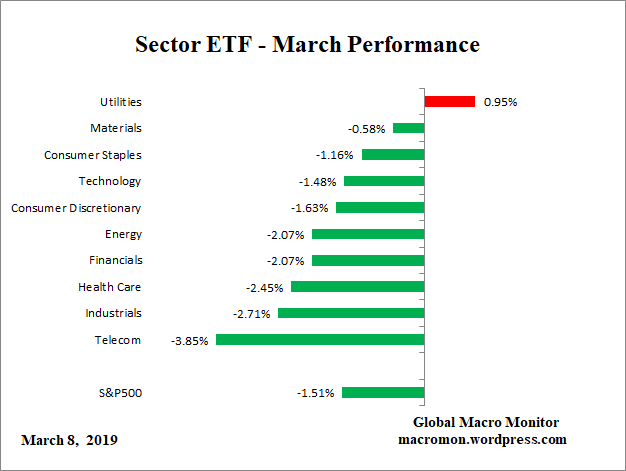
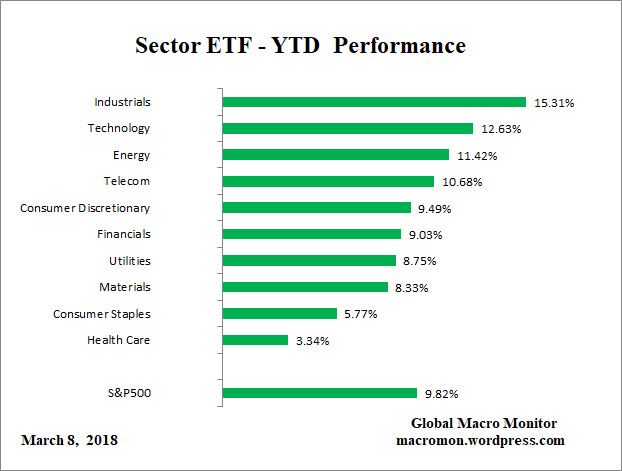
Sector ETF Performance – February 22

ETF_D

ETF_W

ETF_M

ETF_YTD

Posted in Sector ETF Peformance, Uncategorized | Tagged , | Leave a comment

Global Risk Monitor – February 22

RiskMon_1

RiskMon_2

Posted in Daily Risk Monitor, Uncategorized | Tagged , , , , , | Leave a comment

Bovine Math & Physics

Awesome!  I am a yuuuge ‘Horns fan.  Hook ’em, baby!

Posted in AI, Uncategorized | Tagged | Leave a comment

Annual Rank Change Of Top 15 Global Brands

This is nonlinear wild.  What do you think the top global brand will be in ten years?


Posted in Apple, Uncategorized | Tagged , | 2 Comments