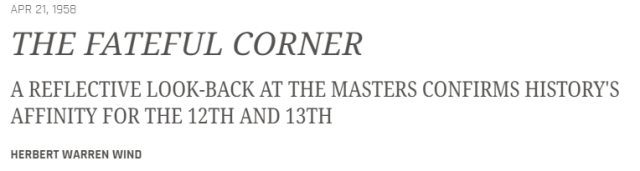
The term ‘Amen Corner’- used to describe the series of holes around the 11th, the par three 12th and 13th holes – was first used in print by author Herbert Warren Wind in an issue of Sports Illustrated in 1958. However, in another piece 26 years later, he revealed that 1930’s jazz number entitled ‘Shoutin in that Amen Corner’ was his inspiration. – Golf 365
Brothers and sisters we got hypocrites in this crowd
Brothers and sisters some of you are shoutin’ too loud
You’ll find out on judgment day you can’t fool the Lord that way
Brothers and sisters hear all I’ve got to say
You can shout with all your might but if you ain’t livin’ right
There’s no use shoutin’ in that amen corner
If your name on that roll all that noise won’t save your soul
So stop your shoutin’ in that amen corner
Just because you’ve paid your dues doesn’t mean your saved
You can’t win them golden shoes if you haven’t behaved
you better think before you shout for your sins will find you out
So stop that shoutin’ in that amen corner
I can’t hear my own self praechin’
For your shoutin’ and your screachin’
You make me forget my text
Every meetin’ leaves me vexed
Why you come here and pray on Sunday
Then you serve the devil Monday
If you want to save your soul
Better get some self control
You can shout with all your might but if you ain’t livin’ right
There’s no use shoutin’ in that amen corner
If your name on that roll all that noise won’t save your soul
So stop your shoutin’ in that amen corner
Shoutin’ here don’t mean a thing if your playin; with fire
Change your ways or you won’t sing in that heavenly choir
Makes no difference how you look if your record ain’t in that book
You’ve heard my preachin’ every one
so put old satan on the run
So stop that shoutin’ in that amen corner
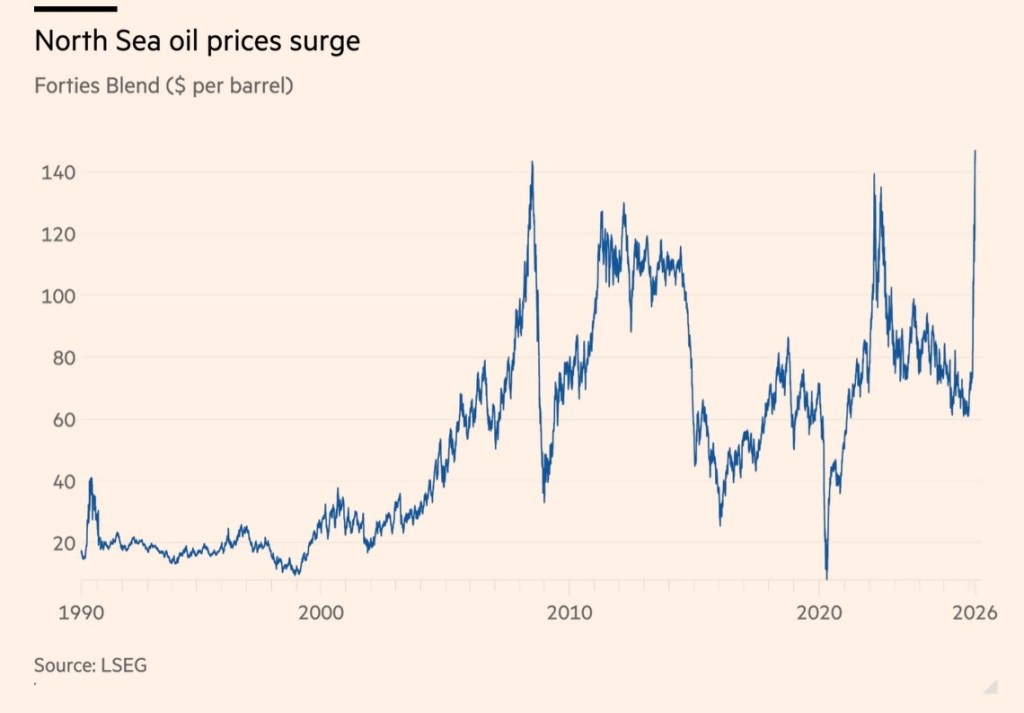
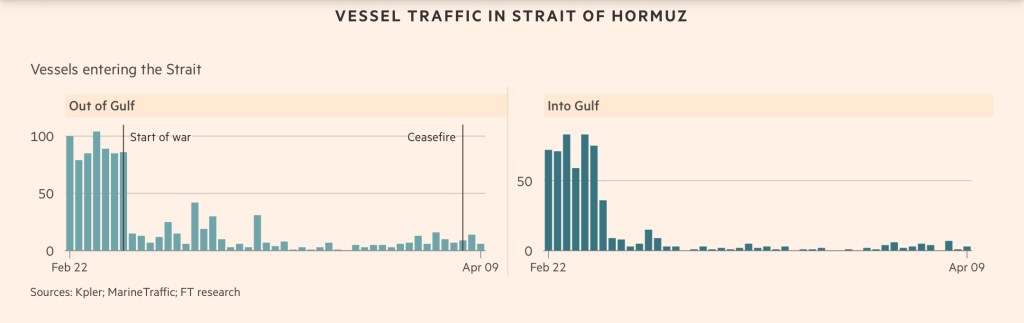
The global oil market is currently flashing a “code red” for portfolio managers and energy traders. While headline futures remain relatively anchored, the physical market is screaming of a systemic shortage. As reported by the Financial Times, a desperate scramble by European and Asian refiners to secure immediate supplies has catapulted North Sea physical prices to historic levels, fueled by Iran’s ongoing blockade of the Strait of Hormuz.
The $50 Basis Gap The most striking indicator of this crisis is the unprecedented decoupling of physical barrels from paper benchmarks. Forties Blend—a critical marker for immediate delivery—surged to nearly $147 a barrel this week. To put that in perspective, while the Brent June futures contract hovers around $97, the physical “Dated” Brent is trading at a staggering premium of roughly $50. This is no longer a speculative play; it is a frantic hunt for molecules.
Exchange Infrastructure Under Strain We are witnessing a rare breakdown in market mechanics. The volatility in Brent Contracts for Difference (CFDs)—the primary tool for hedging the gap between immediate and future delivery—became so extreme that prices breached the Intercontinental Exchange’s (ICE) reporting thresholds. With CFD spreads exceeding $30, the exchange essentially hit a circuit breaker, forcing trading into the less transparent “over-the-counter” (OTC) shadow markets. For hedge fund managers, this loss of price discovery and liquidity in standard hedging instruments is a significant red flag.
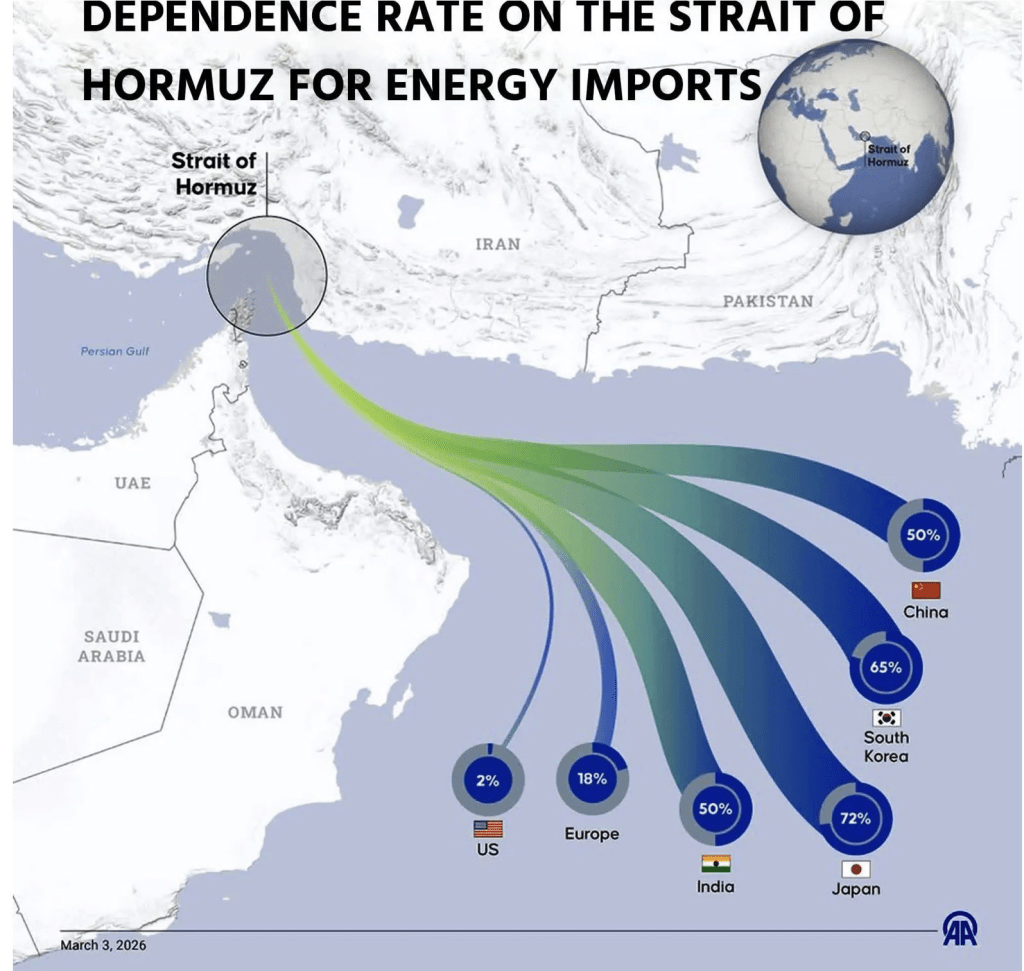
Geopolitical Disconnect Despite optimistic rhetoric from Washington suggesting that Iranian transit will resume “very quickly,” the data tells a different story. Goldman Sachs reports that exports through the Strait of Hormuz are currently at a mere 8% of normal levels. The vulnerability is most acute in Asia, where 80% of petroleum imports rely on this waterway.
The supply side is facing a “perfect storm.” Beyond the Hormuz bottleneck, Saudi Arabia’s capacity has been slashed by 600,000 barrels per day following strikes on the Khurais and Manifa fields, and the East-West pipeline—a vital bypass route—has seen its throughput crippled.
The Macro Outlook Portfolio managers should prepare for a prolonged “physical-first” rally. Even if a diplomatic breakthrough occurs tomorrow, experts warn it will take at least 20 days to resolve the logistical backlog. As Helima Croft of RBC Capital Markets aptly noted to the FT, futures are currently a “lagging indicator” for the grim realities of Middle Eastern waterways. In this environment, the physical market is the only truth-teller.
German POWs from nearby Camp Gordon built the bridge over Rae’s Creek next to the 13th tee box during WWII. They were part of Rommel’s Panzer division in North Africa responsible for building bridges to enable tanks to cross rivers.
While Augusta National is famed for its almost unnaturally beautiful flora, as it turns out some rather interesting fauna once called the course home as well: 200 heads of cattle and more than 1,400 turkeys. From 1943 until late 1944, Augusta National was closed for play and transformed into a farm of sorts to help support the war effort. Some of the turkeys were given to club members during Christmas (meat rations were in effect) while the rest were sold to local residents to help fund the club. And the cows? Well, they acted as natural lawnmowers but also inflicted quite a bit of damage to Augusta National, devouring many of the course’s famed plants and shrubs.
To help repair cattle-related damage and revive Augusta National for its reopening, 42 German prisoners of war from nearby Camp Gordon were shuttled back and forth to work on the course.
“The POWs had been with the engineering crew serving Rommel, the Desert Fox, in North Africa, part of the Panzer division responsible for building bridges that enabled German tanks to cross rivers. It was a useful skill for the renovation work to be done at Augusta National. The Germans were asked to erect a bridge over Rae’s Creek adjacent to the tee box at the thirteenth hole.”
The Masters resumed at Augusta National — now free of German prisoners and barnyard animals — in 1946. And interestingly enough, the Supreme Commander of the Allied Forces in Europe during World War II, Dwight D. Eisenhower, later became a member of Augusta National. Two Augusta National landmarks bearing Eisenhower’s name still stand today: the Eisenhower Tree (a loblolly pine at the 17th hole that the former president and avid golfer repeatedly struck with golf balls and requested be cut down; photo above) and the Eisenhower Cabin (built in the 1950s according to Secret Service security guidelines by the club for the former president’s visits).
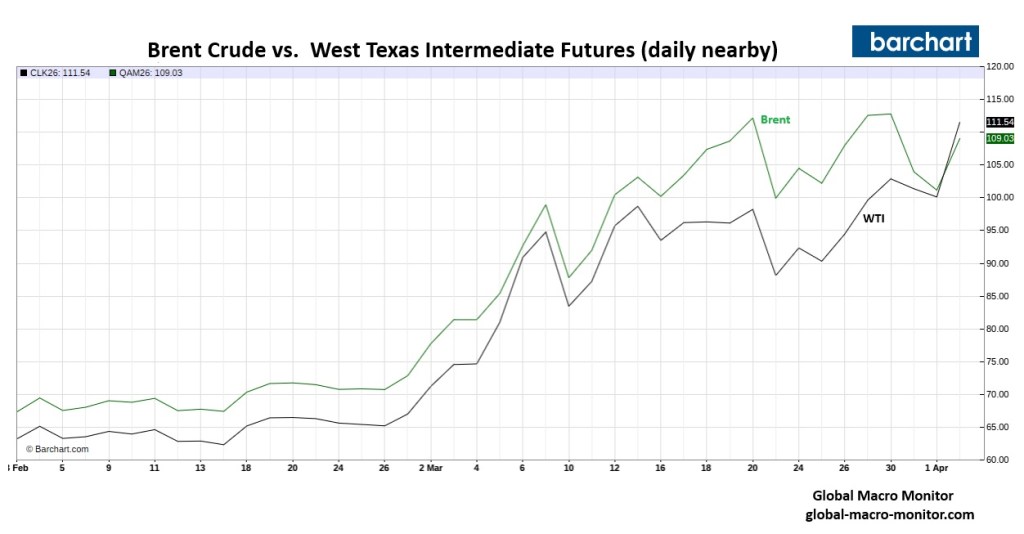
The oil market just delivered one of those “stop what you’re doing” moments: U.S. benchmark WTI trading at a premium to Brent. That’s not just unusual, it’s a signal flare for acute market dislocation.
What Happened (and Why It Matters)
OilPrice.com highlights a rare inversion where WTI surged above Brent, flipping a long-standing global pricing hierarchy. Traditionally, Brent commands a premium given its role as the seaborne global benchmark. When that relationship breaks, something is fundamentally wrong in the plumbing of the oil market.
The driver? Immediate supply scarcity, localized, acute, and geopolitical.
Recent developments—particularly escalating tensions involving Iran and disruptions to the Strait of Hormuz—have choked off a meaningful portion of globally traded crude. Markets are now pricing availability, not just fundamentals.
WTI’s premium is less about U.S. oil being “better” and more about it being accessible. Domestic barrels, sitting in Cushing or flowing through U.S. infrastructure, suddenly look like the cleanest shirt in a very dirty laundry basket.
Microstructure > Macro (For Now)
A key nuance emphasized in the article—and corroborated by broader market commentary—is that this inversion is partly technical:
WTI futures reflect near-term delivery (May)
Brent reflects later delivery (June)
In a market gripped by backwardation, front-month barrels command a premium. Traders are paying up for immediacy.
But don’t dismiss this as just calendar spread noise. The magnitude of the move signals something deeper:
The market is pricing physical scarcity today, not theoretical abundance tomorrow.
The Bigger Picture: A Supply Shock, Not a Demand Story
Let’s be clear—this is not 2008-style demand exuberance. This is a supply shock with geopolitical teeth:
Up to 10–20% of global oil flows are at risk through Hormuz
Insurance, shipping, and security premiums are exploding
Russian exports remain impaired
In other words: this is a multi-node disruption across the global energy network.
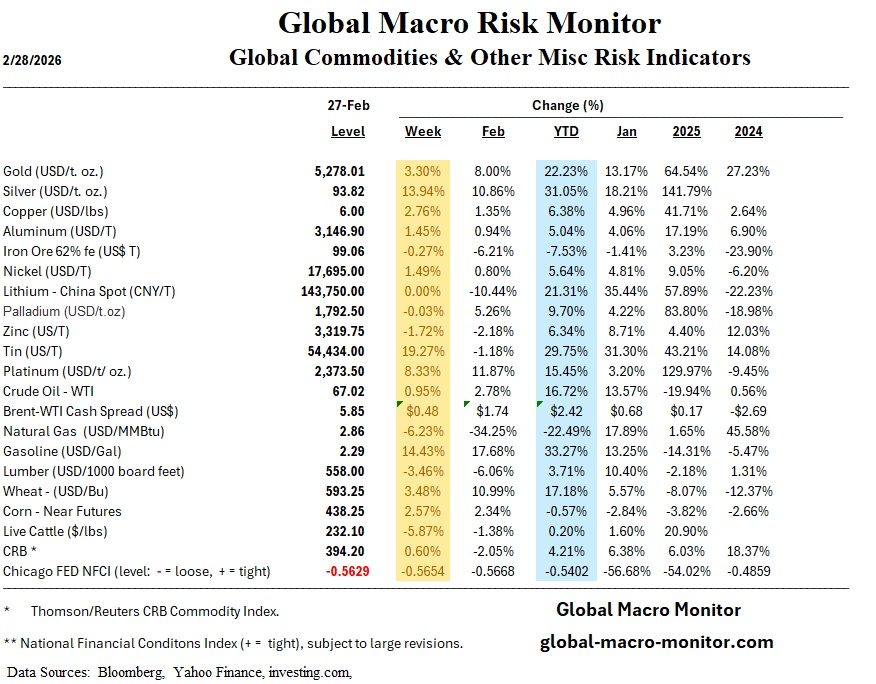
The result? Oil prices have surged over 50% in a month, with WTI pushing into the $110+ range intraday.
Market Implications for Portfolio Managers
1. Inflation Is Back (and It’s Sticky)
Energy is once again the marginal driver of CPI. This isn’t transitory—it’s structural while geopolitical risk persists.
2. Term Structure Is the Trade
Backwardation is screaming tightness. Front-end crude, refined products, and crack spreads are where the action is.
3. U.S. Energy Assets Gain Strategic Premium
Domestic producers and midstream players are suddenly geopolitical hedges. The U.S. is becoming a relative safe haven in oil supply.
4. Tail Risks Are Fat and Getting Fatter
Options markets are now pricing scenarios north of $150 crude if disruptions persist.
The Global Macro Monitor Take
This isn’t just an oil rally, it’s a regime shift in pricing power.
When WTI trades above Brent, the market is telling you one thing loud and clear:
“I don’t care about benchmarks, I care about barrels I can actually get.”
In that world, liquidity fragments, correlations break, and macro models built on stable relationships start to wobble.
The playbook here isn’t about forecasting demand curves, it’s about mapping geopolitical risk onto physical supply chains.
Welcome to oil markets where geography Trumps economics.
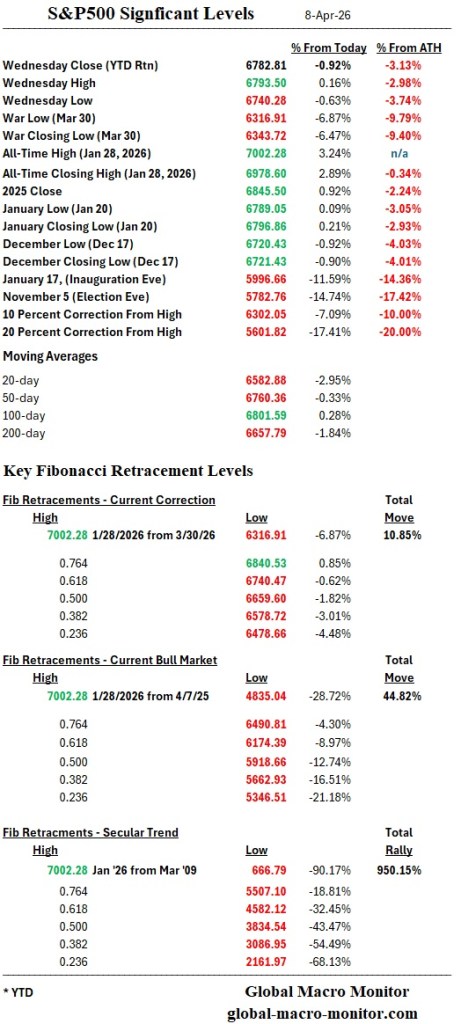
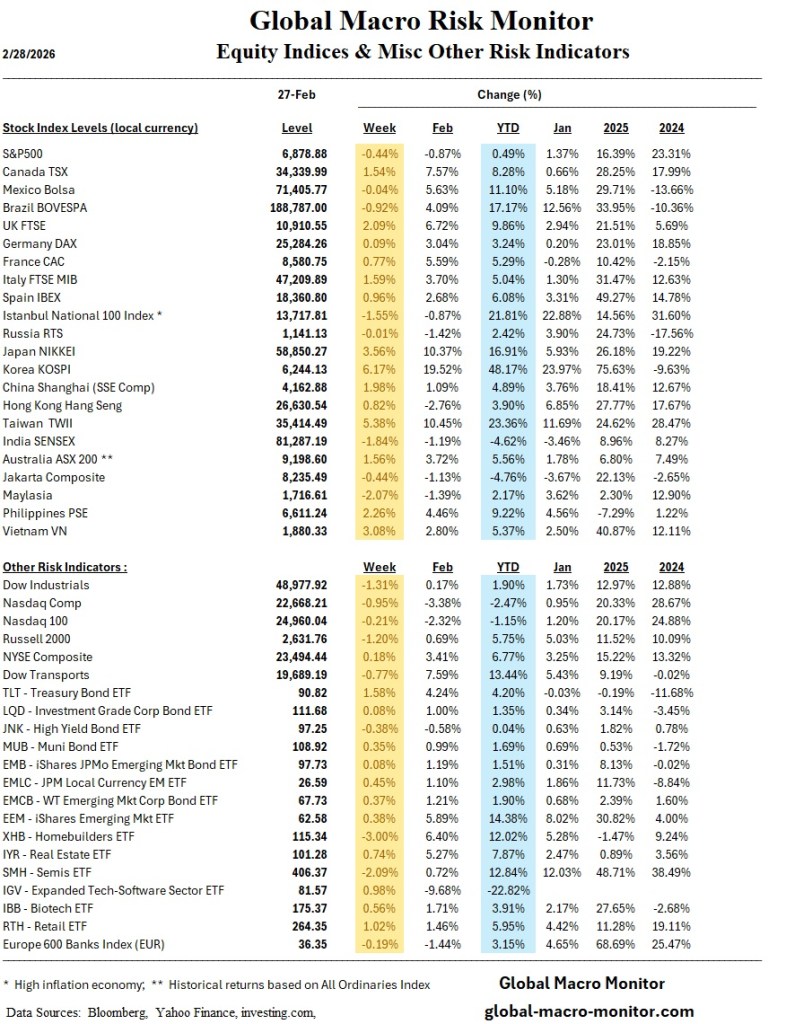
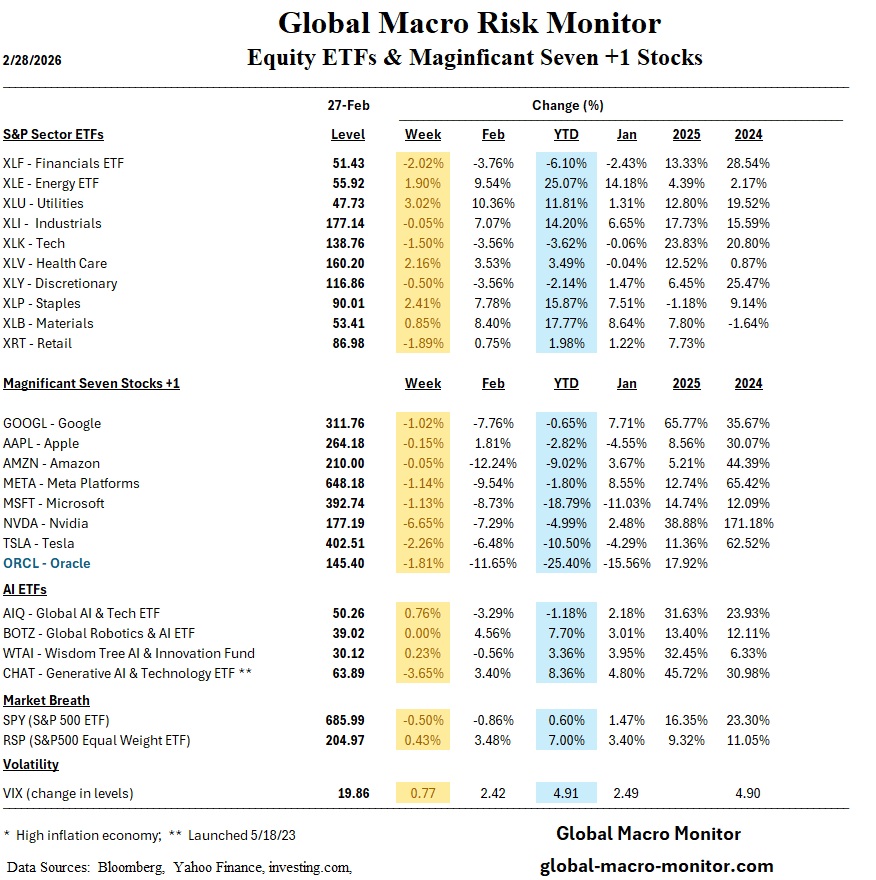
Global markets are no longer simply trending lower, they are fracturing under policy uncertainty and headline-driven volatility. The U.S. market has suffered its fifth consecutive weekly decline in major U.S. indices, with the S&P 500 down ~7% YTD and the Nasdaq entering correction territory. Yet what stands out is not the direction, but the erratic path: sharp rallies repeatedly reversed by conflicting geopolitical signals.
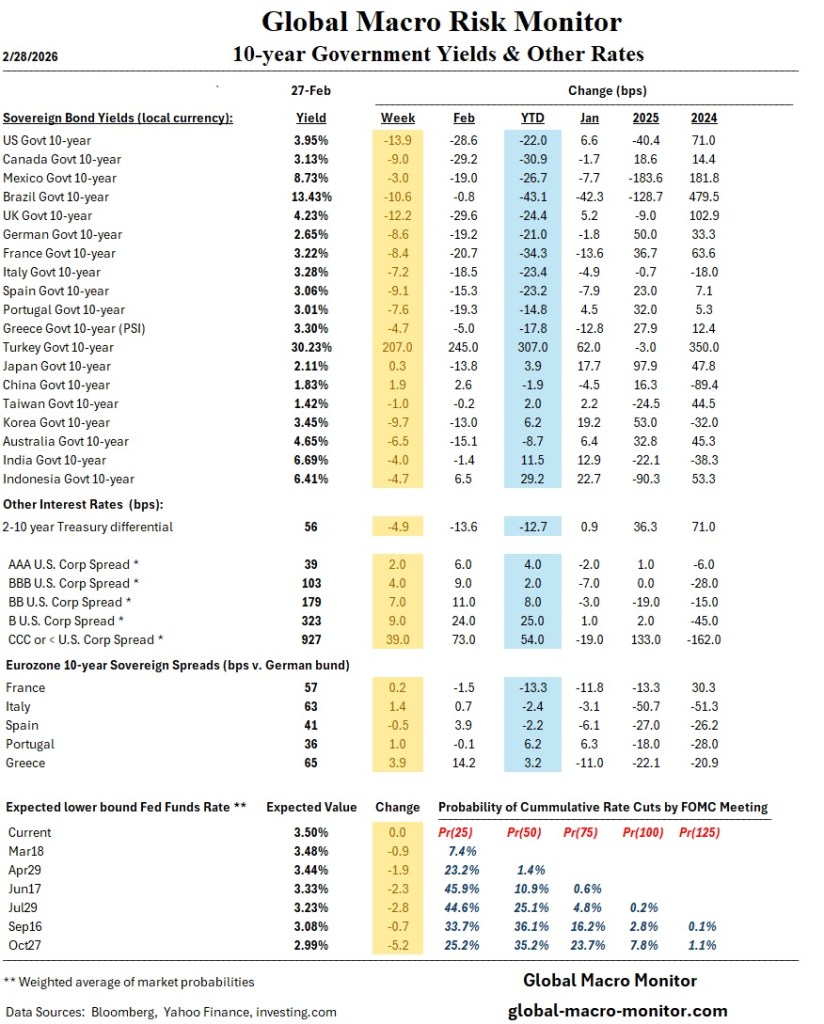
Bond markets reinforce this instability. A global rout has pushed yields sharply higher (U.S. +50 bps, UK +70 bps, Italy +80 bps), while rate expectations have flipped from cuts to a non-trivial rate hikes. This is a classic late-cycle stress signal: tightening financial conditions colliding with weakening growth.
The VIX above 30 confirms that volatility is no longer episode, it is systemic.
Trump as Market Catalyst-in-Chief
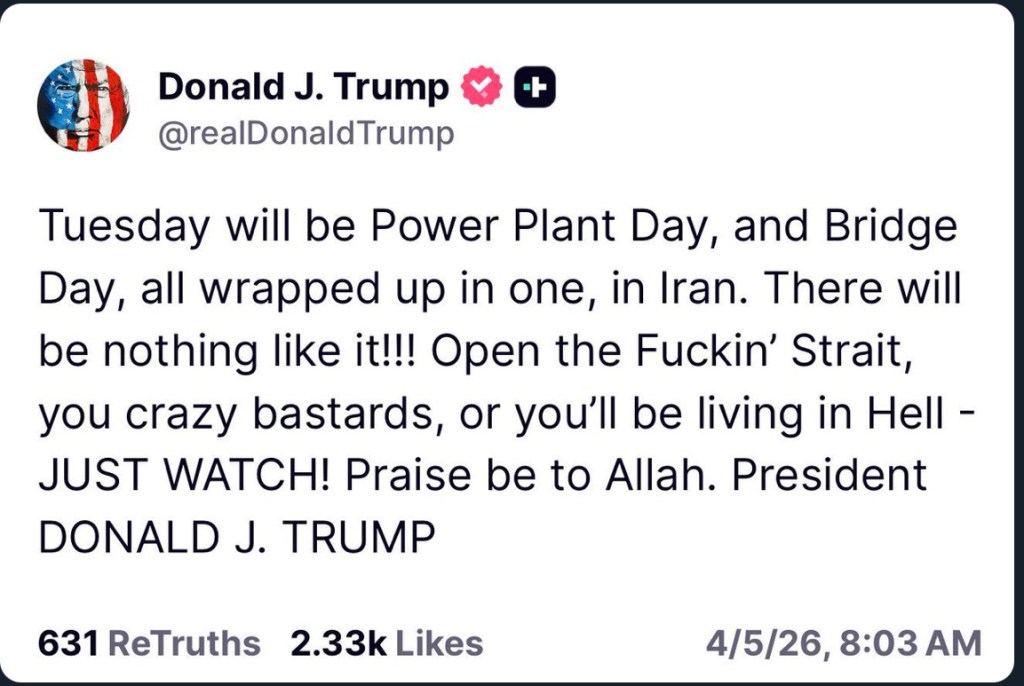
Markets are now trading less on fundamentals and more on Trump’s signaling function. His pattern of announcing delays, pauses, or escalations in the Iran conflict has created a reflexive loop:
Monday rallies on perceived de-escalation
Midweek reversals as credibility fades
Late-week selloffs as uncertainty dominates
This is not random. His messaging appears intentionally calibrated to arrest market declines, particularly given his long-standing tendency to equate equity performance with political success.
However, this strategy is backfiring. Markets are now delivering a “blunt rebuke,” with investors increasingly doubting his ability to resolve the conflict . The result: policy communication is losing its marginal impact, requiring ever more dramatic interventions to stabilize sentiment.
Insider Trading Concerns: Structural Erosion of Trust
There is a far more troubling dynamic: systematic suspicious trading preceding major announcements.
Key examples include:
A $580 million spike in oil futures just minutes before Trump announced a strike delay
Hundreds of predictive bets correctly anticipating military action
Prior equity surges ahead of tariff pauses
While direct culpability is unproven, the pattern is persistent and statistically improbable. More critically, institutional safeguards have weakened: enforcement actions have been reduced, and regulatory oversight diluted .
For markets, perception is reality. The implication is profound: price discovery is increasingly viewed as compromised.
Personal Trading Impact: A Case Study in Policy Risk
Last Monday provided a textbook example of this dysfunction.
Positioned short into what appeared to be a technically confirmed breakdown, I was caught offside by a Trump tweet signaling a delay in Iranian strikes. The market ripped 105 S&P points beyond my stop, resulting in a $4,000 loss.
This was not a failure of analysis—it was a failure of predictability.
The consequence has been behavioral:
Reduced position sizing
Faster stop discipline
Reluctance to re-enter trades
Ironically, this caution led to missed profits later in the week, as the market resumed its downward trajectory. This is the hidden cost of policy-driven volatility: it suppresses risk-taking even when setups are correct.
War on Short Sellers: Liquidity Implications
Trump’s increasingly hostile rhetoric toward short sellers is another destabilizing force. By framing them as adversarial actors, policy risk is being selectively applied to one side of the market.
This has three implications:
Reduced participation from systematic and discretionary short sellers
Lower liquidity during rallies
A structurally weaker bid
Markets require shorts—not just for price discovery, but for buy-side support during declines (short covering). If this cohort withdraws, rallies become shallower and less durable.
The logical outcome:
Expect weak, at, best low-conviction rallies in the near term.
Regional Performance
United States
Five consecutive weekly losses; sentiment deteriorating
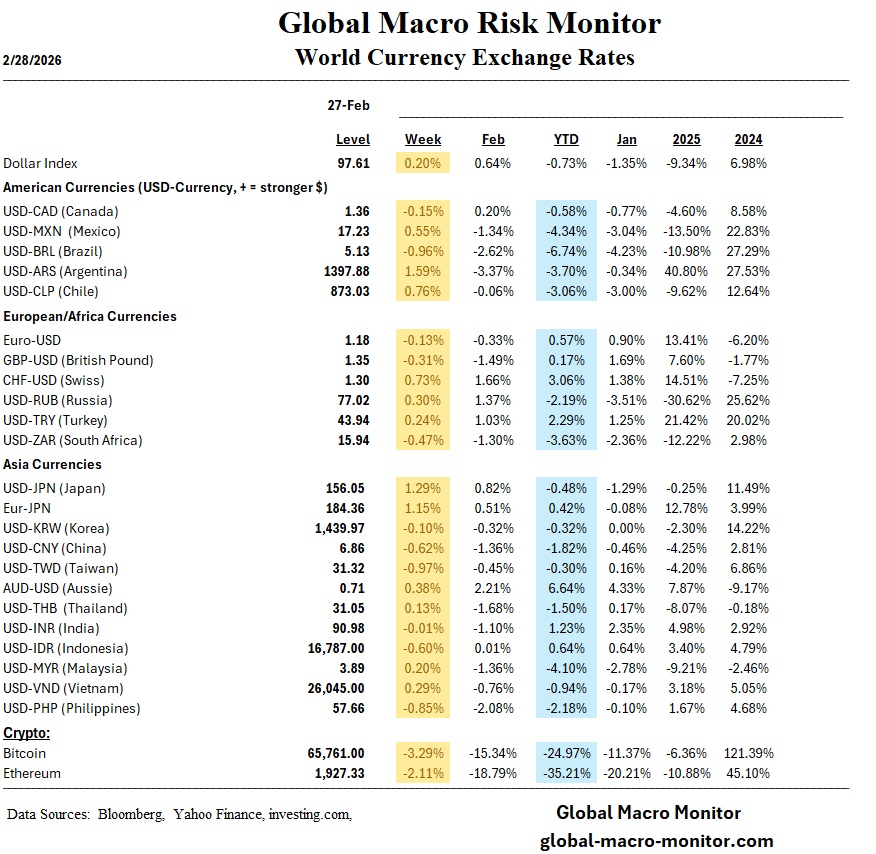
Japan facing currency instability and rising yields
Policy intervention increasing across energy-importing nations
Emerging Markets & LatAm
Mexico surprising with rate cuts despite inflation
Asia broadly in “crisis management mode” due to energy shock
Structural Outperformance (Prototype Insight)
Asia—particularly Korea and Taiwan—remains a structural outperformer, driven by AI capital flows and global manufacturing dominance . However, even these markets are not immune to global liquidity tightening.
Week Ahead: Fragility with Event-Driven Upside Risk
The market enters next week in a technically oversold but fundamentally unstable position.
Key Catalysts:
U.S. Nonfarm Payrolls (delayed reaction due to holiday)
ISM data (growth vs. inflation tension)
Oil price trajectory
Iran conflict headlines (primary driver)
Base Case:
Continued volatility with downward bias
Defensive sectors outperform
High-beta and tech remain under pressure
Tail Risk (Upside):
A credible ceasefire announcement could trigger a violent short-covering rally, given oversold conditions and elevated cash levels.
Bottom Line
Markets are no longer governed by traditional macro inputs—they are being distorted by political signaling, eroding institutional trust, and asymmetric policy risk.
Volatility is structurally higher
Liquidity is deteriorating
Confidence is weakening
In this environment, the correct strategy is not prediction—but survival and optionality.
Or put differently: This is no longer a trader’s market. It’s a headline battlefield.