
As Europe “goes wobbly” they could use an Iron Lady.
(click here if video is not not observable)
As Europe “goes wobbly” they could use an Iron Lady.
(click here if video is not not observable)
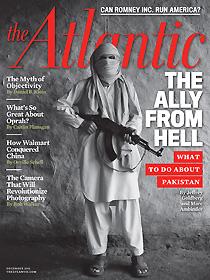 Staying with the employment theme here’s some interesting data from the Atlantic that shouldn’t have surprised us, but was an eye opener, nonetheless. The U.S. Federal payrolls are dominated by men and state and local government by women. Our priors of how to explain this are reflected in two words: Pentagon and teachers. Great chart from a good Atlantic article on the “sexist” recession, and recovery.
 From the Atlantic:
As the graphic to the left shows, women far outnumber men on state and local government payrolls, especially in public schools. Early in the recession, those employers were propped up by stimulus money. No longer. We live in an age of belt tightening, and government employees are being shown the door by the thousands. Last month, state and municipal payrolls shrank by 16,000 workers. There’s no sign of the trend letting up.
(click here if chart is not observable)
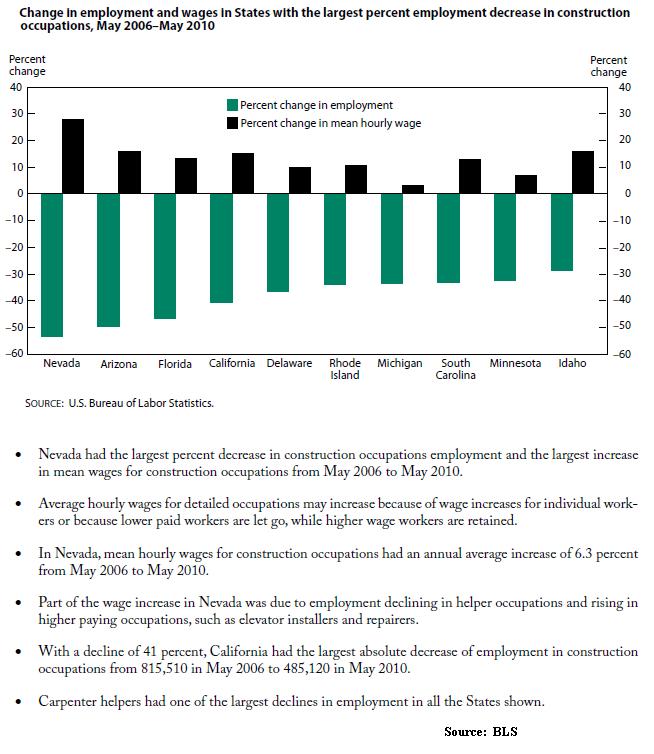
Here’s a great chart from the BLS showing the collapse of construction employment from May 2006-10. No surprise the largest declines are in the four housing bubble states — Nevada, Arizona, Florida, and California. Stunning employment in this sector is down 40-55 percent and one reason why the traditional monetary transmission mechanism is broken — lower rates sparks construction spending and thus hiring of construction workers.
 (click here if chart is not observable)
(click here if video is not observable)
Very unfortunate timing of today’s ECB meeting as Mario Draghi poured cold water on providing a backstop for the distressed Eurozone countries. It’s kind of like holding a press conference before playing a hand in a high stakes poker game. At stake? The future of the global economy and President Obama’s reelection.
Christopher Wood, over at CLSA, had some great nuggets in his latest Greed and Fear piece:
The reason why the character of Draghi has become all important is that it is clear that the compromise agreed by Nicolas Sarkozy and Angela Merkel in Paris earlier this week does not establish the groundwork for a credible fiscal union. For this reason a conservative ECB boss would not view it as a reason to pursue debt monetisation. But if the ECB boss is a politician, looking for an excuse to monetise, then the central bank’s reaction to the new agreement will be different….
The other major development this week again involves a concession from Frau Merkel. She has reportedly agreed that private sector bondholders, most notably Eurozone banks, will in future not be compelled to take losses on their sovereign lending in the Eurozone, as they have been in the case of Greece. This marks in GREED & fear’s view a massive retreat from the German leader’s previous stance driven by moral hazard concerns, and also by demands from the left wing of German politics that banks should take losses. Again, concern about financial sector systemic risk appears to have driven this Merkel backdown. But it is, of course, much easier asserting the principle that there will be no sovereign defaults than deciding who is ultimately responsible for all the sovereign borrowings. And here the likes of Mr Sarkozy, and his friends in the periphery, will be looking to Mr Draghi’s printing press to relieve them of the burden. Does Frau Merkel really agree to that? GREED & fear doubts it…
The bottom line from the above is that risk assets will rally further out of this week’s summit if Draghi proves to be a politician. If not, and debt monetisation is not forthcoming for now, then the best hope to trigger a further rally is the likely announcement sooner rather than later of a G20 central bank financed lending facility at the IMF of several hundred billion dollars to supplement the existing euro bailout fund, with Italy the most likely initial recipient. This news was leaked in a report in today’s Nikkei and also complements what GREED & fear has been hearing on the grapevine in recent days (see Nikkei article “G-20 mulls IMF lending program for Europe”, 8 December 2011).
Like many, we at the Global Macro Monitor believe the only solution to the European debt crisis is to write down bad debts, but we’re also realistic that it will take time because of the weak and highly levered balance sheets of many of the European banks holding the sovereign debt. Bridge solutions will have to do for now as banks bolster their capital. Germany seems to understand this as the sovereign debt crisis has created systemic problems in their own banking system.
After today’s ugly reaction, the Eurocrats now know what the markets want. Will they deliver the fig leaf to give the ECB cover to provide the backstop? We still believe so.
 (click here if charts are not observable)
(click here if video is not observable)
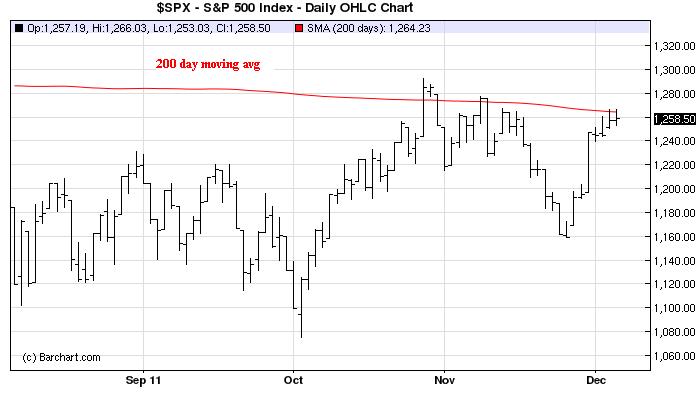
Moving closer to the EU Summit we are are curbing our enthusiasm and expectations of the substance of the deal but increasing our bet that it will be just enough to unleash the balance sheet of the ECB to backstop Italian and Spanish bonds. This should catapult the S&P500 over the 200-day moving average and the great year-end chase will be on.
We’ve made binary trades before and lost big. The “Russia to nuclear to fail” trade where we bought the country’s dollar denominated Eurobonds all the way down from 45 cents to 18 cents, which proved right as an investment as they didn’t default. Still, it was a bad trade buying too early.
We could be wrong on this one and may have too much faith in the Eurocrats, but think of consequences if we are wrong? If the EU fails here, it will 1931 all over again and will put the “Great” in this rolling depression/recession. Therefore, we bet they’ll come up with just enough to let Super Mario do his thing. After that we’ll reaccess and look at the long-term consequences, but hopefully 100 S&P points higher.
(click here if video is not observable)
Once again, the 200-day moving average proved to be formidable resistance for the S&P500. After trading though the 1264-65 level on the now expected daily afternoon market moving FT article the index couldn’t hold its water and sold off into the close. On the positive side, the S&P500 made a higher high, higher low, and closed in the green relative to yesterday’s price action. Not a bad way to work off an overbought condition. We’re still looking for a nice Santa Claus rally that takes the S&P500 up over 1300 to close the year. Could be wrong and always with a stop.
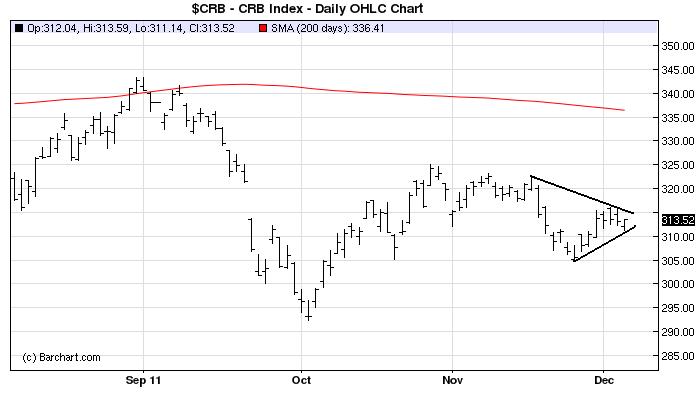
Also take a look at commodities as reflected by the CRB chart. It kind of feels to us commodities are preparing for the coming austerity in 2012 and ready to breakdown. The ECB can print a lot of money and the eurozone money supply can still shrink as banks sell assets and contract credit. Gold can probably do well in this environment.
The key, in our mind, does money demand remain stable in core Europe if the ECB begins to monetize debt in a big way? Super Mario wants to know!
 (click here if charts are not observable)
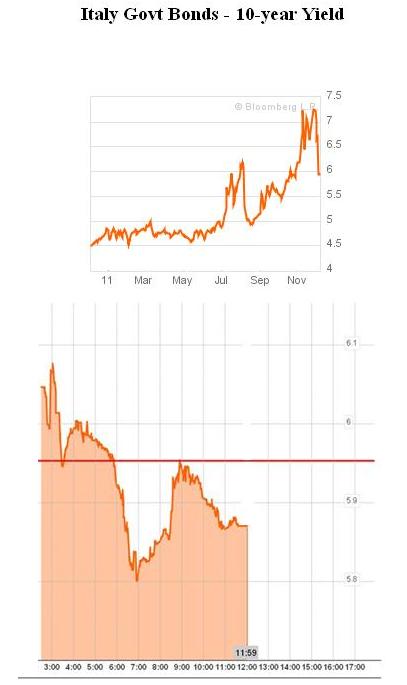
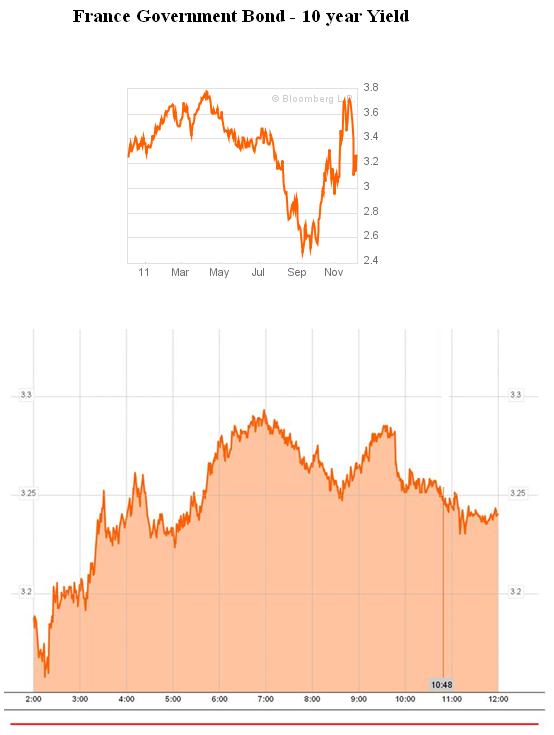
The “troika” – Italian, Spanish, and French bond yields – is acting pretty well even after the S&P downgrade. Italy is under 6 percent and that is what matters. We sense there will be tremendous pressure on the shorts and equity risk off crowd going into the EU Summit and believe the market moves higher even if it’s just a fig leaf to give the ECB cover. After that? All bets off going into 2012. Stay tuned.

 (click here if charts are not observable)


