
Talk about the bookends of the global economy. After viewing the video think about what a joke an offense it is to ask China to bail out Europe.
(click here if video is not observable)
Talk about the bookends of the global economy. After viewing the video think about what a joke an offense it is to ask China to bail out Europe.
(click here if video is not observable)
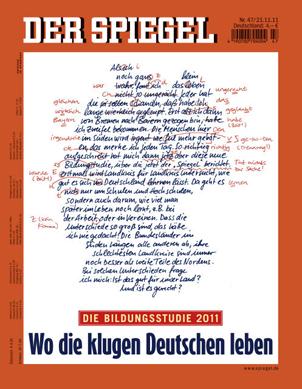 This will surprise many. Der Spiegel reports that Germany’s fiscal management is not as “exemplary” as most perceive.
…Last week, the suspicions of international investors reached the stable core of the euro zone. Investors embarked on a massive selloff of securities issued by supposedly model countries like Finland and Austria and sought refuge in German government bonds.
Role Model Position at Risk
But it is debatable how much longer Germany can be seen as a refuge of stability and security. In reality, German government finances are not nearly in as good shape as the chancellor and the finance minister would have us believe. The way that certain important indices are developing suggests that Germany may not retain its position as a role model in the long term. Government debt as a percentage of GDP is already at more than 80 percent, which compared to other European Union countries is by no means exemplary, but in fact average at best.When it comes to their debt-to-GDP ratios, even ailing countries like Spain are in better shape, with values significantly lower than 80 percent. Critics, irritated by Merkel’s and Schäuble’s overly confident rhetoric, are beginning to find fault with Europe’s self-proclaimed model country. “I think that the level of German debt is troubling,” says Luxembourg Prime Minister Jean-Claude Juncker, whose country has a debt-to-GDP ratio of just 20 percent.
And this before Germany has recapitalized its banks. Deutsche Bank’s leverage ratio with total assets 44x total equity scares the you know what out of us. Of course they’ll argue their sovereign holdings are risk-free and do not need capital, they have hidden reserves, blah, blah, blah… Click here for Simon Johnson’s piece on how Deutsche Bank could become the “transfer bank” of financial contagion to the United States.
 (click here if chart is not observable)
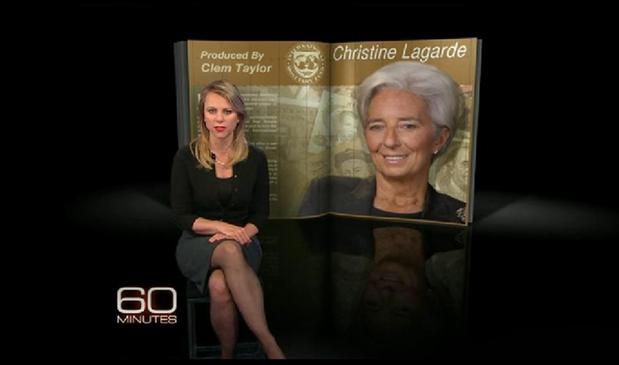
 Christine Largarde’s interview with 60 minutes last night was very impressive. She is a doer and contradicts the stereotypical “meet and discuss” (over nice lunches) do nothing Eurocrat.
Not mentioned was that as an exchange student in the U.S. she worked on Capitol Hill as an intern for then Senator William Cohen, who went on to become Secretary of Defense for President Clinton.
You know she’s tough is she rose to the top of Baker & Mckenzie. Great role model for our daughters! Click here for 60 minutes interview.
 (click here if picture is not observable)
(click here if video is not observable)
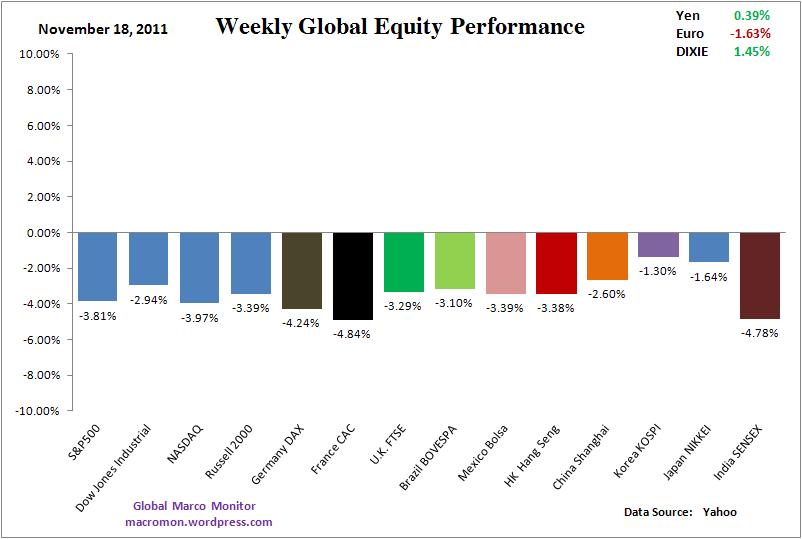
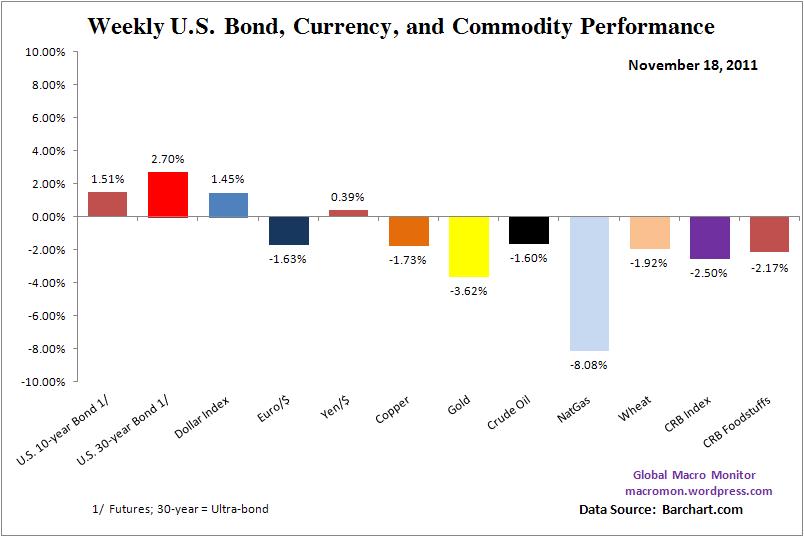
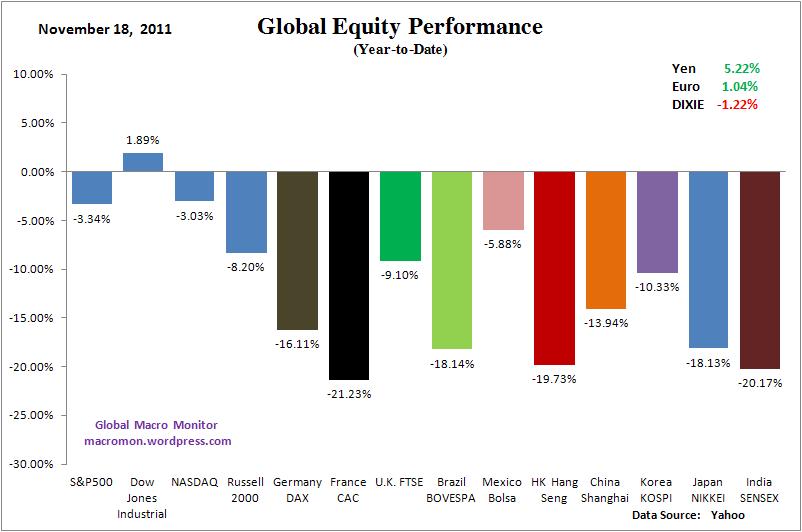
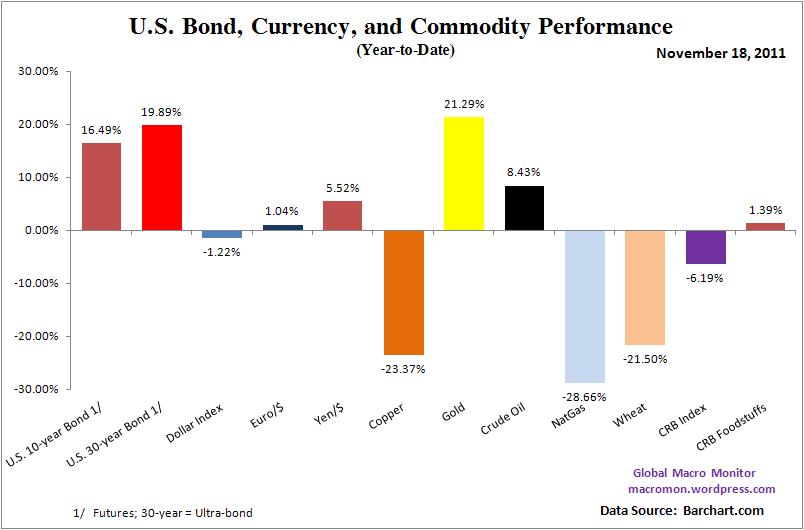 (click here if charts are not observable)
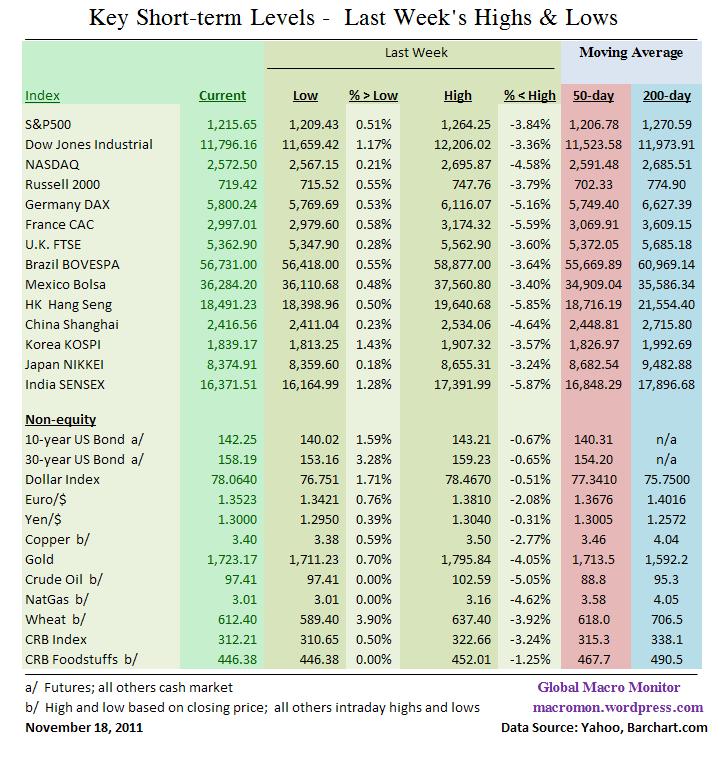
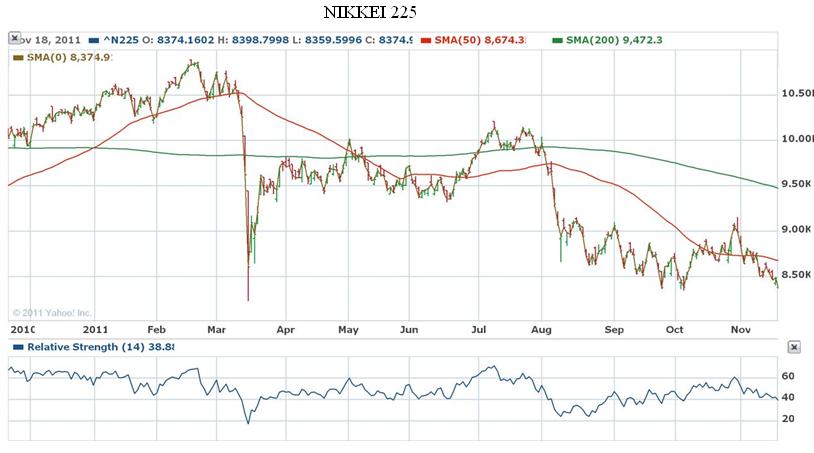
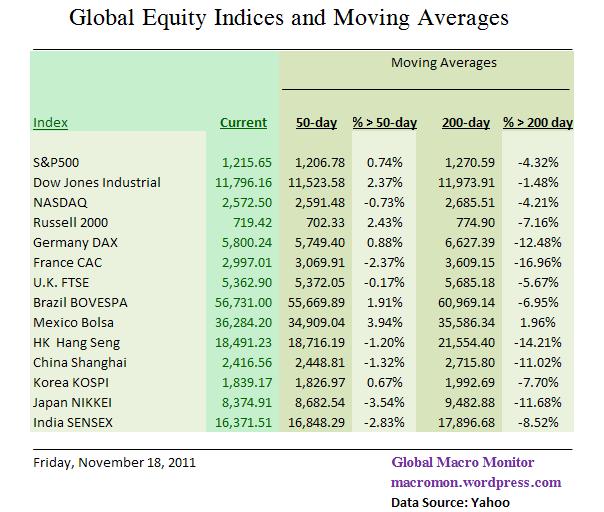
Since the global markets are in full preservation of capital mode, thought we’d bring you what we deem to be the ugliest charts of the global equity indices we follow. All are in short-term downtrends and have pierced their 50-day moving averages, at the very least, a second time since the August crash.


 And the Ugliest? Looks ready to break to new lows.
 (click here if charts are not observable)
Just a follow up to our last post. This chart from the IMF illustrates how China was able to skirt — in relative terms — the deep economic contraction by generating a huge expansion in domestic credit and increase in its money supple. This, while credit was contracting in the rest of the developed world.
Imagine the politics of, say, the U.S. administration or state and local governments ringing up Citibank and Bank of America and telling ordering them to extend credit to a construction company to build the country’s largest shopping mall? Great policy until the mortgage has to be paid. The tremors, of which, are now being felt in China’s financial sector.
 (click here if chart is not observable)
The question is will China embark on another massive state led credit expansion to offset the decline in exports as they did in 2008-09? We have our doubts.
(click here if video is not observable)

 (click here if tables are not observable)
ECB President, Mario Draghi, gave his first official speech outside the Eurozone’s central bank and asked EU policymakers “where is the implementation” of past decisions to beef up the EFSF. The ECB is in a difficult position and has to strike the right balance of not being the Bundesbank of the past or perceived by the Germans as the Banco Central de la República Argentina of the 1980’s.
The other Super Mario got his mandate from the Italian parliament. Spreads on Italian, Spanish, and French sovereign bonds came in (tightened) big today. Have a great weekend!
(click here if video is not observable)


