On This Day In History – March 7

Birthdays

TIH_Burbank_Mar7

  • 148 Lucilla, Rome, Roman noblewoman (daughter of Marcus Aurelius and sister of Commodus) (between 148-150 AD), born in Rome
  • 1849 Luther Burbank, American horticulturist who developed more than 800 strains and varieties of plants, born in Lancaster, Massachusetts (d. 1926)

Events

TIH_Rhinelan_Mar7

  • 161 Roman Emperor Antoninus Pius dies and is succeeded by co-Emperors Marcus Aurelius and Lucius Verus, an unprecedented political arrangement in the Roman Empire
  • 1530 English King Henry VIII‘s divorce request is denied by the Pope
  • 1774 British close port of Boston to all commerce
  • 1798 The French army enters Rome: the birth of the Roman Republic.
  • 1857 Baseball decides 9 innings constitutes an official game, not 9 runs
  • 1870 Cincinnati Red Stockings, 1st pro-BB team, begin 8-mo tour of Midwest & East
  • 1876 Alexander Graham Bell receives a patent for the telephone in the US
  • 1911 US sent 20,000 troops to the Mexican border
  • 1936 Hitler breaks the Treaty of Versailles by sending troops to the Rhineland
  • 1962 Beatles made their broadcasting debut on BBC radio
  • 1965 Alabama state troopers and 600 black protestors clash in Selma during “Bloody Sunday”, protesters beaten and hospitalized
  • 1975 US Senate revises filibuster rule, allows 60 senators to limit debate
  • 1994 ANC chief Nelson Mandela rejects a demand by white right-wingers for separate homeland in South Africa
  • 2007 British House of Commons votes to make the upper chamber, the House of Lords, 100% elected
Posted in Uncategorized | Leave a comment

QOTD: Baseball Inflation Or Relative Price Increase?

QOTD = Quote of the Day

No one will ever be paid more than Ruth” – Ed Barrow, NY Yankee GM after signing the Babe to a 2-year $160K contract ($2.4 million in 2019 dollars),  circa March 1930

QOTD_Ruth_Countract


Posted in Uncategorized | Leave a comment

On This Day In History – March 6

Birthdays

TIH_Greenspan_Mar6

  • 1475 Michelangelo, Italian sculptor, painter, architect and poet of the High Renaissance (David, Ceiling of the Sistine Chapel), born in Caprese, Tuscany (d. 1564)
  • 1926 Alan Greenspan, American economist, presidential advisor and Chairman of the Federal Reserve of the United States (1987-2006), born in NYC, New York
  • 1937 Ivan Boesky, stockbroker inside trading, born in Detroit, Michigan
  • 1972 Shaquille O’Neal, American Basketball Hall of Fame center (4-time NBA champion, 3-time NBA Finals MVP, Olympic gold 1996), born in Newark, New Jersey

Events

TIH_Alamo_Mar6

  • 1799 Napoleon Bonaparte captures city of Jaffa, Palestine, after a 5 day siege, defeating the Ottoman Empire
  • 1831 Edgar Allan Poe removed from West Point military academy
  • 1836 Battle of the Alamo: After 13 days of fighting 1,500-3,000 Mexican soldiers overwhelm the Texan defenders, killing 182-257 Texans including William Travis, Jim Bowie and Davy Crockett
  • 1857 Dred Scott Decision: US Supreme Court rules Africans cannot be US citizens
  • 1865 US President Abraham Lincoln‘s 2nd Inaugural Ball
  • 1869 Dmitri Mendeleev presents the first periodic table of the elements to the Russian Chemical Society
  • 1889 German firm Bayer patents the medicine aspirin
  • 1922 Babe Ruth signs 3 year contract with NY Yankees at $52,000 a year
  • 1964 Boxing legend Cassius Clay joins the Nation of Islam and changes his name to “Muhammad Ali“, calling his former title a “slave name”
  • 1967 Stalin’s daughter Svetlana Allilujeva asks for political asylum in US
  • 1972 Jack Nicklaus, passes Arnold Palmer as golf’s all-time money winner
  • 1981 Walter Cronkite signs off as anchorman of “CBS Evening News”
  • 1983 Helmut Kohl’s CDU/CSU wins West German parliament elections
Posted in Uncategorized | Leave a comment

Beware of Trannies That Lag

Summary

  • We construct a relative performance index (TRP) of the Dow Transports and Dow Industrials Index 
  • In all three large and major 2018 sell-offs, the TRP signaled an impending correction 7-18 trading days before markets rolled over
  • The TRP peaked on this past Valentine’s Day and is down 3.60 percent yet the Dow Industrials is still up 1.53 percent has yet to roll over. 
  • The Dow did hit a high on February 22 and is down just around 1 percent 
  • We don’t know if the TRP is confirming an impending sell-off but investors and traders should closely monitor the relative performance of the Transports 

The Dow theory on stock price movement is a form of technical analysis that includes some aspects of sector rotation. The theory was derived from 255 Wall Street Journal editorials written by Charles H. Dow (1851–1902), journalist, founder and first editor of The Wall Street Journal and co-founder of Dow Jones and Company. Following Dow’s death, William Peter HamiltonRobert Rhea and E. George Schaefer organized and collectively represented Dow theory, based on Dow’s editorials. Dow himself never used the term Dow theory nor presented it as a trading system.  – Wikipedia

We constantly monitor the Dow Transports Index and its relative performance as a signal of future equity price action.  There is a growing concern that the Trannies have been underperforming other indices, including its father, the Dow Jones Industrials, since Valentine’s Day.

The concerns are reinforced by the signals the deterioration in the TRP sent in 2018 just before last year’s three major corrections.   The table and chart below should not be viewed in isolation from one another but as compliments.


Trannies_1


Trannies_2

January 2018 Correction

The relative performance of the Transports or the TRP (Transport/Industrials) peaked 10 trading days before the Dow’s high on January 26th, declining by more 5 percent before the Dow and stock market rolled over and experiencing a historic spike in volatility.

Only three times since 1950 has intraday volatility jumped so high as measured by a modified version of the Average True Range:  1) September 1955 after an extraordinarily period of calm the S&P500 tanked on September 26th when markets opened after President Eisenhower’s heart attack on the 8th hole of Cherry Hills Country Club over the weekend. The market quickly recovered; 2) January 1962 when the “Kennedy slide” began to accelerate; and 3) the October 1987 stock market crash.  – GMM, February 11th

The first correction of 2018, close-to-close in the Dow Industrials, was 11.58 percent.

End September 2018 Correction   

After spending most of the year recovering and making new all-time highs into the end of Q3,  the Dow and stock market rolled over again with the Dow peaking on October 3rd,  18 trading days after the relative performance of the Transports (TRP) topped out on September 10th.   The TRP fell over 5 percent while the Dow was making a new high, similar relative price action to the January correction.

We maintain the bear market that began at the end of Q3 2018 was rooted in the breakout of long-term interest rates.

We warned that long-term interest rates were about to spike, which they did breaking out to 3.26 percent causing the fourth quarter collapse in stocks.  The one thing that Mr. Market really fears, in our opinion and inference from the price action,  is a spike in long-term interest rates.  – GMM, February 26th

The Dow fell 9.48 percent before rallying into the December crash.

December 2018 Crash

The Dow and the overall stock market partially recovered into December but had trouble breaking through stiff price resistance, particularly the 2800 S&P level.

Once again, the relative performance of the Transports sent a signal of future price weakness.  The TRP peaked 7 trading days before the Dow topped out falling — albeit much less than the year’s prior two corrections –  almost 1.6 percent before the market rolled over hard and fast.

The Dow eventually fell 15.62 percent in a very short timeframe causing the Market Socialists, led by Mr. President, Mr. Cramer, Mr. Market, and the many clowns paraded on CNBC, to put tremendous pressure on the Fed to rescue the market from itself.  That is begging the government to effectively nationalize the stock market losses.

Yeah, yeah, the Fed was too tight with an almost zero percent real fed funds rates.  Right.

Chairman Powell and the Fed eventually caved.  Nothing new but “they’re not even pretending anymore.

…Nixon alternately bullied and cajoled and threatened and rewarded his hand-picked Federal Reserve Chair, Arthur Burns, to do the right thing and keep the money spigot open … wide open. Complaints about too much liquidity sloshing around were “bullshit”, and so what if they were running the economy hot? Good lord, man, imagine who would take over the White House in 1972 if he were defeated! Imagine the insane fiscal spending policies that those Democrats would push on the country if he lost!

Donald Trump has EXACTLY the same problem.

Donald Trump has found EXACTLY the same solution.

Jay Powell is the Arthur Burns of our day.

The only difference is that Nixon did all of his bullying and cajoling and threatening and rewarding in private, and Burns wouldn’t dream of saying out loud what Powell is shouting about the “important signal” of financial market “volatility” on monetary policy decisions.

They’re not even pretending anymore.  Ben Hunt, Epsilon Theory

All is well now with the markets, or is it?

Transports Rolling Over Again

The data in the above chart illustrate the Transports are rolling over once again.  The TRP index peaked on Valentine’s Day, is now down 3.60 percent with the Transports Index down 2.99 percent from its February 22nd high.   The Dow has yet to roll over as the administration continues to dangle the prospects of a “good” China trade deal in front of the markets.

Upshot

We don’t know if the stock market is about to roll or the TRP is sending a false positive signal but investors should always sit up when the Trannies lag.  Heeding the signal last year could have made traders lots of money.   We are certain some did.

The Transports fell 0.8 percent today with a flattish Dow.

Keep it on your radar, folks.

Transports are under pressure and it could be a warning sign

Trannies_3

Click here to view video

Posted in Equities, Uncategorized | Tagged , | 9 Comments

On This Day In History – March 5

Birthdays

  • 1898 Zhou Enlai, Premier of the People’s Republic of China, born in Huai’an, China (d. 1976)
  • 1918 James Tobin, American economist, Nobel laureate (d. 2002)
  • 1934 Daniel Kahneman, Israeli economist and Nobel laureate (2002), born in Tel Aviv, Israel

Events

  • 363 Roman Emperor Julian moves from Antioch with an army of 90,000 to attack the Sassanid Empire, in a campaign that brings about his own death
  • 1770 Boston Massacre (Incident on King Street): British soldiers kill 5 men in a crowd throwing snowballs, stones and sticks at them. African American Crispus Attucks 1st to die; later held up as early black martyr. Massacre galvanizes anti-British feelings
  • 1864 1st track meet between Oxford & Cambridge
  • 1904 Nikola Tesla describes the process of the ball lightning formation in Electrical World and Engineer
  • 1923 Montana & Nevada become 1st states to enact old age pension laws, providing precedent for Social Security 10 years later
  • 1931 Gandhi & British viceroy Lord Irwin sign pact
  • 1933 FDR proclaims 10-day bank holiday
  • 1933 Germany’s Nazi Party wins majority in parliament (43.9%-17.2M votes)
  • 1946 Winston Churchill’s “Iron Curtain” speech in Fulton, Missouri, popularizes the term and draws attention to the division of Europe
  • 1971 “Stairway to Heaven” by Led Zeppelin first played live at Ulster Hall, Belfast by Robert Plant, Jimmy Page, John Bonham and John Paul Jones
  • 1976 British pound falls below $2 for 1st time
  • 1995 Graves of Tsar Nicholas II and family found in St Petersburg
  • 2013 The Dow Jones surpasses its 2007 pre-financial crisis levels for the first time
  • 2013 Venezuelan Vice-President Nicolás Maduro assumes the presidency after the death of Hugo Chávez
  • 2018 North Korean leader Kim Jong-un meets South Korean officials for the first time since taking office, hosting a dinner in Pyongyang
Posted in Day In History, Uncategorized | Leave a comment

A Note From A GMM Reader…

Passing on a note (email) we just received from a Global Macro Monitor (GMM) reader, who is vacationing on the beach in Mexico.   By the way, he is not a free rider.  He made a nice contribution to GMM (see donate widget on the right side of our website), which has paid for itself in multiples, including today’s trade.

I made some good scratch on your advice.  Bought SPY at 277.  Thanks.  Your politics is all off, Trump is a shoe in, but your investing instincts are pure gold — KD on the beach in Mexico,  March 4th

See our advice he is referring to right here.

We are pretty much out of the day trading business but today’s sell-off at the open was a gift, and worth 20 S&P points.  After 20 plus years of trading on Wall Street, hedge funds, and our own — everything from Russian Eurobonds to Korean equities to natural gas futures — we know gifts when we see them.

If history is any guide, given the historical start to the year, the S&P should finish March at or around 2850-ish.

We say this with great trepidation as we don’t like:  the market;  valuations; the fundamentals;  debt levels; the geopolitics;  the domestic politics;  the Fed and government/POTUS manipulation of the markets, and, especially the faux wealth and asset-driven economy.

Nevertheless, we are a better seller into strength, always hold our strong convictions weakly as we recognize we could be wrong (go figure), that markets like to go up and do go up on average, and we try not to (but not always) fight the tape.

Always looking for opportune times to get shorty.  Not yet.

Posted in Equity, Uncategorized | Tagged , , | 4 Comments

Why Corporate America Is Debt Dieting After Binge – Bloomberg

Mar.04 — Peter Tchir, head of macro strategy at Academy Securities, and Bloomberg’s Molly Smith discuss the impact of corporate debt on bond ratings and equity markets. They speak with Bloomberg’s Jonathan Ferro on “Bloomberg Markets: The Open.”  – Bloomberg Markets & Finance


CorpDebt_Video

Click here to view the video 

Posted in Uncategorized | Leave a comment

S&P Worth A Scalp To The Upside

This looks like a short-term overreach by profit takers in the S&P.  Buying some at 2771-ish with a stop at 20-day – i.e, 2760 cash — for a quick scalp for the day.   A small headline about pushback in China on trade deal but think we close higher than our entry.  #HateDayTrading


S&P

Posted in Uncategorized | 1 Comment

On This Day In History: Opium War II Officially Begins

March 3, 1857 – France and the United Kingdom declare war on China

Opium Wars

CHINESE HISTORY

Opium Wars, two armed conflicts in China in the mid-19th century between the forces of Western countries and of the Qing dynasty, which ruled China from 1644 to 1911/12. The first Opium War (1839–42) was fought between China and Britain, and the second Opium War (1856–60), also known as the Arrow War or the Anglo-French War in China, was fought by Britain and France against China. In each case the foreign powers were victorious and gained commercial privileges and legal and territorial concessions in China. The conflicts marked the start of the era of unequal treaties and other inroads on Qing sovereignty that helped weaken and ultimately topple the dynasty in favour of republican China in the early 20th century.

The Second Opium War

In the mid-1850s, while the Qing government was embroiled in trying to quell the Taiping Rebellion(1850–64), the British, seeking to extend their trading rights in China, found an excuse to renew hostilities. In early October 1856 some Chinese officials boarded the British-registered ship Arrowwhile it was docked in Canton, arrested several Chinese crew members (who were later released), and allegedly lowered the British flag. Later that month a British warship sailed up the Pearl River estuary and began bombarding Canton, and there were skirmishes between British and Chinese troops. Trading ceased as a stalemate ensued. In December Chinese in Canton burned foreign factories (trading warehouses) there, and tensions escalated.

The French decided to join the British military expedition, using as their excuse the murder of a French missionary in the interior of China in early 1856. After delays in assembling the forces in China (British troops that were en route were first diverted to India to help quell the Indian Mutiny), the allies began military operations in late 1857. They quickly captured Canton, deposed the city’s intransigent governor, and installed a more-compliant official. In May 1858 allied troops in British warships reached Tianjin (Tientsin) and forced the Chinese into negotiations. The treaties of Tianjin, signed in June 1858, provided residence in Beijing for foreign envoys, the opening of several new ports to Western trade and residence, the right of foreign travel in the interior of China, and freedom of movement for Christian missionaries. In further negotiations in Shanghai later in the year, the importation of opium was legalized. – Encyclopedia Britanica 


Posted in China, Uncategorized | Tagged , | Leave a comment

Week In Review – March 1

Summary

  • Euro periphery spreads continue to come in
  • U.S. 10-year yield 10 bps higher
  • German bund 8 bps higher
  • U.S. curve 4 bps steeper on the week
  • U.S. credit continues to rally. Watch this space
  • EM FX x/Asia weaker led down by Brazil
  • China and Euro stocks outperform  global equities
  • Major Latin stocks hit hard
  • Nasdaq outperforms U.S. major indices
  • Financial conditions continue to loosen
  • Natural gas leads commodity complex higher, now up almost 11 percent since we cited the “widow maker” was freakishly low and deserved a “stab”

Commentary:   The S&P500 was able to close above the 2800 level for the first time since November 8th, which is was huge.  The highest close since the Q4 crash is 2813.89 on November 7th.  The highest intraday level is 2816.94, which was tagged on October 17th.  The stock rally is confirmed by the credit markets with spreads coming in and it does appear 2816 will be taken out sometime soon, making the path of least resistance higher and a new high.  The biggest risk is that POTUS and/or President Xi gives us a negative surprise on their trade deal.

We are watching the National People’s Congress in Beijing this week; comments from Mario Draghi at the ECB meeting; retail earnings in the U.S, including Costco, Target, Kroger, and Dollar Tree. Salesforce will be big in the tech schpace, and the economic data culminating in nonfarm payrolls on Friday.  Also, keeping an eye open for German factory orders, Italy GDP, and China trade balance.

Though the short-term trade looks to be higher, and almost everyone is on board, by the way,  we are watching the 10-year note yield carefully as we maintain a rise in real long-term interest rates is what concerns the market most.  Our view remains that long-term investors should be selling into strength, reducing risk, and waiting for a yuge wash out.  Valuations are at or close  historical extremes as measured by the Buffet Indicator below and the major shifting geopolitical/economic tectonic plates are moving the wrong direction to put on long-term equity risk.  Waiting for much lower prices.

Let the traders be traders.


Buffet Indicator_Table


Inflation Adjusted NASDAQ

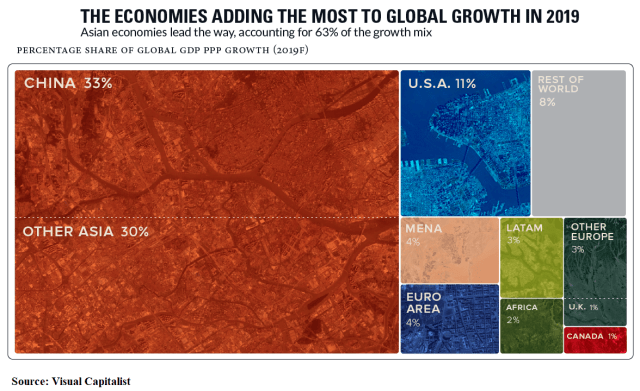
GDP


GDP_2


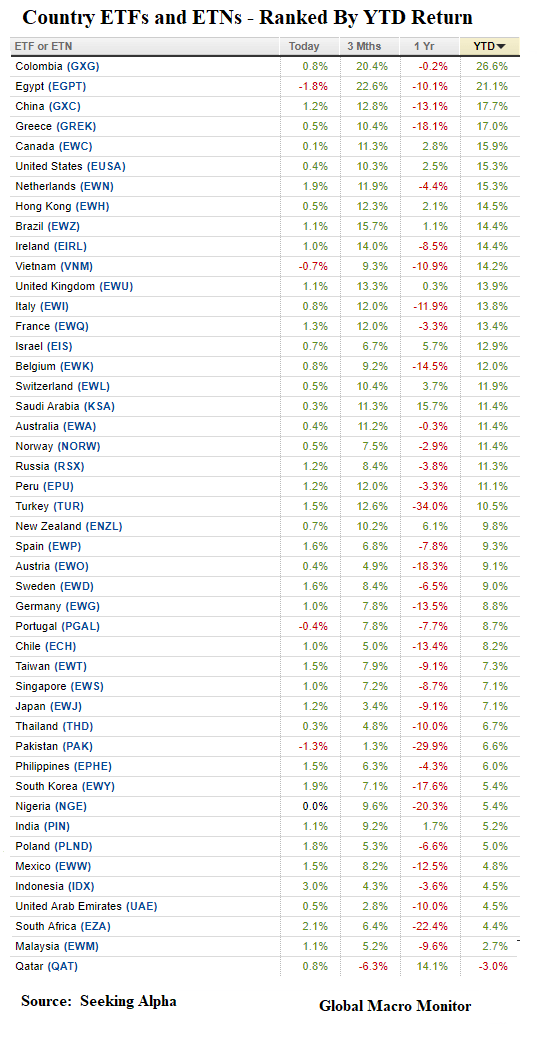
Week_2019_ETFs


Week_Table

Posted in Uncategorized | Leave a comment