Global Risk Monitor: Week In Review – January 31

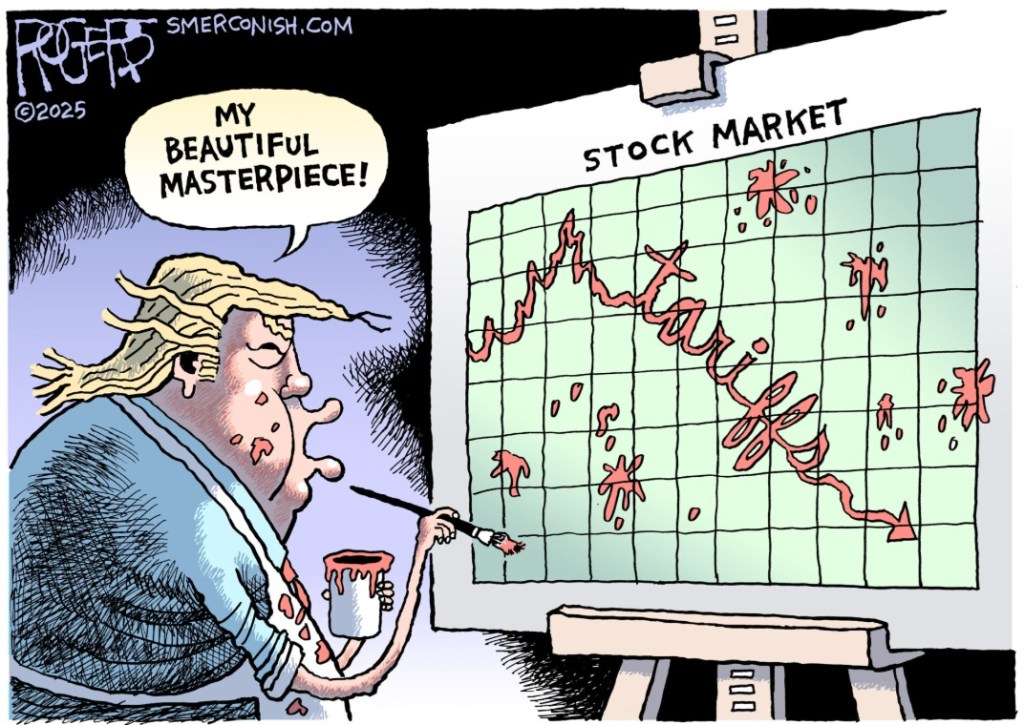
The financial markets are poised for heightened volatility following President Donald Trump’s decision to impose broad tariffs on Mexico, Canada, and China. The move, which includes a 25% tariff on imports from Mexico and Canada and a 10% tariff on energy imports from Canada and goods from China, has injected uncertainty into global trade relations. Investors now face two key risks: potential retaliation from U.S. trading partners and the impact on inflation, corporate earnings, and economic growth.

Markets typically react swiftly to major geopolitical and policy shifts before evaluating the long-term consequences. While some may view the tariffs as an aggressive opening stance in negotiations, markets tend to “shoot first and ask questions later.” The latest measures come at a time when global growth is already fragile—China’s economic data showed contraction across multiple sectors, and the eurozone reported stagnation in Q4 GDP.

Market and Economic Recap (Week Ending January 31, 2025)

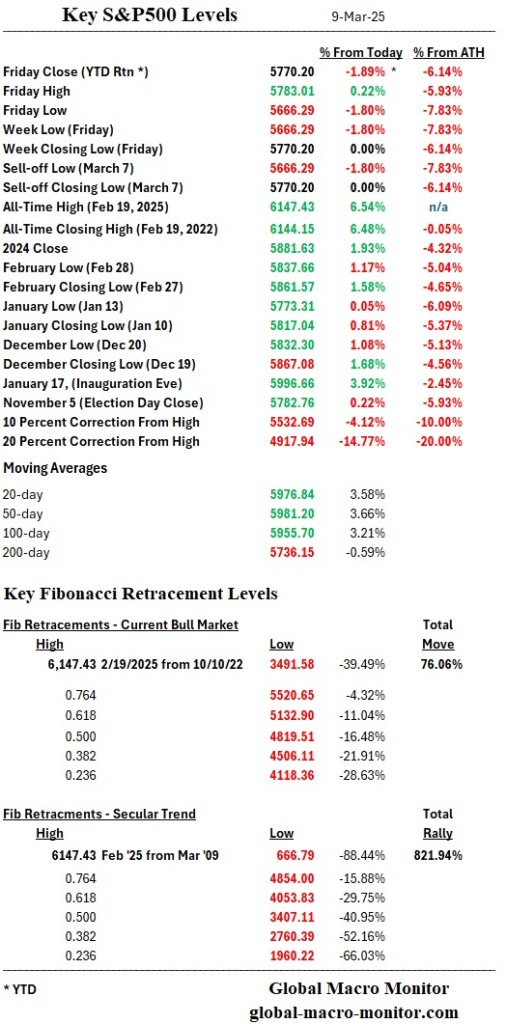
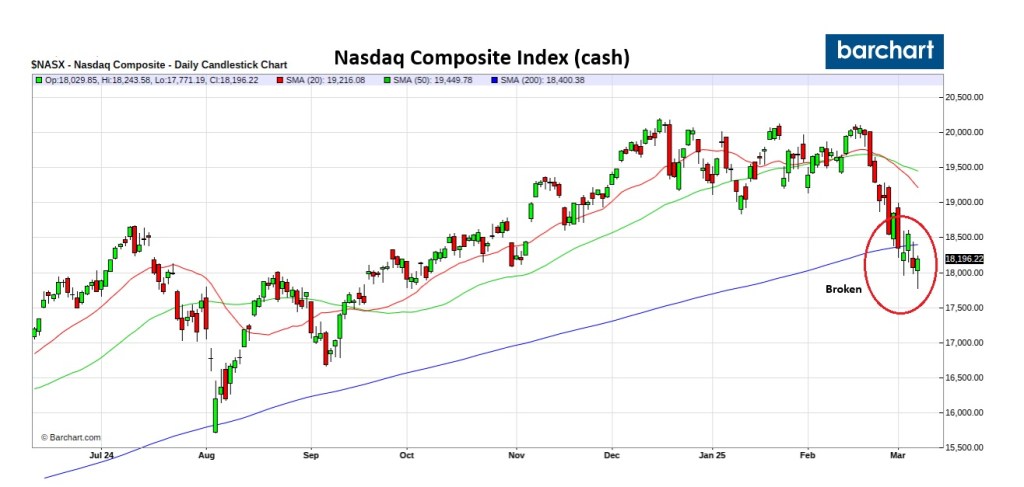
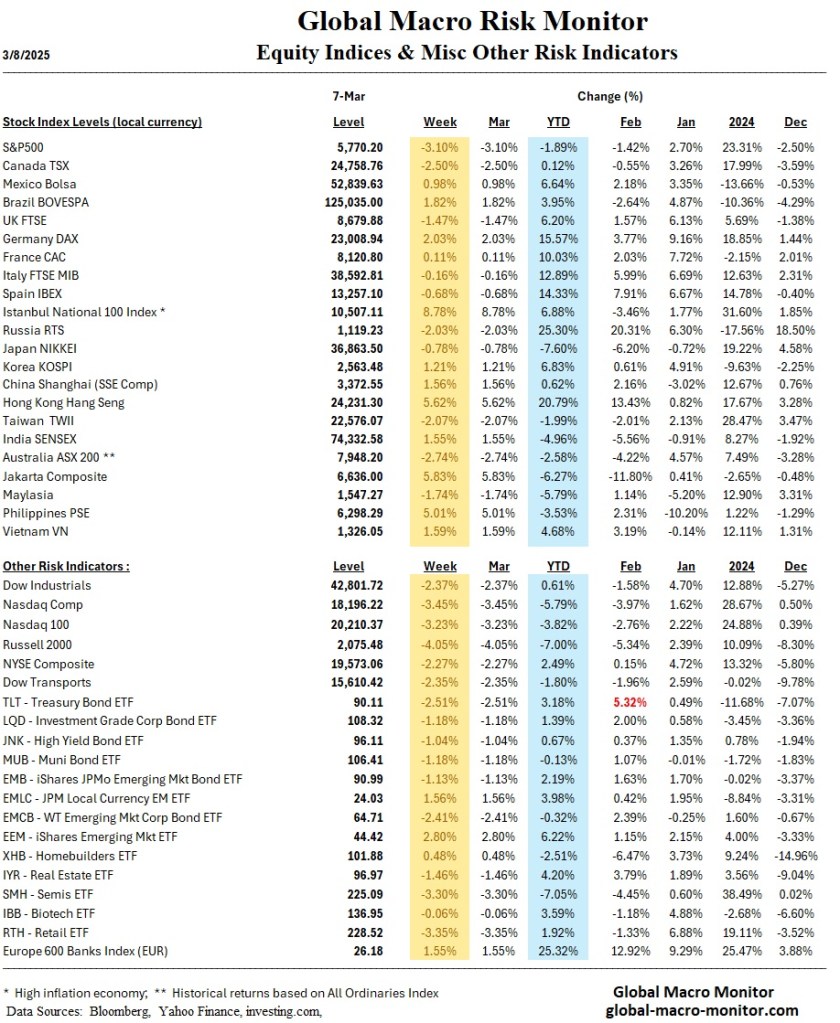
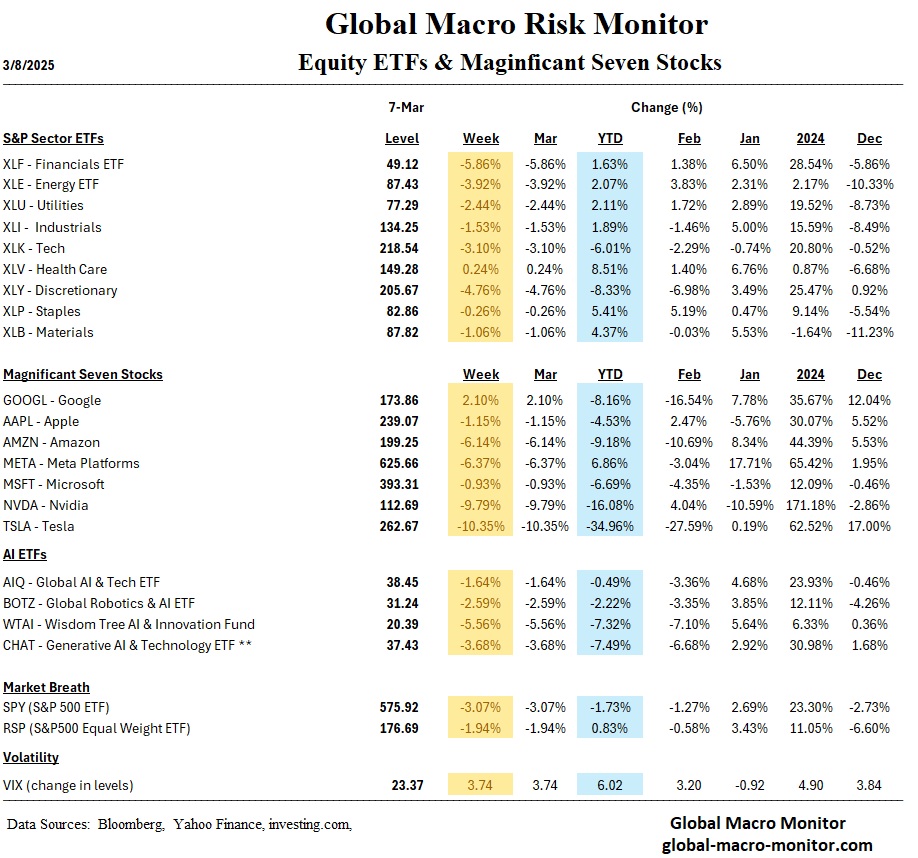
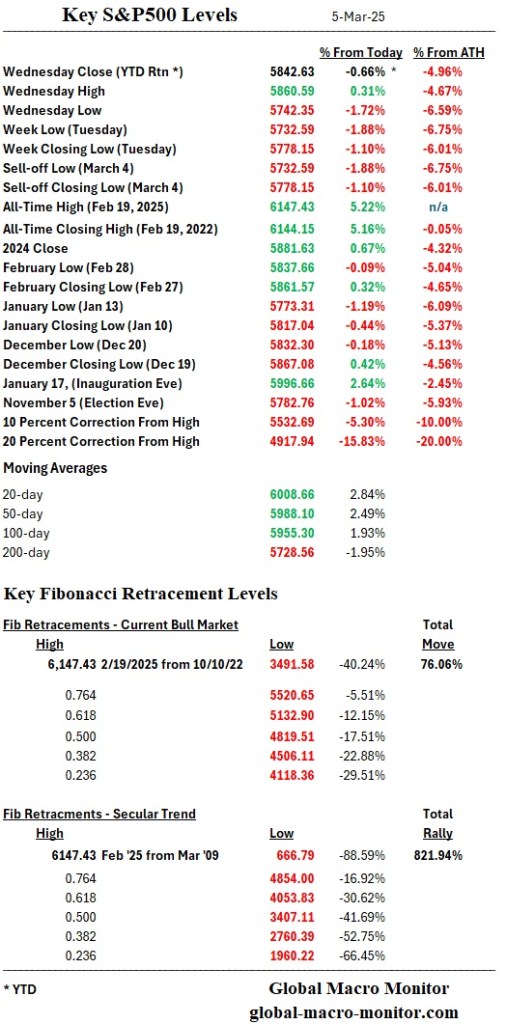
  • Equity Markets: U.S. stocks were volatile, with the Dow Jones rising modestly for the third consecutive week (+120 points) while the S&P 500 (-60 points) and Nasdaq (-326 points) faced losses. Tech stocks were particularly hit after AI competition concerns from DeepSeek.
  • Federal Reserve Policy: The Fed held rates steady at 4.25%-4.50%, signaling patience in policy adjustments. Core PCE inflation remained at 2.8% YoY.
  • Economic Growth: U.S. GDP grew at 2.3% in Q4 and 2.8% for the full year, slightly below expectations but ahead of long-run forecasts.
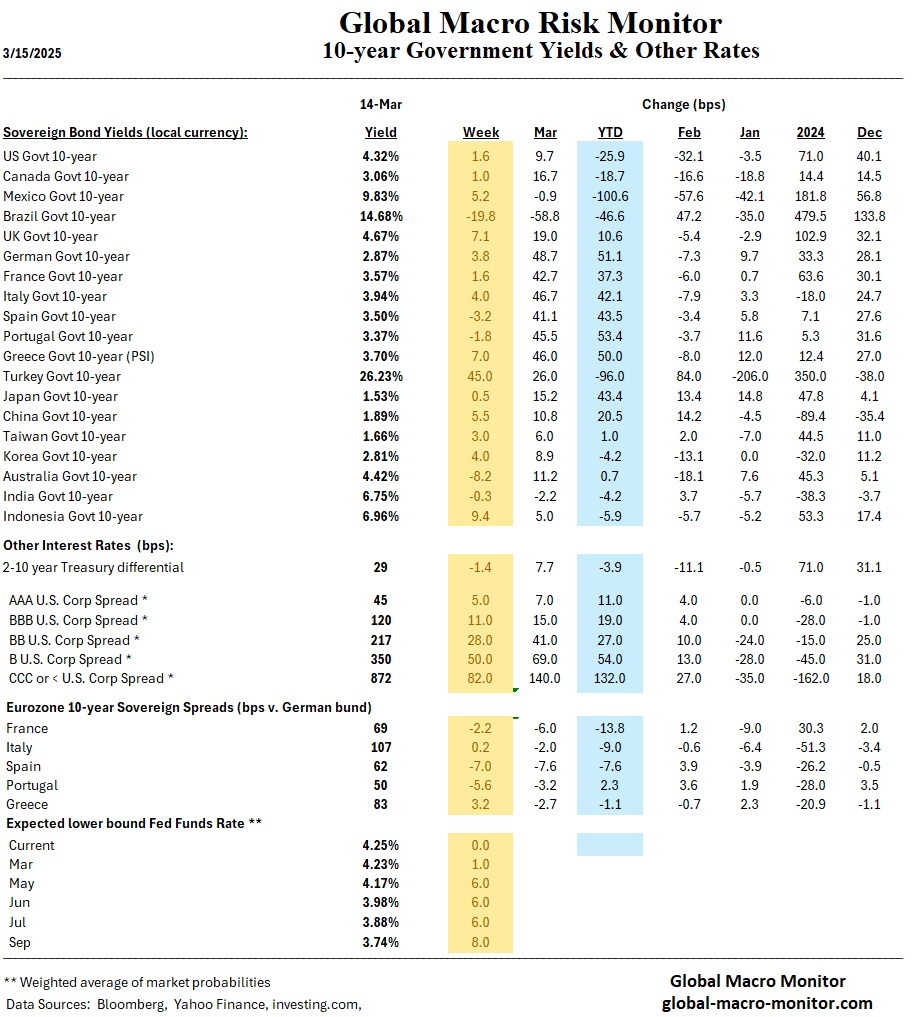
  • Fixed Income Markets: Treasury yields fell for most of the week but rebounded after the tariff announcement.
  • Earnings Season: Roughly 40% of S&P 500 firms reported, with notable earnings beats from Meta and Apple, while Microsoft and Tesla provided mixed results.
  • European Markets: The ECB cut rates by 25 basis points to 2.75% amid weak eurozone growth.
  • China’s Economy: PMI data pointed to worsening conditions across manufacturing, services, and construction.

Market Outlook: Higher Volatility Ahead

The immediate concern is whether this tariff escalation will lead to retaliatory measures from Canada, Mexico, or China. If so, supply chain disruptions and inflationary pressures could prompt renewed Fed scrutiny. Investors should brace for increased volatility in equity and fixed income markets as the implications of Trump’s tariff strategy unfold.

Posted in Uncategorized | Tagged , , , , , , , , , | Leave a comment

Tech Bros Takeover Washington | Isaacson

Posted in Uncategorized | Leave a comment

The Rise and Fall of $Trump Coin: The Mirage of Crypto Scarcity and Currency

The launch of $Trump, a cryptocurrency unveiled during President Donald Trump’s inauguration festivities, has stirred both excitement and skepticism, shining a harsh light on the flaws in the cryptocurrency market. Promoted as a revolutionary token, $Trump initially surged to a $15 billion market cap within hours, only to lose over half its value days later. For critics like Global Macro Monitor, the $Trump saga epitomizes why cryptocurrencies lack credibility: they have no intrinsic value and fail to meet John Maynard Keynes’ definition of a currency—1) a store of value, 2) a medium of exchange, and 3) a unit of account.

A Gimmick-Driven Launch

Announced during the star-studded Crypto Ball, $Trump entered a market already rife with speculation. Backed by a Trump-affiliated entity controlling 80% of the supply, the memecoin promised supporters a way to share in the “crypto revolution.” However, the launch was followed swiftly by Melania Trump’s competing token, $Melania, and later by the Reverend Lorenzo Sewell’s $Lorenzo coin, introduced just hours after his inauguration benediction. Sewell, a Detroit pastor, pitched $Lorenzo as a funding tool for charitable initiatives, only to see its value spike briefly before collapsing—mirroring $Trump’s trajectory.

The ease with which these tokens were minted highlights the fundamental problem with crypto scarcity. While Bitcoin is touted as “digital gold” due to its fixed supply, the flood of memecoins—ranging from $Trump to celebrity coins like $LeBron (LeBron James) and $Leo (Leonardo DiCaprio)—reveals that cryptocurrencies can be created out of thin air, eroding the foundation of the investment thesis tied to scarcity.

A Questionable Wealth Boom

The broader cryptocurrency market now exceeds $3 trillion in capitalization, creating vast wealth for some without producing anything of tangible value. This speculative boom is undeniably inflationary on the margin, as money flows into unproductive assets rather than contributing to real economic output. For Global Macro Monitor, this wealth accumulation, untethered to intrinsic value — or a value anchor, for that matter — amplifies concerns about cryptocurrencies’ long-term sustainability.

Failing Keynes’ Test of Currency

While Bitcoin enthusiasts argue that crypto represents financial innovation, it fails Keynes’ test of currency. Its extreme volatility makes it a poor store of value, few merchants accept it as a medium of exchange, and its fluctuating prices undermine its role as a unit of account. The chaotic launches of $Trump and $Lorenzo only exacerbate these weaknesses, reducing the market to a speculative playground.

Industry and Public Reactions

Critics within the crypto community were quick to decry the $Trump coin. Nic Carter, a Trump supporter and crypto investor, called the move a cash grab that undermined the industry’s credibility. Ethereum creator Vitalik Buterin went further, warning that political and celebrity coins are tools for manipulation and a threat to democracy. Social media backlash was swift, with many accusing the Trump family of exploiting their positions for personal enrichment while tarnishing the industry.

Despite the controversy, the Trump administration continues to champion crypto, with executive orders aimed at easing regulations. Anyone counting on regulation to bring stability should think again. The next four years in the cryptocurrency market are set to make the “Wild West look like a Sunday picnic,” as new tokens and speculative ventures flood the space, testing the limits of both investors and regulators.  In addition, the crypto industry is hoping for a “takeout” by the U.S. G. by means of the creation of a U.S. Bitcoin strategic reserve.   

A Cautionary Tale

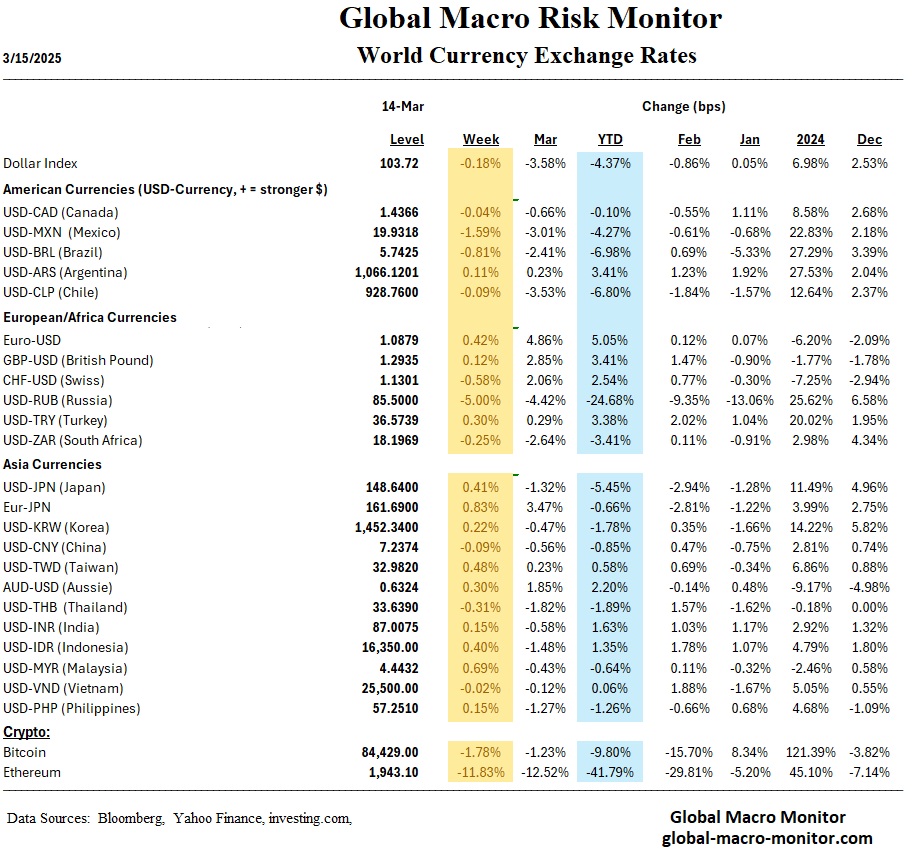
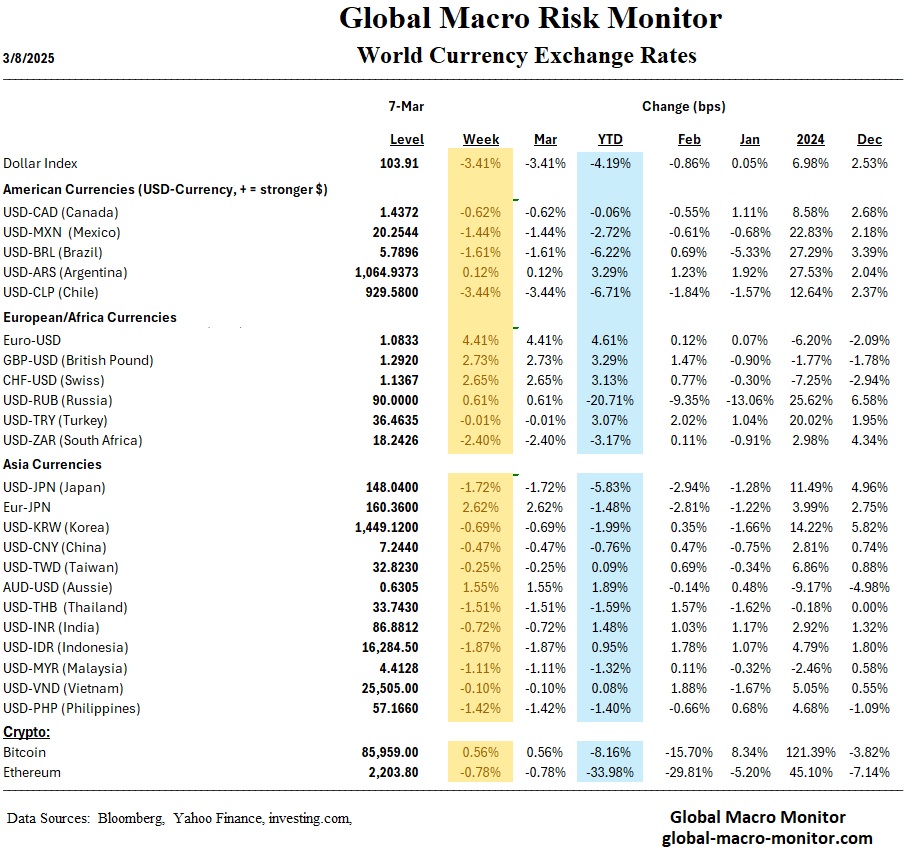
The $Trump coin also highlights the fragility of the cryptocurrency market and the dangers of unregulated speculative assets. For Global Macro Monitor, cryptocurrencies’ lack of intrinsic value and inability to function as currencies per Keynesian theory make their long-term appeal dubious. That said, we do trade Bitcoin, recognizing its unique position as the most established cryptocurrency and the trading opportunities it presents.  

The fundamental value of Bitcoin is ambiguous at best and entirely untethered to any notion of “fair value.” There is no fair value because there is no intrinsic value. Price is dictated purely by flows, driven by investor and trader psychology, with no underlying anchor to ground it. As a result, Bitcoin’s price can go anywhere—soaring to unimaginable highs or crashing just as quickly—because it is detached from any tangible economic or financial foundation.

Still, the $Trump saga serves as a sobering reminder that without foundational reforms—and perhaps even with them—cryptocurrencies may remain financial mirages rather than revolutionary innovations.

Nevertheless, at the end of the day, what ultimately matters to the crypto industry and its investors can be summed up by paraphrasing the late Al Davis, former owner of the Oakland Raiders:

“Just [keep rising in price and] win, baby.”


Posted in Uncategorized | Tagged , , , , | 1 Comment

U.S. At Peak Oil Production

But weak global demand and market caution could deter investment in additional supply. “The oil and gas industry is reluctant to produce more than global markets can absorb right now. Precisely because they know that will cause commodity prices to drop sharply,” said James Lucier, managing director at Capital Alpha Partners, adding that there was “quite a lot of market discipline” constraining fresh drilling. – FT

Posted in Uncategorized | Leave a comment

’Toon of the Day: ICE, ICE Maybe

Farmworker Justice estimates that 70 percent of farmworkers are immigrants (about 40 percent of which are undocumented). Within agriculture, crop production employs the most immigrants (59 percent of farm laborers) while approximately 45 percent of livestock workers are foreign-born.-  farmsaid.org

Posted in Uncategorized | Leave a comment

Highest Marginal Tax Rate by State

Posted in Uncategorized | 3 Comments

Trump 2.0 Inherits A Very Expensive Stock Market

The S&P 500 CAPE (Cyclically Adjusted Price-to-Earnings) ratio, a metric developed by economist Robert Shiller, measures stock market valuation by averaging earnings over the past ten years and adjusting for inflation. It provides a long-term perspective on whether the market is overvalued or undervalued compared to historical norms. As shown in Charlie Bilello’s most excellent chart, Trump 2 begins its administration in 2025 with a CAPE ratio 37.8, the highest in modern history, surpassing the peak valuation under George W. Bush’s first term in 2001.

This record-high CAPE ratio signals a challenging environment for generating positive and above-average equity market returns. Historically, elevated CAPE ratios have been associated with subdued long-term returns as high valuations leave little room for further expansion. The U.S. stock market has consistently priced in robust corporate earnings growth, but achieving these growth rates becomes harder when valuations start at such lofty levels. In this context, the Trump 2 administration faces a critical test: steering economic policies to sustain market confidence amid such expensive conditions.

As highlighted in our recent analysis, “Presidential Stock Returns,” the new administration will likely depend on a higher-than-average inflation environment to maintain stock market momentum. A moderate increase in inflation can benefit equities by supporting corporate revenue growth, but excessive inflation risks eroding consumer purchasing power and undermining profitability. Striking this delicate balance is vital.

The data also contextualizes broader market trends. For example, CAPE ratios were substantially lower during economic recoveries such as under FDR in 1933 (7.9) or Reagan in 1981 (9.3). In contrast, the elevated valuations of 2025 reflect an era of expansive monetary policies and tech-driven growth expectations, further emphasizing the risks and constraints the administration will need to navigate. This market landscape leaves little margin for policy or economic missteps.

Posted in Uncategorized | Tagged , , , , | Leave a comment

It Begins…Prepare for a Food Price Spike

Posted in Uncategorized | Leave a comment

COTD: Ready For Some Football?

Posted in Uncategorized | Leave a comment

QOTD: Every Little Thing He Does Is Inflationary

 …financial markets and official economic indicators over the past few weeks have given policymakers around the world plenty to contemplate. Were the recent bond-market alarm bells a sufficient warning to Trump and his team, or will they still pursue large-scale stimulus in the form of a tax cut, across-the-board import tariffs, and a crackdown on immigration? As I wrote in November, most economists would describe this as an inflationary agenda. And now, it appears that ordinary Americans and bond markets agree. – Jim O’Neil

Posted in Uncategorized | Leave a comment