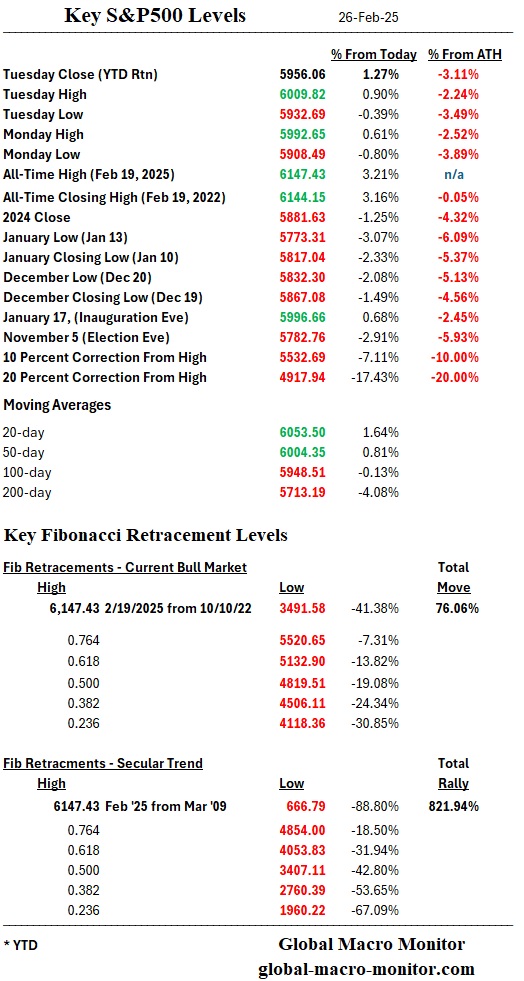
The S&P 500 closed right at its 100-day on Friday. The Nasdaq bounced right off its 200-day. Stay tuned.


The S&P 500 closed right at its 100-day on Friday. The Nasdaq bounced right off its 200-day. Stay tuned.
Firefly Aerospace’s Blue Ghost lander has successfully touched down on the Moon, making it only the second privately built spacecraft to achieve this milestone. The Texas-based company developed the robotic lander as part of NASA’s Commercial Lunar Payload Services (CLPS) initiative, supporting the Artemis program aimed at returning humans to the Moon.
Launched aboard a SpaceX Falcon 9 rocket, Blue Ghost spent two weeks orbiting before its hour-long descent to the lunar surface, landing this morning at 3:36 a.m. ET. The control room in Austin, Texas, erupted in celebration, marking another step in the growing private-sector involvement in lunar exploration.
The lander is carrying 10 NASA science instruments to study the Moon’s surface and interior. Among its tasks, it will:
While in orbit, Blue Ghost also captured stunning imagery of the Moon’s south pole and far side, providing valuable data for future missions.
This landing follows Intuitive Machines’ Odysseus mission in February 2024 and kicks off a wave of lunar expeditions. Another Intuitive Machines lander is set to land around March 6, while a Japanese ispace lander, launched alongside Blue Ghost, is on a longer trajectory, arriving in May or June.
NASA awarded Firefly $101.5 million for this mission, reinforcing private-sector contributions to lunar exploration and future human landings.
Source: NBC News
Check out the video of Firefly’s Blue Ghost lander, which captures stunning 10x-speed footage of the Moon’s far side and its thruster maneuvers from 100 km above the surface. Stunning.
This video image of our home from the moon never gets old. I have a framed print of Earthrise above my desk, which was taken by Apollo 8 astronaut William Anders.

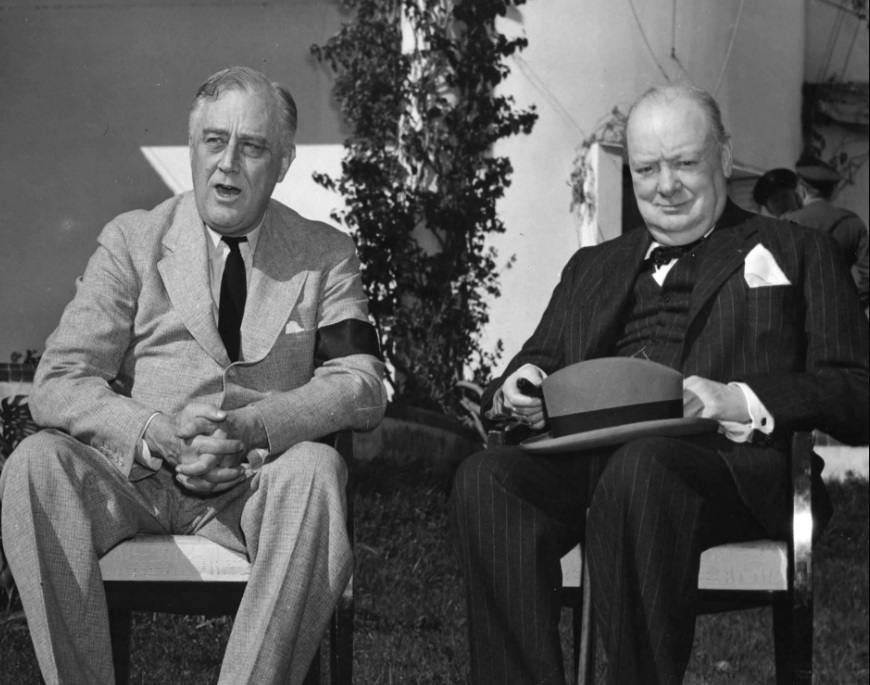
Winston Churchill once remarked on his attentive relationship with President Franklin D. Roosevelt by saying,
“No lover ever studied every whim of his mistress as I did those of President Roosevelt.”
No doubt Putin and Xi scrutinize the current POTUS just as closely. But is the vigilance reciprocated?
Churchill called Roosevelt “Franklin” in private, reflecting their deepening friendship. In return, Roosevelt called Churchill “Former Naval Person” but later called him “Winnie.”
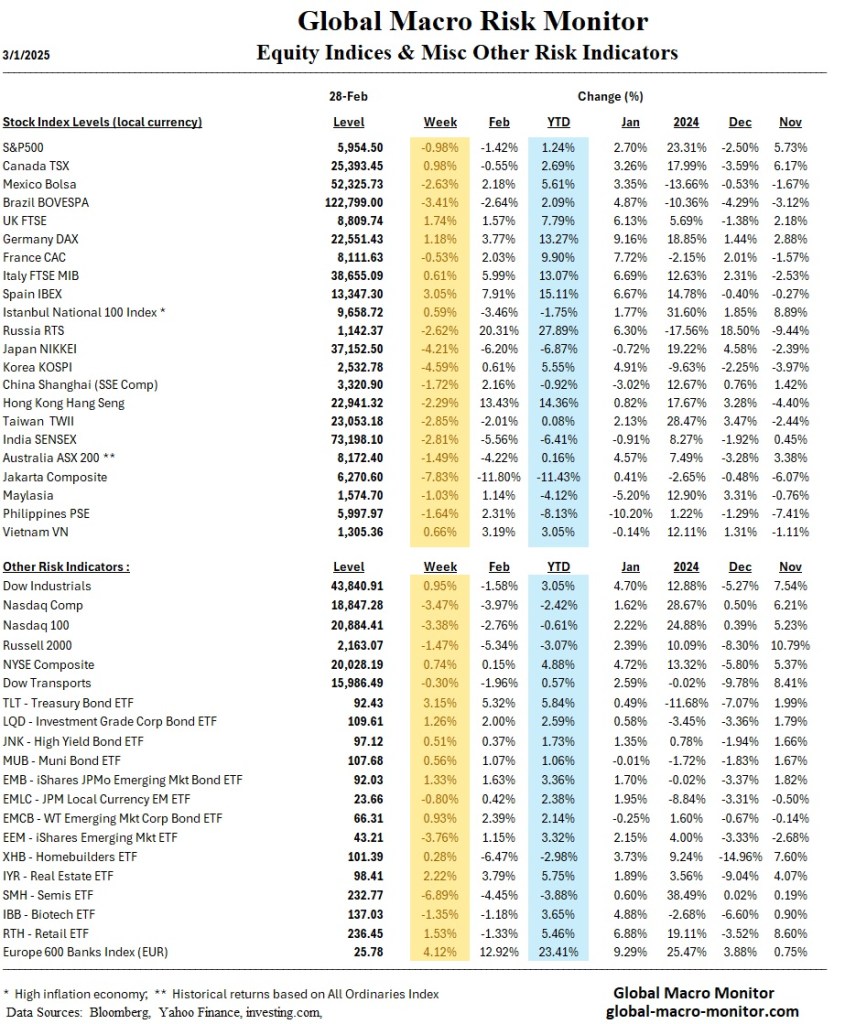
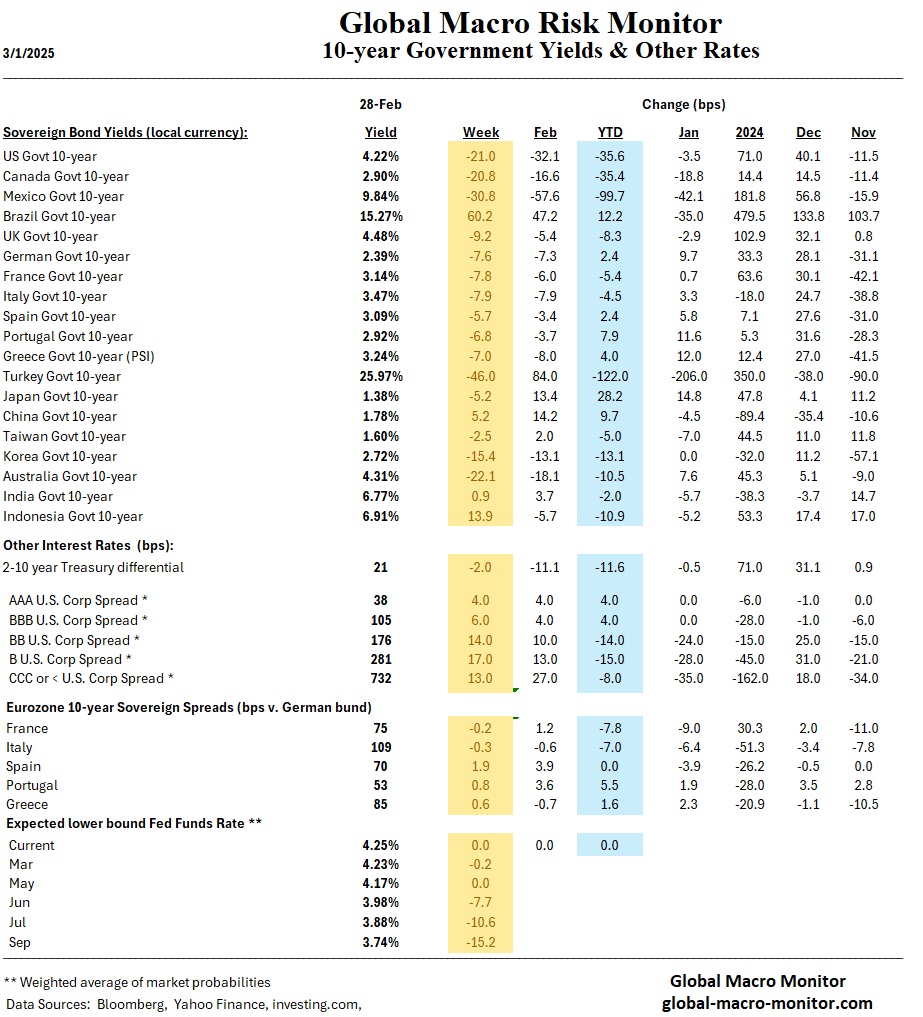
The past week saw heightened market volatility, with the S&P 500 and Nasdaq declining due to fading AI momentum and a growth scare, while the Dow Jones outperformed. The Atlanta Fed’s GDPNow model slashed Q1 GDP growth projections to -1.5%, signaling a potential contraction, exacerbated by weaker consumer spending and falling confidence levels. The bond market is flashing recessionary signals, as Treasury yields fell, and the yield curve remains inverted.
Brazilian markets faced sharp losses, with its stock market falling 3.41%, the real depreciating 2.7%, and bond yields surging 60 basis points amid concerns over rising interest rates and a shift to leftist populist economic policies. Meanwhile, Japan’s Nikkei dropped 4.21%, weighed down by a tech sell-off and U.S. tariff fears, while European equities posted modest gains.
Looking ahead, the market will focus on U.S. labor data, Fed rate expectations, and the March 4 tariff deadline. With risks rising, a defensive stance seems prudent, focusing on value stocks, liquidity, and hedging strategies.
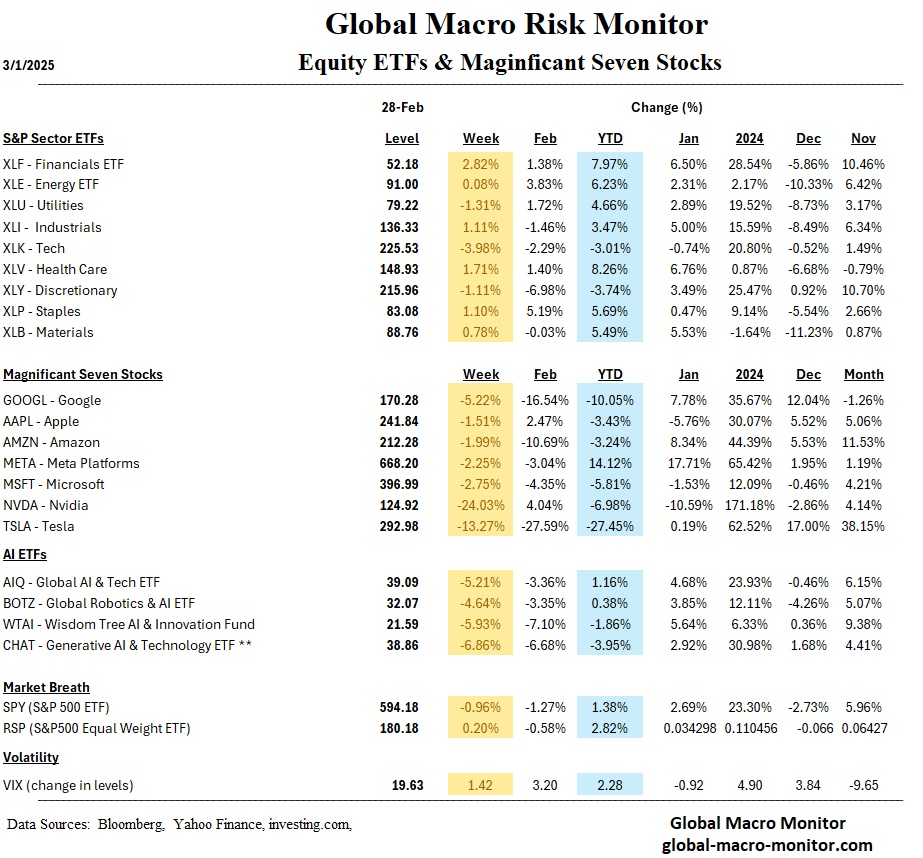
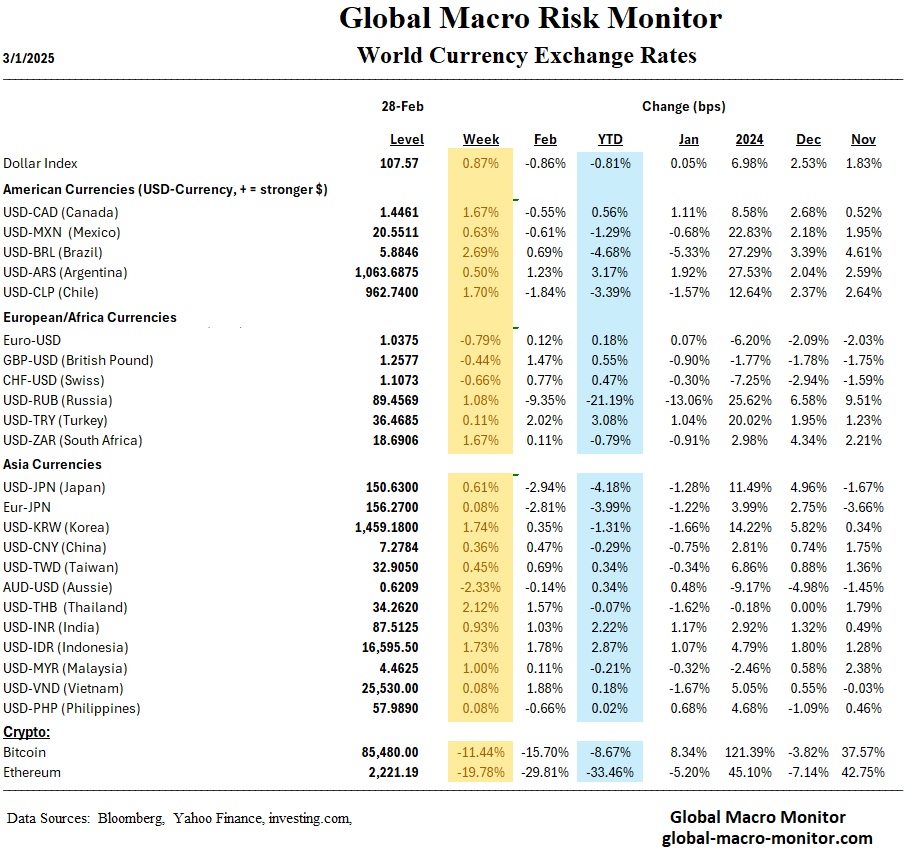

Watch these levels, folks. This one feels like it is ready for a deep correction. Market volatility can signal instability before a major downturn, just like a speed wobble on a bicycle or motorcycle—when the handlebars start shaking uncontrollably before a crash. Sharp price swings, erratic sentiment, and liquidity imbalances indicate that investors struggle for control. While a deep correction often follows, sometimes markets regain balance if conditions stabilize. Volatility is an early warning, not a guarantee of collapse, but when the wobble intensifies, the risk of a full-blown selloff increases. Stay alert—key support levels will determine the outcome.

Today’s German federal election has delivered a decisive yet complex verdict, with Friedrich Merz’s center-right Christian Democratic Union/Christian Social Union (CDU/CSU) securing a plurality of the vote at around 29%, as exit polls suggest. Meanwhile, the far-right Alternative for Germany (AfD) achieved its best-ever result, gaining approximately 20%. While reinforcing the CDU/CSU’s dominance, this outcome complicates coalition-building, as all major parties have refused to work with the AfD due to its far-right positions.
U.S.-Germany Parallels: Political Fractures and Populist Gains
Much like in the United States, Germany’s political landscape has become deeply polarized. The surge of right-wing populism, economic concerns, and debates over immigration mirror the Republican vs. Democratic divide in the U.S. The AfD’s rise is akin to the ascent of Trump-style nationalism, capitalizing on economic anxiety and anti-immigration sentiments. However, Germany’s consensus-driven parliamentary system makes it harder for populists to seize executive power, in contrast to the U.S. presidential system.
Grand Coalition: A Likely but Contentious Path Forward
Given the fractured Bundestag, a Grand Coalition (GroKo) between the CDU/CSU and the Social Democrats (SPD) is the most likely outcome. Historically, Germany has seen multiple GroKos, including under Angela Merkel. While such coalitions bring stability, they risk stifling political debate and enabling further AfD growth as the main opposition. SPD leader Olaf Scholz has ruled out a ministerial role in a CDU-led government, but the party may still enter a coalition to prevent political deadlock.
The AfD’s Isolation and the Political Firewall
Despite its strong performance, the AfD remains isolated, as mainstream parties continue to uphold the political “firewall” that prevents cooperation with the far right. This effectively excludes the AfD from governance, even as its influence in public discourse grows. However, CDU leader Merz’s recent willingness to accept AfD votes on an immigration motion has sparked controversy, raising concerns that the firewall might erode over time.
The Debt Brake Loosening: A Major Economic Shift
While the U.S. grapples with reining in its debt trajectory, Germany faces mounting pressure to loosen its fiscal restraints. At the heart of the post-election economic debate is the constitutional “debt brake,” which caps deficit spending at 0.35% of GDP. Introduced in 2009 to enforce fiscal discipline, it has increasingly become an economic straitjacket, choking off investment in infrastructure, defense, and green energy. With stagnant growth and an estimated €600 billion investment shortfall by 2030, political momentum—now backed by former Chancellor Merkel herself—is shifting toward reform. The debate is no longer about whether the debt brake will be loosened, but how much fiscal flexibility Germany is willing to embrace.
Impact on the European Economy
Relaxing the debt brake would enable higher government spending, potentially boosting Germany’s sluggish economy and providing stimulus to the broader Eurozone. Increased German investment in infrastructure and defense could reduce reliance on exports, making the economy more resilient against China’s manufacturing overcapacity and Trump’s potential tariffs. However, the CDU’s fiscal conservatives may limit the extent of reform, favoring a gradual approach rather than outright abolition.
Conclusion
Germany’s 2025 election outcome underscores political fragmentation, rising right-wing populism, and pressing economic reforms. A CDU-SPD Grand Coalition is the most probable governing scenario, while the AfD remains isolated despite its electoral gains. Meanwhile, the debate over loosening the debt brake signals a pivotal shift in German economic policy, with potential ripple effects across Europe. The challenge for Merz will be to balance fiscal responsibility, economic revitalization, and political stability—a task that will define Germany’s role in Europe and its transatlantic relations in the years ahead.

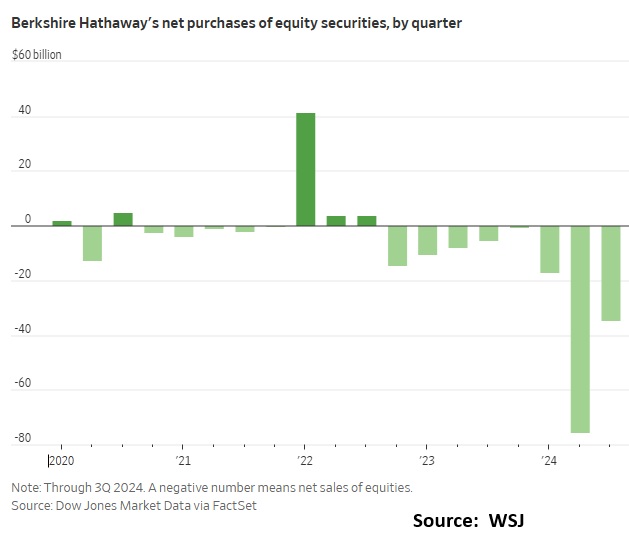
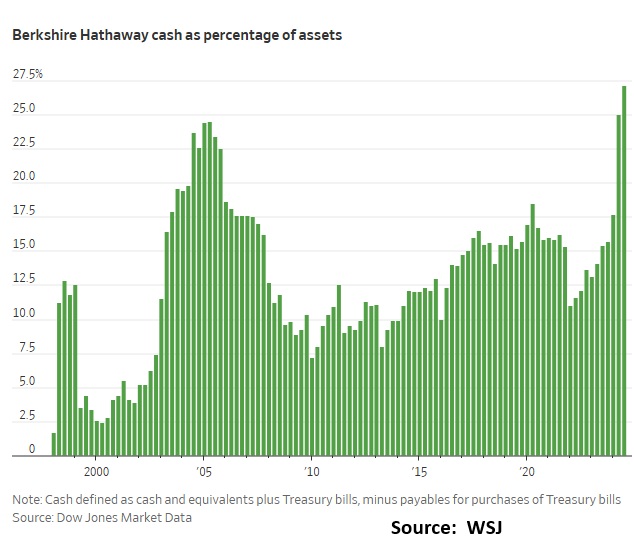
Warren Buffett’s recent moves in the stock market signal a strong defensive posture, one that suggests a serious market correction may be on the horizon. Over the past several years, Berkshire Hathaway has been a net seller of equities, shedding over $134 billion in stocks in 2024 alone, particularly trimming its holdings in Apple and Bank of America. Simultaneously, Buffett has amassed an unprecedented $334 billion cash pile, which the Global Macro Monitor estimates to be over 30 percent of BH’s total assets and his largest cash position ever.
“Nothing Looks Compelling”
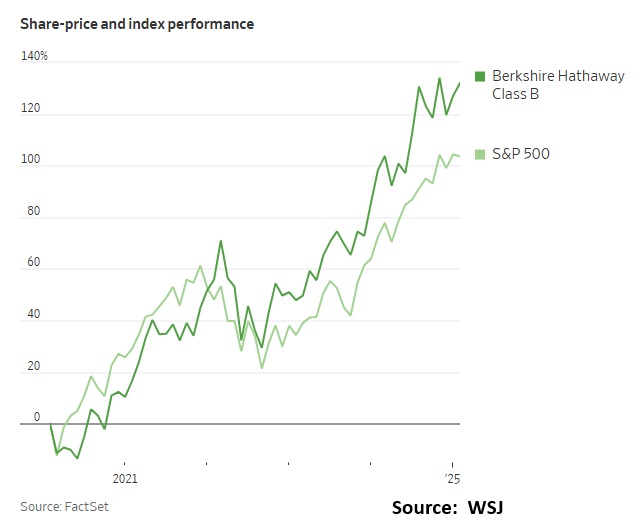
Buffett’s reluctance to deploy this cash, despite historically favoring equities, underscores his view that the market is dangerously overvalued. The S&P 500 has surged over 20% in consecutive years, yet Buffett has remained on the sidelines, signaling that valuations have exceeded reasonable levels. His repeated assertion that “nothing looks compelling” suggests that he sees few opportunities that justify the risk. Moreover, Berkshire has halted stock buybacks, another indication that Buffett believes prices are stretched.
Steve Cohen Bearish
The broader economic climate supports Buffett’s cautious stance. Steve Cohen, CEO of Point72, has turned bearish for the first time in years, citing rising inflationary pressures due to aggressive tariff policies, a restrictive immigration stance that could constrict the labor force, and federal spending cuts aimed at reducing the deficit. Cohen argues that these factors will slow economic growth from 2.5% to 1.5% in the second half of the year, increasing the likelihood of a market correction. Buffett’s strategy aligns with this outlook: in an environment of deteriorating fundamentals, cash provides a safe haven.
Newsletter to Investors
Buffett’s latest letter to shareholders further reveals his perspective. He openly acknowledges past mistakes in capital allocation and emphasizes the importance of adjusting to changing market conditions. He notes that while Berkshire still holds substantial equities, their marketable securities portfolio has declined from $354 billion to $272 billion, while non-quoted controlled equities have increased. Buffett reiterates that Berkshire will always favor ownership of quality businesses over cash but also warns that economic uncertainties and fiscal irresponsibility can erode paper money’s value.
Not A Market Call?
Notably, Buffett does not explicitly frame his cash hoarding as a market call, yet his actions suggest otherwise. While valuation alone is not a reliable timing mechanism, the alignment of stretched stock prices, macroeconomic risks, and Buffett’s defensive positioning strongly suggests that a significant market correction is imminent. Historically, Buffett has been an opportunistic buyer during downturns, and his current stance implies he is waiting for a major dislocation to deploy capital at more attractive valuations. Given Buffett’s unparalleled market acumen, investors should take heed—this could be a pivotal moment in market history.