
Click on table to enlarge and for better resolution
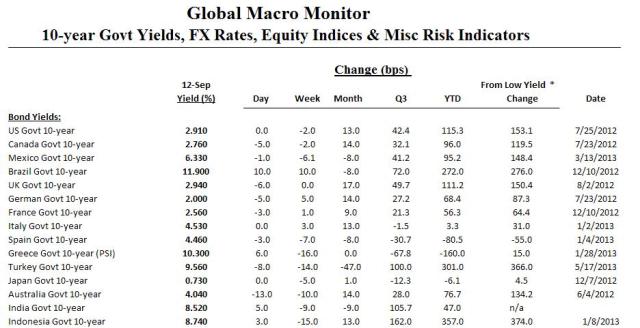
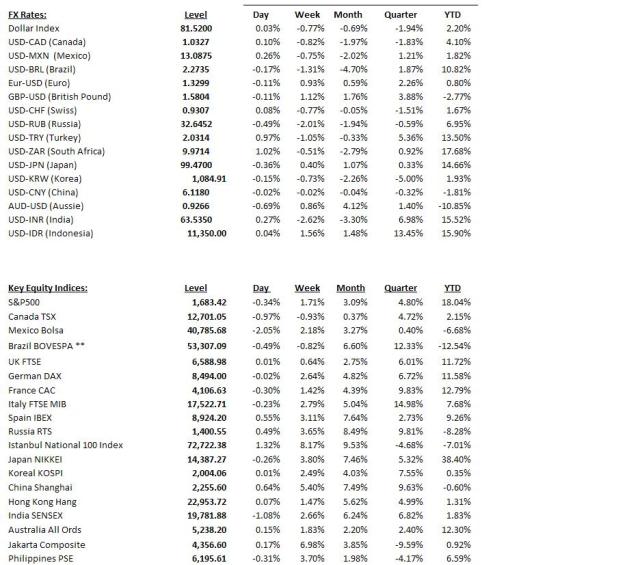
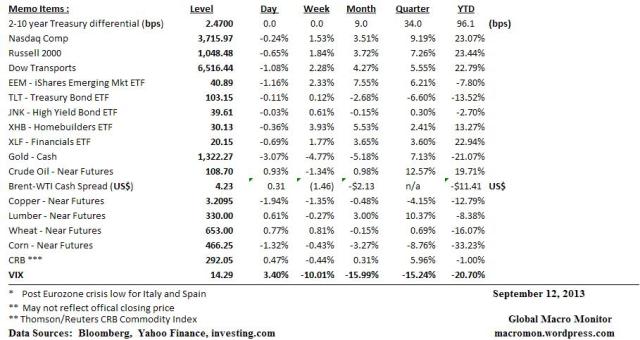 (click here if table is not observable)
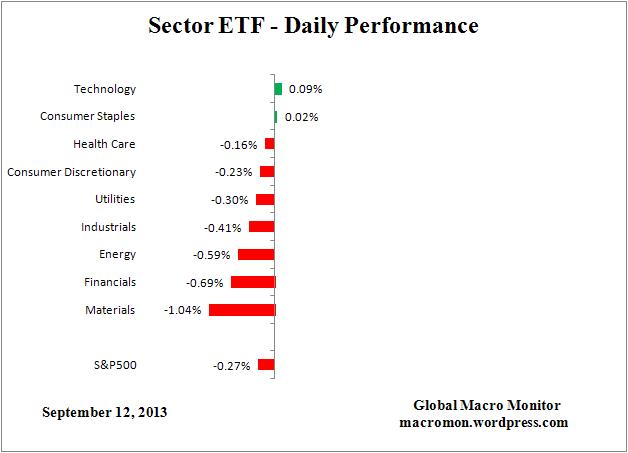

 (click here if charts are not observable)
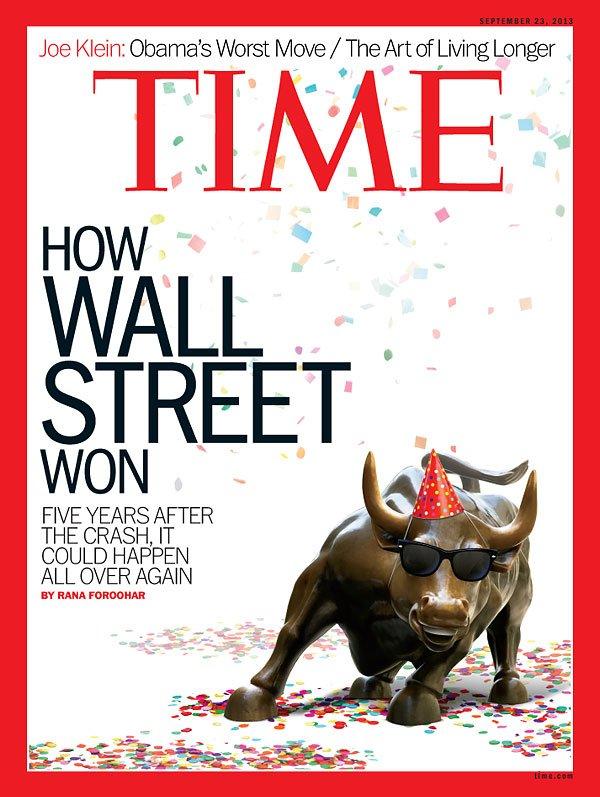
Check out the new cover of Time magazine (see below).
Here’s Krugman on the magazine cover curse after Fed Chairman Bernanke was named Time’s 2009 Person of the Year,
… Be afraid, be very afraid.
The magazine cover curse is a well-known phenomenon: you should always short the stock of a company whose CEO is the subject of a glowing cover story in a major magazine.
– Paul Krugman, December 2009
Short this Bull? No way! Not yet.
To be fair the Time cover story is really about how financial reform over the past five years is more myth than fact. Here’s a little snippet,
The biggest banks in the country are larger and more powerful than they were before the crisis, and finance is a greater percentage of our economy than ever.
Given all this, is your money really any safer over the long haul than it was five years ago?
(click here if picture is not observable)
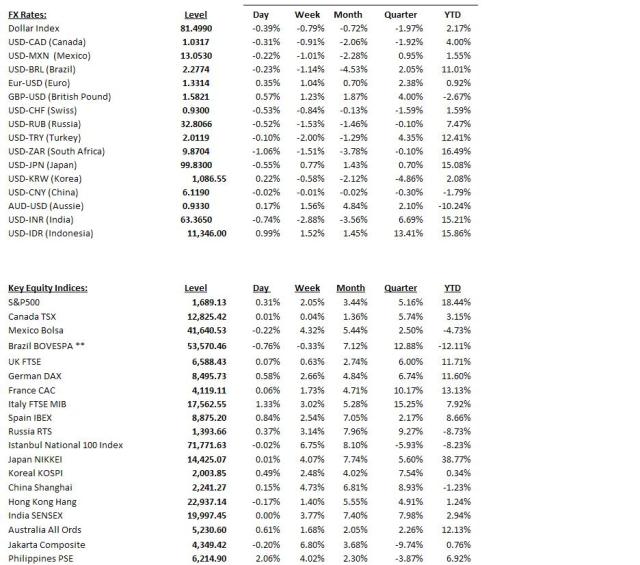
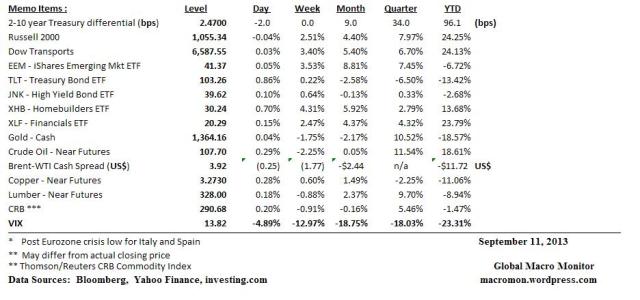
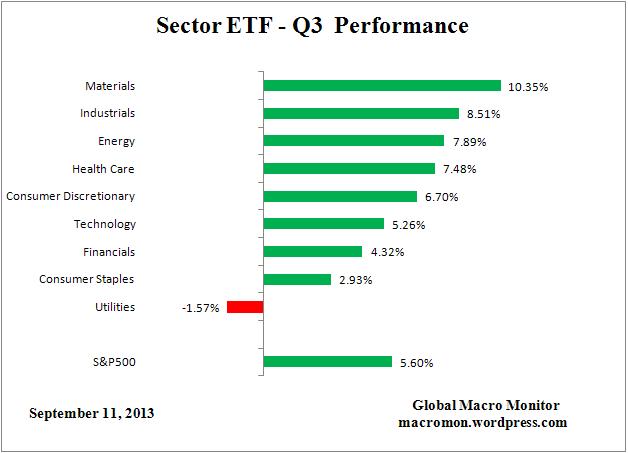
The S&P500 is only 1.22 percent from its August 2nd all-time high of 1709.67. Looks like it shaping up be a year when you sell buy Rosh Hashanah, buy Yom Kippur, no? Must be global warming.
Click on table to enlarge and for better resolution

 (click here if table is not observable)
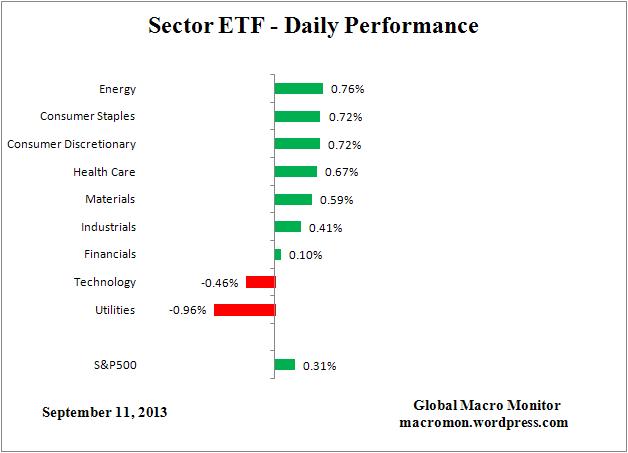
 (click here if charts are not observable)
Reading through the classic textbook, Technical Analysis of Stock Trends, last night I stumbled upon a stunning stat comparing the returns of a strategy using Dow Theory versus buy and hold. Using Dow Theory buy and sell signals would have turned an initial investment of $100 in 1897 into $492,597.38 by the end of 2010. This compares to a buy and hold strategy of $25,952.72, which even assumes buying the Dow low at 29.64 and selling at the December 2010 close.
Of the 41,444 days from 1897 to 2010, the Dow Theory investor would have been on the sidelines 14,378 days, or 37 percent of the time. A nice place to be given some of the epic bear markets over the past hundred years. Imagine watching your portfolio evaporate during the “Hoover drawdown” of 1929-32 with the Dow falling 89 percent. No thanks!
Even more impressive is the return on trading both sides of the market, both long and short, using the Dow Theory buy and sell signals. This strategy would have turned the initial $100 investment in 1897 into $2,697,535.01 by the end of 2010.
The data ignores reinvestment and dividends. Stunning, nonetheless!
 Source: Technical Analysis of Stock Trends
Also see: TheDowTheory.com
(click here if table is not observable)
Here’s one we’re putting on our must see list. Reuters MacroScope blog writes,
“Money for Nothing: Inside the Federal Reserve” is a slick, thoughtful and alternately infuriating-and-funny documentary that premiered in New York’s Florence Gould Hall last night. It gives the U.S. central bank a pretty thorough lashing, especially Alan Greenspan. The former Fed Chairman is strung up like a piñata and smacked around as the culmination of long-misguided U.S. monetary policy that, crisis after crisis, lacks the creativity and courage to remove the proverbial punch bowl when the time is right.
(click here if video is not observable)
Wow! Here’s a new definition of China Mobile.
The pain we took yesterday in Apple was enough to cut the position. Lucky us. Not!
(click here if video is not available)
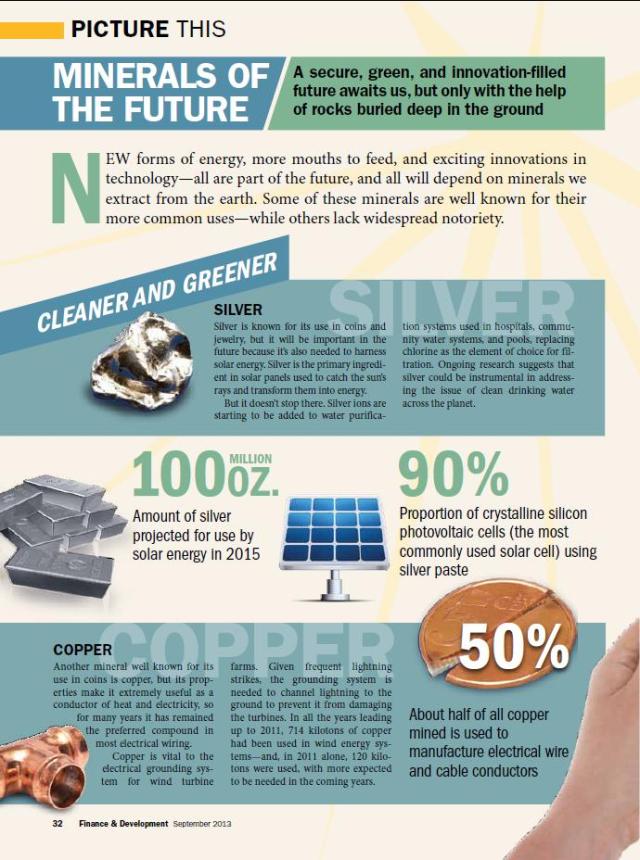
Nice infographic from the IMF’s Finance and Development. Did you know that Canada and Russia produce 50 percent of the world’s potash? You do now!
Click to enlarge and for better resolution.
 (click here if infographics are not observable)
Sept. 9 – Influential thinkers and leaders at the Ambrosetti Forum including Trichet, Roubini and Zoellick give Reuters’ Lucy Marcus their take on the biggest issues facing Europe’s economy.
– Reuters TV
(click here if video is not observable)

 Global Macro Monitor