
The dominant market story this past week was not simply that risk assets sold off, it was that geopolitics forcibly rewired the macro regime. The escalation surrounding Iran and the Strait of Hormuz has shifted markets from a “disinflation + cuts” narrative to a “war premium + policy uncertainty” regime, and assets are adjusting accordingly, violently in some cases.
From Rate Cuts to Rate Hikes
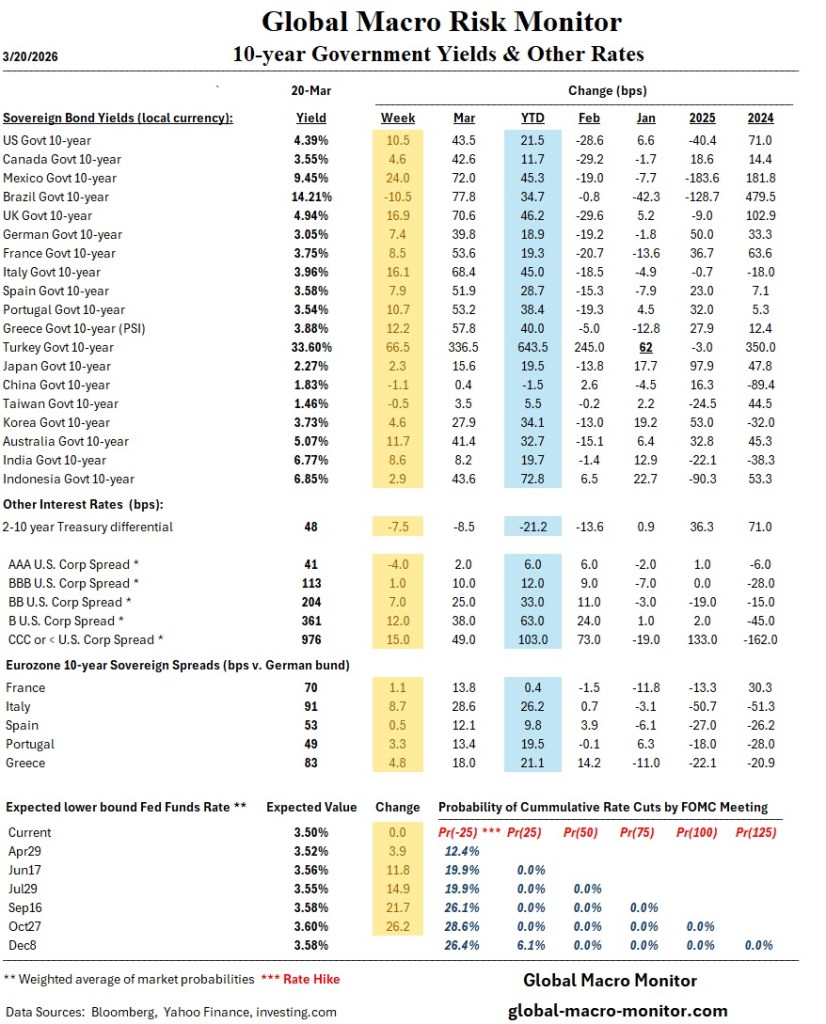
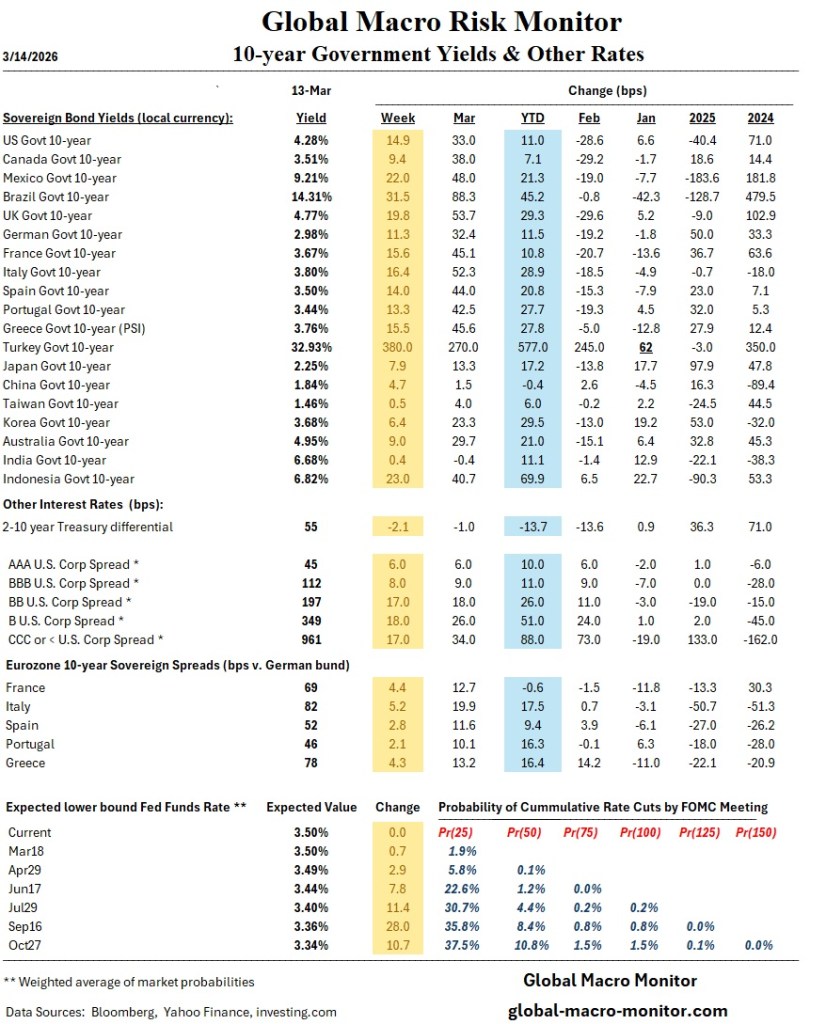
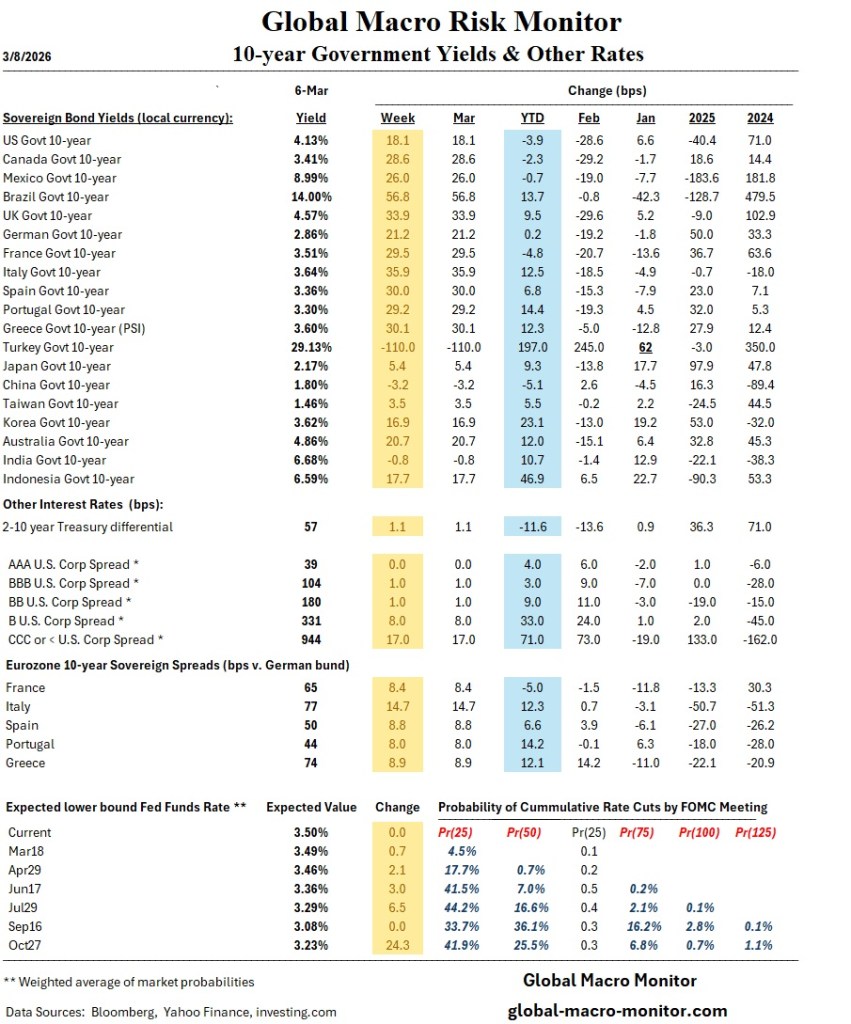
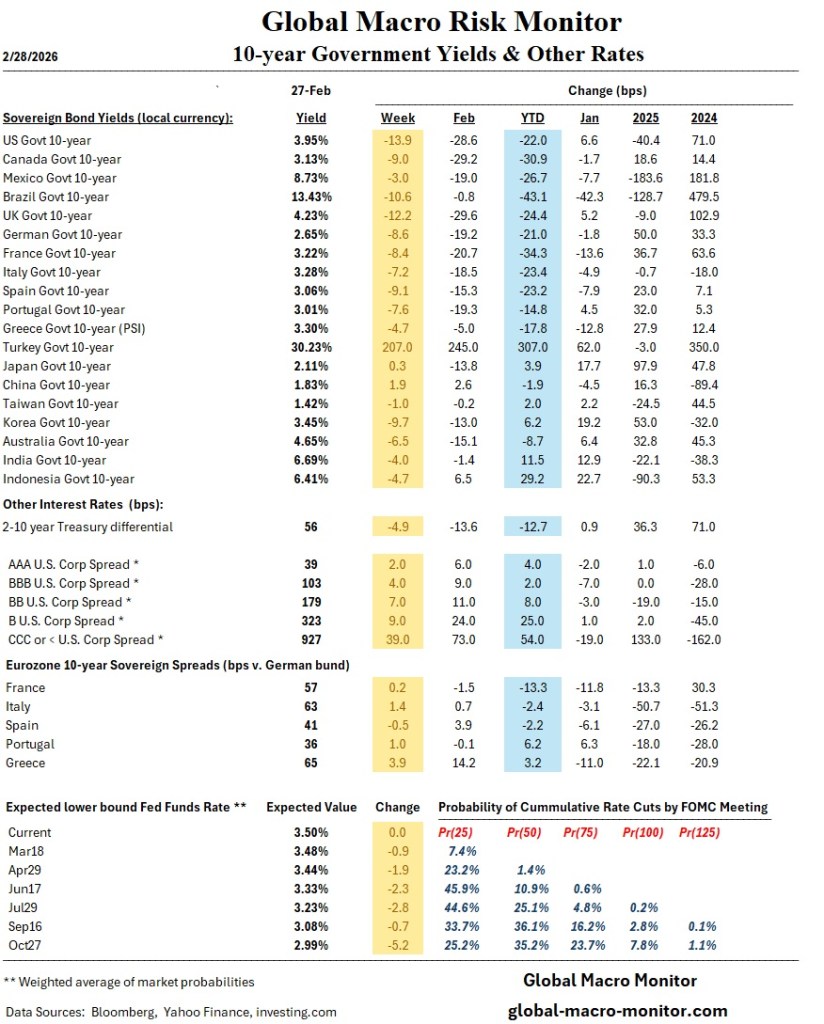
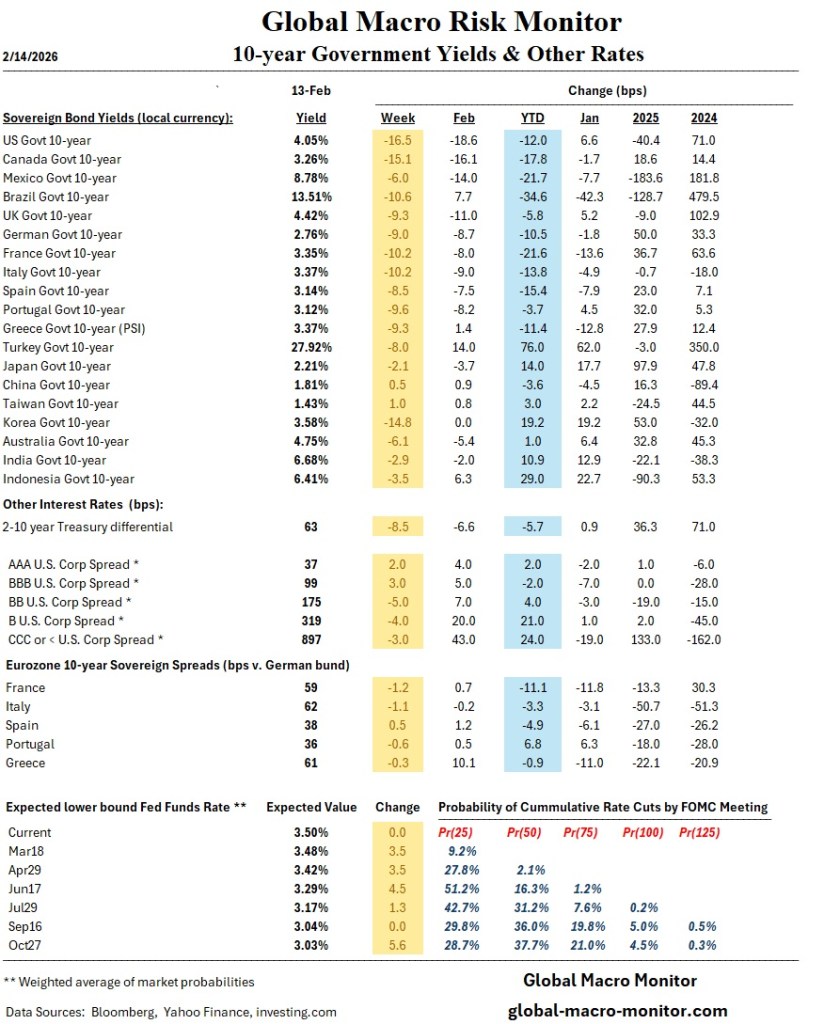
Markets have decisively repriced the Fed path. Rate cuts are no longer the base case in the near term; instead, markets are assigning ~12% odds of an April hike and >30% probability of a hike by October. That’s not a tail risk anymore, that’s a regime shift. And it is being driven less by domestic demand and more by a geopolitical supply shock feeding directly into inflation expectations.
Brent Crude vs West Texas Intermediate (WTI)
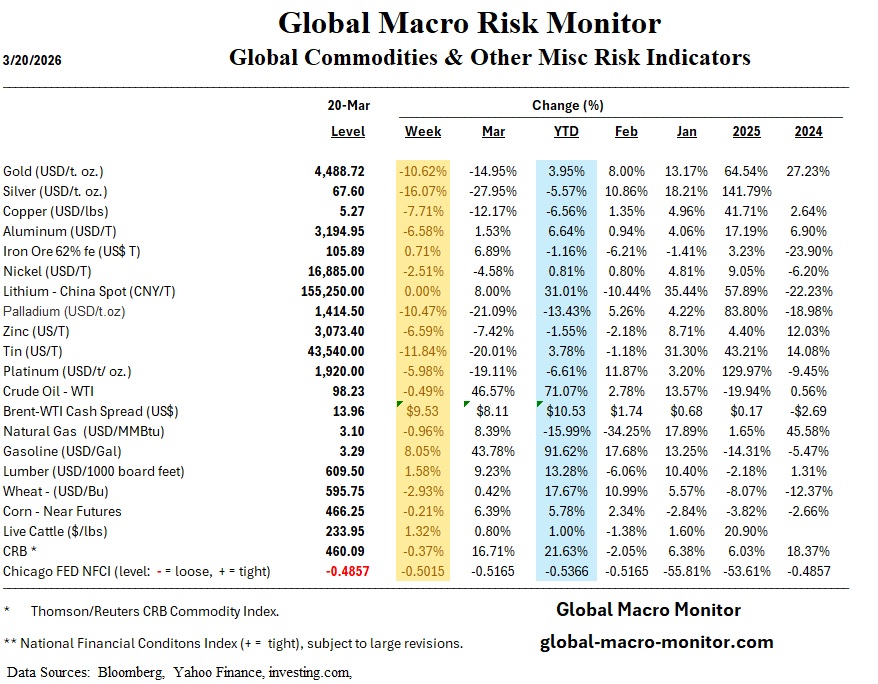
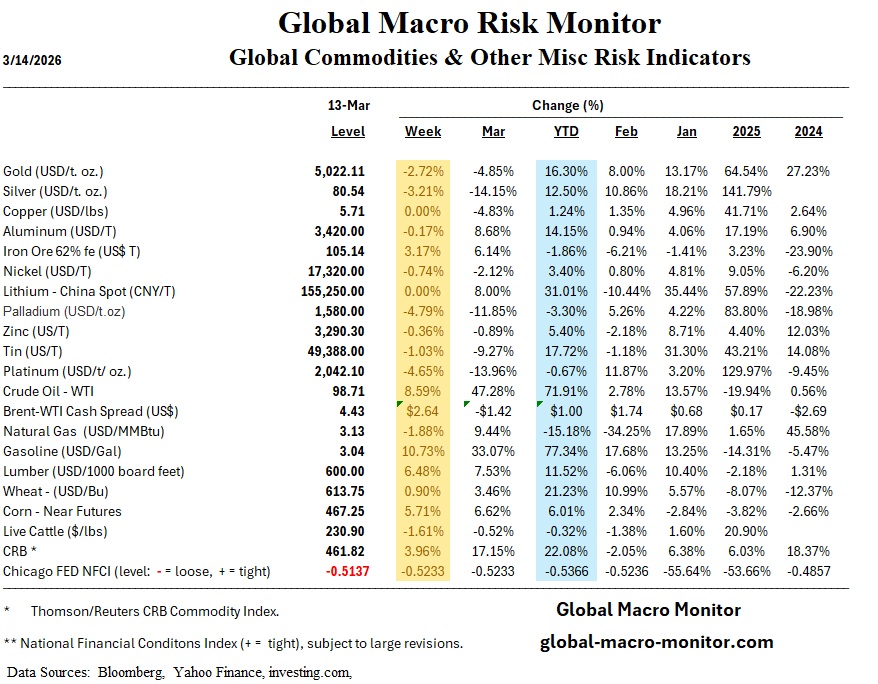
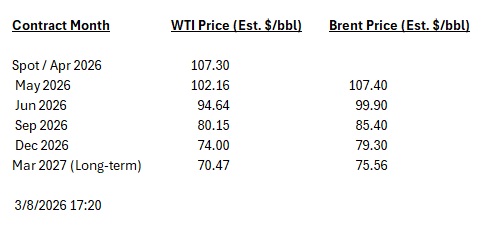
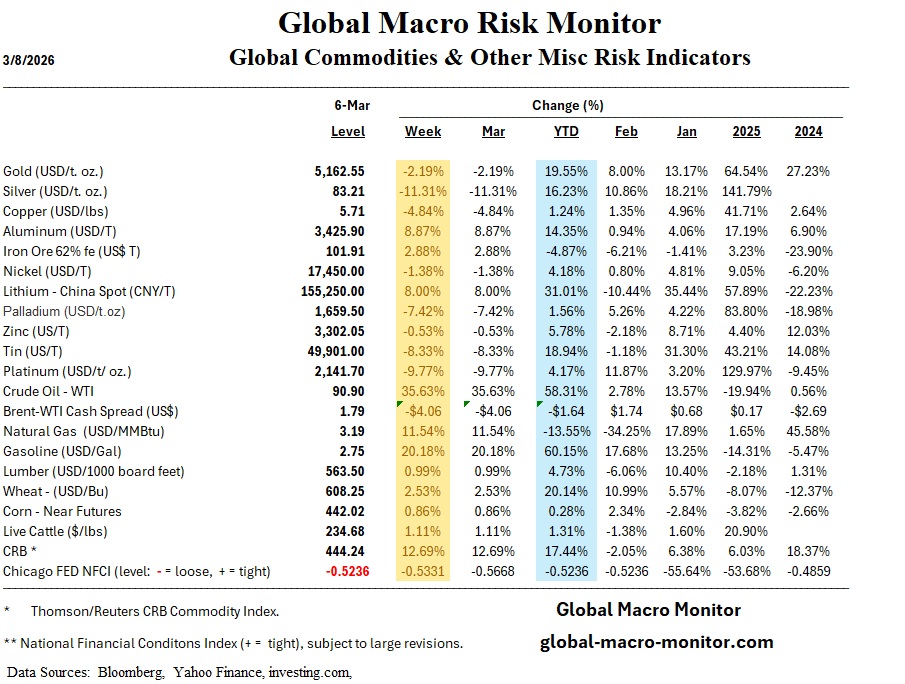
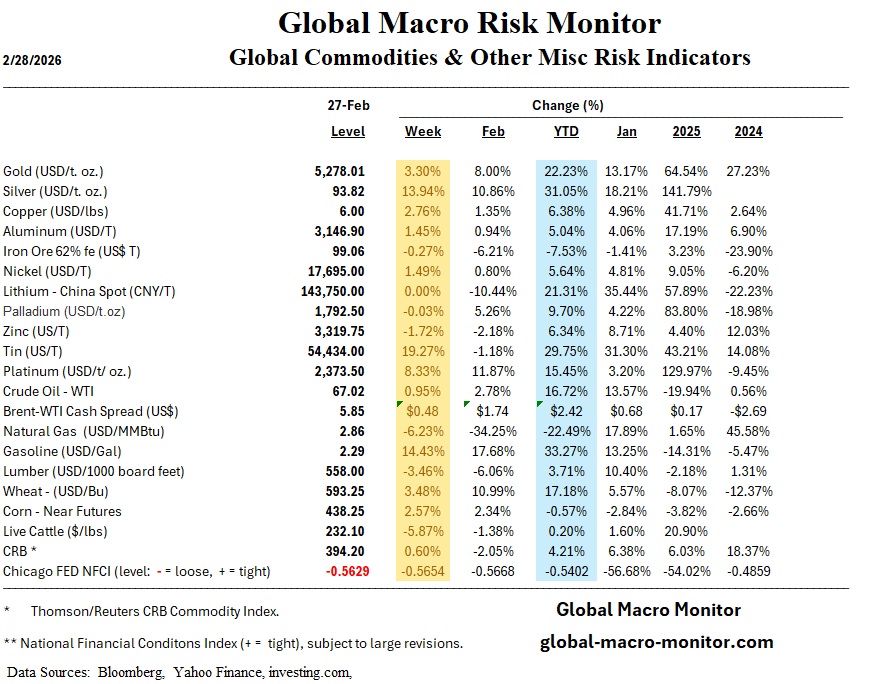
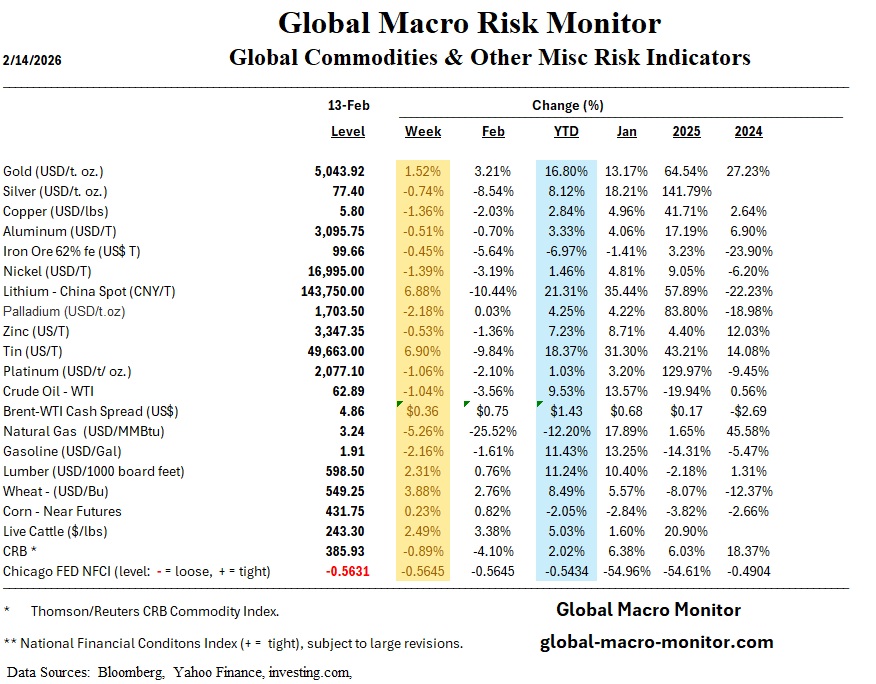
Energy is the transmission mechanism. The Iran war escalation, coupled with heightened risk to shipping lanes through the Strait of Hormuz, has injected a persistent risk premium into crude markets. The Brent-WTI spread widening to ~$14 (an 11-year high) is not just a curiosity, it reflects global supply fragility versus U.S. relative insulation. Markets are effectively pricing in the possibility that energy flows could be disrupted, even if only intermittently. That’s enough to keep inflation sticky and central banks cautious.
Brent crude oil is exposed to Strait of Hormuz and seaborne disruption, while WTI tracks relatively stable U.S. inland supply conditions. The spread was also reported near $11 (intraday >$17) as tanker risk repriced global barrels faster than Cushing-linked crude. Official U.S. Energy Information Administration (EIA) analysis links higher Brent to falling shipments through the strait and regional shut-ins.
Brent is no longer just a commodity, it’s a high-frequency signal of geopolitical stress transmission into financial markets, precisely because Brent Crude prices the marginal barrel of globally traded, seaborne crude that is directly exposed to chokepoints like the Strait of Hormuz, where disruption risk is most acute; by contrast, West Texas Intermediate (WTI) remains more insulated, reflecting inland U.S. supply, pipeline logistics, and domestic inventory dynamics rather than immediate geopolitical flow risk. Treat sharp moves as information, not noise: they often precede shifts in inflation expectations, central bank reaction functions, and cross-asset correlations. The edge comes from reacting not to the headline but to how Brent prices the probability and persistence of disruption.
Crude Market Disruption
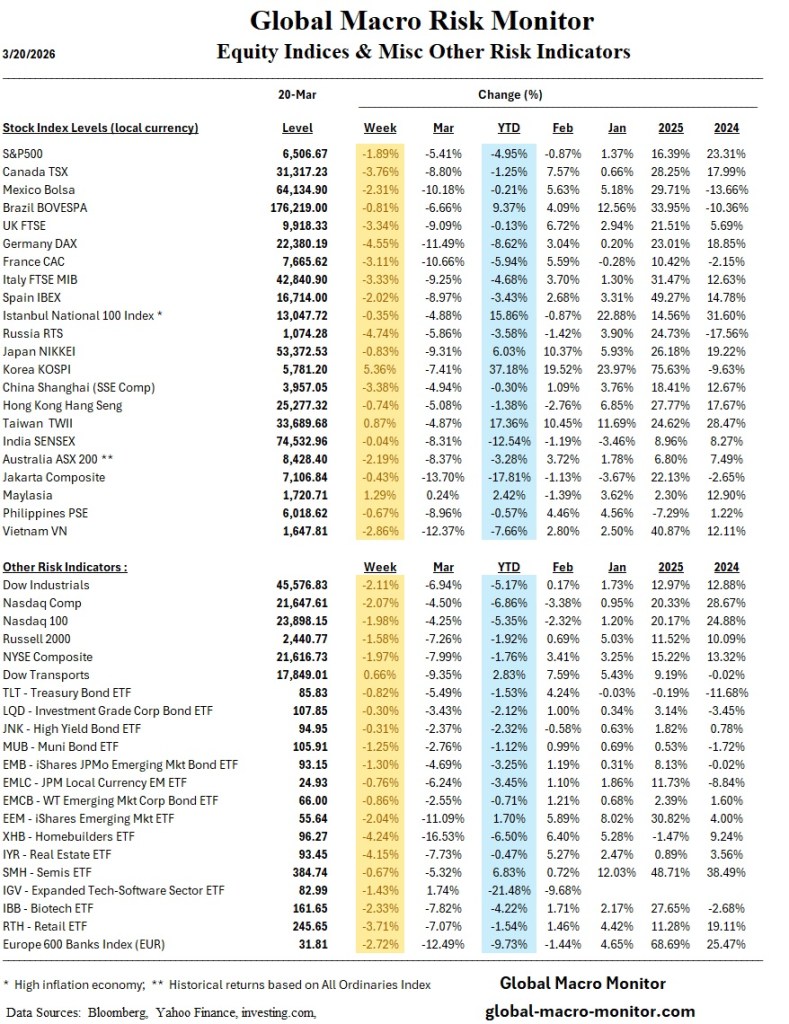
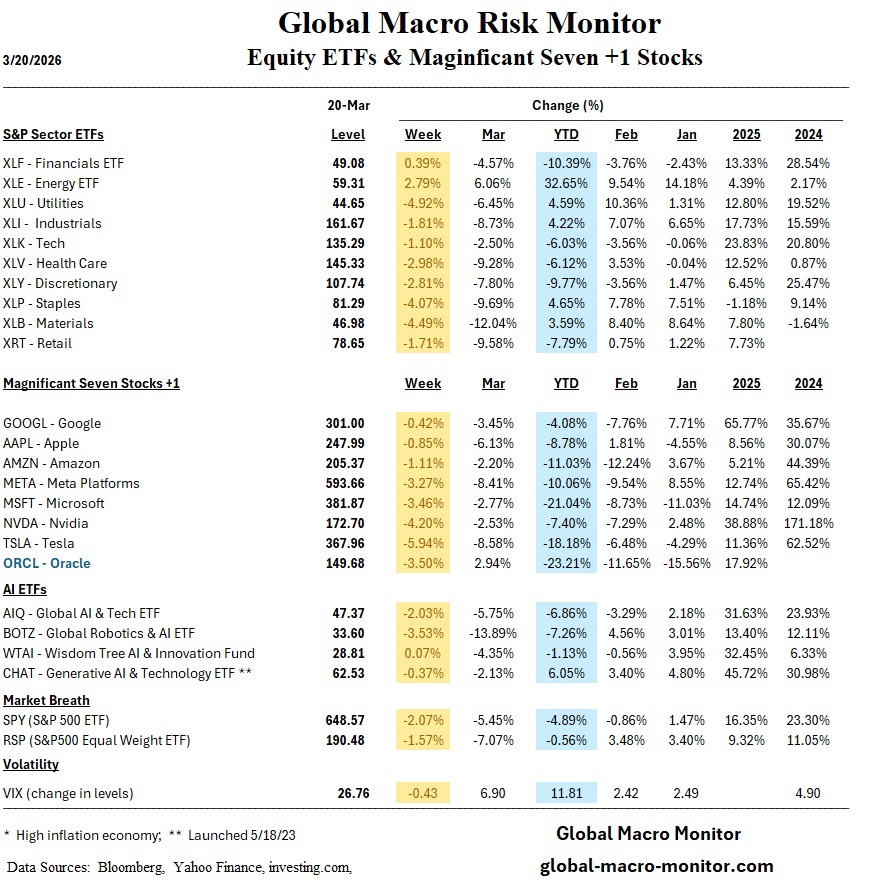
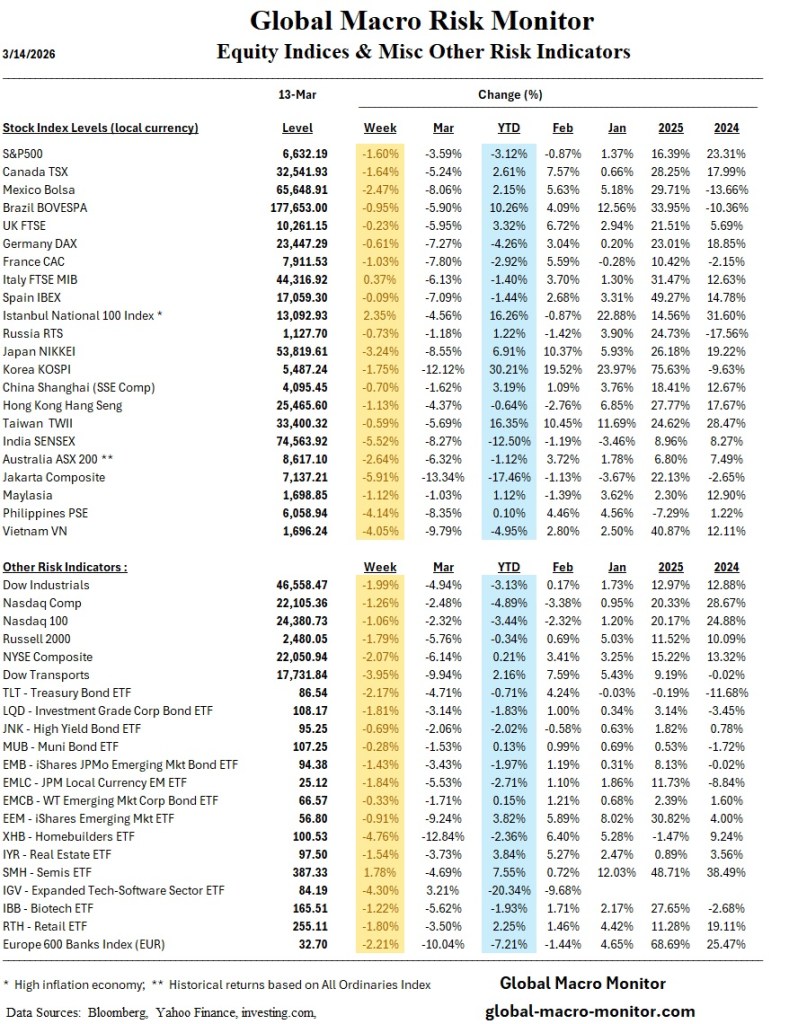
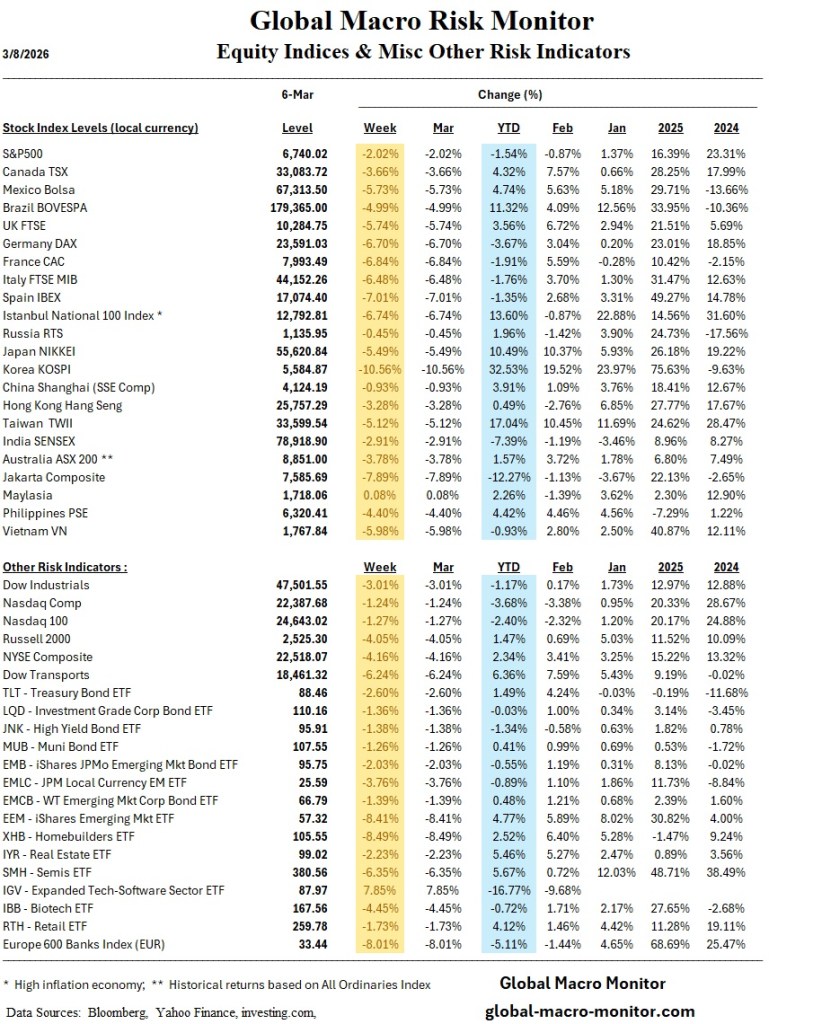
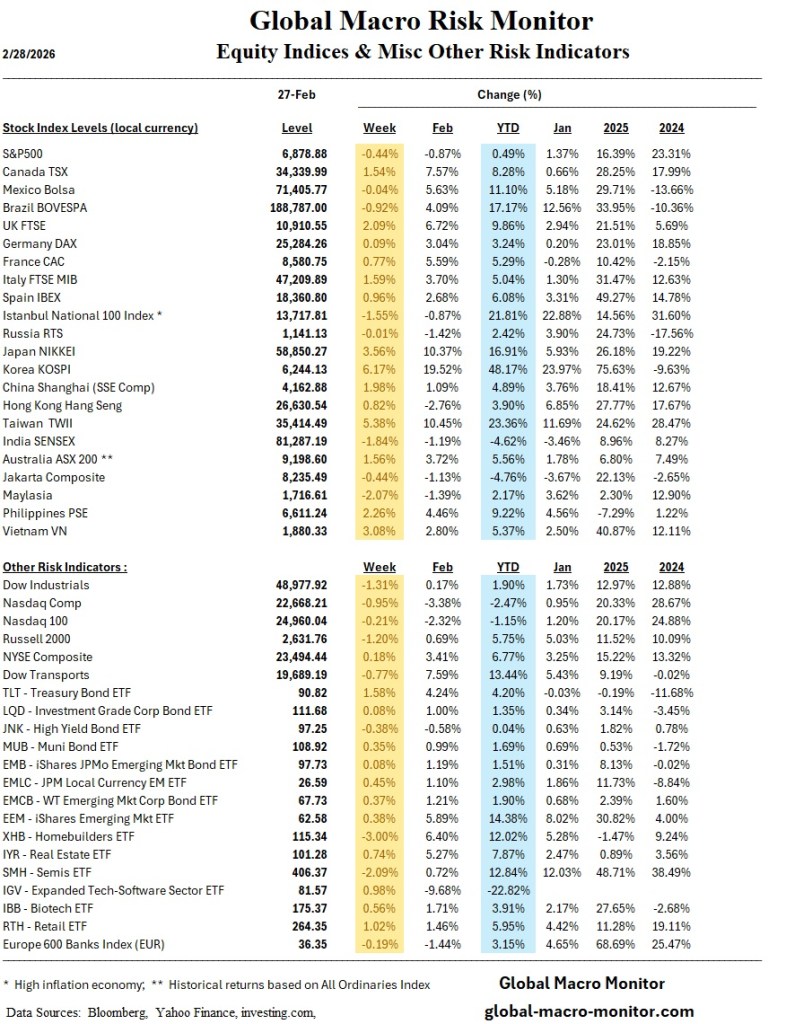
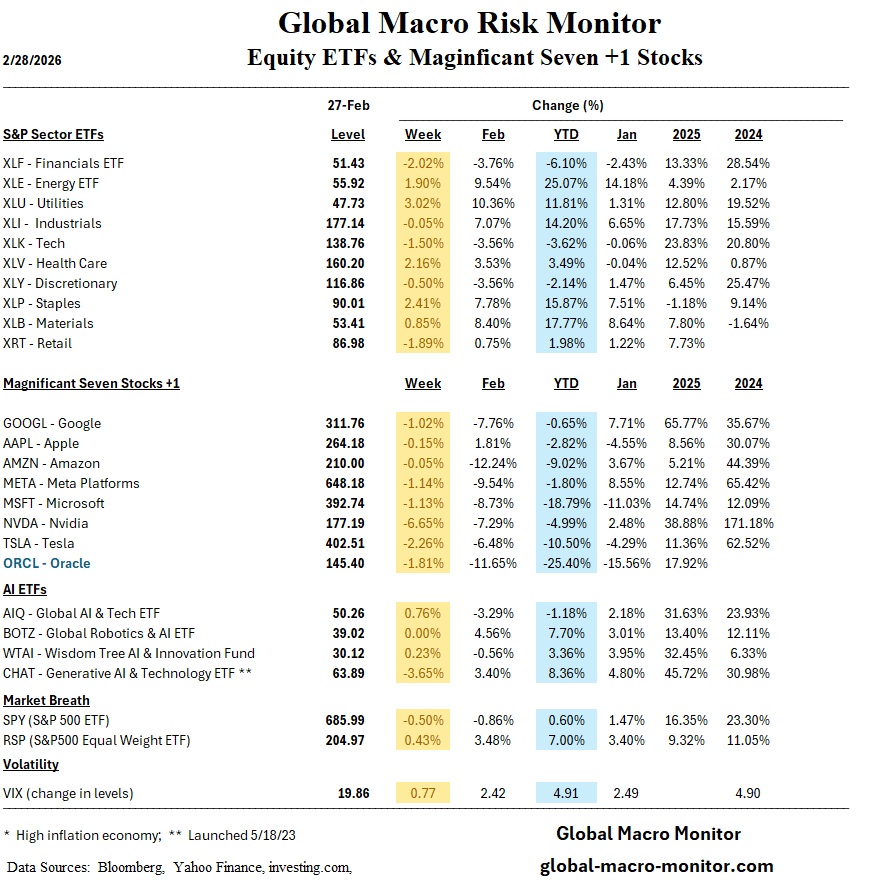
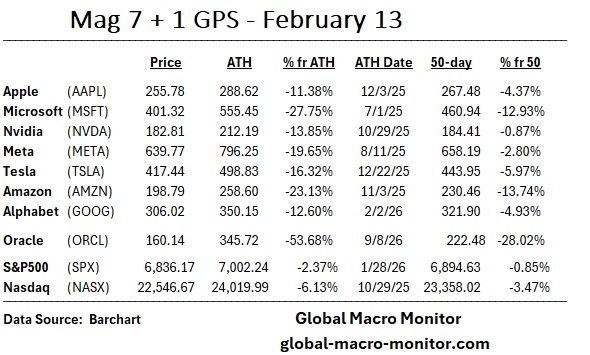
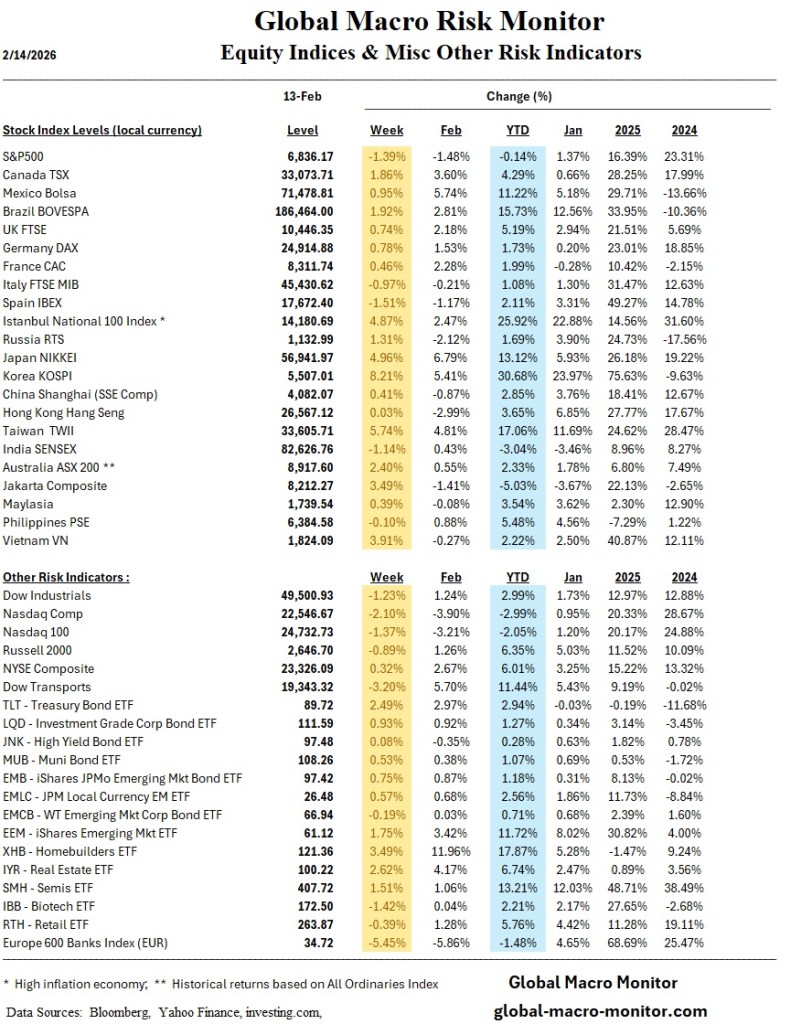
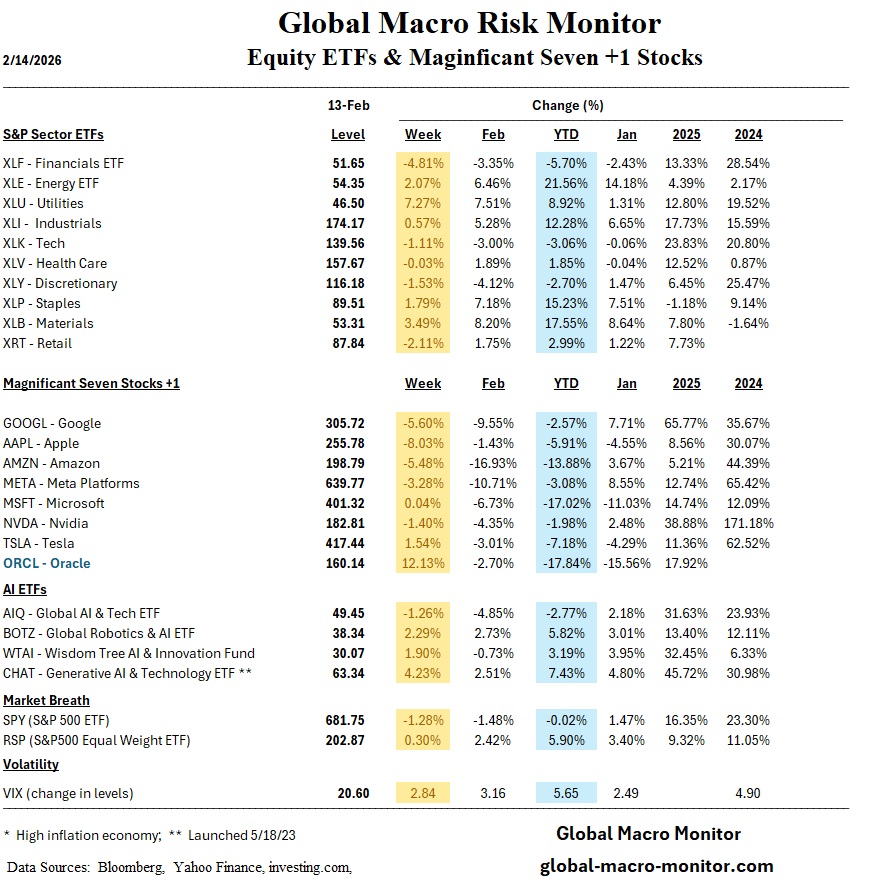
The knock-on effects of the Brent price spike were textbook but sharper than expected. Duration-sensitive equities were hit hardest as rate cuts were priced out and real yields rose. The S&P 500 dropped nearly 2% on the week, the Nasdaq is now brushing correction territory, and breadth deteriorated meaningfully. Homebuilders and real estate rolled over as financing expectations worsened. Even defensives failed to provide cover, staples sold off aggressively, suggesting this is less about rotation and more about de-risking under macro stress.
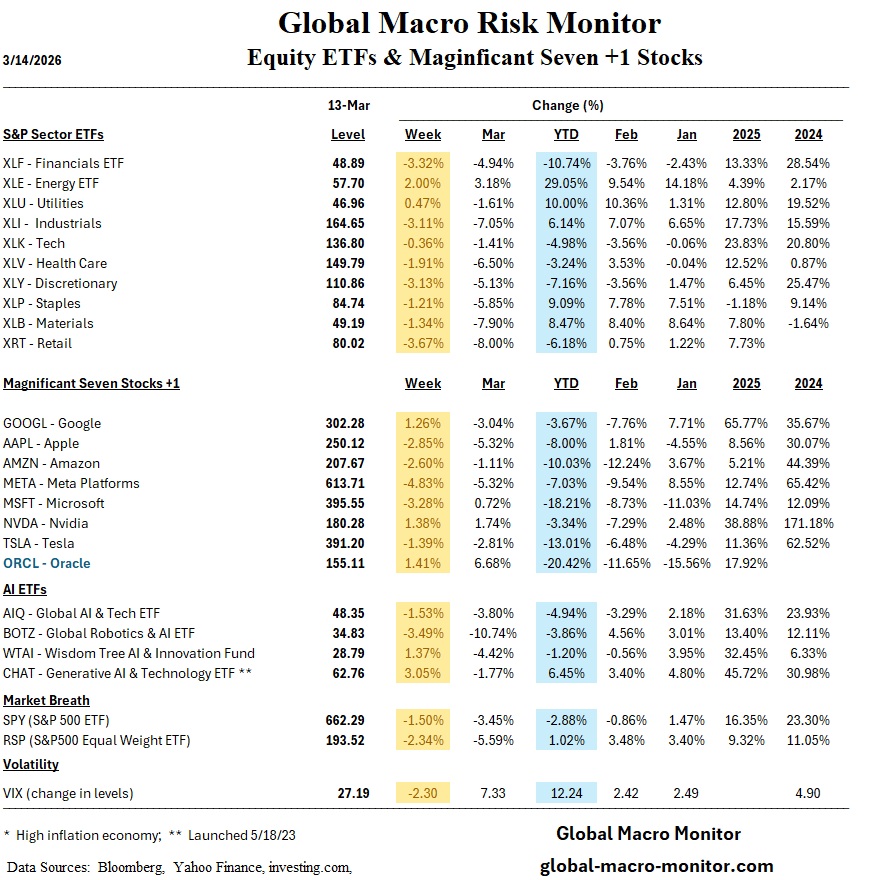
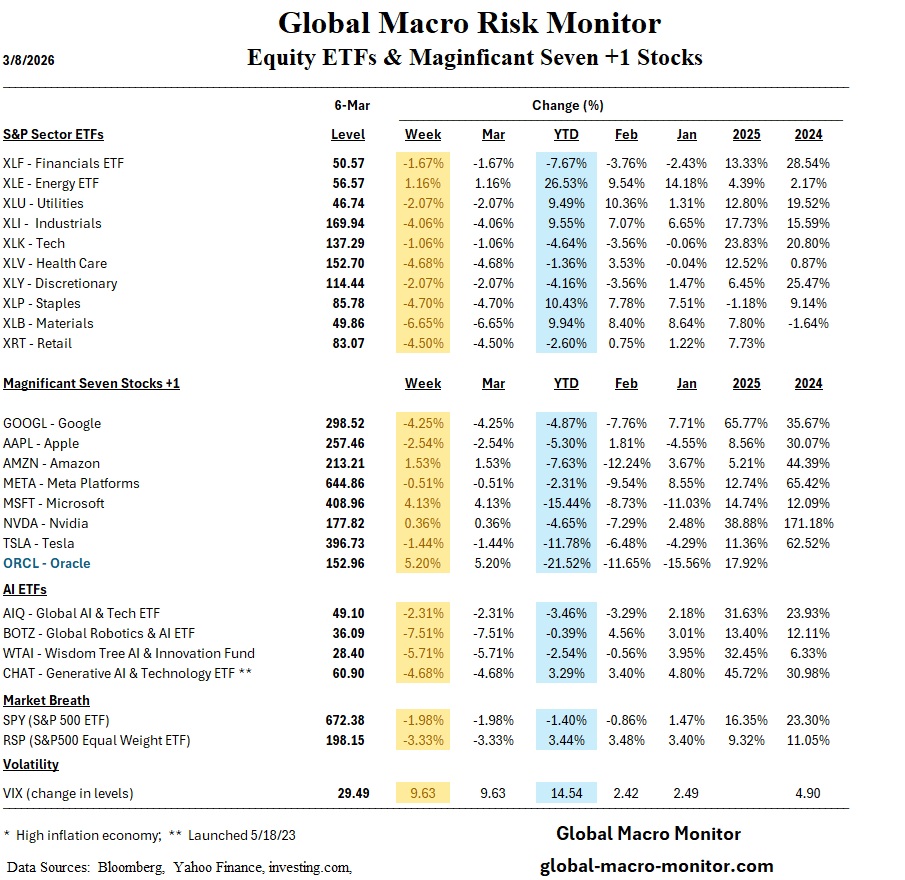
Meanwhile, energy equities surged (XLE +3% on the week, +30% YTD), effectively becoming the market’s hedge against geopolitical escalation. That divergence: energy up, everything else down is the market quietly telling you what it thinks about the persistence of the conflict.
The more subtle signal came from gold’s failure to rally sustainably. In a traditional geopolitical scare, gold should outperform. Instead, it declined on the week. No doubt part of its weakness was profit taking after a massive run but it is a tell, real yields and liquidity conditions are dominating safe-haven flows. for now. In other words, this is not yet a panic market; it is a repricing market. But if the conflict broadens or physically disrupts supply, that dynamic can flip quickly.
Central banks, for their part, are now boxed in. The Fed held steady but raised inflation expectations while maintaining only one projected cut this year. Powell acknowledged energy-driven inflation risks without committing to a policy pivot. Translation: they are watching oil more than payrolls. The ECB and BoE echoed similar concerns, signaling that the war has effectively tightened global financial conditions without a single rate hike.
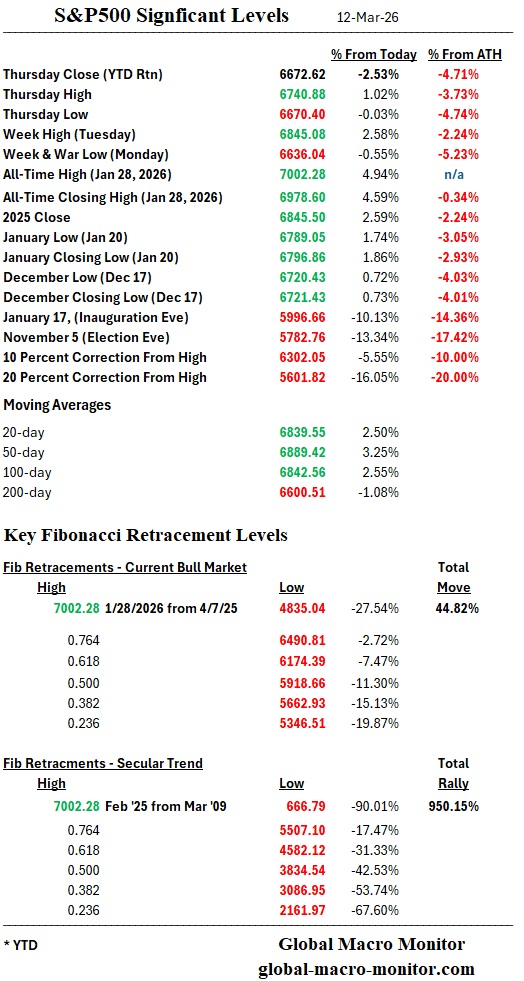
Technically, the market is weakening into this geopolitical backdrop. The S&P 500 has logged four consecutive down weeks, the S&P500 and Nasdaq have broken key support levels, and only a small fraction of stocks remain above their short-term trends. Moreover, small caps are already in correction territory, and participation is collapsing. This is not broad capitulation, but it is early-stage stress with a geopolitical catalyst.
Stay tuned and stay frosty, folks.
Regional Performance
- United States:
- Equities: Broad-based decline across major indices (Dow -2.1%, S&P ~-2%, Nasdaq ~-2%), with the Nasdaq now flirting with correction territory. Market breadth deteriorated sharply as only a small fraction of stocks remain above key technical levels.
- Sector dynamics: Energy (+3% weekly, +30% YTD) is the clear outperformer, acting as a geopolitical hedge. Rate-sensitive sectors (homebuilders, real estate) and consumer defensives (staples) underperformed, reflecting both higher yields and demand concerns.
- Rates & policy expectations: The 10-year Treasury rose toward ~4.4% as inflation expectations repriced higher. Markets have shifted from expecting multiple cuts to pricing meaningful probability of further tightening.
- Macro data: February PPI surprised to the upside (0.7% MoM), reinforcing inflation concerns. Housing data weakened—new home sales fell to the lowest since 2022—highlighting sensitivity to higher financing costs.
- Bottom line: The U.S. remains relatively insulated from direct energy supply shocks, i.e., shortages, but is absorbing the policy consequences of global inflation driven by war, that is price spikes.
- Euro Area:
- Equities: STOXX Europe 600 declined ~3.8%, underperforming the U.S. as energy sensitivity weighed heavily.
- Energy exposure: Europe is structurally more vulnerable to Middle East supply disruptions, making it a first-order casualty of rising oil and gas prices.
- Policy stance: The ECB held rates steady but signaled increasing concern about energy-driven inflation. Growth expectations are weakening while inflation risks are rising, a classic stagflationary tilt.
- Fiscal backdrop: Rising deficits and weaker industrial activity compound the challenge, particularly in Germany and Italy.
- Bottom line: Europe is caught in a growth squeeze + inflation shock, with limited policy flexibility.
- United Kingdom:
- Equities & economy: UK markets declined alongside global peers, with domestic demand already fragile.
- Monetary policy: The Bank of England held at 3.75% but shifted hawkish in tone, acknowledging that energy shocks could reaccelerate inflation.
- Outlook revisions: Barclays revised down GDP forecasts while raising inflation and unemployment expectations.
- Structural vulnerability: The UK remains highly exposed to imported energy costs and currency weakness.
- Bottom line: The UK faces a worsening trade-off between inflation control and growth stability, exacerbated by geopolitical risk.
- Japan:
- Equities: Modest declines, but less severe than Western markets.
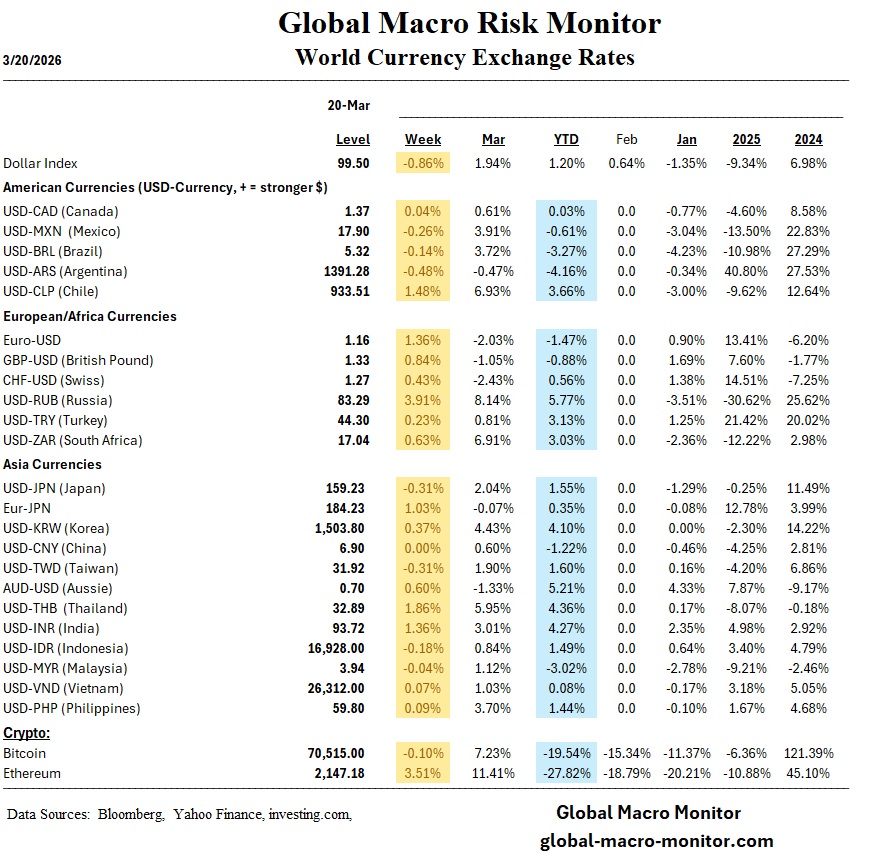
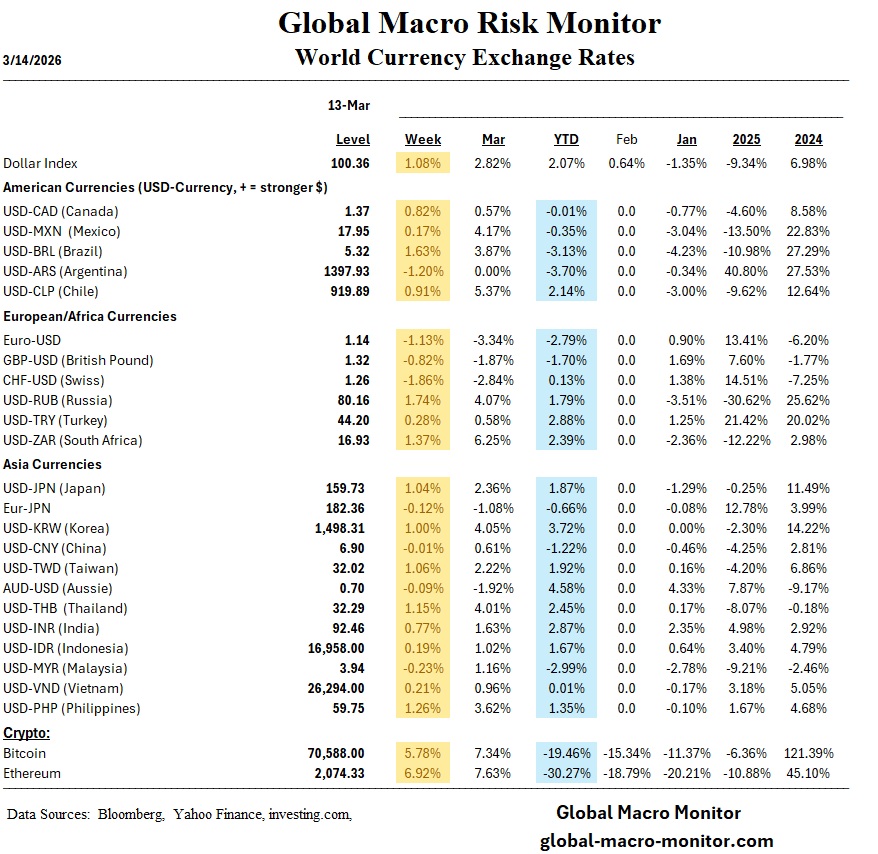
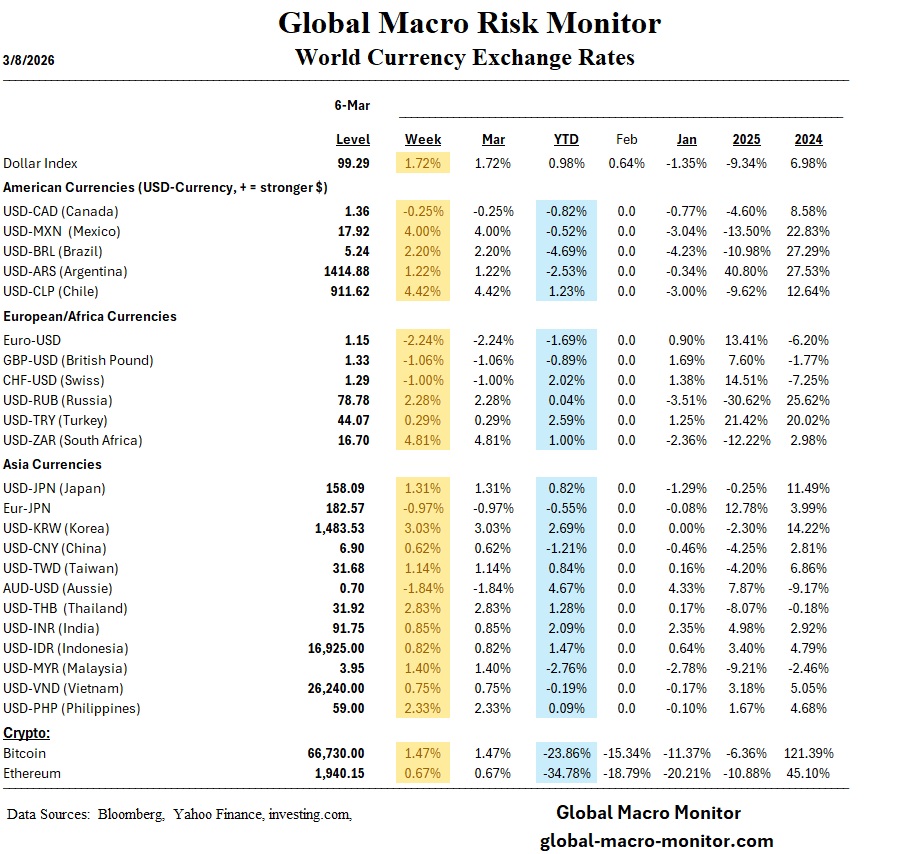
- Currency & inflation: A weak yen amplifies imported energy costs, effectively transmitting Middle East shocks into domestic inflation.
- Policy trajectory: The Bank of Japan maintained its gradual tightening bias, supported by rising inflation expectations and wage dynamics.
- Trade dynamics: Japan’s reliance on imported energy makes it sensitive to sustained oil price increases, though corporate exporters benefit from yen weakness.
- Bottom line: Japan sits at the intersection of currency-driven inflation and policy normalization, with geopolitics accelerating both.
- China:
- Equities: Declined despite modestly better-than-expected economic data.
- Macro signals: Industrial production and retail sales showed tentative stabilization, reducing immediate pressure for aggressive easing.
- External risks: China is indirectly exposed to geopolitical tensions through trade routes and global demand softness.
- Policy stance: Authorities remain cautious, balancing stimulus with financial stability concerns.
- Bottom line: China is stabilizing domestically but remains vulnerable to external shocks from global conflict and trade disruption.
- Emerging Markets (EM):
- Divergence: Performance is increasingly bifurcated.
- Winners: Commodity exporters and select Asian markets (e.g., Korea +5% weekly, ~+40% YTD) benefit from global supply constraints and tech momentum.
- Losers: Energy importers, particularly in EEMEA, face acute pressure from rising oil prices and currency depreciation.
- Inflation dynamics: LatAm faces renewed inflation pressures from energy, though growth remains relatively resilient.
- Capital flows: Rising U.S. yields and geopolitical risk are tightening financial conditions across EM.
- Bottom line: EM is no longer a monolith—it is a high-dispersion environment driven by exposure to energy and global liquidity conditions.
- Divergence: Performance is increasingly bifurcated.
The Week Ahead
- Macro focus: U.S. PCE inflation (Friday) remains the key scheduled release, but let’s be clear: macro data is now playing second fiddle to geopolitics. Markets will continue to trade primarily on developments in the Middle East, particularly any escalation involving Iran, disruptions to the Strait of Hormuz, or shifts in U.S. military posture. The inflation data matters only insofar as it interacts with the war-driven energy shock. Monitor the price of Brent crude.
- Geopolitical driver (Iran War – primary market catalyst):
- The conflict has entered a more complex and potentially prolonged phase. While the U.S. has degraded Iran’s military and nuclear infrastructure, core strategic objectives remain unmet, including regime destabilization and full containment of Iran’s nuclear capability.
- President Trump is now publicly signaling a possible “wind-down” of operations, but messaging remains inconsistent, oscillating between escalation and exit. This ambiguity is feeding market volatility.
- Critically, the war has triggered what the International Energy Agency (EIA) calls the largest supply disruption in global oil market history, with Brent crude hovering around ~$112 and upside risks persisting if shipping lanes are further compromised.
- Iran retains asymmetric leverage: sea mines, small-vessel attacks, and the ability to disrupt tanker traffic in the Strait of Hormuz. Even minimal disruption—or the fear of it—can paralyze global shipping and sustain elevated oil prices.
- The U.S. is now pushing allies to take on a greater role in securing shipping lanes—effectively outsourcing risk containment. This introduces coordination risk and timeline uncertainty, both of which markets will need to price.
- Bottom line: the market is not pricing a clean resolution—it is pricing a prolonged, uncertain conflict with persistent inflationary consequences.
- Energy & inflation transmission:
- Energy is now the key driver of inflation repricing and the conventional wisdom is this is no temporary spike.
- If shipping through Hormuz remains impaired or insurance costs spike, oil prices could remain structurally elevated into 2027, according to market analysts.
- This directly feeds into:
- Higher headline inflation globally
- Reduced probability of Fed rate cuts
- Increased odds of policy tightening (already >30% by October)
- Translation for markets: the war is now embedded in the inflation curve.
- Economic calendar (from Weekly_Mar20, expanded context):
- Construction Spending / New Home Sales: Will be watched for continued signs of housing weakness under higher rates—already a pressure point.
- Durable Goods Orders: Key for assessing business investment resilience amid tightening financial conditions.
- Crude & Gas Inventories: Normally secondary data—now front-line indicators of supply stress and geopolitical spillover.
- Initial Jobless Claims: Still important, but labor data is losing marginal influence relative to inflation and energy.
- GDP (third estimate): Backward-looking, but relevant for confirming growth resilience heading into a more hostile macro backdrop.
- Personal Income & Spending: Critical for gauging consumer durability as energy costs rise.
- Michigan Sentiment: Watch for inflation expectations—these are increasingly sensitive to gasoline prices and war headlines.
- Earnings to watch:
- KB Home: Direct read-through on housing sensitivity to rates.
- GameStop / Chewy: Retail and discretionary demand signals.
- Cintas / Paychex: Labor market and corporate services demand.
- PDD: China consumption and e-commerce trends.
- Carnival: Travel demand—particularly sensitive to fuel costs.
- Jefferies: Capital markets activity and risk appetite.
- In aggregate, earnings will be interpreted through a geopolitical lens—fuel costs, demand resilience, and margin pressure.
- Market setup (expanded):
- Many are looking for a “breakout” or “breakdown” week nd that framing still holds, but the drivers are now clearer:
- Bear case (increasingly dominant):
- Further escalation in Iran conflict
- Confirmed or perceived disruption in Hormuz shipping
- Oil moving decisively higher
- Inflation expectations rising → yields higher → equities lower
- Fed pushed further into a hawkish corner
- Bull case (fragile and tactical):
- Credible signal of de-escalation or U.S. drawdown
- Stabilization in oil markets (even at elevated levels)
- Oversold technical bounce given positioning and sentiment
- Base case: Markets remain range-bound but volatile, trading headline-to-headline on war developments, with macro data acting as secondary confirmation rather than primary drivers.
Bottom Line
The upcoming week is not about whether inflation prints 0.2% or 0.3%—it’s about whether oil supply chains remain intact and whether the U.S. commits to escalation or exit.
Markets have already repriced the Fed. Now they are repricing the duration and intensity of the Iran conflict.
Everything else is commentary.

 Global Macro Monitor