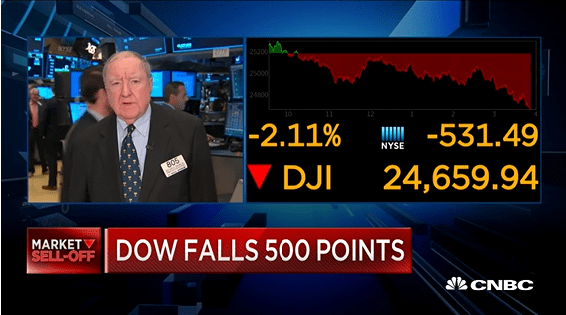
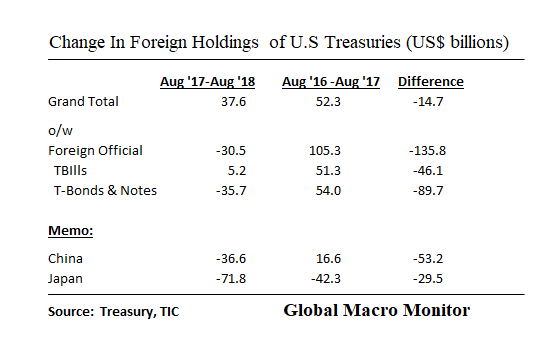
Just before the close, Art Cashin, one of the best out there, cited the weak Treasury auctions and, ergo, worries China is pulling back on its Treasury purchases as a major factor behind the ugly stock sell-off.
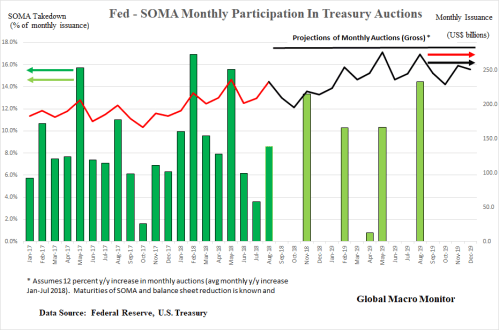
Recall, also no FED participation in the auctions this month, and primary dealers took down a disproportionately large share of new issues this week. The auctions ranged in size, from 12 to 42 percent larger relative to October 2017 in each maturity.
Free Ride Over
That is the Treasury financing needs due to larger budget deficits and quantitative tightening are growing rapidly. The almost two decade long free ride and free money from central banks, including China and Japan, is over.
Of course, international reserves could begin to build rapidly forcing central banks into more Treasury securities but that scenario runs contrary to President Trump’s policy. The administration is moving in the opposite the direction seeking to reduce bilateral trade deficits and hammering countries with weak currencies, defined, we suspect, based on purchasing power parity (PPP). Foreign exchange intervention to maintain a stronger currency will lead to more foreign central bank selling of Treasury securities.
Nationalism can be a real bitch when you’re dependent on foreign financing. Hope the administration gets woke before it’s too late. We may have already screwed the pooch.
Hope you have been reading the Global Macro Monitor over the past month, folks. We gave you the heads up here:
Central banks and foreigners have accumulated almost 75 percent of the stock of marketable notes and bonds. That liquidity is/has dried up, folks. America First soon to be America Thirst?
The budget mess is also starting to get loopy. That is higher interest rates = higher interest payments = higher deficits = higher borrowing requirements = higher interest rates… Wash, rinse, repeat. Yes, Mr. Vice President, deficits do matter when they have to be financed by normal means.
We should be out in the next few days with some barn burning and eye-opening data all tied to what we think is the meta narrative driving global market weakness.
The U.S. Treasury bond market is the center of universe, of which all asset markets are priced and circle. Traders and investors must understand its dynamics, and not just in pricing but the kinetics of how it is funded.
Haven flows and/or another round of QE are the only hope of holding U.S. long-term yields down. Not exactly a positive scenario, comrades.
You heard it here first, folks. More analysis to come. Only massive haven flows can save the bond market, and that ain’t good, is it?
Hey, Mr. President, ever think you're going to shift your complaining away from Powell and towards the real reason why rates are backing up? pic.twitter.com/EfmlVIsPd4
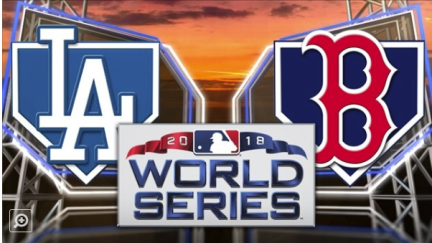
We’re not talking about October stock market corrections but the World Series! The Boston Red Sox and Los Angeles Dodgers square off tonight to begin the 114th October Classic.
The last time the two teams met was in 1916 when the Dodgers were test driving a new nickname, the “Robins.” The Red Sox beat Brooklyn four games to one. Casey Stengel starred for the Robins, and Babe Ruth pitched thirteen shutout innings after giving up a run in the first inning to win the fourteen-inning game two. The winning players share (World Series bonus) was $3,910 ($87,500 in 2018 dollars) versus the last year’s Astros’ player share of $438,901.
Mr. October
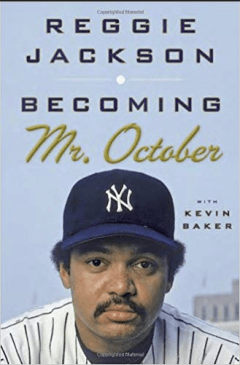
No baseball player is more synonymous with the World Series than Mr. October himself, Reggie Jackson.
Jackson earned the nickname “Mr. October” with his performance in Game 6 of the 1977 World Series against the Los Angeles Dodgers. Down 3-2 in the fourth inning, the Yankees outfielder hit a two-run home run and did the exact same thing in the fifth inning. Then in the eighth, he hit another home run to put the Yankees up 8-3. His performance secured the win and the series for New York.
– Athlon Sports
The first twenty-five years of my life was baseball, 24/7, an obsession that almost compares to today’s techno-addicted youth.
My baseball career ended due to an injury, but also mainly the lack of emotional maturity and the ability to pull out of an ugly hitting slump. Nothing worse for your confidence than cruising along during the season hitting .350, then to fall into a 2-for-50 tailspin. Then comes the vicious circle thinking you will never get another hit. Ironically, baseball players can fail 70 percent of the time, and still hit .300, making it to the Hall of Fame.
It’s very similar to what happens to your psyche and P&L, trying to trade crude oil and natural gas against the ‘bots. You gotta shake off the bad ones and move on. I could’ve been somebody, damn it!
I did have a headstart in baseball as a young teen working with the Los Angeles Dodgers, first as a batboy, then batting practice pitcher, and adjunct bullpen catcher. Later, I would spend some time with the Atlanta Braves and Oakland A’s.
I caught Tommy John (TJ) — the real one, who had the surgery named for him – for almost the entire season he was out before his remarkable comeback. He could barely extend his hand after the surgery but refused to give up. I would try to hide in the outfield before games but would soon hear Red Adams, the Dodgers pitching coach, calling me to come to the bullpen.
TJ was very wild when he first started on the comeback trail, bouncing curveballs in the dirt, which too often ended up smacking me in the family jewels. It was a painful year, and it’s amazing that I could still have children. Tommy John is one of the greatest human beings ever.
Reggie
One winter or spring during the off-season, can’t recall, I get a call from my boss to come to Dodger Stadium for a few days as Reggie Jackson was going to film a television commercial. He said the production company might need a pitcher or catcher and I should be around to help Reggie around the clubhouse and stadium.
I wasn’t in the union so being in the commercial was out.
Over the next three days, Reggie and I became very close. He treated me like I was his little brother. Reggie had this larger than life image, with a reputation for a larger than life ego.
He took a lot of heat for that quote, and still denies it, and I certainly didn’t see the Reggie ego the media often portrayed. He was super kind, friendly, down to earth, always made time for you, and was just a great guy to hang out with. He made you feel comfortable and not conscious you were in the presence of one of baseball’s greatest stars. It was very much like a good day hanging with your big brother.
Self-centered egomaniacs don’t treat the little people like that.
One thing that really stood out over our three days together was how Reggie spoke. He sounded like an university professor, very intelligent, Later I found out he has an IQ of 160, the same as Steven Hawking! That is genius zip code.
Pumas
What really sealed the deal was when Reggie finished filming and was about to leave. He handed me a piece of paper with an address and phone number:
22 Yankee Hill Oakland, Ca (415) xxx-xxxx
He said when I was in the Bay Area; I would never stay in a hotel but with him. I believe that house burnt down in the 1991 Oakland Hills fire.
He then asked for my shoe size and address. We shook hands and parted ways.
About a week later five boxes of Puma tennis shoes came in the mail. Thank you, Reggie!
Baltimore Orioles
The next season, the A’s traded Reggie to the Baltimore Orioles as a rental. He was playing out his option and Charles Finley, the A’s owner, would never pay Reggie’s new market rate.
My little brother idolized Reggie, so when the O’s were in town, I took him to a game. After the game, I went down to the dugout to say hi as Reggie trotted in from the outfield. He invited me into the clubhouse. I asked Reg if my little brother could accompany me. He said absolutely.
I had told Reggie about my brother, and when we get into the clubhouse, he points to his locker and says, “Geoff, anything, take anything you want. My uniform, glove, anything.” Big egos and the self-absorbed don’t treat little people like this.
I love Reggie Jackson.
Pete Rose
Pete Rose was the same way, by the way. Always thinking and caring about the little guy.
The commish of baseball, Bart Giamatti, my favorite actor’s father, died just eight days after banishing Charlie Hustle from baseball. Just sayin’.
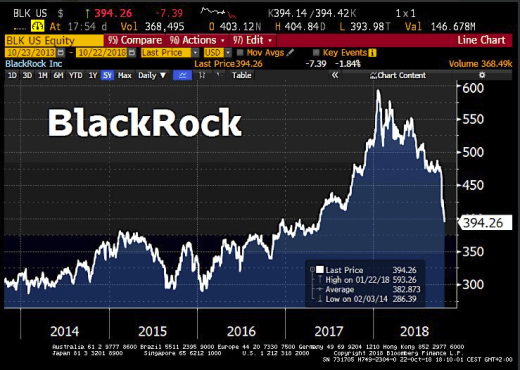
Wow. Completely missed the 34 percent flop in Blackrock, the world’s most massive shadow bank, from its $594.52 January high. Now trading through the key $400 level, with the next significant support to the downside at $380. Thanks to Holger for bringing it to our attention.
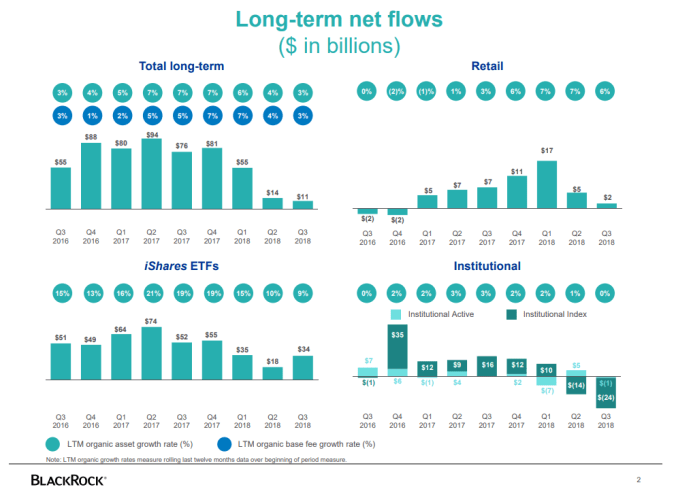
It looks like it’s all about institutional outflows and diminishing marginal inflows caused by, what Larry and Rob call de-risking, and mainly by the hedge funds.
Sure not seeing the de-risking it in the 10-year Treasury yield, which is another story, and why this year’s two equity corrections/sell-offs are different. , in spite of a persistent massive short position by specs in the 10-year note futures
[Operator Instructions] Our first question comes from Dan Fannon with Jefferies.
Dan Fannon
Thanks. Good morning.
Laurence D. Fink
Hi, Dan.
Dan Fannon
I guess, Larry, could you elaborate on your broader comments about de-risking? It seems based on your commentary that we — it should likely continue here in the short-term and we’re seeing it through your index products. So I guess are there other kind of asset classes we — that you’re seeing that in? And then also, is there a capture rate where you’re seeing flows going into other categories that are obviously less risky?
Laurence D. Fink
I will let Rob talk about it and then I will add to it after him.
Robert S. Kapito
So I think, Larry, mentioned increased trade tensions, emerging markets volatility, and certainly the fear of continued interest rate rises across the globe. So what happens, especially during that type of volatility period is clients de-risk. So depending upon the next couple weeks and some of the political issues as well and the volatility that’s out there, clients may continue to de-risk. Certainly, we’ve seen the hedge funds de-risk from a period of time where I think across the board most of them are already down 2% 4%, so getting below that is difficult for many hedge funds, so they’ve just risked — de-risked. And we also, depending upon the guidelines of the clients and what we think about the markets, we encourage either de-risking or risking depending upon what their objectives are. The goal for us is even in that de-risking, to capture those assets because whatever they’re selling and going into, we have that product. So whether clients move from equity to fixed, we can accomplish that. Whether they’re going from value to growth, long duration to short duration, out of emerging markets into emerged markets, our goal is to offer a holistic solution so that they can de-risk and then be ready to put the risk on with us as well. And that also moves from product to product, whether they do it in iShares, and typically they’ll do that in the non-core iShares that have the most liquidity. Clients in the core iShares do that less because they’re more buy-and-hold. So, we see that more in the active products, and I think that really describes a lot of the flows this quarter.
Laurence D. Fink
Let me just add a little more. I think the market movements post third quarter was, as Rob said, more hedge funds de-risking. We did not see any accelerated outflows in the first few weeks. I think, Dan, when you think about some of these big large strategic partnerships we announced, none of that was asset flows this quarter. All of this is going to be huge asset flows probably in 2019. And this is why we are spending so much time trying to develop these deeper relationships. We are not going to be able to predict or strive for any one quarter, but I do — we’re very excited about the opportunities of building these deeper relationships that over time are going to really push us towards a much higher growth rate. That being said, if the markets remain to be uncertain, if political risk remains large, you will continue to see clients pause. We’ve seen this in the past. Generally, in the fourth quarter, we see clients adding risk that is typically what happens especially November, December. We — and so, I’m not here to tell you, I know how this will all play out, but we are continuing to see large interest from our clients in our technology businesses, we’re continuing to see large interest from our clients in our alternative space and let me also talk about the breadth of our active business for a second. We had positive active flows in fixed, in multi-asset, and in alts. The only area where we had outflows that were significant was in the low-fee index products, and that I think, Rob Kapito has talked about this for years, that’s where we see how people navigate money. They go in and out of index funds in large-scale as an indicator of their market beliefs. So — and I would also say unlike most organizations in the industry we had positive flows in U.S wealth in our retail side. So I don’t know the outcome of this quarter or political uncertainty, but all I could say is we’re — we have very strong conversations going on right now with really important clients and we will see how that plays out.
Taiwan may be about to get hot, hot, hot in the next year after last night’s Commander in Chief’s ambiguous message on defense treaties. – GMM
One of GMM‘s most excellent followers, who we very much like and respect, responded with this:
This whole article is a science-fiction of oh, this could happen, and oh that could happen…. And we could be hit with an asteroid tomorrow. Just sit back and watch the hands that are dealt and how they are played. This article is either Sci-fi or false news. Your choice!
The United States is considering a new operation to send warships through the Taiwan Strait, U.S. officials tell Reuters, a mission aimed at ensuring free passage through the strategic waterway but which risks heightening tensions with China.
The United States is considering a new operation to send warships through the Taiwan Strait, U.S. officials tell Reuters, a mission aimed at ensuring free passage through the strategic waterway but which risks heightening tensions with China. – Reuters
John Bolton’s Fingerprints
The show of force by the U.S. in the Taiwan Strait appears to be a hardening line against and challenge to President Xi’s One China Policy and has National Security Adviser, John Bolton’s fingerprints all over it.
Bolton has close professional and personal ties in Taipei . According to an investigative report by the Washington Post ( April 9, 2001 ), Bolton was on the payroll of the Taiwan government before joining the Bush administration. Bolton received $30,000 for “research papers on UN membership issues involving Taiwan ” at the same time he was promoting diplomatic recognition of Taiwan before various congressional committees.
In 1999 Bolton, speaking as an AEI scholar, said that “…diplomatic recognition of Taiwan would be just the kind of demonstration of U.S. leadership that the region needs and that many of its people hope for. The notion that China would actually respond with force is a fantasy.” Bolton joined a prominent group of neoconservatives and traditional conservatives who signed a statement jointly sponsored by the Project for the New American Century and the Heritage Foundation that lambasted the Clinton administration for its failure to offer unequivocal support of Taiwan . – Counterpunch
A neocon chickenhawk driving U.S. foreign policy, provoking an emerging China, in an area they consider one of the highest in the country’s national interest.
Moreover, this is happening at a unique and critical period in world history,
The defining question about global order for this generation is whether China and the United States can escape Thucydides’s Trap. The Greek historian’s metaphor reminds us of the attendant dangers when a rising power rivals a ruling power—as Athens challenged Sparta in ancient Greece, or as Germany did Britain a century ago. Most such contests have ended badly, often for both nations, a team of mine at the Harvard Belfer Center for Science and International Affairs has concluded after analyzing the historical record. In 12 of 16 cases over the past 500 years, the result was war. When the parties avoided war, it required huge, painful adjustments in attitudes and actions on the part not just of the challenger but also the challenged. – Graham Allison, The Atlantic, Sept 2015
We also don’t think the timing of the leak to Reuters was a coincidence,
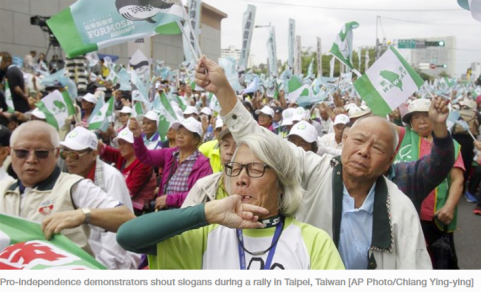
Protesters chant anti-China slogans on Taipei march in first large-scale rally pro-independence rally in decades.
Thousands of people have rallied in Taiwan’s capital to call for a referendum on independence, in the first major protest calling for a popular vote since the self-ruling island became a democracy more than 20 years ago.
The march on Saturday through Taipei took place as China has stepped up its claims to Taiwan, which Beijing considers as part of its own territory.
– Al Jazeera, October 20th
Are you freaking kidding?
We suspected the doctrine of Strategic Ambiguity with Taiwan died when President Trump hedged about coming to the defense of a NATO country if it were attacked,
Tucker: So membership in NATO obligates the members to defend any member that is attacked. So let’s say Montenegro, who joined last year, is attacked, why should my son go to Montenegro to defend it from attack?
President Trump: I understand what you are saying. I have asked the same question. You know Montenegro is a tiny country with very strong people… They may get aggressive, and congratulations you are in World War III…But that is the way it was set up, don’t forget I just got here. – GMM, July 2018
But to be replaced by a doctrine of direct provocation with China, based on a bet President Xi is a Paper Tiger on Taiwan? A crazy, dangerous gambit, in our opinion, and one that could easily be dismissed if not for the future of the world depended on it.
Extending President Trump’s logic above, we asked back in July,
“Why should my son go to Montenegro Taiwan to defend it from attack?”
NFW will the American public send their sons and daughters to fight World War III over Taiwan. President Xi knows it, and President Trump effectively stated it in his interview with Tucker Carlson back in July, at least, that is what he seemed to imply. The probability for a fatal miscalculation is now higher than ever.
Here’s to hoping, and praying, John Bolton has recalibrated his China will “respond with force is fantasy” view. And, especially, that Defense Secretary, James Mattis, remains in the administration. Mr. Bolton is a known bully, possibly the force behind the resignation of U.N. Ambassador, Nikki Haley.
It was reported he even threatened a Brazilian official in the diplomatic scrum leading up to the Iraq War, “We know where your kids live.” How we long for that National Security Adviser who dresses like a “beer salesman.”
Let us rephrase and state it again, Taiwan is getting hot, hot, hot, and we doubt President’s Trump and his new BFFS, President Xi, can patch this one up over a few diet cokes.
On Your Radar
Watch this space.
The world and market is asleep in deep, deep hibernation at the wheel on this one, folks.
We leave you with this fantasy,
We are confident that Saddam Hussein has hidden weapons of mass destruction and production facilities in Iraq. – John Bolton, 2002
Update:
Run, don’t walk, to today’s South Morning China Post’s piece, TAIWAN’S COSYING UP TO TRUMP COULD SPARK A CHINA-US WAR,
This is not the first time Taiwan has become a central issue in US-China relations. In the 1960 US presidential debate, John Kennedy and Richard Nixon traded barbs over whether America should launch a nuclear war against China to protect the tiny islands of Matsu and Quemoy, or Kinmen, in the event of a communist invasion.
Trump might now see Taiwan as an increasingly valuable point of leverage over China, but Beijing will make no compromise on this politically most sensitive issue as it considers Taiwan a “core interest”.
As the US and China drift dangerously towards direct conflict, Taiwan should be cautious. The narrow Taiwan Strait could be the flashpoint that sparks war between the world’s most powerful nations. – SCMP
Update:
TAIWAN'S DEFENCE MINISTRY SAYS TWO U.S. WARSHIPS PASSED THROUGH THE TAIWAN STRAIT ON MONDAY
Spain sovereign spread starting to widen as small to medium Spanish banks hammered over mortgage tax
Brazilian assets continue to perform as the election of Jair Bolsonaro is a done deal, slated for next weekend
Mexican peso weaker. Reports AMLO to scrap NAFTA 2.0 negotiating team could be causing uncertainty
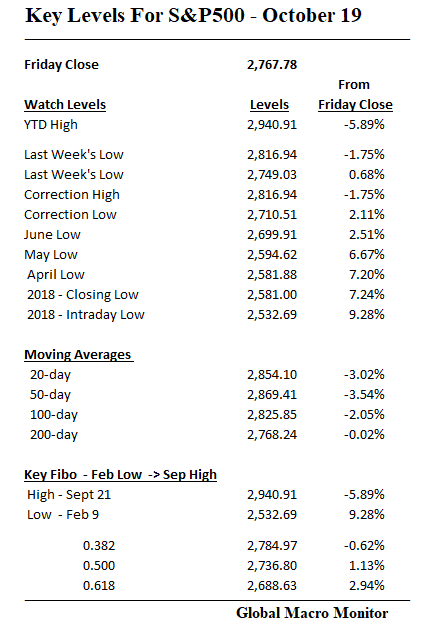
S&P500 closed right at its 200-day moving average and couldn’t hold a bid last week
Crude down 3 percent
Commentary: Sloppy trading until the U.S. midterm. Earnings galore this week. Could see some buying, but earnings growth to reset next year as effect of tax cut will end. The October algo — selling ‘bots and traders come in, probe market for bid, if no sellers, cover, repeat — still the program.
Nation [ethnic groups] will rise against nation [ethnic groups], and kingdom against kingdom.There will be great earthquakes, famines and pestilences in various places, and fearful events and great signs from heaven. – Jesus of Nazareth
OK, folks, we will lay it on the anvil.
We are not afraid of being wrong, which is often the case, as we have internalized the key to longevity is to cut your losses quickly. That is the essence of being a trader. Nobody knows the future but you need to act as if you do in order to have the confidence to pull the trigger.
Furthermore, we don’t suffer the recency bias from being wrong in the November 2016 election and therefore not afraid and don’t have to hedge our analysis. If we are wrong, we move on. Punto!
If women and the young turn out in November, we won’t be, however.
Our conclusions are not influenced by our partisanship (though always impossible to exclude all bias) and not wishful thinking but positive analysis based on the data, recent trends, and probabilities, sprinkled with some political intuition.
TAKING TO THE STREETS: Tens of thousands of protesters marched through central London on Saturday to demand a new referendum on Britain's departure from the European Union. https://t.co/1L7kZt3GA2pic.twitter.com/qw6xeFW03w
I fear all we have done is to awaken a sleeping giant and fill him with a terrible resolve. — Japanese Admiral Isoroku Yamamoto (quote never confirmed)
A second vote on BREXIT is an uphill battle, but if the Trump administration gets “bitch slapped” in the November midterms the momentum and pressure for a new BREXIT vote will build, in our opinion.
Theresa May’s government has ruled out a second referendum on membership, saying it would be an undemocratic denial of the result of the June 2016 Brexit referendum, which voted 52-48 in favour of leaving. The main opposition Labour party also officially remains opposed, although Keir Starmer, shadow Brexit secretary, last month said the party had not ruled out supporting a new vote. – FT
Young Voters The Key In The U.S. November Midterms
It’s all up to young voters turning out in November. If they would have voted in the first BREXIT referendum, we wouldn’t be having half of this conversation.
It has been estimated that only 36 per cent of people in the 18 – 24 year old category voted in the EU referendum. 64 per cent of young people did not bother to take themselves down to the polling station and place their vote – Independent
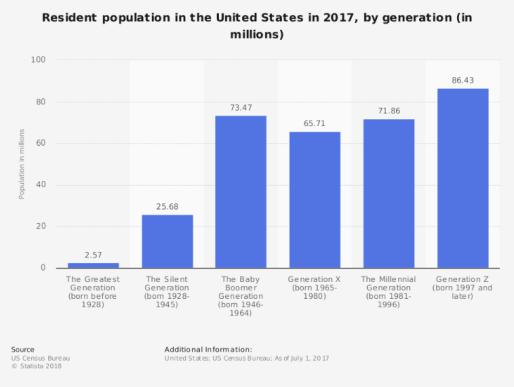
Gen Z
It does look like the youth are finally getting fired up, at least, in the States.
So far, the data point to a surge in political engagement, intention to vote and outreach between friends to encourage voting. Gen Zers may be voting for the first time, but they are certainly not new to politics. – The Conversation
Millennials
The jury is still out on whether their older brothers and sisters, the millennials, will get off their arse and get to the polls.
In the 60+ age demographic, almost 90 per cent of eligible voters cast their ballots, but, at the other end of the scale, only 25 per cent of millennials took the time to vote. – Global News
Bad freaking citizenship, millennials. Do they enjoy being slaves to their senior political taskmasters and enjoy laying down in the Clash of Generations? Just askin’.
Indeed, if there is one sentiment that unites the crises in Europe and America it is a powerful sense of “baby boomers behaving badly” — a powerful sense that the generation that came of age in the last 50 years, my generation, will be remembered most for the incredible bounty and freedom it received from its parents and the incredible debt burden and constraints it left on its kids. – Thomas Friedman, NY Times
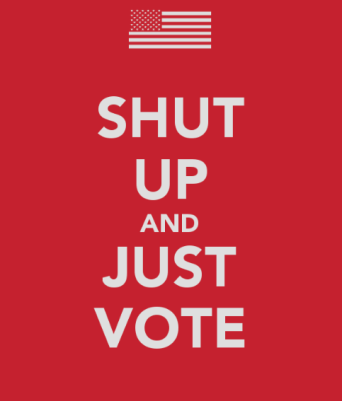
Moreover, millennials have no right to complain the leadership of the Democratic Party is dominated by septuagenarians, octogenarians, and soon to be, nonagenarians. Shut up and vote!
The Lavender Wave
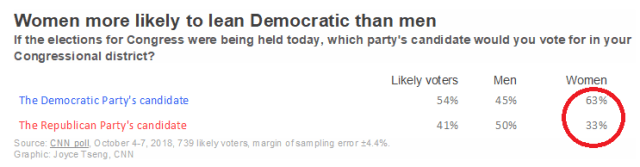
We are expecting a Lavender Wave (pink plus blue) in the November midterm. The die is cast with the women’s vote, now let’s see if the young show up.
The political arithmetic seems pretty simple to us. Women and the young will Trump old white men, that is if they show up.
Women vote in higher numbers than men and have done so in every election since 1964. In 2016, 9.9 million more women than men voted. Women have voted at higher rates than men since 1980. In 2016, 63.3% of eligible female adults went to the polls, compared to 59.3% of eligible male adults. Even in midterm elections, when voter turnout is lower among men and women, women vote in higher numbers and at higher rates than men.
More women than men register to vote. Some 83.8 million women were registered to vote in 2016, compared to 73.8 million men. – Footnotes
The Young And The Left
Simple math. Where are we wrong?
After the November to Remember, EXIT the BREXIT will take center stage.
The political tectonics are about to shift, folks, and you heard it here first.
No Sugar Coating It
Our recommendation to the one percenters and the comfortably numb retired baby boomers, who have bequeathed to and saddled the younger generations with massive pension and public sector debt liabilities?











One of GMM‘s most excellent followers, who we very much like and respect, responded with this:
We still like and respect the reader, by the way.