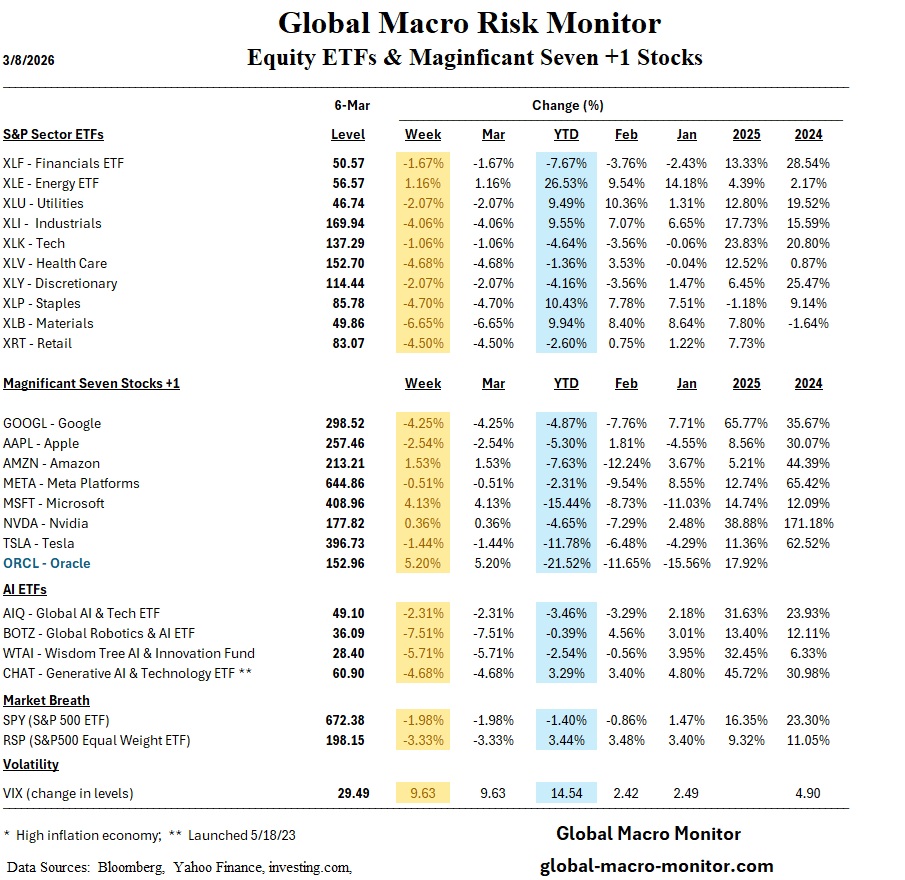
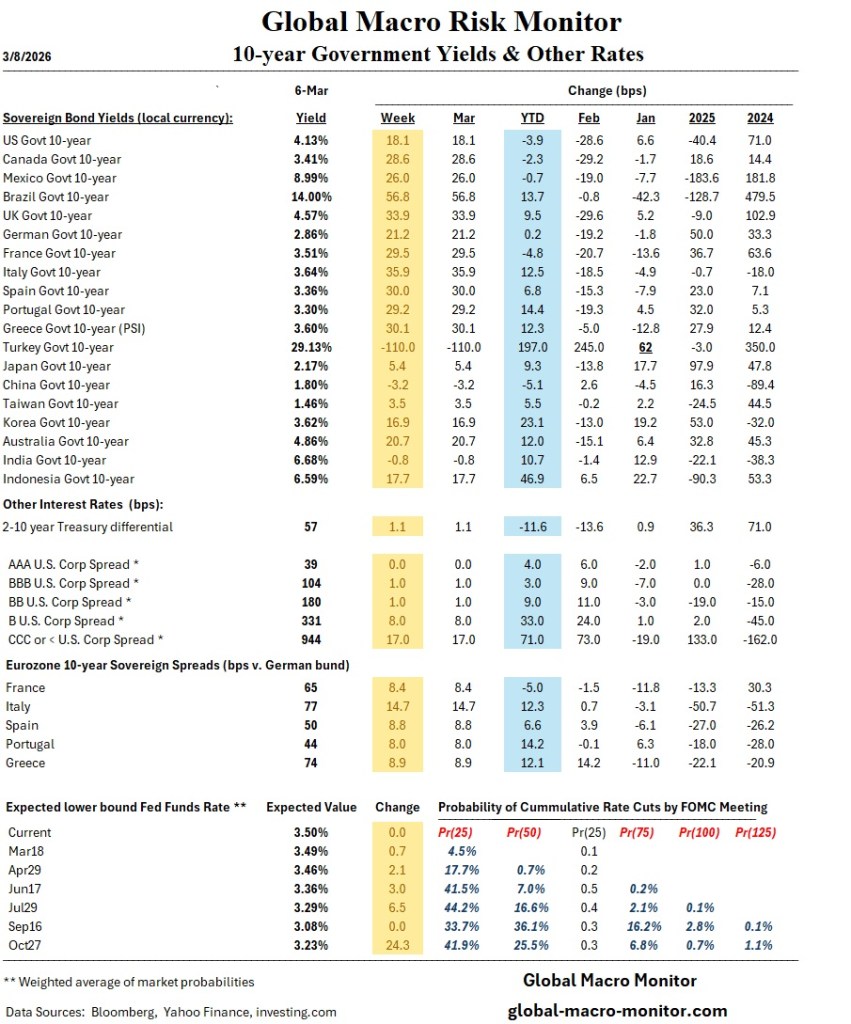
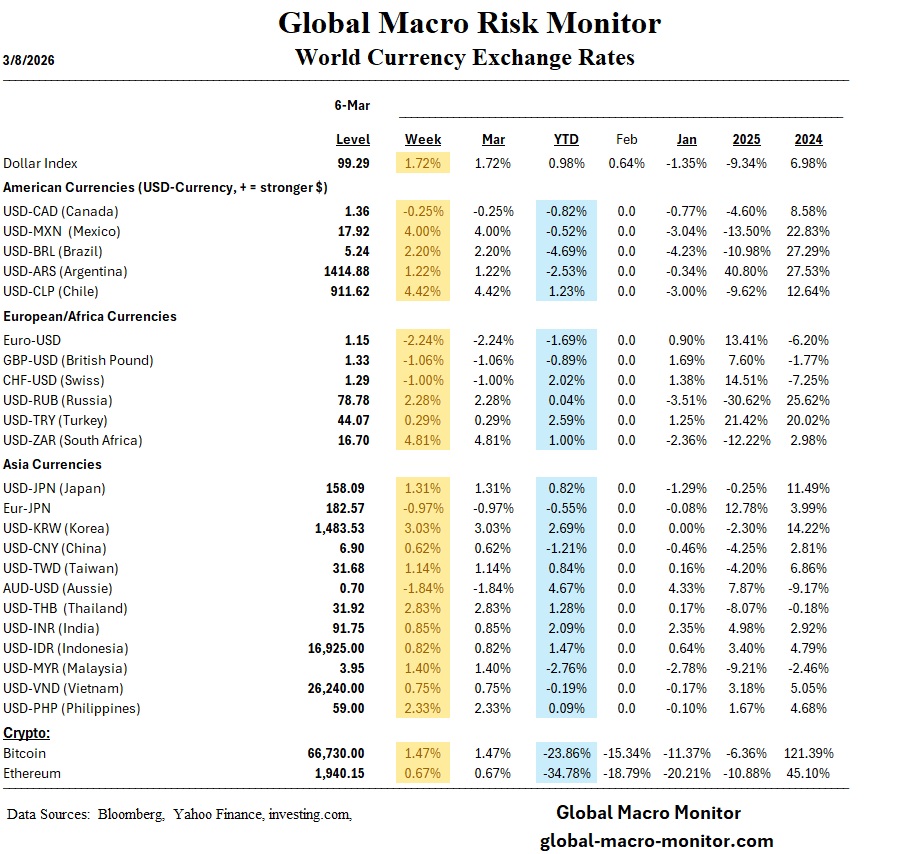
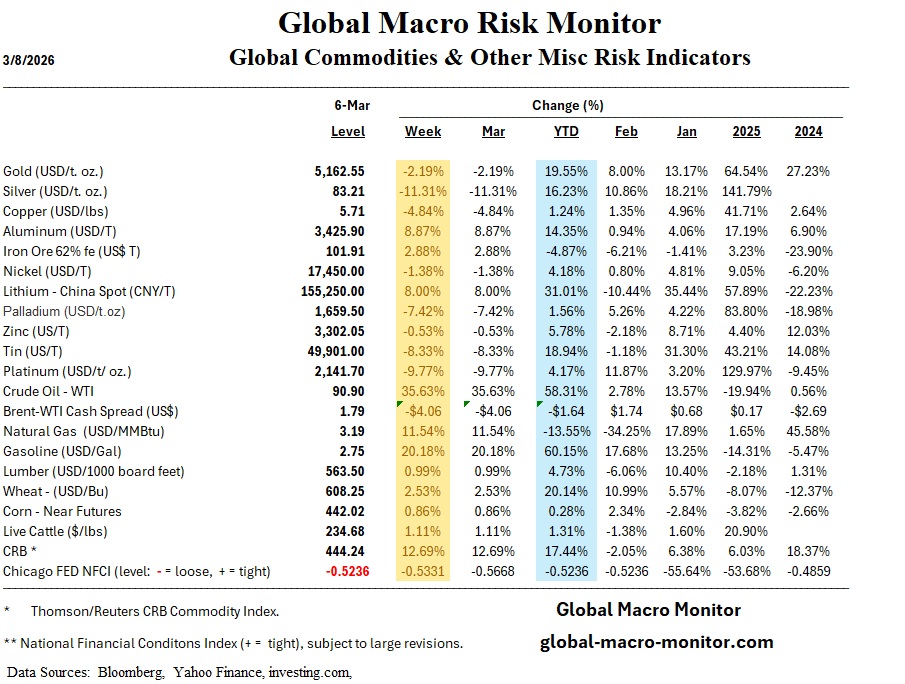
Global Risk Monitor: Week In Review – Dec 5

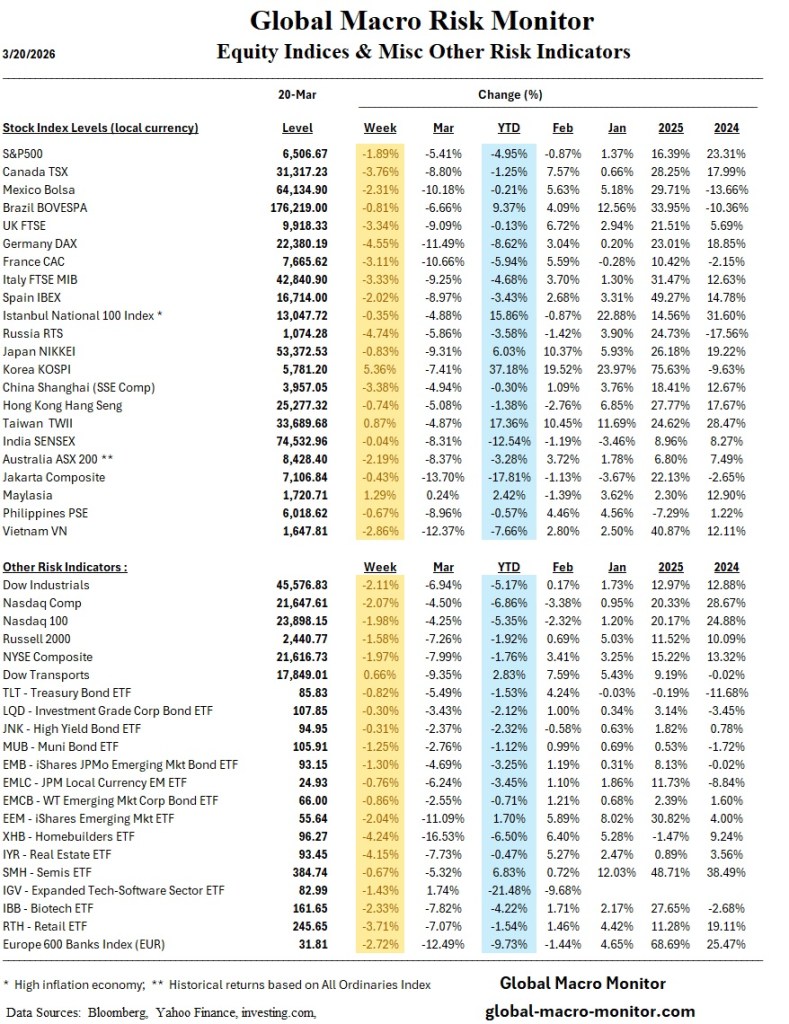
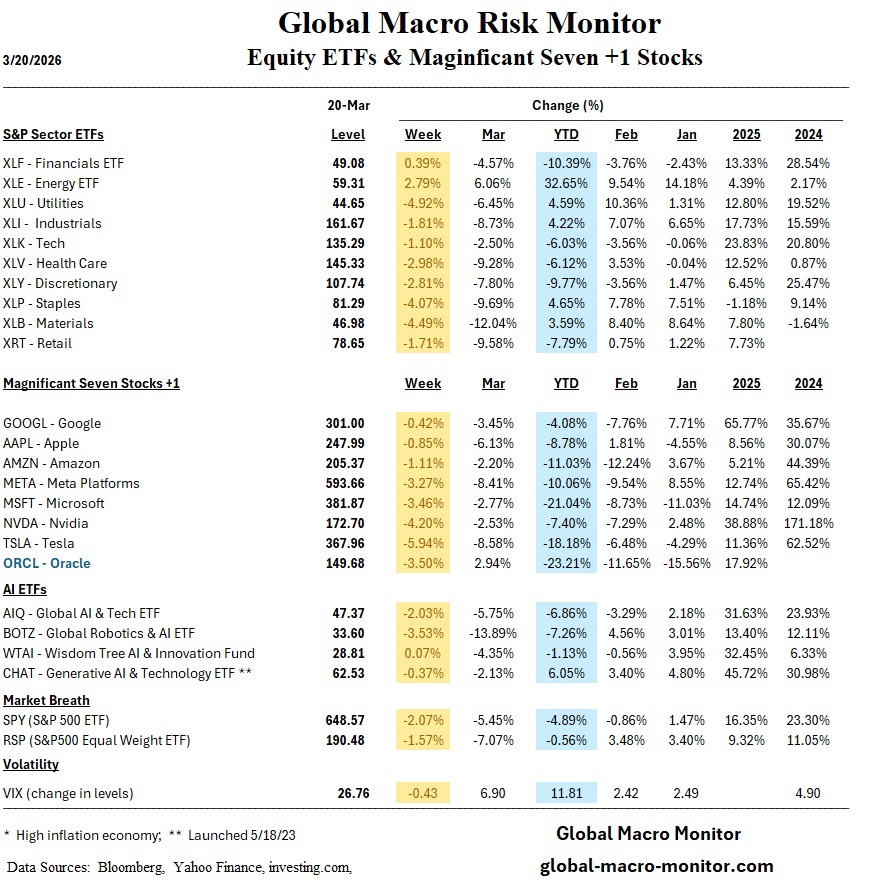
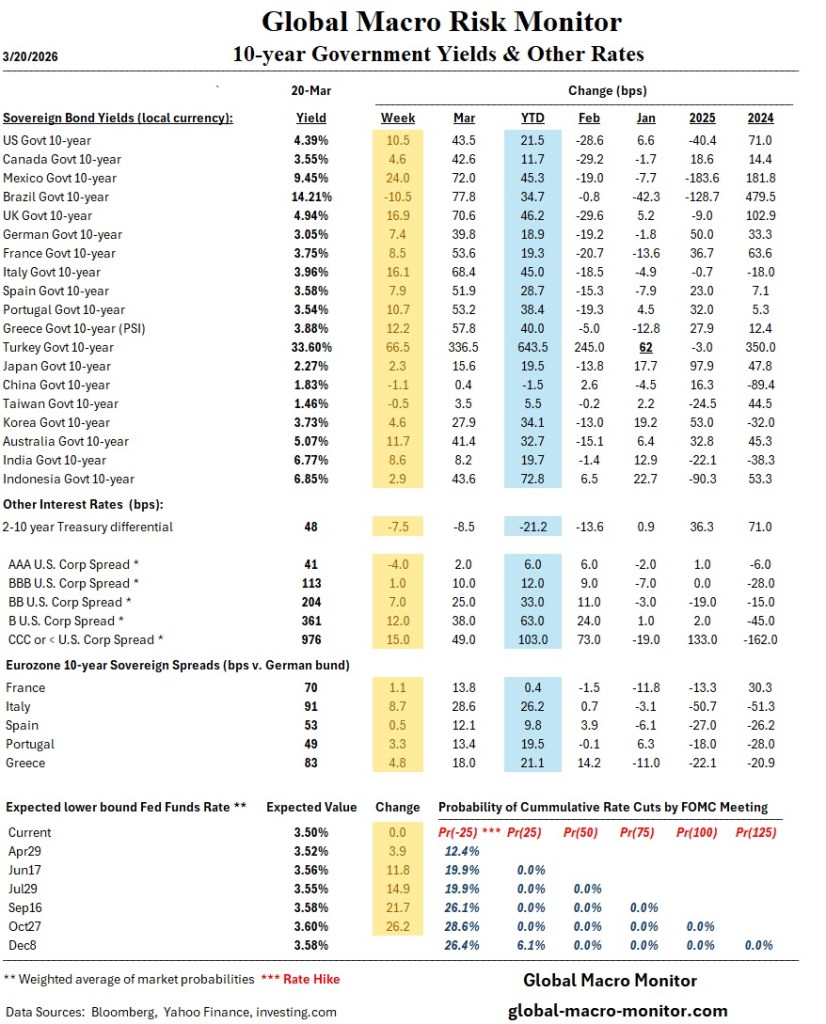
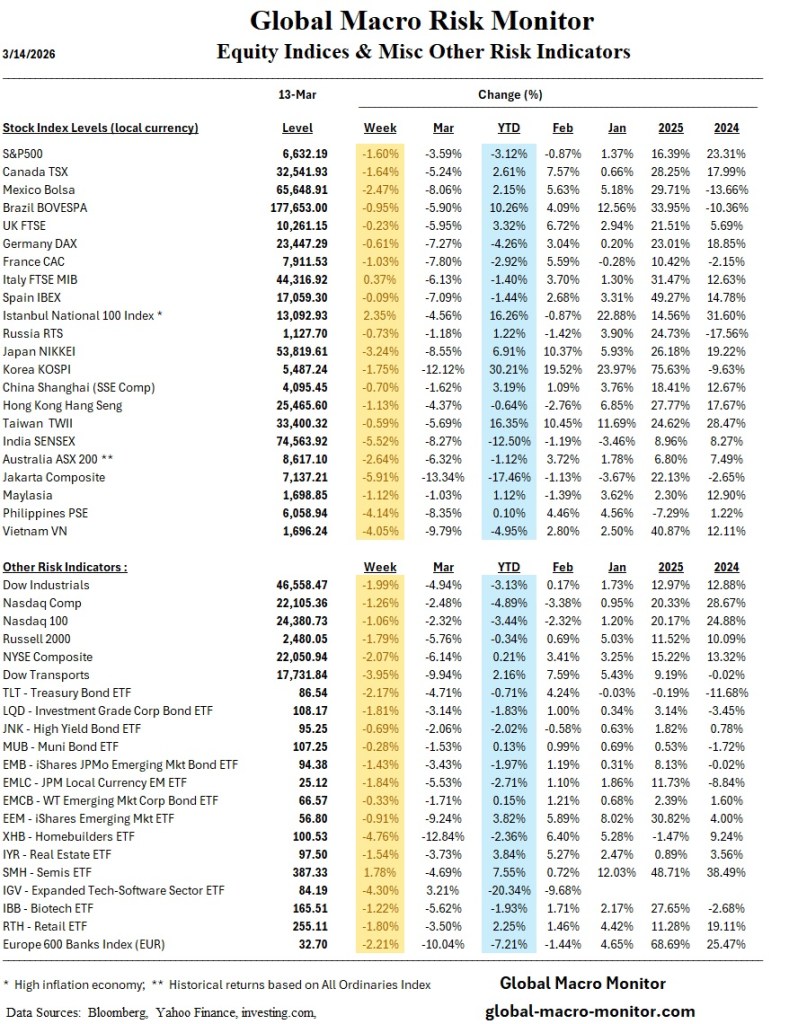
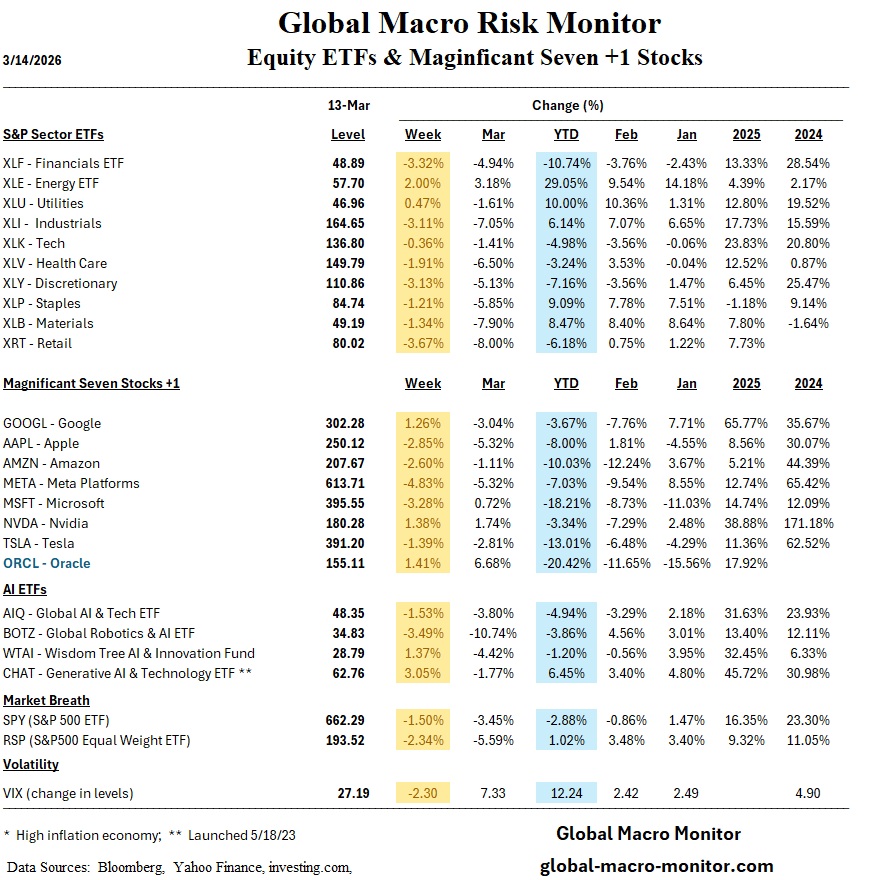
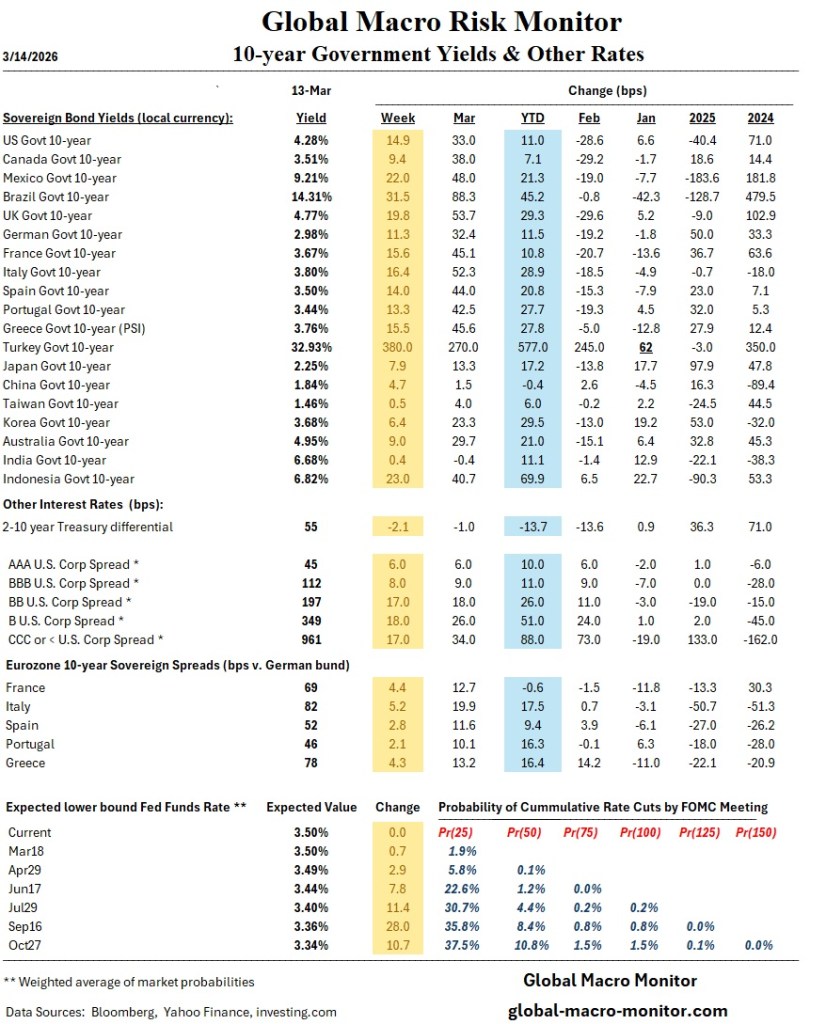
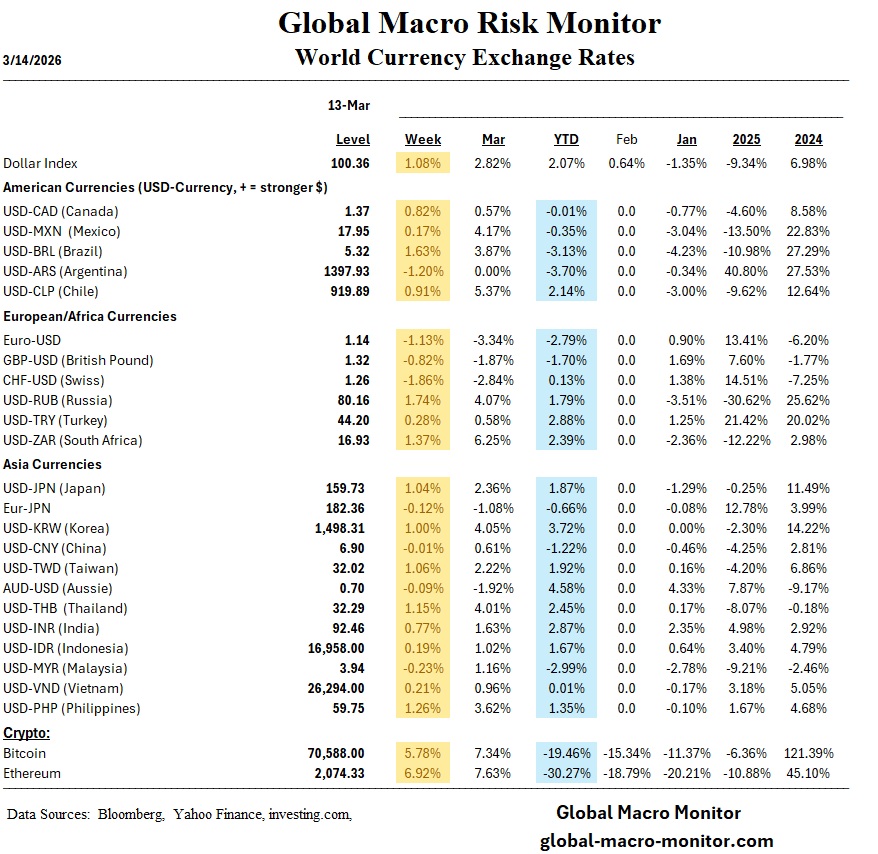
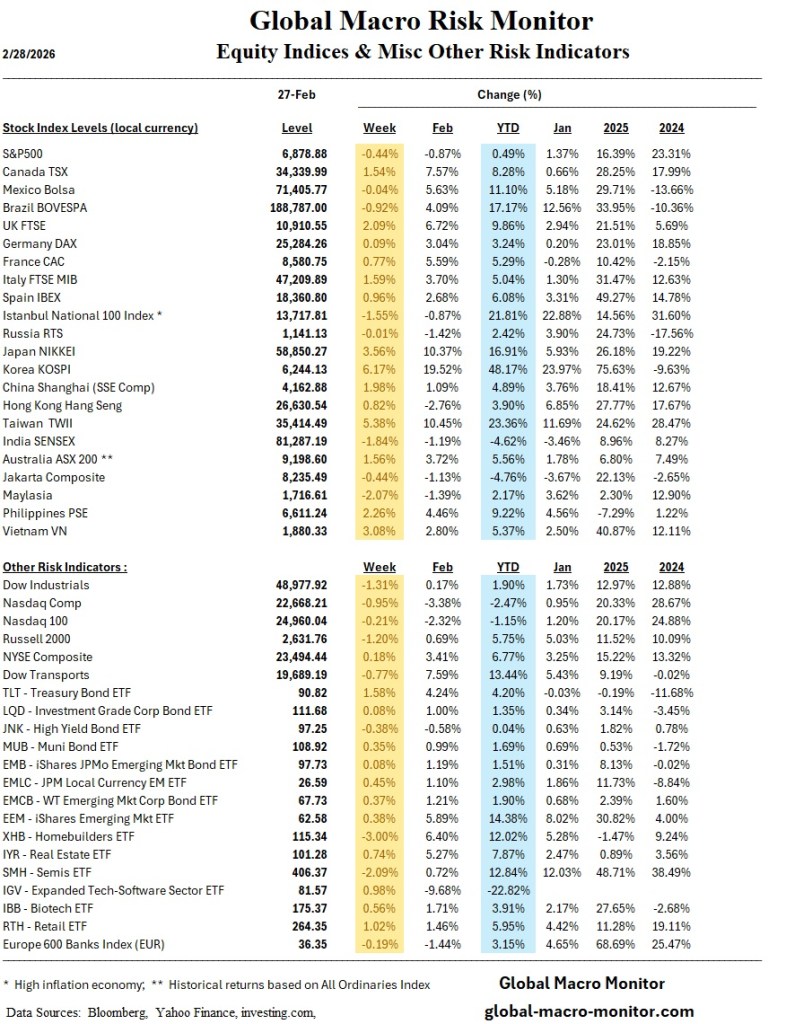
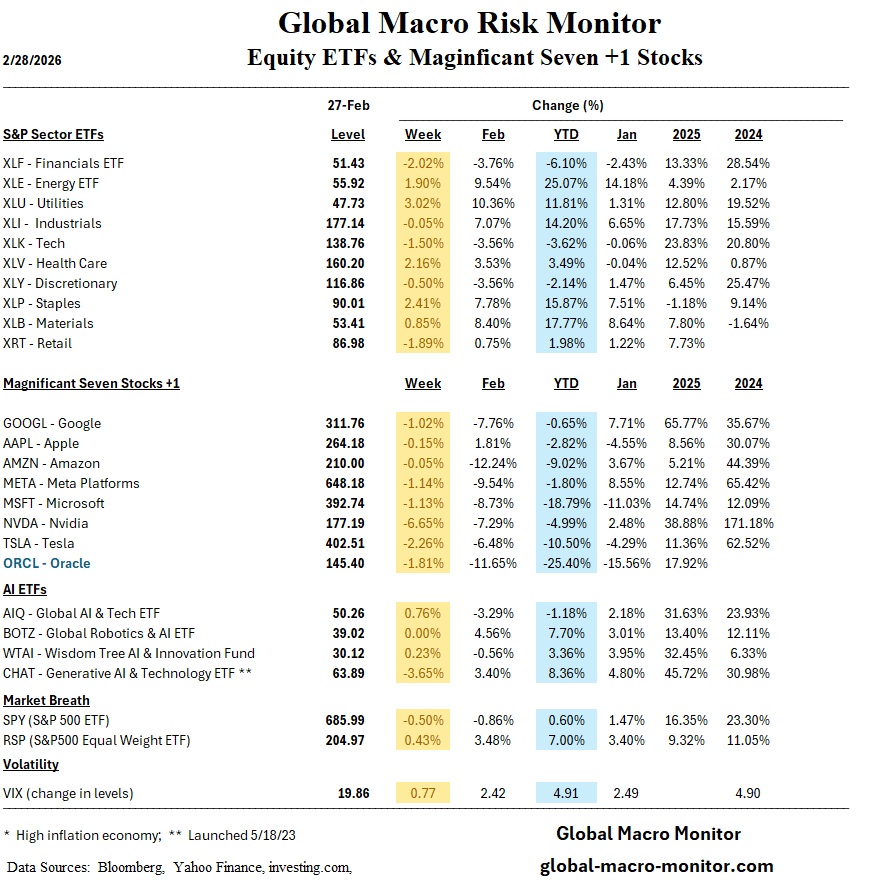
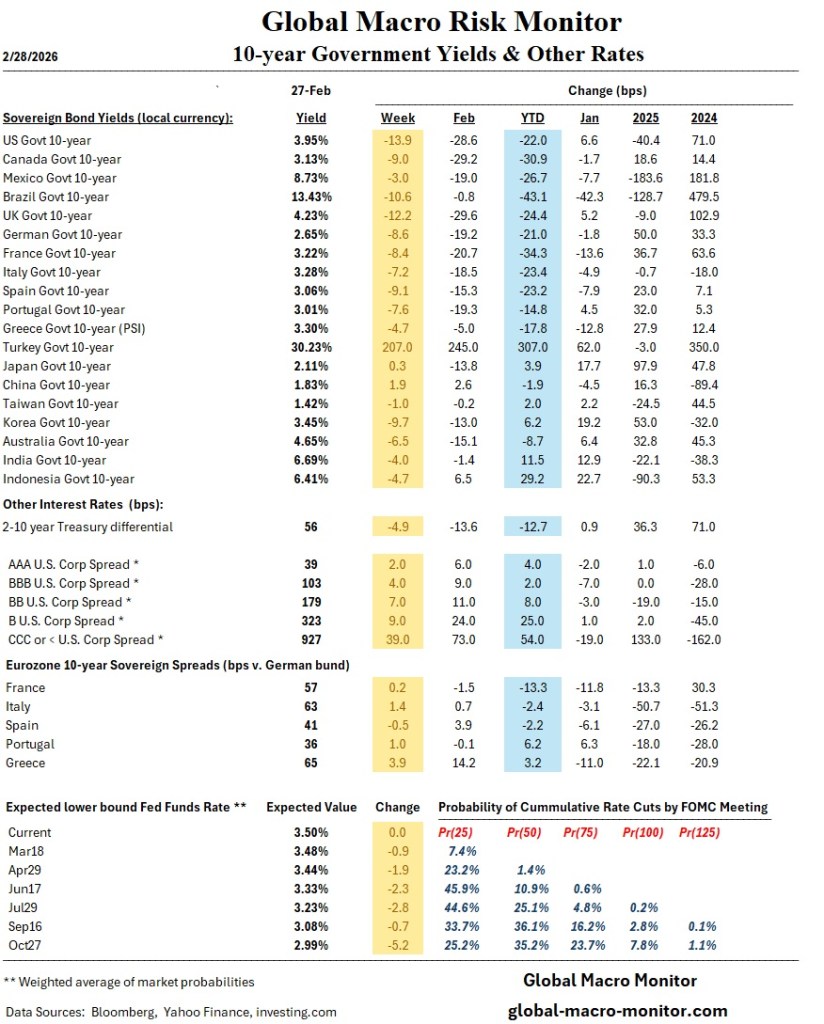
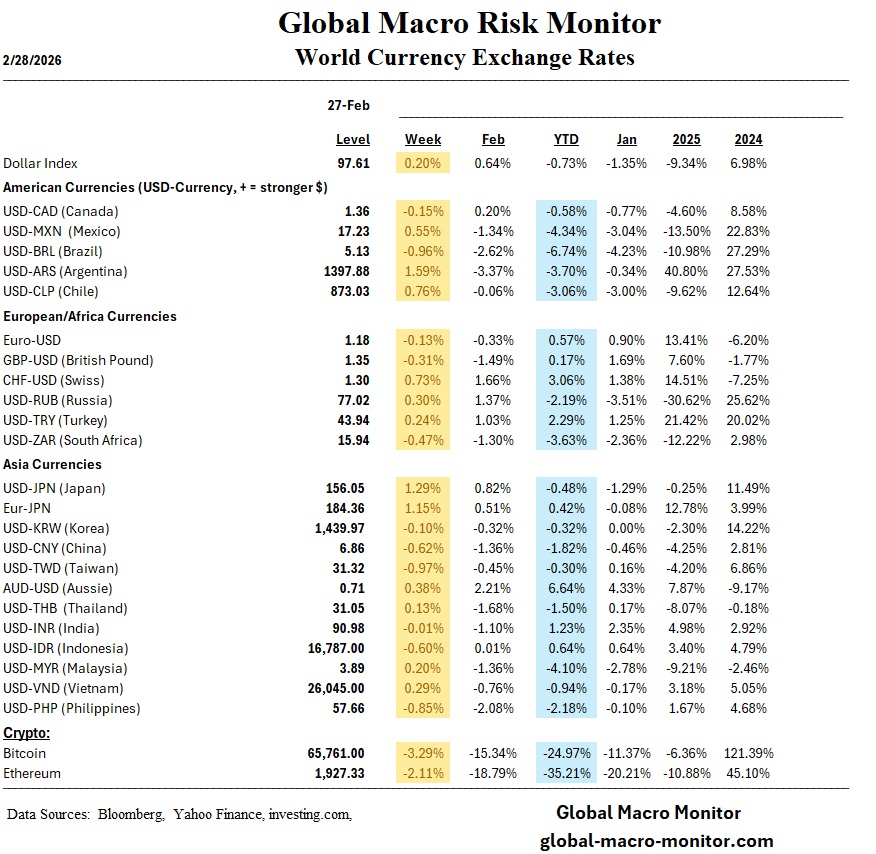
Global risk sentiment stayed constructive this week despite a sharp back-up in global bond yields and lingering growth concerns. Higher long-end yields across 19 bond markets—led by a 27 bp rise in Canada—coincide with markets pricing an 80–90% chance of a 25 bp Fed cut, but limited conviction on further easing into March. Equities ground higher in the U.S. and Europe, with transports, cyclicals, and small caps outperforming as investors rotate toward rate-sensitive and economically geared sectors.

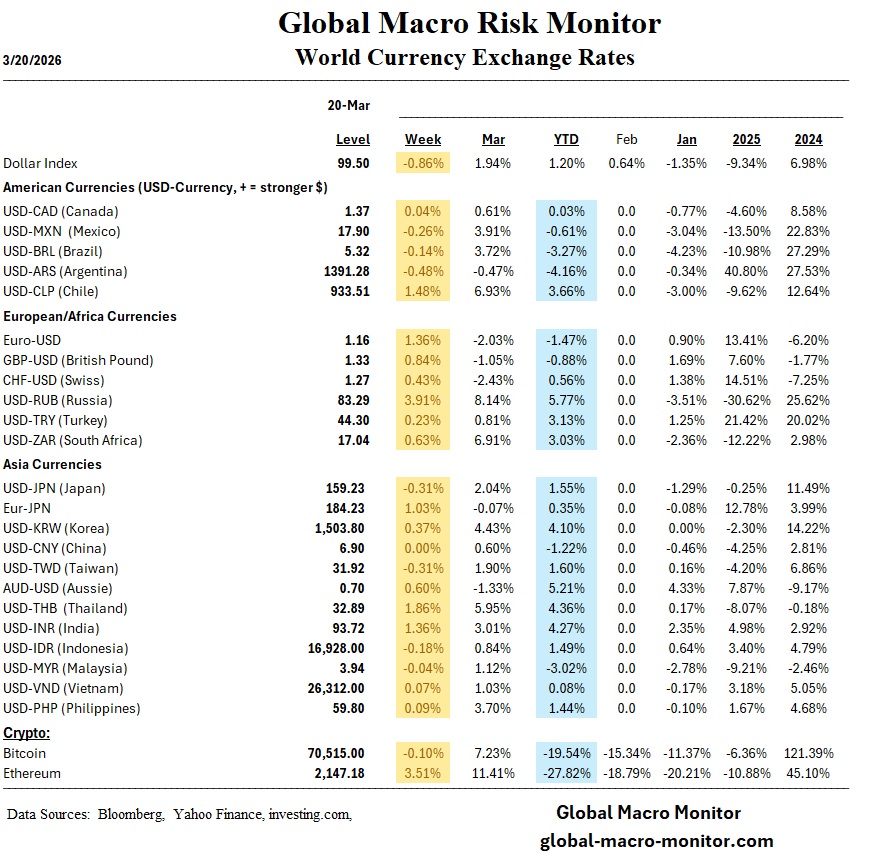
Data continue to paint a mixed global picture: U.S. manufacturing remains in contraction while services expand at the fastest pace in nine months; labor indicators are softening at the margin, but initial jobless claims sit at a three-year low. Eurozone inflation has ticked up slightly above 2%, reinforcing an ECB-on-hold stance, while Japan edges closer to BoJ rate normalization as JGB yields hit multi-year highs. China’s PMIs underline weak domestic demand, even as exports and tech/AI themes support local equities. Across EM, policy is drifting more dovish, with India and several Asian and EEMEA central banks cutting rates. Overall, valuations look increasingly stretched, leaving the rally vulnerable to rates, earnings, or policy surprises.

Regional Economic Insights

United States

  • Mixed labor data: ADP showed the largest job loss in two years while jobless claims hit multi-year lows.

  • Stock performance supported by weaker inflation (core PCE below expectations) and Fed-cut optimism.

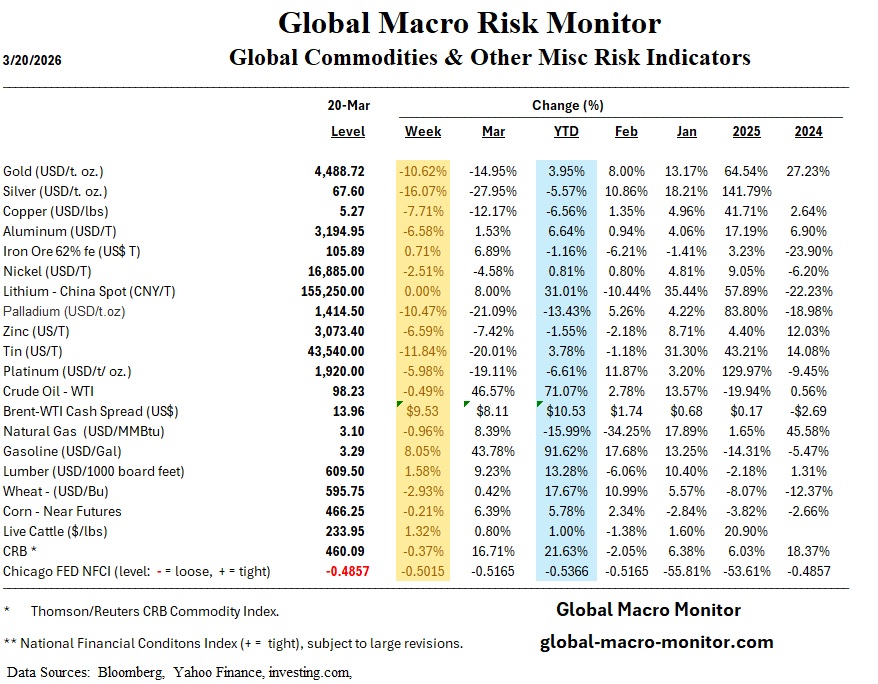
  • Oil, yields, and gold moved in response to shifting expectations for next week’s FOMC call.

Eurozone

  • Market sentiment influenced by inflation divergence—CPI roughly aligned with expectations while PPI remains firm (from broader template structure).

Japan

  • JGB yields rising, interacting with U.S. yields and potentially altering risk sentiment next week.

China

  • No new macro updates in Week_Dec5; monitoring holiday-related demand trends (per document structure).

Inflation: CPI–PPI Dynamics

  • U.S. core PCE inflation cooled slightly in the latest release (0.1% below expectations), helping maintain the disinflation narrative.

  • Producer prices (PPI) due next Thursday are a potential catalyst for volatility.

Markets

Equities

  • Strongest sectors: consumer durables, transportation, and manufacturing.

  • Dow Transports had an outsized weekly gain, breaking into leadership territory and signaling cyclical momentum.

Bonds

  • Yields fell on weak ADP data but reversed higher on cooling inflation expectations and anticipation of the FOMC meeting.

Energy, Metals & Crypto

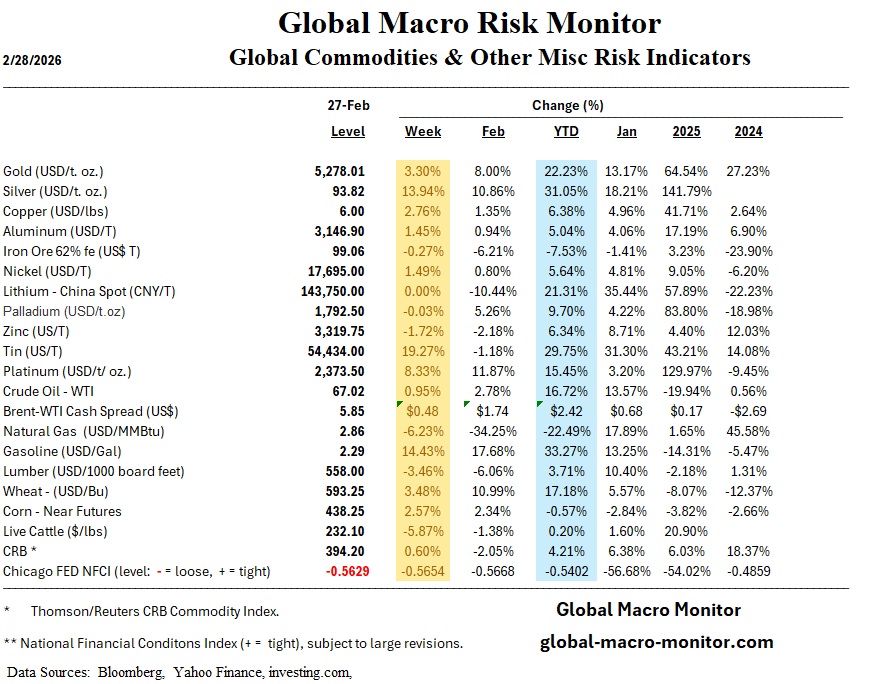
  • Oil: Rose mid-week on geopolitical tensions, then moderated on inventory builds.

  • Gold: Softened after the prior week’s 3.8% rally.

  • Crypto: Bitcoin and Ethereum whipsawed; ETH boosted temporarily by its Fusaka upgrade.

United States Outlook (Week Ahead)

Key releases include JOLTS, ECI, PPI, crude oil inventories, and the FOMC decision on Dec. 10.

Central Bank Actions

The FOMC is expected to cut rates by 25 bps, though committee dissents are likely; guidance suggests fewer cuts ahead.

Risks & Outlook

  • Volatility expected in the latter half of next week due to Fed messaging and Oracle earnings—a binary catalyst for AI-linked sentiment.

  • Rising JGB yields may pressure U.S. long rates and shift the market tone.

Posted in Uncategorized | Leave a comment

The No Hire-No Fire Economy

Posted in Uncategorized | Leave a comment

Global Risk Monitor: Week in Review – Nov 28

KEY ISSUES

  • Silver surged 13% for the week and is now up over 90% year-to-date—vastly outperforming Bitcoin, which is down 3% on the year.
  • Eurozone banks climbed 5% during the week and are now nearly 70% higher year-to-date when accounting for the currency boost.
  • Market volatility fell sharply, with the VIX dropping 7 points to 16, signaling stronger investor risk appetite.

These developments: precious metals momentum, European banking sector strength, and a major decline in volatility were central to global market behavior this week.

GLOBAL MARKETS SUMMARY

Risk assets rallied across global markets. U.S. equities posted broad gains in a holiday-shortened week, supported by softer economic data and dovish messaging from Federal Reserve officials. The markets have priced an 86% probability of a 25 bps rate cut by the Fed at its December 10th meeting. Small caps outpaced large caps, and technology shares rebounded strongly.

The standout move came from silver, which surged 13%, a move reflecting both inflation concerns and increased demand for safe-haven or alternative assets.

European markets also strengthened, with a notable rally in bank stocks. Meanwhile, volatility dropped substantially, creating a supportive backdrop for equities and credit.

UNITED STATES

Equities & Markets

  • Major indices posted weekly gains:
    • Dow: +3.18%
    • S&P 500: +3.73%
    • Nasdaq: +4.91%
  • The Russell 2000, a gauge of smaller companies, rose 5.52%, reflecting a shift toward risk-on sentiment.

Economic Data

  • Retail sales: +0.2% for September, below expectations.
  • PPI: +0.3% headline; +0.1% core.
  • Jobless claims: Declined to 216,000, the lowest since April.
  • Consumer confidence: Fell to 88.7, signaling growing economic caution.

Policy & Rates

  • Fed Beige Book:
    • Employment edged lower.
    • Prices continued moderate increases.
    • Consumer spending weakened further.
  • Treasury market: Yields fell as investors priced in a likely December rate cut. The yield on the 10-year Treasury note fell 5 bps to 4.02%

EUROPE

Equities

  • STOXX Europe 600: +2.35%
  • DAX: +3.23%
  • CAC 40: +1.75%
  • FTSE 100: +1.90%

Eurozone Banks: Weekly and Year-to-Date Standouts

Banks in Europe rallied roughly 5% for the week and are now nearly 70% higher year-to-date when currency gains are factored in.  We doubt anyone believed at the beginning Euro banks would outperform Nvidia by a factor of 2x by December 1st.

Key drivers included:

  • Higher net interest margins
  • Strong capital positions
  • Stable inflation near ECB target
  • Improved sentiment toward European financials

Macro Developments

  • Inflation across major eurozone countries remained subdued.
  • UK’s new budget introduced £26 bn in tax increases.
  • Germany’s business sentiment weakened, while consumer willingness to buy improved.

JAPAN

Japanese markets rallied strongly:

  • Nikkei: +3.35%
  • TOPIX: +2.45%

Momentum was fueled by dovish signals about global monetary policy, a rebound in tech/AI shares, and steady Tokyo inflation at 2.8%, reinforcing speculation that the Bank of Japan may contemplate a future rate hike.

The 10-year JGB yield rose to 1.82%, approaching levels last seen 17 years ago.

CHINA

Chinese equity benchmarks advanced:

  • CSI 300: +1.64%
  • Shanghai Composite: +1.40%
  • Hang Seng: +2.53%

Despite these gains, industrial profits fell 5.5% year over year, indicating slowing momentum and highlighting persistent structural challenges—particularly within manufacturing and real estate.

OTHER KEY MARKETS/GEOPOLITICAL DEVELOPMENTS

Russia–Ukraine Peace Framework Discussions

A 28-point U.S. proposal has gained traction among NATO and EU members, offering a potential basis for negotiations but still requiring major concessions from both sides.

South Korea Monetary Policy

The Bank of Korea kept the Base Rate at 2.50%, noting rising inflation but maintaining flexibility for future cuts amid global uncertainty.

MARKET VOLATILITY TRENDS

The VIX dropped sharply to 16, falling 7 points in one week.

This move signals:

  • Declining hedging costs
  • Renewed appetite for equities and credit
  • Possible overconfidence if economic data fails to stabilize

The drop in volatility was one of the most influential forces shaping global risk sentiment the past and upcoming week.

PRECIOUS METALS: SILVER’S POWERFUL SURGE

Silver’s 13% weekly rally has pushed its year-to-date gain beyond 90%, dramatically surpassing Bitcoin’s –3% performance.

Key catalysts include:

  • Strong industrial demand
  • Elevated geopolitical tensions
  • A softer U.S. dollar
  • Growing investor preference for tangible, inflation-resistant assets

EUROPEAN FINANCIAL SECTOR: BANKS BREAK OUT

Eurozone banks delivered another standout performance this week.
Their strong gains reflect:

  • Stabilizing macroeconomic conditions
  • Attractive valuations
  • Positive earnings momentum
  • Enhanced foreign interest due to currency strength

This sector remains a cornerstone of the European equity story in 2024.

OUTLOOK: WHAT TO WATCH NEXT

  • Federal Reserve: Market expectations remain aligned with a possible December rate cut.
  • Eurozone Inflation (Dec 2): A reading near target could support earlier ECB easing.
  • Bank of Japan: Investors await guidance on potential tightening.
  • China: Markets look for signs of additional stimulus as growth softens.
  • Volatility: With the VIX at 16, markets could be vulnerable if data surprises to the downside.
Posted in Uncategorized | Tagged , , , , | Leave a comment

Productivity of the World’s Largest Economies

More than Luck of the Irish!

Posted in Uncategorized | Leave a comment

Global Risk Monitor: Week In Review – Nov 21

Global markets navigated a risk-off week marked by renewed doubts over the durability of the AI-driven equity rally, rising volatility, and shifting expectations for a December U.S. rate cut. Strong corporate earnings failed to offset investor concerns about inflated tech valuations, while global activity indicators suggested modest but uneven momentum. Several asset classes exhibited outsized weekly moves, underscoring fragile sentiment across risk markets.

GLOBAL MARKETS

  • Equities broadly declined, led by tech-heavy indices:
    • NASDAQ −2.7%, pressured by AI valuation concerns.
    • Hang Seng −5.0%, CSI 300 −3.1%—sharp reversals in China-linked tech names.
    • Major European benchmarks also weakened: DAX −3.29%, FTSE MIB −3.03%, CAC 40 −2.29%.
  • Mega-cap divergences:
    • Google +8.47% posted standout strength.
    • Oracle −10.81% saw the week’s largest drop among major tech names, reflecting tightening credit conditions around AI infrastructure.
  • Market volatility rose:
    • VIX climbed to ~28 midweek before settling near 23.

REGIONAL HIGHLIGHTS

United States

  • Federal Reserve:
    • December cut expectations rose to ~70%, reversing earlier hawkish interpretations of FOMC minutes.
    • Fed officials acknowledged softening labor conditions but emphasized persistent inflation risks.
  • Economic Indicators:
    • Delayed September jobs report: +119k payrolls (well above expectations); unemployment rose to 4.4%.
    • Treasury yields fell late week: 10-year −7.9 bps, supporting bonds.
  • Market Performance:
    • S&P 500 −1.95% on the week, tech lagged, and breadth weakened.

Europe

  • Macro Data:
    • Eurozone PMI composite held at 52.4, signaling steady expansion with weak manufacturing (49.7).
    • Consumer confidence remained at an 8-month high (−14.2).
  • Inflation & Policy:
    • UK CPI fell to 3.6%, reinforcing expectations of further BoE easing.
    • Equities declined broadly: Germany and Italy posted some of the steepest weekly losses.

Japan

  • Markets:
    • Nikkei −3.48%, pressured by sharp declines in AI-linked firms.
  • Policy & Data:
    • Government approved a ¥21.3T fiscal package; yields climbed as the 10-year JGB hit 1.78% (a 17-year high).
    • Core CPI remained elevated at 3.0%.

China

  • Equities:
    • CSI 300 and Shanghai Composite suffered weekly losses (−3.77% and −3.90%) amid fading AI enthusiasm and deepening property-sector concerns.
  • Policy:
    • Authorities considering new nationwide mortgage subsidies and tax adjustments to stabilize the housing market.

EMERGING MARKETS

  • Turkey 10-year yield fell +30 bps, the largest global weekly rate decline.
  • Argentina peso weakened +1.53%, reflecting persistent macro volatility.
  • South Africa cut rates, citing an improved inflation outlook and steadier domestic demand.

COMMODITIES & FX

  • Oil: WTI −3.38%, Brent spread increased (+$0.71), reflecting softer demand and geopolitical repricing.
  • Metals:
    • Lithium +8.4% was the week’s strongest commodity move.
    • Gold remained stable (−0.48%).
  • FX:
    • USD broadly strengthened: USD/JPY +1.20% on Japan fiscal slippage; Dollar Index +0.89%.
  • Crypto:
    • Bitcoin fell −11.03%, extending a multiweek decline to near 7-month lows.

WEEKLY THEMES & OUTSIZED MOVES

AI Valuation Stress Drives Global Tech Reversal

  • Oracle (−10.81%), Nvidia (−5.94%), and META (−7.50%) highlight a broad re-rating of AI infrastructure names.
  • Asia tech mirrored the selloff: Hang Seng Tech-heavy components down >3%.

Risk-Off Flows Boost Bonds & USD

  • U.S. 10-yr yield fell −7.9 bps, one of the sharpest G10 moves.
  • Dollar strength broad-based—pressure particularly notable in EM FX.

Commodity Divergence

  • Lithium’s +8.4% surge vs. WTI’s −3.38% fall signals diverging supply/demand narratives across raw materials.China Property Drag Returns
  • Housing data deterioration and policy rumors reignited downside pressure across Chinese equities.

WEEK AHEAD

  • U.S. data heavy: GDP 2nd estimate, PCE, durable goods, consumer confidence, jobless claims.
  • Eurozone PMIs and UK fiscal commentary in focus.
  • Japan inflation and fiscal implementation developments to shape JPY volatility.
Posted in Uncategorized | Tagged , , , , | Leave a comment

The Not So Fabulous 7

Nvidia endured a sharp and unsettling 8% reversal today, and when combined with Bitcoin’s continued slide, the pressure spread quickly across the broader market. By the close, the S&P 500 had fallen 3.5% from its intraday high, marking a swift and sizable retreat.

Within the Fab 7, only Apple and Alphabet have avoided double-digit declines from their recent highs. The rest have already fallen double-digits, with several either in or nearing bear-market territory—a drop of 20 percent or more.

No one can foresee what comes next, but the speed and severity of today’s reversal invite a moment of reflection. For some investors, the abrupt shift echoes the unsettling tone of the 2018 “Nightmare Before Christmas” bear market. That episode only finally came to an end on Christmas Eve, when Fed Chairman Jay Powell—after months of relentless pressure from President Trump—stepped back and began to ease up on monetary policy, effectively marking the capitulation that turned the tide.

Posted in Uncategorized | Leave a comment

How Event Markets Are the New Frontier for Traders

Posted in Uncategorized | 1 Comment

The Fab 7 + 1 GPS

The following table shows notable divergence among the major tech names.

Apple is sitting just 1.8% below its peak, placing it within striking distance of a new record. In contrast, both Meta and Oracle are firmly in bear-market territory, each trading at more than 20 percent below their all-time highs (ATH)  and double-digit discounts to their 50-day moving averages.

Meta is down more than 14% from its 50-day, reflecting ongoing volatility tied to concerns about rising AI-related expenses. Oracle sits nearly 20% below its 50-day after a sharp month-long slide driven by cloud-margin worries.

Posted in Uncategorized | Leave a comment

Global Risk Monitor: Week in Review – Nov 14

Global economic activity showed mixed momentum, with markets navigating a choppy week shaped by the end of a prolonged 43-day U.S. government shutdown and increasingly hawkish Federal Reserve communications. U.S. equities initially rallied on optimism but ultimately ended broadly flat to slightly lower, while bond markets adjusted to fading expectations of a December rate cut. International data presented uneven growth signals, and several regions continued to struggle with inflation pressures and policy uncertainty.

Global Markets

  • Markets experienced volatility: early-week rallies faded by Thursday’s sell-the-news reaction after the U.S. government reopened, leaving the S&P 500 and Dow marginally higher for the week and the NASDAQ slightly lower.
  • Market breadth improved modestly, with more stocks trading above 200-day moving averages across the S&P 500, Nasdaq, and Russell 2000 indices
  • Global activity indicators were mixed: UK growth held modestly, Australia’s labor market strengthened, while China’s activity continued to soften

Regional Highlights

United States

  • Federal Reserve:

    • Multiple Fed officials sent hawkish signals, sharply reducing expectations of a December rate cut. Probabilities fell from ~63–70% to roughly 41–46% during the week.
    • Officials emphasized lingering inflation risks and uncertainty due to data gaps caused by the shutdown
  • Economic Indicators
    • CPI data release delayed; estimates point to +0.2% MoM and 3.0% YoY inflation; core CPI nowcast at +0.3%.
    • PPI expected +0.2% MoM, reversing -0.1% prior month
    • Initial jobless claims slightly improved week-over-week.
    • Government shutdown resolution will slowly clear data backlogs, with the September jobs report scheduled for release November 2.

  • Market Performance:

    • Early-week equity rally driven by shutdown-ending progress; tech led initial gains before rotating out later in the week.
    • Treasury yields rose slightly after hawkish Fed commentary

Europe

  • UK reported modest Q3 growth with slowing wage gains—part of broader mixed global activity data.
  • Romania kept its policy rate at 6.50%, facing elevated inflation (9.76% in October) driven by VAT hikes and removal of electricity price caps. Policymakers foresee modest declines in inflation over coming quarters

Japan

  • Japan GDP release scheduled for the following Monday, noted as a key upcoming data point in the global calendar
  • No additional Japan-specific data was included in the visible excerpts.

China

  • China’s activity data “continued to soften,” signaling ongoing demand challenge.
  • Trade- or manufacturing-specific details were not included in the retrieved excerpts.

Emerging Markets

  • Romania highlighted as maintaining steady rates amid “high uncertainties and risks,” with inflation well above desired levels due to energy policy shifts and tax increases.
  • No additional emerging-market political or macro developments were present in the visible material.

Commodities & FX

  • Oil: EIA crude oil inventories rose by +6.41 million barrels.
  • Natural Gas: EIA natural gas inventories increased by +45 bcf
  • Gold/BTC: Gold rose 2 percent and is now up over 50 percent on the year, a major outperformance relative to Bitcoin, which is up only 2 percent in 2025.   

Week Ahead

  • United States:
    • Nonfarm Payrolls expected Tuesday or Wednesday; Existing Home Sales on Thursday.
  • Global:
    • Japan GDP (Mon.)
    • Canada CPI (Mon.)
    • Eurozone PMIs (Fri.)
  • U.S. Data Backlog:
    • September jobs report scheduled for November 20; additional delayed releases remain unscheduled due to shutdown disruptions
Posted in Uncategorized | Tagged , , , , | Leave a comment

Tariff Reality Roasts the White House

On April 6, the Global Macro Monitor wrote:

The strategy’s incoherence is evident in absurd measures such as, for example, a tariff on coffee, an import for which the U.S. lacks viable domestic production except de minimis production in Hawaii and Puerto Rico. These policies reflect a reactive, politically charged agenda rather than a cohesive economic strategy. Ultimately, market forces are likely to compel a reversal…

Doesn’t the Administration understand the most basic concept of international trade and economics – Comparative Advantage?  – GMM

We grabbed a 2½-pound bag of coffee at Costco this week and nearly fell over—prices are up more than 20% from a year ago. With that kind of sticker shock hitting everyday items, Trump’s latest tariff reversal doesn’t come as a surprise at all. It fits the broader pattern we’ve been tracking: policy swings that feed directly into higher consumer costs.

Many of the commodities that will no longer face “reciprocal” tariffs have seen some of the biggest price increases since Trump took office, in part because of tariffs he imposed and a lack of sufficient domestic supply.

For instance, Brazil, the top supplier of coffee to the US, has faced tariffs of 50% since August. Consumers paid nearly 20% more for coffee in September compared to the prior year, according to Consumer Price Index data.  – CNN, November 14

Impact on Bond Markets

The real issue is whether global bond markets will start to price in the broader implications of a Trump tariff rollback—one that extends well beyond food imports. Customs duties have quietly become one of the fastest-growing revenue streams for the federal government, a rare source of fiscal buoyancy in an otherwise deficit-heavy landscape. If those tariffs come down, then—ceteris paribus—the Treasury loses a meaningful chunk of income, mechanically widening the budget deficit unless offset elsewhere.  Emphasis on “extends well beyond food imports” for meaningful impact on federal tax receipts. 

In that sense, tariff policy isn’t just a trade variable anymore; it’s a fiscal lever with direct consequences for supply dynamics in the Treasury market. Investors already nervous about persistent deficits and elevated issuance may view a tariff unwind as one more pressure point on the government’s financing needs. And in today’s environment—where duration supply, term premia, and fiscal credibility are back at the center of global macro—the bond market’s reaction function could turn decidedly less forgiving.

Tariff Revenues to the U.S. Government ($ billions)

Coffee Tariffs

Shortly after tariffs first landed in early April 2025 with “Liberation Day,” most imports were given a 10% rate. That alone was disruptive—this was the first time in recent memory that U.S. coffee imports were hit with tariffs. The shock was immediate, the questions were many, and the impact was felt across the specialty coffee supply chain. Four months later, tariffs on coffee are higher than ever. The landscape is shifting, and the situation is escalating. Here’s where things stand now, and what it means for you as a roaster.

While tariffs on coffee imports from many countries still face a 10% duty, geopolitical tensions have driven some rates much higher. Goods from Brazil, the world’s largest coffee producer, are now subject to a staggering 50% tariff. Other large coffee producers, like India (25%), Vietnam (20%), and Indonesia (19%), have also been hit with steep increases. These changes are reshaping the coffee trade in real time.  — Genuine Origin

Juan Perón Resurrected 

At Global Macro Monitor, we’ve been direct about this: Trump’s erratic, favor-driven policy style is steadily grinding the economy into a less efficient machine. Government by whim—and too often by favor or implied corruption—forces businesses to spend more time deciphering political signals than deploying capital. The economic gears are gumming up: investment gets delayed, supply chains get hedged into absurdity, and firms operate under the constant threat that today’s rule could be tomorrow’s tweet

The only thing masking the damage is a stock market still levitating on momentum, and even that looks like it’s on its final, exhausted leg. The parallel is obvious to us—this is the modern Juan Perón dynamic, where political volatility and personalist rule corrode economic performance long before financial markets finally reprice the risk.

Posted in Uncategorized | Tagged , , , , | Leave a comment