
As 2025 begins and the incoming U.S. administration outlines its economic priorities, global manufacturing faces significant headwinds. The J.P.Morgan Global Manufacturing PMI for December 2024 posted a modest contraction, reflecting a complex interplay of regional disparities, policy uncertainties, and sector-specific trends.
Key Highlights:
-
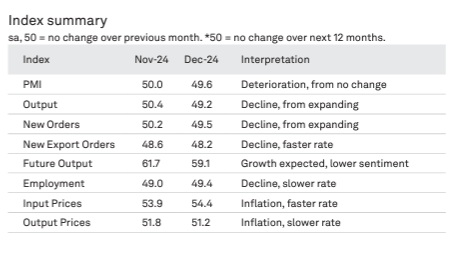
Global Manufacturing Contraction: The Global Manufacturing PMI fell to 49.6 in December, down from 50.0 in November, marking the fifth contraction in six months.
-
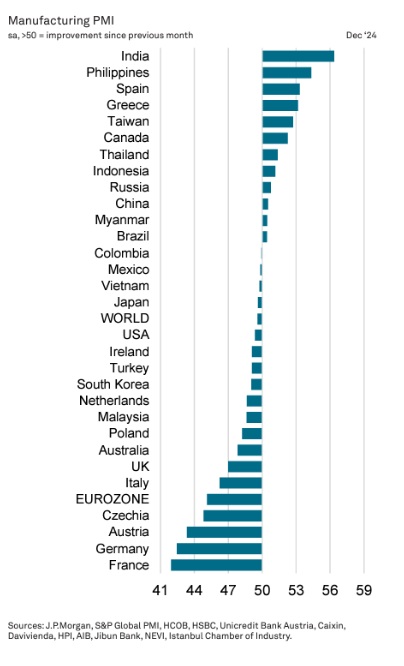
Regional Disparities: Strength in India and select Southeast Asian nations contrasted sharply with pronounced declines in France, Germany, Austria, the US, and the UK (see chart below).
-
Sectoral Divergence: Consumer goods production rose for the seventeenth consecutive month, while intermediate and investment goods sectors contracted.
-
Trade Weakness: International trade volumes declined for the seventh consecutive month, with only eight nations reporting growth in new export orders.
-
Input and Selling Prices: Input cost inflation hit a four-month high, while selling price inflation eased to a nine-month low.
In-depth Analysis:
Manufacturing Output and Orders
The global manufacturing sector ended 2024 on a weaker footing, with both output and new orders contracting in December. These declines erased the gains of the previous two months, resulting in near-stagnation for the final quarter. Only 13 of the 30 nations surveyed reported production growth, led by India, the Philippines, and select eurozone nations like Spain and Greece. In contrast, industrial heavyweights such as France and Germany faced sharp contractions, indicative of broader eurozone challenges.
Policy Risks and Regional Impacts
Uncertainty around potential U.S. tariffs under the new administration is clouding business sentiment. This risk is particularly acute for export-dependent economies in Europe and Asia. Meanwhile, the U.S. manufacturing sector saw its sharpest contraction in 18 months, further signaling domestic vulnerabilities amid a global slowdown.
Sectoral Insights
Consumer goods production remained resilient, extending a 17-month growth streak. However, this strength failed to offset declines in intermediate and investment goods industries, underscoring uneven demand dynamics. The divergence highlights opportunities for sector-specific investment strategies.
Trade and Employment Trends
International trade volumes declined for the seventh straight month, with only eight nations, including India, Taiwan, and South Korea, reporting export order growth. Weak trade dynamics fed into global employment trends, with job losses recorded in major regions like the euro area and China, even as the U.S. and Japan added jobs.
Inflationary Pressures
Input cost inflation accelerated to a four-month high in December, driven by supply chain disruptions and higher raw material costs. Yet, selling price inflation eased to a nine-month low, reflecting softening demand and competitive pricing pressures. Investors should watch for potential margin compressions in cost-sensitive industries.
Investment Implications:
-
Regional Rotation: Strength in India and Southeast Asia could offer opportunities for regional rotation as Western economies struggle.
-
Sector-Specific Strategies: The divergence between consumer goods and other manufacturing categories provides scope for targeted investment.
-
Policy Monitoring: Close attention to U.S. tariff announcements will be critical for forecasting trade and manufacturing dynamics.
-
Supply Chain Risks: Persistent input cost inflation warrants a focus on supply chain resilience in portfolio companies.
-
Employment Metrics: Declining employment in key regions could signal broader macroeconomic weakness, warranting cautious optimism.
The December Global Manucaturing PMI underscores the fragility of the global manufacturing landscape as we enter 2025. For portfolio and hedge fund managers, aligning strategies with these evolving dynamics—from regional strengths to sectoral disparities and policy risks—will be essential in navigating the year ahead.

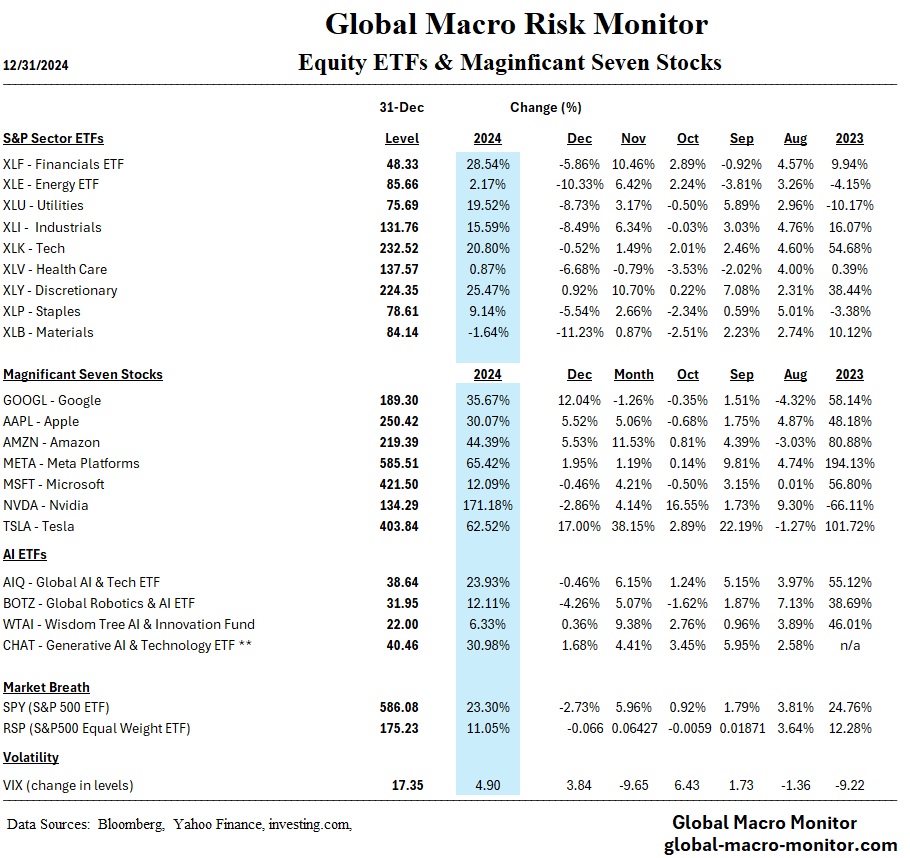
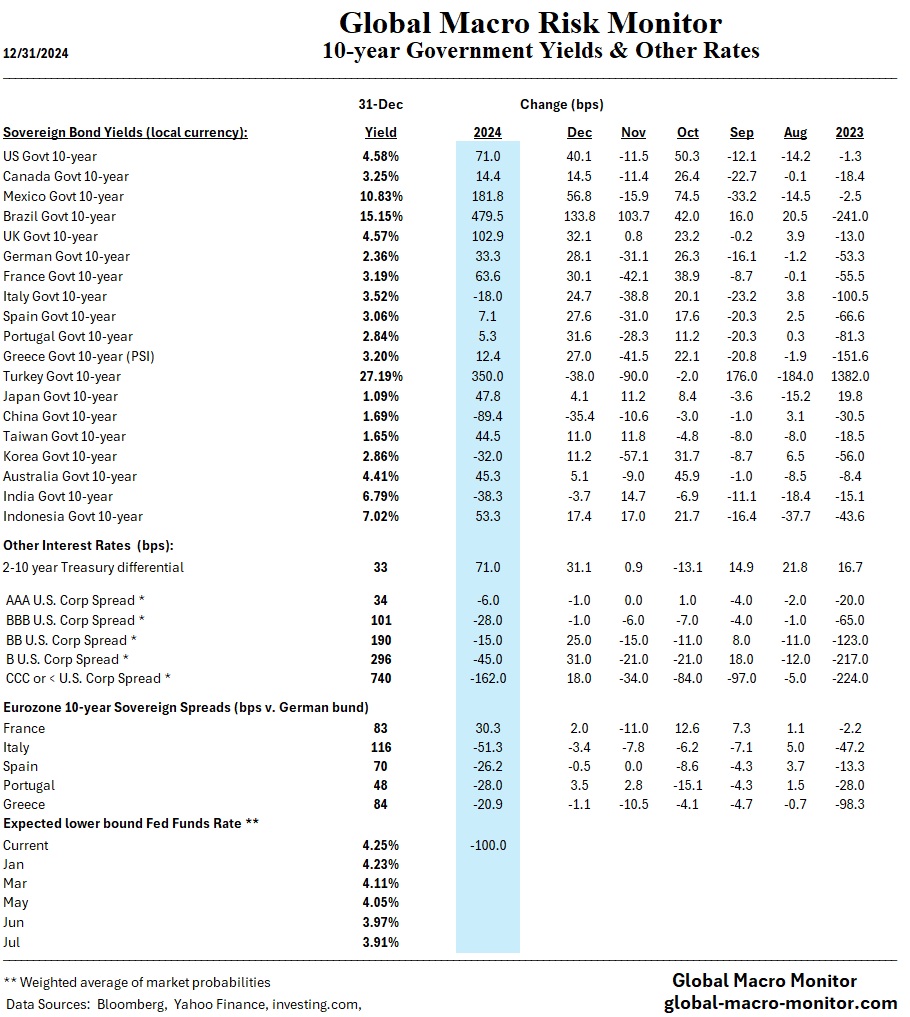
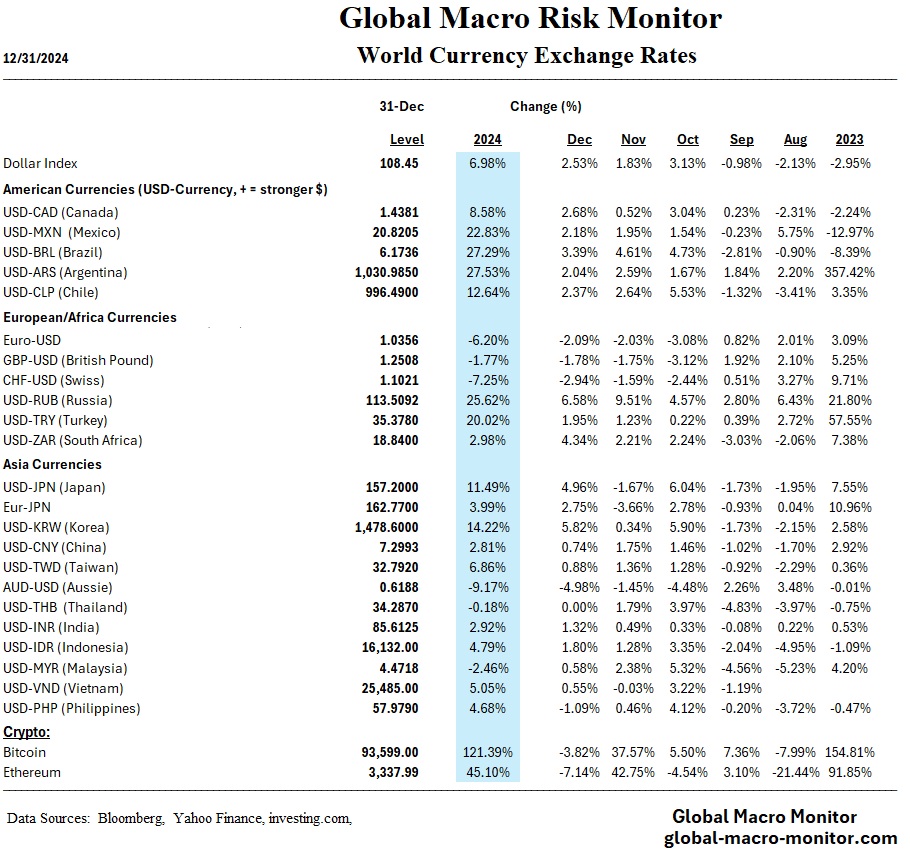
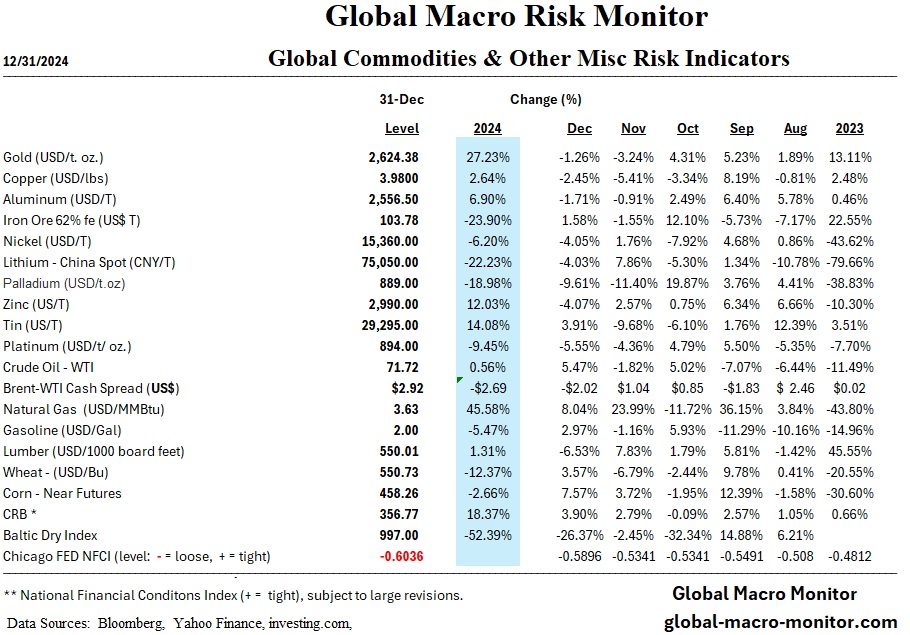

 Global Macro Monitor