We have finally made the time to more closely review the release of last week’s Fed minutes from the July 25-26 meeting. We kind of like what we see.
Debate Breaking Out Among FOMC Members?
A debate appears to breaking out between members and staff of the Federal Reserve’s FOMC about the impact of QE on long-term interest rates and their impact on asset markets.
On the one side are what we call the Bubblistas, who believe and are concened the repressed low long-term U.S. interest rates are leading to excess asset speculation.
On the other, the academic “Efficient Marketistas,” — who, by the way, we believe were partly responsible for the 1990’s equity bubble and the 2003-07 credit bubble — think the markets are pricing all information and fundamentals correctly.
How do you think they explain Italian junk yields trading through U.S. Treasuries? Covered interest rate parity? That is expectations of continued appreciation of the euro/dollar? Such absurdity.
What Is The Bond Market Telling Us?
We also always chuckle when we hear market commentators talk about, “what is the bond market telling us?” We completely agree, and have been expressing the same view for years, of what Mark Dow wrote last month on the Behavioral Macro blog,
“The bond market—in both shape and level—has been telling us very little about US economic prospects/activity. However, short-term changes do inform us as to the prevailing narrative.” – Mark Dow
FOMC Minutes
Have a look at our annotated version of a few key paragraphs of of the Fed minutes released last week and what we believe telegraphed the subject of Chariman Yellen’s Jacksole Hole speech later this week on financial stability.
Minutes of the Federal Open Market Committee
July 25-26, 2017
..Asset purchases by foreign central banks and the Federal Reserve’s securities holdings [see our Table below] were also likely contributing to currently low term premiums [QE/ZIRP distortions – Bubblistas], although the exact size of these contributions was uncertain. A number of participants pointed to potential concerns about low longer-term interest rates, including the possibility that inflation expectations were too low [Efficient Marketistas] , that yields could rise abruptly [see our “beach ball effect” on repressed interest rates], or that low yields were inducing investors to take on excessive risk in a search for higher returns [fear of yield chasers and financial destabilization – Bubblistas].
Several participants noted that the further increases in equity prices, together with continued low longer-term interest rates, had led to an easing of financial conditions [see our post, Market Liquidity Conditions Still Loose As A Goose]
However, different assessments were expressed about the implications of this development for the outlook for aggregate demand [uncertain over wealth effect of rising asset prices] and, consequently, appropriate monetary policy. According to one view, the easing of financial conditions meant that the economic effects of the Committee’s actions in gradually removing policy accommodation had been largely offset by other factors influencing financial markets [concerns of losing control to the markets], and that a tighter monetary policy than otherwise was warranted [Bubblisitas]. According to another view, recent rises in equity prices might be part of a broad-based adjustment of asset prices to changes in longer-term financial conditions [Efficient Marketistas], importantly including a lower neutral real interest rate, and, therefore, the recent equity price increases might not provide much additional impetus to aggregate spending on goods and services.- FOMC Minutes from July 25-26 Meeting – Released August 16, 2017
We produced this table in March and do not believe the data have changed much, though with more Treasury issuance the percentage of the U.S. Treasuries held by the Fed and foreign central banks is certainly lower.

Nevertheless, at the time, 65 percent of all long-term Treasuries, with maturities longer than one year, were held by the Fed and foreign central banks. That is by non-price sensitive holders. Add to that foreign private holders, forced into the U.S. bond market by negative interest rates in Europe and Japan, and not much of the cash market is available for domestic investors.
Stunningly, more than 80 percent of Treasury securities longer than one year are held by the Fed and foreigners, making short selling or straying from your benchmark a very dangerous proposition.
From The Great Moderation To The Great Distortion
The supply of bonds and notes taken out of the market by the Fed and foreign central banks, coupled with foreign private bond flows (due to foreign QE and NIRP), has resulted in a massive distortion of long-term risk-free interest rates. Since, most risk assets are priced off of these rates, then, by simple logic, risk in all asset markets is mispriced.
The Truman Show Markets
Fake news, fake economies (based on fake demand dependent on asset bubbles and the wealth effect), fake markets (dependent on QE and low interest rates). It’s the Truman Show, folks.
The 75 trillion dollar (size of global economy) question is when will Truman Burbank realize his world is fake?
We think when policy rates rise another 100-200 basis points and/or double digit percent reductions in the monetary bases of the G3, maybe with the exception of Japan, which we may never see. Whatever the case, it may take some time.
Stock Versus Flow Of Bank Reserves
The fear of overshooting interest rates and bursting asset bubbles may be one reason the Fed, alternatively, wants to start shrinking its balance sheet. We agree with the Fed that it is the stock (or level) of reserves in the financial system that matter and not the flows, at least for now. At some point, however, the markets will worry the level of reserves are approaching drought level conditions and financial liquidity is becoming too tight.
Nevertheless, as long as interest rates remain repressed and low, the mispricing of asset markets can last much longer than many think. It already has, and, remember, “the market can remain irrational longer than you can remain solvent.”
Investors, traders and ‘bots, for that matter, also have to make money in the market they are dealt. Not the market that should be or the one they want it to be.
Furthermore,
It is hard to pop a bubble of financial exuberance, however, when the predominant investor sentiment appears to be grudging rationalisation of high prices, absent much enthusiasm. Dhaval Joshi, chief strategist for BCA Research, says: “At our client meetings, almost everybody disbelieves that current valuations allow developed market equities to generate attractive long-term returns. Yet many investors are willing to suspend this disbelief, at least for the time being.” – FT
In other words, many market participants are acting as Truman Burbank, forcing themselves to believe the island of Seahaven is for real. Fitting in our new world of virtual reality and 24/7 reality television.
There will come a day when Truman discovers or rediscovers reality and walks off the set, not like the financial collapse and Lehman moment of ’08, as there is too much liquidity in the global financial system. More of a sustained period of secular stagnation before the major central banks capitulate and effectively become employment agencies and either directly, or indirectly, monetize wages. Contrary to conventional wisdom, we believe inflation, rather than deflation will be the ultimate end game. Though a period of sustained deflation will sow the seeds and set the stage for the inflation.
Central Banks Gone Wild
After all, major central banks are already engaging in activities almost unthinkable 20 years ago.
The Bank of Japan’s controversial march to the top of the shareholder rankings in the world’s third-largest equity market is picking up pace.
Already a top-five owner of 81 companies in the Nikkei 225 stock average, the BOJ is on course to become the No. 1 shareholder in 55 of those firms by the end of next year, according to estimates compiled by Bloomberg from the central bank’s exchange-traded fund holdings. – The Japan Times, August 15
In the U.K. there is already talk of the “People’s QE”.
The UK policy of increasing money supply in the past has always been based on two premises to avoid hyperinflation and currency destruction: the independence of the central bank as a central pillar of monetary policy, and the constant sterilization of asset purchases (ie, what it buys is also sold to monitor market real demand). The balance sheet of the Bank of England has remained stable since 2012, coinciding with the highest economic growth period, and is below 25% of GDP.
Corbyn´s People´s QE means that the central bank will lose its independence altogether and become a government agency that prints currency whenever the government wants, but the increase of money supply does not become part of the transmission mechanism that reaches job creators and citizens in the real economy. All the new money is for the government, with the Bank of England forced to buy all the debt issued by a “Public Investment Bank”.
– Zero Hedge, August 19
The Monetary And Political Debates Begin
Nonetheless, we are encouraged the FOMC seems to now be debating such issues. A debate that should have taken place before the 2007-08 credit bubble popped, which could have prevented much economic pain and indirectly and partially caused the political instability the U.S. is now experiencing.
Whether the central bankers can and/or have the courage to try and guide the global economy and markets to a safe landing and rid the distortions, which are both apparent and the ones we have no idea even exist, from 10 years of zero interest rates and quantitative easing, is highly questionable. It is clear from the minutes, the FOMC members don’t even know themselves.
Nevertheless, the debate we have long been looking for among the monetary policy makers appears to have finally begun.
Similarly, the legacy issues of slavery and the confederacy, which should have been dealt with 150 years ago, but were circumvented by the presidental election of 1876, have finally boiled to the surface in the U.S. and have added additional event risk to the markets. We are, at least, encouraged the issue is finally being discussed, debated, and hopefully will be addressed, which should be good for the country in the longer term if it doesn’t permanently rupture the body politic, first.
Our Market View
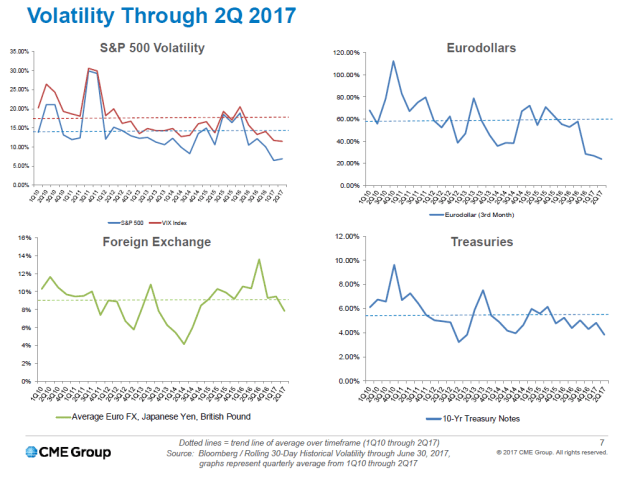
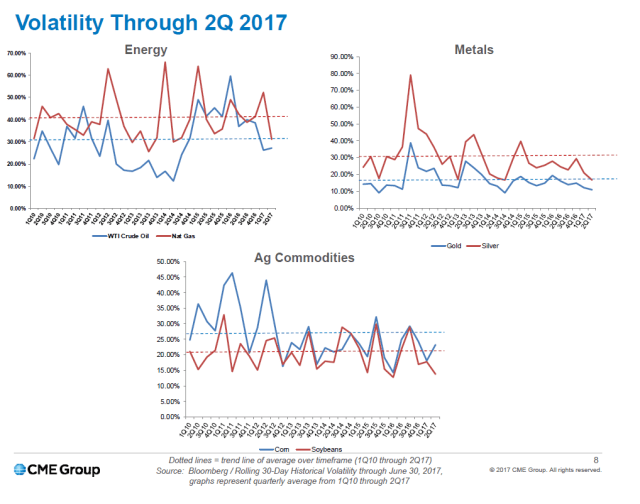
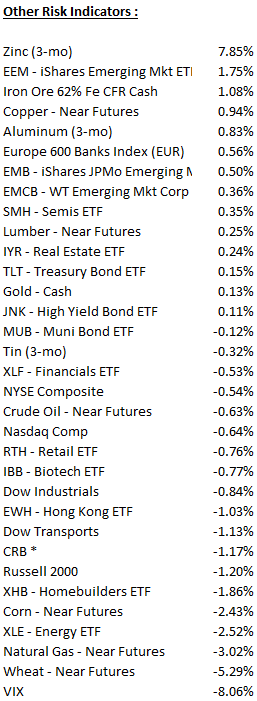
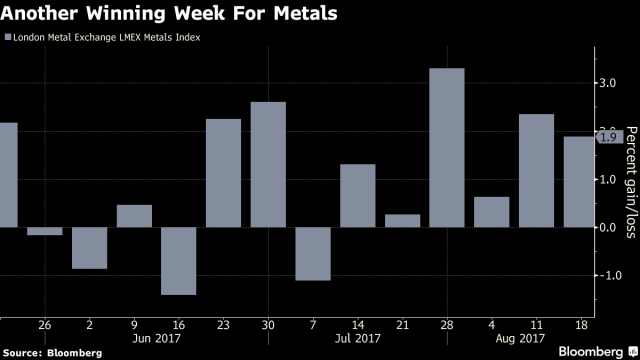
You know our market view. A volatile autumn, culminating in a sharp, quick sell off around or in October that should be bought. It makes us nervous, however, many already believe and are beginning to arrive at the same view.
Finally, we leave you with some more money quotes from the FOMC minutes (via Bloomberg). Looks like they are going to the pull the trigger on quantitative tightening (QT) in September, unless markets become too volatile.
- most market participants now anticipated that the FOMC would announce at its September meeting a date for implementation of a change in reinvestment policy, although a couple of survey respondents expressed the view that the timing could be affected by developments regarding the federal debt ceiling
- The overall labor force participation rate edged up in June
- new home sales in May partly reversed the previous month’s decline.
- The most cited reason for the lackluster loan demand was subdued investment spending by nonfinancial businesses, but banks also reported that some borrowers had shifted to other sources of external financing or to internally generated funds.
- This overall assessment incorporated the staff’s judgment that, since the April assessment, vulnerabilities associated with asset valuation pressures had edged up from notable to elevated, as asset prices remained high or climbed further, risk spreads narrowed, and expected and actual volatility remained muted in a range of financial markets.
- In this projection, the staff scaled back its assumptions regarding the magnitude and duration of fiscal policy expansion in the coming years. However, the effect of this change on the projection for real GDP over the next couple of years was largely offset by lower assumed paths for the exchange value of the dollar and for longer-term interest rates.
- Participants noted that the fundamentals underpinning consumption growth, including increases in payrolls, remained solid.
- uncertainty about the course of federal government policy, including in the areas of fiscal policy, trade, and health care, was tending to weigh down firms’ spending and hiring plans.
- measured aggregate wage growth was being held down by compositional changes in employment associated with the hiring of less experienced workers at lower wages than those of established workers.
- some likelihood that inflation might remain below 2 percent for longer than they currently expected
- they differed in their assessments of whether inflation expectations were well anchored.
- A number of participants noted that much of the analysis of inflation used in policymaking rested on a framework…A few participants cited evidence suggesting that this framework was not particularly useful in forecasting inflation. However, most participants thought that the framework remained valid
- Participants agreed that it would not be desirable for the current regulatory framework to be changed in ways that allowed a reemergence of the types of risky practices that contributed to the crisis.
- Most saw the outlook for economic activity and the labor market as little changed from their earlier projections and continued to anticipate that inflation would stabilize around the Committee’s 2 percent objective over the medium term. However, some participants expressed concern about the recent decline in inflation, which had occurred even as resource utilization had tightened, and noted their increased uncertainty about the outlook for inflation. They observed that the Committee could afford to be patient under current circumstances in deciding when to increase the federal funds rate further and argued against additional adjustments until incoming information confirmed that the recent low readings on inflation were not likely to persist and that inflation was more clearly on a path toward the Committee’s symmetric 2 percent objective over the medium term.
- the extent of current downward pressure on longer-term yields arising from the Federal Reserve’s asset holdings and how this pressure would diminish over time as balance sheet normalization proceeded, the strength and degree of persistence of other domestic and global factors that had contributed to the easing of financial conditions and elevated asset prices, and whether and how much the neutral rate of interest would rise as the economy continued to expand.
- in the Committee’s post meeting statement and its Addendum to the Policy Normalization Principles and Plans. Participants generally agreed that, in light of their current assessment of economic conditions and the outlook, it was appropriate to signal that implementation of the program likely would begin relatively soon, absent significant adverse developments in the economy or in financial markets.
- several participants were prepared to announce a starting date for the program at the current meeting, most preferred to defer that decision until an upcoming meeting while accumulating additional information on the economic outlook and developments potentially affecting financial markets.
– FOMC Minutes from July 25-26 Meeting – Released August 16, 2017