Dropping Like a BRIC: Bovespa Turns Negative For Year

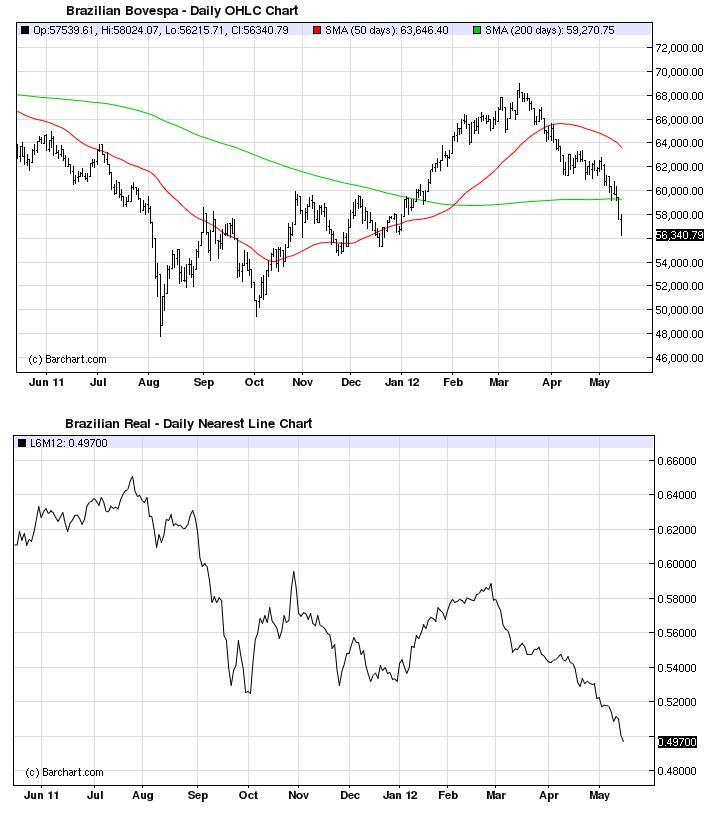
After leading global equity markets for the first two months of the year,  the Brazilian Bovespa has fallen like a BRIC since hitting its 68,970 high on March 14th.  We noted the index broke its 200-day yesterday and with today’s close is negative for the year,  down more than 18 percent from the March high.  Surprising given the currency has weakened significantly, which is big red flag in our book.

No doubt there are many reasons for the slide, but it feels to us, it is more tied to the China slowdown and collapse in the commodity complex.  Though most equity markets are moving with commodities,  note the close movement of the Bovespa with the CRB Index in the chart below.  Listen to the markets and stay tuned.

This is not only a reflection of a commodity-led export sector but also the risk-on/risk-off nature of global markets incredibly pregnant with central bank created liquidity.

(click here if charts are not observable)

Posted in Black Swan Watch, BRICs, Commodities | Tagged , , , , | 5 Comments

Uneasy axis for Paris and Berlin

(click here if video is not observable)

Posted in Euro, PIIGS, Policy, Politics | Tagged , , | Leave a comment

Tale of Two Gaps

We’ve posted many times how a market “abhors a vacuum and all gaps will be filled.” Apple’s opening gap after their latest earnings release has now been completely filled.

Not Amazon’s, however, and it could be the fact the gap up after earnings completed the fill from the gap down last October.  Nevertheless,  Amazon’s stock is stubbornly bid even in this weak market.   Stay tuned.

(click here if charts are not observable)

Posted in Apple | Tagged , , , | Leave a comment

Europe Enters Terminal Zone

Another tough day in Europe as Greece failed to form a government and called for new elections.   We sense Europe has entered a terminal phase of the Euro as we now know it.

No doubt there will numerous ECB interventions, new growth and fiscal pact announcements, which will move the markets one way or another.  As for us, we’re preparing for a long hot summer of discontent in the Euroland.

Today’s Key Data Points
Italy wider by 15.4 bps;
Spain wider by 10.7 bps;
Portugal wider by 29.5 bps;
Ireland wider by 36.3 bps;
Greece wider by 180 bps;
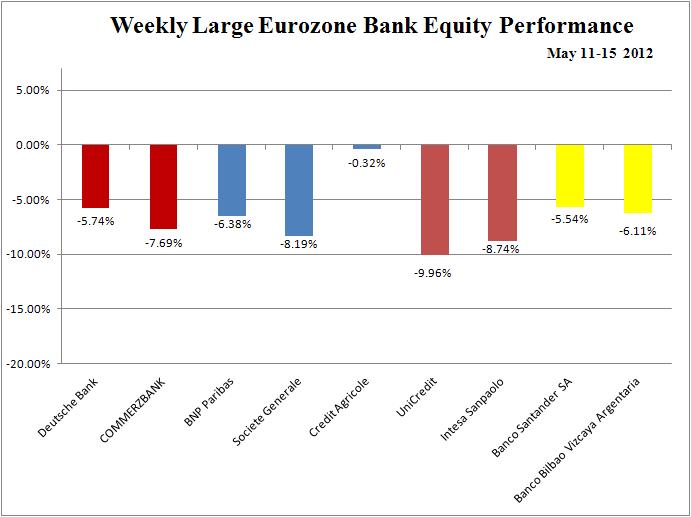
Banks mostly lower, SocGen -4.24% and UniCredit -5.24%;

The charts reflect the change in sovereign spreads vs the German Bund and bank stock performance for the first two days of this week.

(click here if charts are not observable)

Posted in Black Swan Watch, Euro, German Bund, Italian Yields, PIIGS | Tagged , , , , , , , | Leave a comment

“…A Breath Away From the Drachma and Disaster”

(click here if video is not observable)

Posted in Black Swan Watch, PIIGS, Sovereign Debt, Sovereign Risk | Tagged , , , | 1 Comment

All Is Ugly

x/ bonds and the U.S. dollar.

Tough to find a chart with an uptrend.  The Brazilian BOVESPA and Hang Seng broke their 200-day moving averages today.

Commodities are very ugly especially given China’s monetary moves over the weekend, which, generally, would  send them to the moon.

We’re also a bit surprised by the complacency given the fugly charts and waiting for a big flush out before even thinking about getting off the sidelines.   In the interim we’ll scalp to make a few bucks (or lose a lot).

(click here if charts are not observable)

Posted in Chart of the Day, Charts, Commodities, Equities | Tagged , , , , , , | Leave a comment

Tough Day in Euroland

Key Data Points:
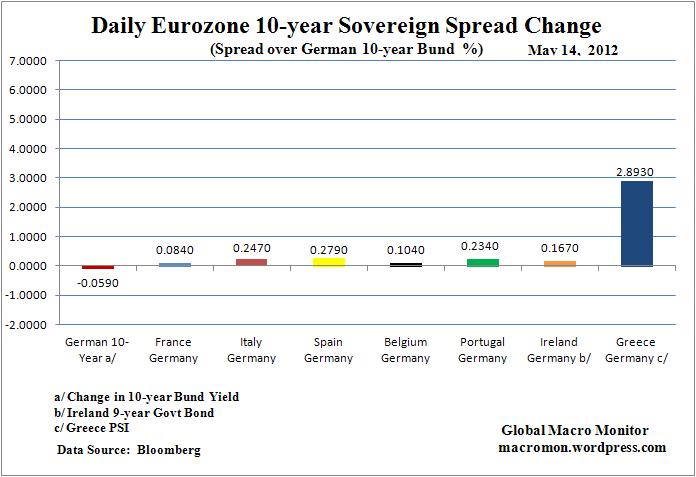
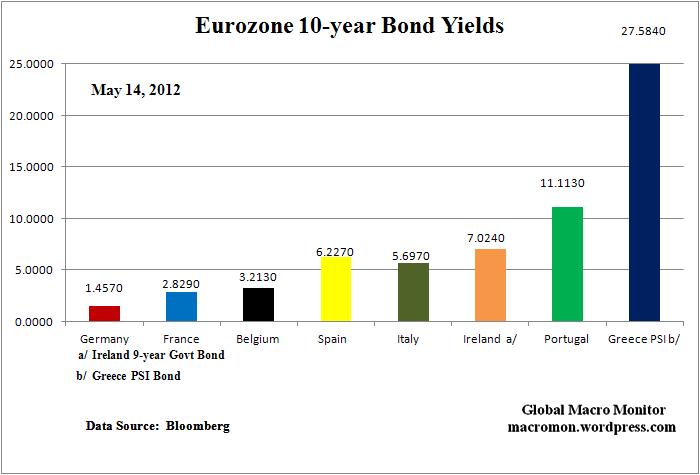
German Bund yield falls 6 bps to 1.457 percent;
France 8.4 bps wider;
Italy 24.7 bps wider;
Spain 27.9 bps wider to 6.23 percent;
Portugal 23.4 bps wider;
Ireland 16.7 bps wider;
Greece 289 wider;
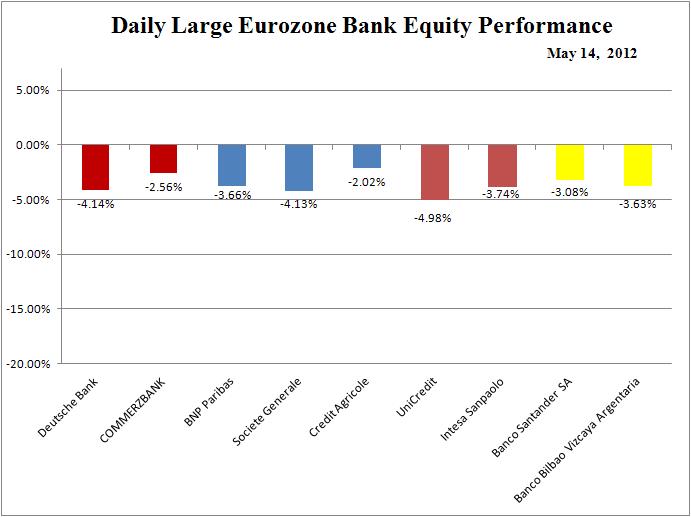
Large Eurozone bank stocks down 2-4 percent;
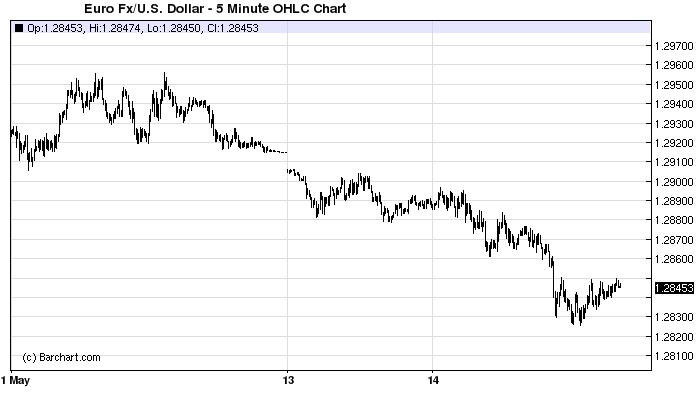
Euro currency down 0.53 percent against the U.S. dollar.

(click here if charts are not observable)

Posted in Black Swan Watch, Euro, Eurozone Sovereign Spreads, Sovereign Risk | Tagged , , , , , , | Leave a comment

The Euro End Game: Simon Johnson Gets It

Run, don’t walk, to the Peter Boone/Simon Johnson Bloomberg piece, As European Austerity Ends, So Could the Euro. 

While most are clamoring for more money printing by the ECB to monetize bad sovereign debt which has no demand,  the Global Macro Monitor has been clear and consistent in its view:   There is a huge difference between money printing in the U.S., Japan, and U.K.  to goose the economy versus money printing ala Bulgaria 1996 to buy sovereign debt for which there is no demand.

Boone and Johnson are one of the few we have seen that understand this point.  They write,

Is there any hope for the euro dream?

One potential way forward would be to create a European- level fiscal union that assumes all national debt, much like what Alexander Hamilton did as first U.S. secretary of the Treasury. That isn’t going to happen in modern Europe. Why would German taxpayers and savers agree to pay for the good times previously enjoyed in Greece, Italy or Spain? Who could even ask them to do so?

As a result, all eyes are turning to the European Central Bank, because some in the euro policy elite still hope loose monetary policy and higher inflation rates will provide an escape hatch. But addressing fiscal issues through monetary means generally doesn’t work, and it does nothing to improve the competitiveness of the struggling euro-area periphery.

There’s more,

The ECB will also lobby for austerity, which would reduce the amount of credit it needs to create. But democratically chosen governments will simply refuse to comply. The central bank will jettison its inflation-fighting credentials, and instead pray that the monetary issuance needed to keep troubled nations afloat isn’t too large and that inflation expectations don’t start to increase.

And here’s where they really nail it,

But here’s the problem: Pursuing such a monetary policy is a recipe for a dangerous loss of confidence in the euro system.

Money demand will be destabilized, in our opinion, when/if the ECB engages in an explicit and full blown monetization of sovereign debt for which the markets have loss confidence.   In fact,  in some ways it already has if bank deposits can be defined as money.

How much demand is there currently for Greek,  Spanish, or Italian euro bank deposits?  During the height of crisis in Q4 2011,  it appeared demand for even German and French euro deposits was about to collapse.

Risky times, indeed.

Posted in Black Swan Watch | 1 Comment

Week in Review

Key Data Points
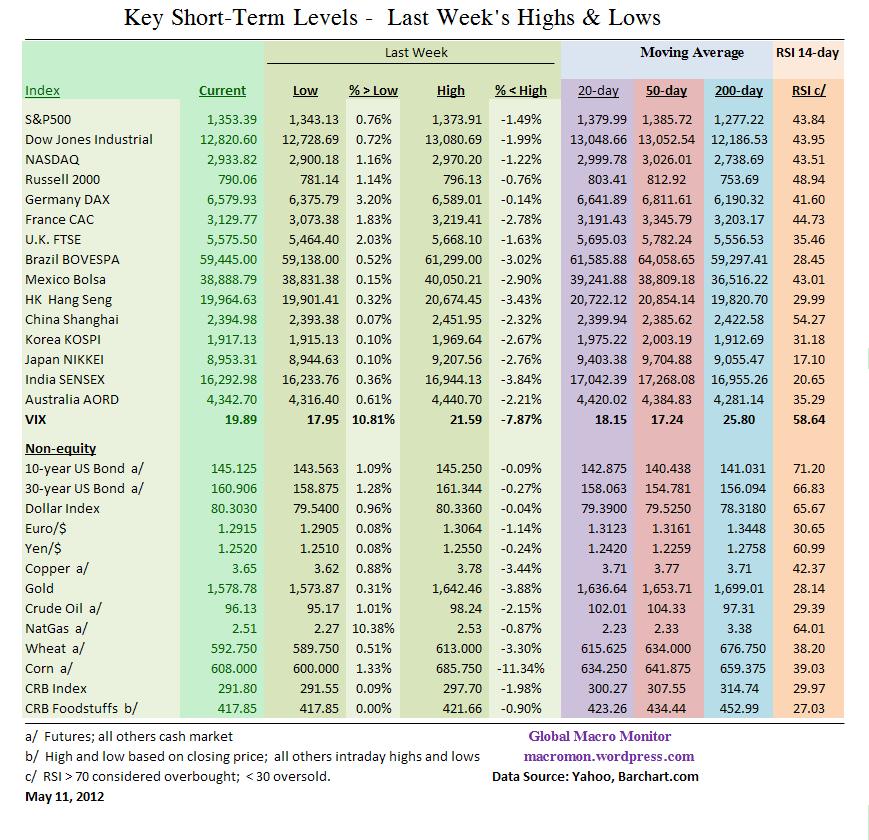
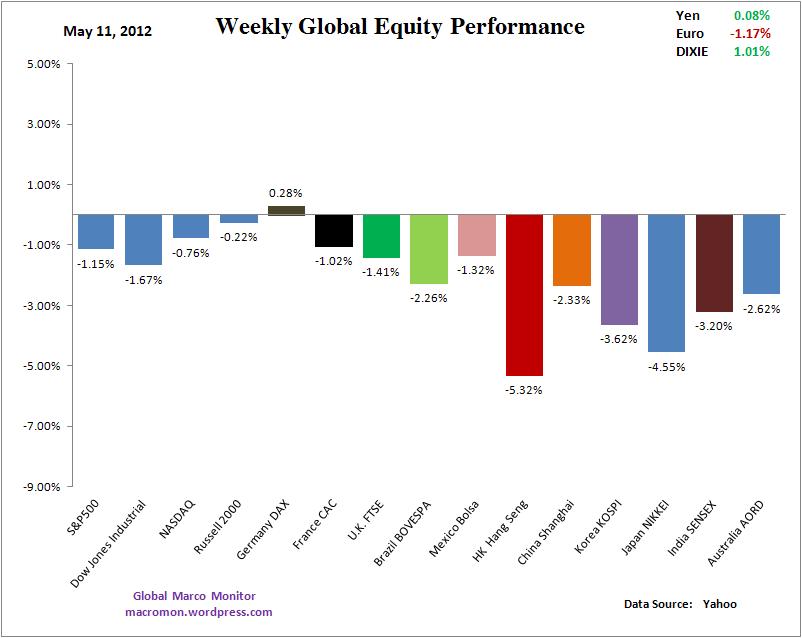
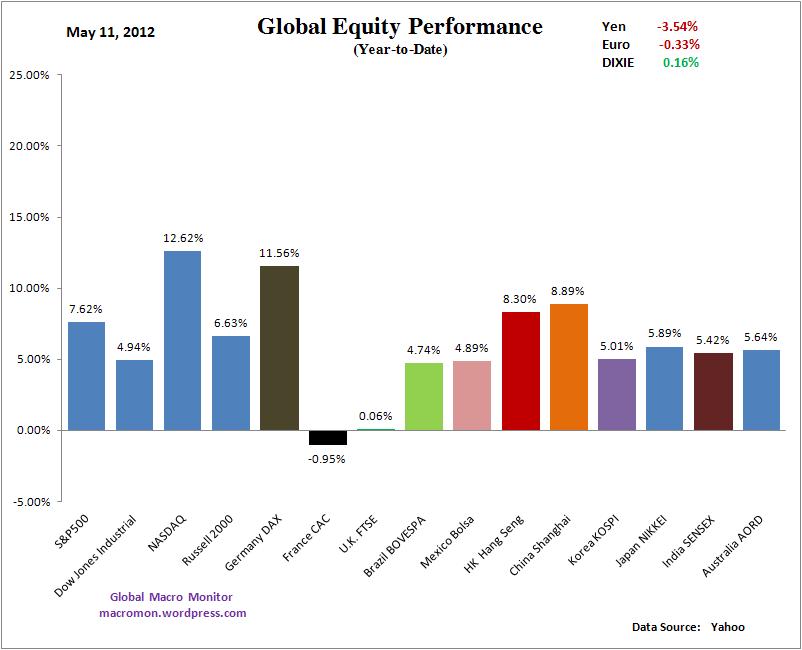
France’s CAC turns negative for the year;
Dow has worst week in 2012;
German DAX bounces after its worst week of the year;
KOSPI, NIKKEI, SENSEX, and All Ords have worst week of 2012;
Hang Seng and All Ordinaries break 50-day moving average;
BOVESPA and Hang Seng flirting with 200-day moving average;
NIKKEI and Shanghai close below 200-day  moving average;
NIKKEI extreme oversold condition with RSI at 17;
Natural gas biggest weekly up move of 2012;
CRB Index breaks key support;

(click here if chart is not observable)

Posted in Week in Review | Tagged , , , , , , , | Leave a comment

Eurozone set for slow recovery

(click here if video is not observable)

Posted in Black Swan Watch, Economics, Euro | Tagged , , | Leave a comment