Jeremy Grantham CNBC Interview

Run don’t walk to CNBC’s extended interview with Jeremy Grantham, chief investment strategist at Grantham Mayo Van Otterloo (GMO).  Click here for the interview.

He begins commenting on the Fed’s attempt to stimulate growth through the  “wealth effect,” noting that academic studies estimate consumers spend 3 percent of stock wealth, which has thus added 2 percent to GDP with the rally off the lows.  He believes the S&P500 fair value is 900, but thinks there may be another 20 percent upside in stocks before the day of reckoning.   On commodities: “we’re running out of everything” and recommends  only buying commodity companies “if they have the stuff in the ground”and to “shoot” the processors.   He is one of the smartest guys out there with a comprehensive big picture view, which has proven correct on a consistent basis.  It’s well worth your time.

Click here for his recent piece, “Night of the Living Fed.”

Posted in BRICs, China, Commodities, Crude Oil, Currency, Equities, Gold, Monetary Policy, Policy, Whales | Tagged , , | 1 Comment

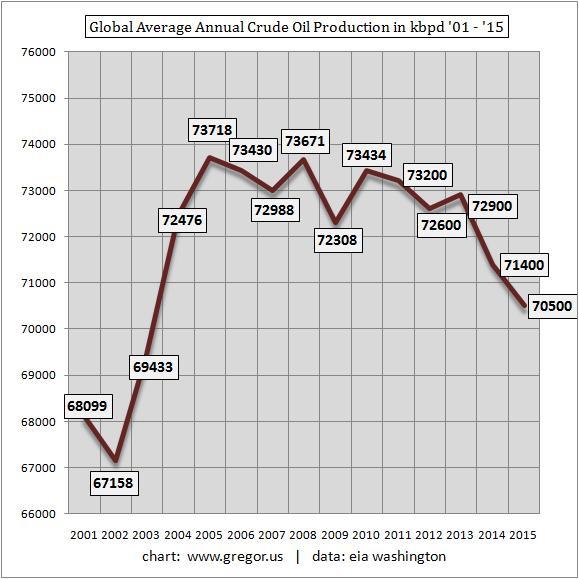
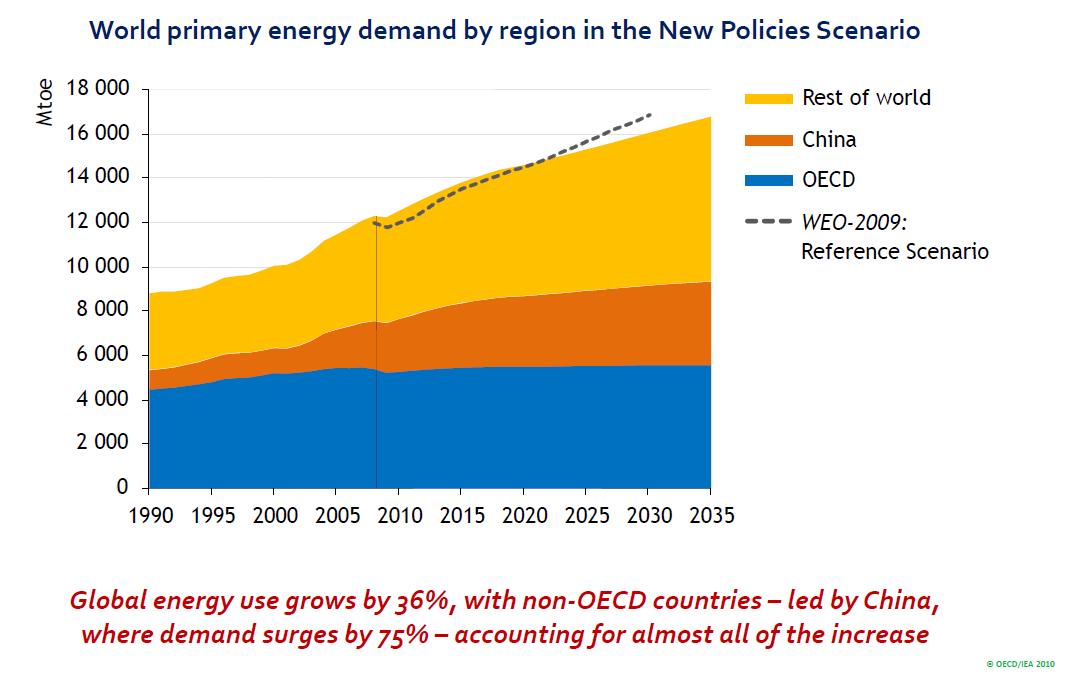
Chart of the Day: Crude Oil Production & Energy Demand

This is a fairly informative graph from Gregor.us, which gives a fundamental sense of which way crude prices are heading in the next few years.   NORF!

Posted in Crude Oil | Tagged , | 4 Comments

Quote of the Day

“Global imbalances lie at the heart of the current recession; failure to address them will abort recovery and lead to currency wars. Gold can play a minor part in the necessary rebalancing, as Mr Zoellick suggests – although history shows that a gold standard would be too deflationary.”   – Robert Skidelsky,  FT
Posted in Bonds, China, Commodities, Fiscal Policy, Monetary Policy, Politics, Sovereign Risk | Tagged , , | Leave a comment

All Eyes on Portugal and U.S. Bond Auctions

After a yield spike of 40 basis points since the launch of QE2 (see chart below), the U.S. is due to sell $16 BN in 30-year bonds tomorrow.  This is interesting in itself, but after a week of increased bond market volatility in Europe’s periphery, all eyes will be on the Portugal’s bond auction.

The country is set to sell EUR 750 MM to EUR1.25 BN of its 4.20% October 2016 and 4.80% June 2020 bonds at Wednesday’s auction.  This is the country’s first bond auction since Europe agreed to create a permanent mechanism to deal with fiscal problems in the euro zone and has raised concerns as to whether core countries,  such as Germany,  will continue to support those in trouble.

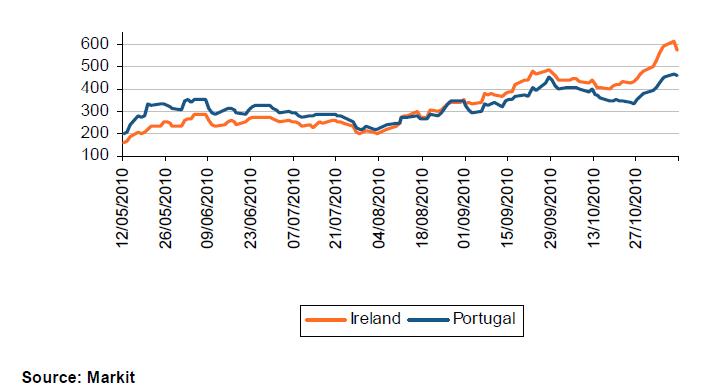
Greece successfully sold Euro 390 MM of 26-week treasury bills today at a yield of 4.82% with a bid-to-cover of 5.15.  Rumors that the ECB was buying Portuguese and Irish government bonds today caused spreads in both sovereigns to tighten as much as 40 bps.   Portugal has the highest concentration of its sovereign debt held by foreigners and thus the most at risk of capital flight and rollover problems (see chart).  Tomorrow should be interesting to see how much the ECB will be forced to participate.   Stay tuned!

Posted in Black Swan Watch, Credit, PIIGS, Sovereign Risk | Leave a comment

Peru to Sell First 40-Year Bond

Wow! Seems like just yesterday Peru’s hard currency debt was trading at 8 cents.  Actually, it was 1993.  Remember President Alberto Fujimora?   Bloomberg writes,

Peru plans to sell 40-year debt in the international market for the first time as part of dollar and sol-denominated bonds it may issue as soon as tomorrow to take advantage of demand for higher-yielding debt.

The government will sell benchmark dollar bonds due in 2050 and at least $500 million more of 7.84 percent sol bonds due in August 2020, according to a person familiar with the transaction, who declined to be identified because terms aren’t set. Bank of America Corp. and Morgan Stanley are arranging the bond sale, the person said

It has been a long volatile cycle with lots of bailouts in between.

Posted in Bonds, Commodities, Sovereign Risk | Tagged , | Leave a comment

Dilma Rousseff – “The last time there was a series of competitive devaluations…it ended in world war two.”

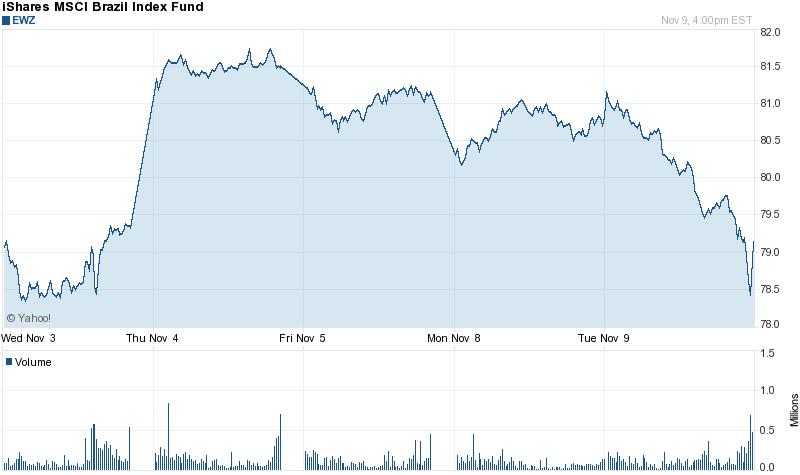
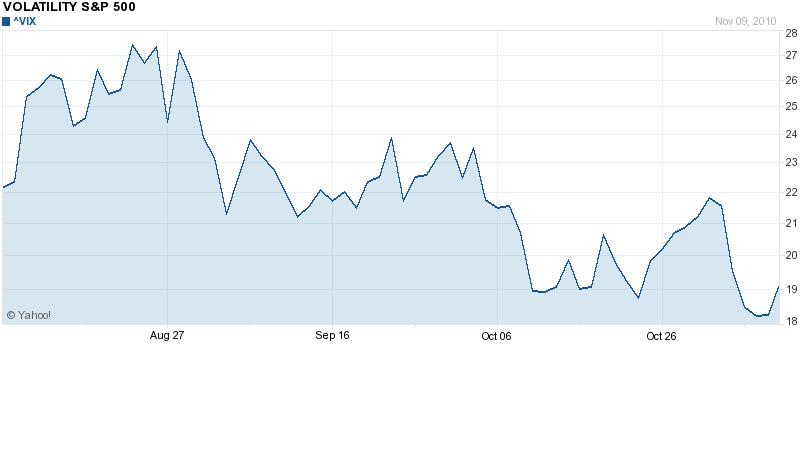
These are harsh words from Brazil’s president-elect Dilma Rouseff, who was speaking at a joint press conference with outgoing president, Luiz Inacio Lula da Silva last Wednesday.  She joins a chorus of world leaders condemning U.S. monetary policy and sets the stage for a contentious G20, which meets in Seoul on November 11-12.  We’ve been buying volatility and expect it to increase going into the meeting as the potential for conflict is not fully priced, although it began with this afternoon’s reversal.  The FT writes,

At a joint press conference with president-elect Dilma Rousseff, outgoing president Luiz Inácio Lula da Silva said on Wednesday he would travel to the G20 summit in Seoul with Ms Rousseff, ready to take “all the necessary measures to not allow our currency to become overvalued” and to “fight for Brazil’s interests”. “They’ll have to face two of us this time!” he said.

Ms Rousseff added: “The last time there was a series of competitive devaluations. . . it ended in world war two.”

Brazil has been an early casualty in the currency wars, as the real has risen by 39 per cent against the dollar since the start of 2009, prompting fears it will hollow out Brazil’s industrial base by making manufactured exports uncompetitive. Data released on Thursday showed September industrial output was 2 per cent lower than in March.


Related Articles
Fed Global Backlash Grows – WSJ
G20 tensions rise over the future of the global economy – Telegraph
Brazil ready to retaliate for US move in ‘currency war’ – FT
Backlash against Fed’s $600bn easing – FT

Posted in BRICs, China, Commodities, Currency, Gold, Monetary Policy, Policy, Politics | Tagged , , , | 1 Comment

G20 Risk: “China says G20 should monitor US Fed” – SMH

Though the ugly bond auction got the headline, there’ s no doubt part of this afternoon’s reversal in many key stocks and commodities was partially caused by concern the G20 may turn into a fiasco as members use the occasion to beat the U.S. like drum over QE2.   The Sydney Morning Herald writes,

China’s state media has issued a new broadside at the US Federal Reserve’s move to prime the US economy, suggesting the Group of 20 should monitor policy shifts by the US central bank.

The Xinhua news agency said in a commentary the Fed was “risking the global recovery by following its own track for economic revival” by spending an extra $US600 billion ($A593.65 billion) buying Treasury bonds to stimulate the US economy.

The comments were published just days ahead of two key summits this week – the G20 meeting in Seoul and the Asia-Pacific Economic Co-operation forum in Yokohama, Japan – that are expected to focus on rebalancing global trade.

“There is an urgent need for the G20 … to set up a new mechanism that effectively monitors the issuer of the international reserve currency, especially when it is not able to carry out responsible currency policies,” Xinhua said.

We picked up some GLD, the gold EFT, on the $40 reversal.  Any conflict in the G20,  continued sovereign debt worries in Europe, and a potential ugly 30-year auction should provide a bid to the metal, which was extremely overbought at today’s high.   The strength of this bounce will be an important test as to whether gold has what it takes to hit our year-end $1,500 target price.

Posted in Commodities, Equities, Gold | Tagged , , , , | Leave a comment

Inside Job

Posted in Equities, Fiscal Policy, Monetary Policy, News, Policy, Politics | Tagged | 1 Comment

Quote of the Day: “Although insolvent, Ireland is still liquid…”

Morgan Kelly writes in today’s Irish Times,

As a taxpayer, what does a bailout bill of €70 billion mean? It means that every cent of income tax that you pay for the next two to three years will go to repay Anglo’s losses, every cent for the following two years will go on AIB, and every cent for the next year and a half on the others. In other words, the Irish State is insolvent: its liabilities far exceed any realistic means of repaying them.

For a country or company, insolvency is the equivalent of death for a person, and is usually swiftly followed by the legal process of bankruptcy, the equivalent of a funeral.

Two things have delayed Ireland’s funeral. First, in anticipation of being booted out of bond markets, the Government built up a large pile of cash a few months ago, so that it can keep going until the New Year before it runs out of money. Although insolvent, Ireland is still liquid, for now…

Since September, a permanent team of ECB “observers” has taken up residence in the Department of Finance. Although of many nationalities, they are known there, dismayingly but inevitably, as “The Germans”.

Related Articles
If you thought the bank bailout was bad… – Irish Times
Ireland is sinking – Economist

Posted in Black Swan Watch, Fiscal Policy, Geopolitical, Sovereign Risk | Tagged , , | Leave a comment

Chart of the Day: Sovereign Debt and Capital Flight

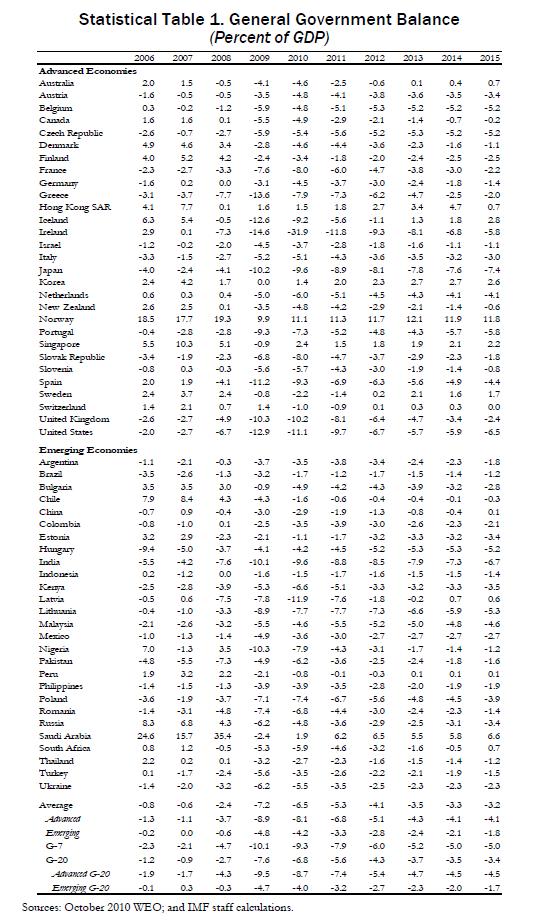
We thought this to be a very informative chart, which shows the percentage of a country’s sovereign debt held by domestic and foreign residents.   In general, the more a country’s debt is held by foreigners the higher the risk of capital flight and a sudden loss of confidence.  This increases “rollover risk” and the need for restructuring and/or bailout.  There is no coincidence Ireland and Greece have a high concentration of their public debt held by foreigners.    The table below on fiscal balances also shows that sovereign debt issues are not going away.

Posted in Black Swan Watch, Bonds, Commodities, Credit, Currency, Fiscal Policy, News, Policy, Sovereign Risk | Tagged , , | Leave a comment