Why is Canadian oil so cheap? – Financial Post

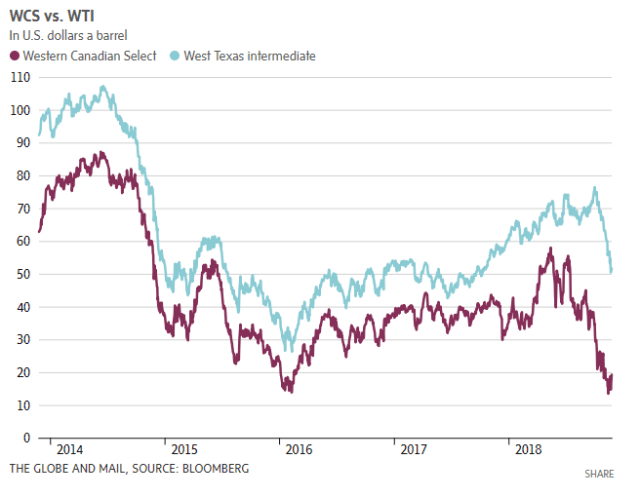
$10 Handle On WCS

Wow!  Canadian crude traded with a $10 handle!

That is frickin’ stunning.  Production is stranded and nowhere to go.  Can’t use oil tankers for storage as they can’t get it to port.

Here’s to wishing we had some caverns in Canada to fill up with WCS.

Canadian Crude

Before 2018, the average price gap for Edmonton Mixed Sweet was about US$4 a barrel, in Bloomberg data going back to mid-2014. It hit a record discount of US$39 this month.

Canada’s lighter grades are getting slammed by the same forces affecting heavy crude – namely, a pipeline bottleneck that’s made it tougher to ship product, along with refinery outages during maintenance season in the U.S. Midwest. As a result, an increasing amount of crude is being transported by rail and truck. Some executives in the oil patch have also called on the Alberta government to intervene and impose production cuts, aimed at bolstering prices.  – The Globe and Mail, November 27th


Hat Tip:  The Polish Rifle, Dougie Skrypek

Posted in Crude Oil, Uncategorized | Tagged , , , , | Leave a comment

Geraldo’s Powerful Rebuke

Posted in Immigration, Uncategorized | Tagged , | 2 Comments

In Science We Trust!

Posted in Quote of the Day, Uncategorized | Tagged , | 5 Comments

What are Apple’s core problems? – FT

The iPhone maker has been hit as investors worry over sales and US-China tensions

► Subscribe to FT.com here: http://bit.ly/2GakujT

Posted in Apple, Uncategorized | Tagged , | Leave a comment

Week In Review – November 23


Summary

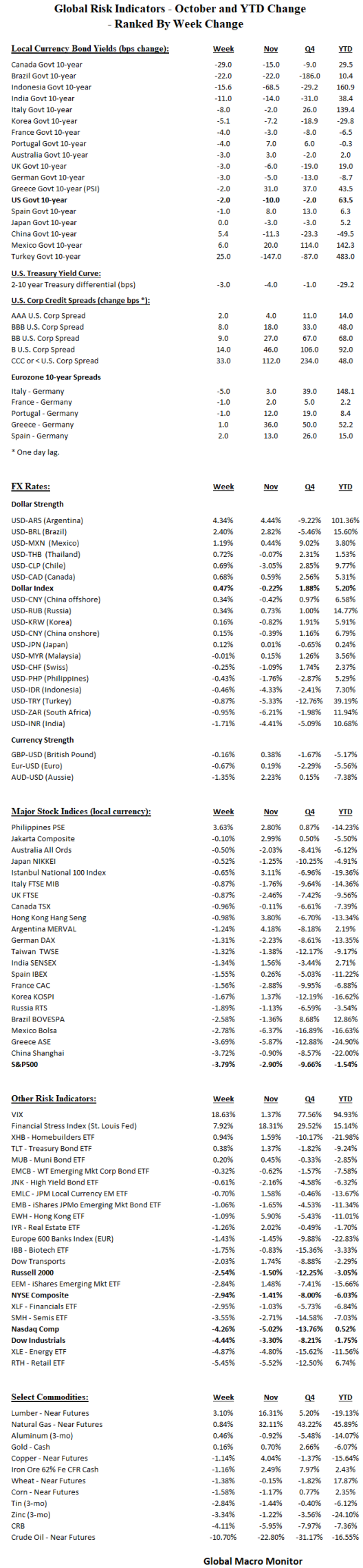
  • Ugly Thanksgiving week for equities. S&P led all major indices lower
  • Philippines stocks were the only major index in the green as stocks broke out of a range on positive sentiment due to lower oil prices and expected inflation
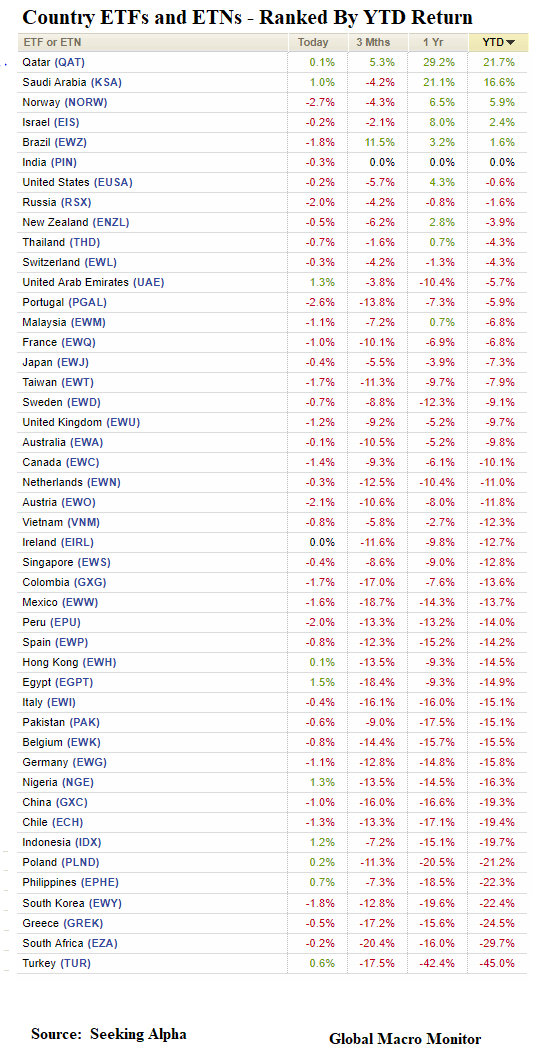
  • Only Brazil, Argentina, and India stock are green YTD, and only in local currency terms.  Negative, some extremely, when currency weakness is factored
  • Table 2 illustrates 2018 has been a horrendous year for world stocks in dollar terms
  • The U.S. 10-year yield was only able to eke out 2 bps on the big sell-off in stocks
  • Credit spreads continue to blow out and November is the first month of credit weakness confirming stock weakness
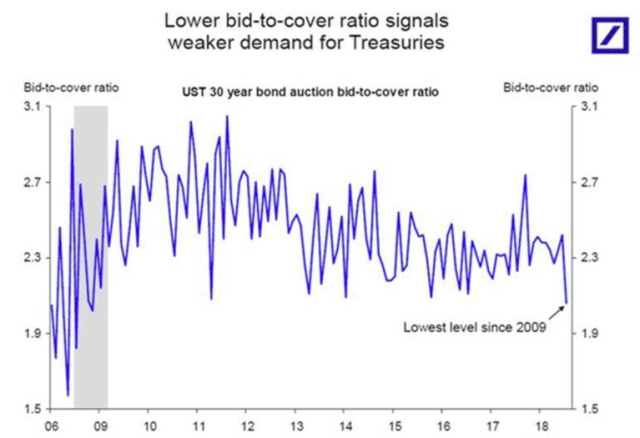
  • Chart 2 confirms our prediction the demand for Treasury bonds is fading while supply is increasing.  Could be a big problem.  Watch this space
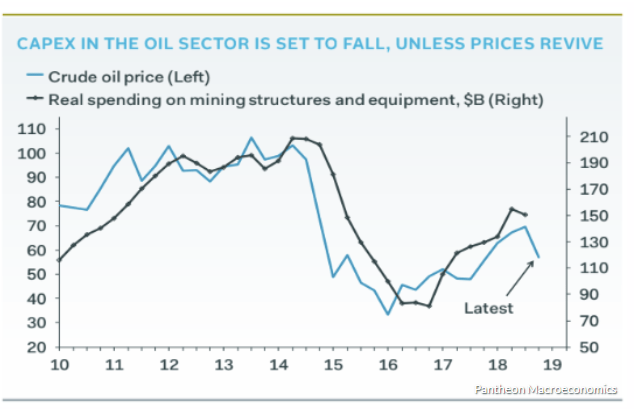
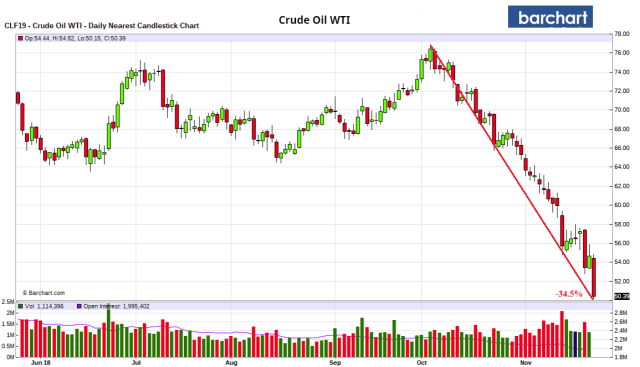
  • Crude oil, down over 10 percent on the week,  is way oversold but looks like a $40 handle is a done deal next week.  Oil is a trending machine.  Stay with trend and wait for the turn before even thinking about it

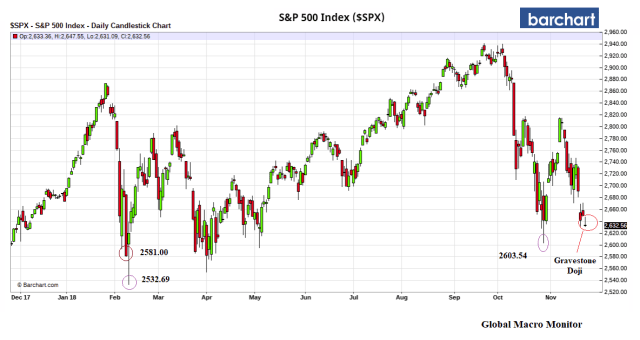
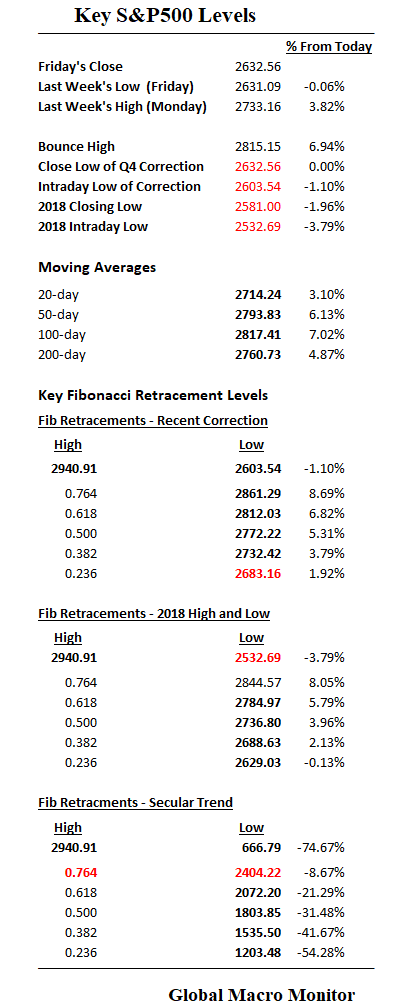
Commentary:  Watching for some stability to return to stocks.  The S&P Q4 correction intraday low needs to hold at 2602.54, which we have little confidence it will.  Watch for a close below 2581.00, the 2018 closing low.  That will increase the probability the 2018 intraday low of 2532.69 to around 90 percent.   If that fails, stocks are in deep trouble.

Credit spreads also need to stabilize.   Too many BBB bonds out there and feels like the floor is ready to give way.

Treasury yields are not behaving as they should — moving lower with stocks — as the technical position is out of kilter.  New big issuance with declining demand from past buyers is not being absorbed by haven flows.   We believe the Treasury market is crowding out all other assets and major factor of weakness in risk assets.

Note the divergence in Chart 6 of yields and oil prices.  Many expect that to close, which it may a smidgeon,  but not as the bond bulls expect.   We are in a different world:  a different fiscal regime and different buyers.

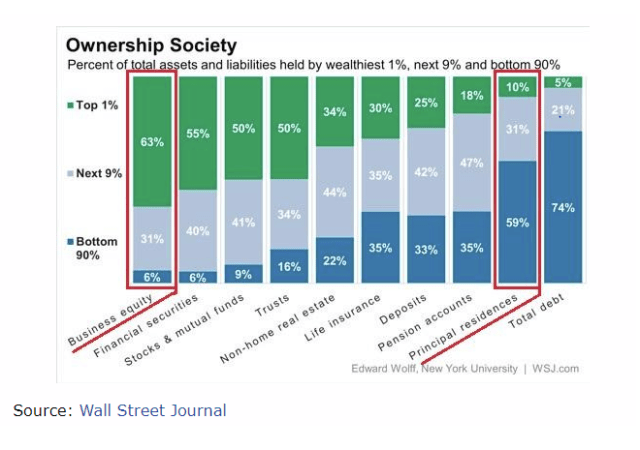
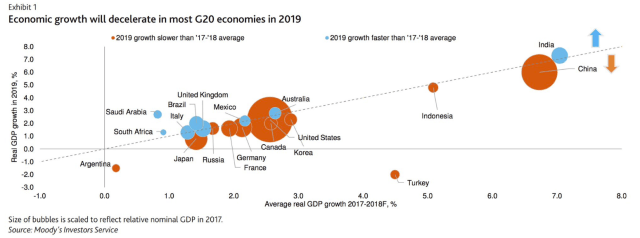
Chart 3 is a big flashing orange light that political instability is coming.

We expect at least an effort to bounce risk assets but it should be a feeble one and chance to sell.  BEARISH. 


Table 1
Week_Chart_1


Chart 1

Week_Chart_2

Chart 2

Week_Chart_3


Chart 3

Week_Chart_4

Chart 4

Week_Chart_7


Chart 5

Week_Chart_5


Chart 6


Chart 7

Week_Chart_6


Table 2

Week_2018_ETFs


Table 3

Week_Table


Posted in Uncategorized, Week in Review | Tagged , , , , , , | Leave a comment

The Interest Rate Paradox In Emerging Markets

In advanced economies, interest rates fall during recessions as investors replace risky assets such as stocks with safe assets such as bonds and cash. This makes fiscal stimulus easier. Everywhere else, recessions create fears of debt default or debt monetization through rapid inflation. Sometimes savers pull their money out of the country to buy foreign assets, causing interest rates to rise.   –  Barron’s,  November 21, 2018

Posted in Emerging Markets, Interest Rates, Uncategorized | Tagged , , , | Leave a comment

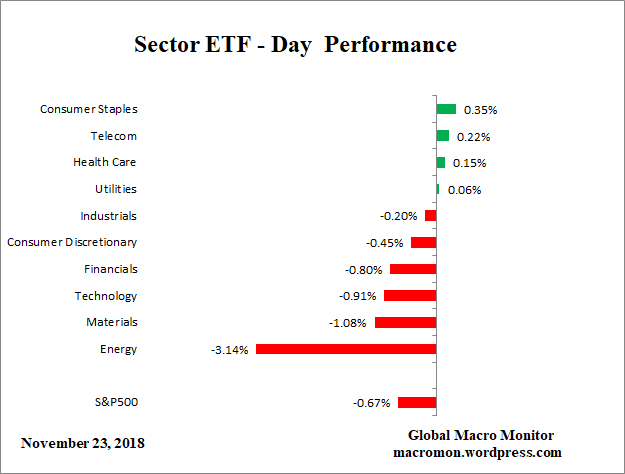
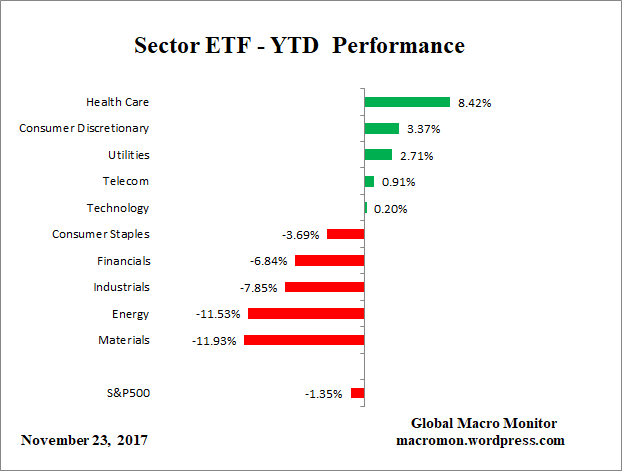
Sector ETF Performance – November 23

Sector_ETF_D

Sector_ETF_W

Sector_ETF_M

Sector_ETF_Q

Sector_ETF_YTD

Posted in Sector ETF Peformance, Uncategorized | Tagged | Leave a comment

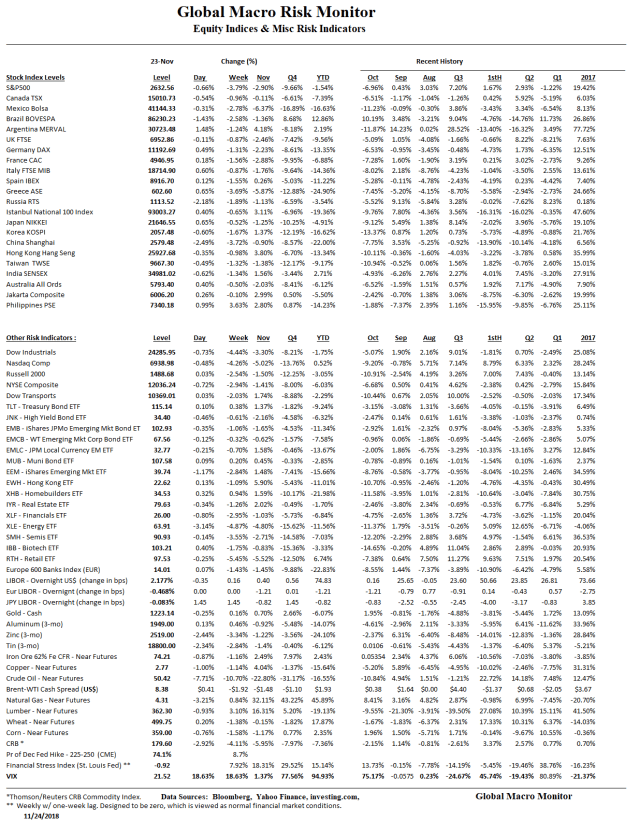
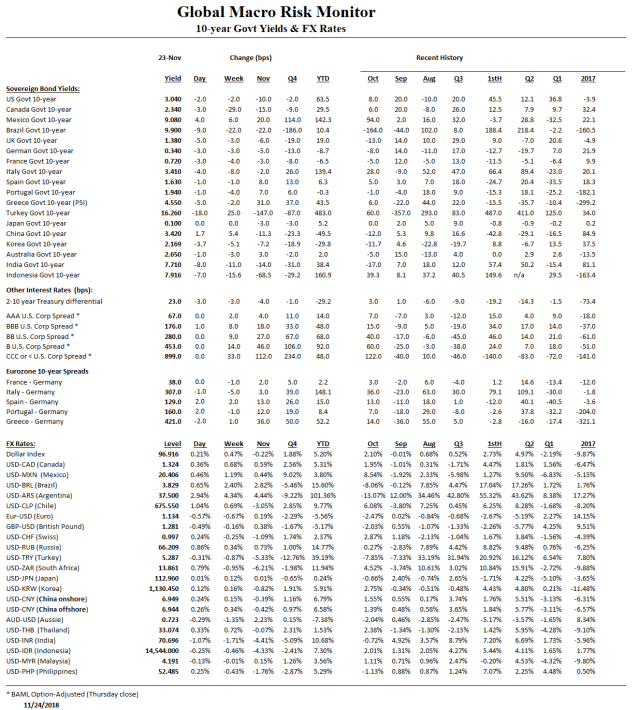
Global Risk Monitor – November 23

RiskMon_1

RiskMon_2

Posted in Daily Risk Monitor, Uncategorized | Tagged , , , , , | Leave a comment

Ten Good Weekend Reads

Here comes a $40 handle on crude!

Crude

  1. Why good forecasters become better people – FT
     To make predictions, keep an open mind and understand what you don’t know
  2. Trump, Xi Signal Readiness for Trade Talks Ahead of G-20 Meeting – Bloomberg
  3. The assassination that could’ve sparked World War III – Wash Post
    JFK was almost assassinated during the Cuban missile crisis
  4. Recalculating GDP for the Facebook age – FT
    The true impact of social media? Economists have a different angle
  5. 10 things we learned from the midterms – The Hill
  6. In Race for Global Power, U.S. and China Push Nations to Pick a Side – NY Times
  7. Tax Cuts and Spending Will Be the Next Crisis Defense, OECD Says – Bloomberg
  8. Italy May Be ‘Sleepwalking Into Instability,’ E.U. Says, and Weighs Penalty – NY Times
  9. Beyond the AI Arms Race – Foreign Affairs
    America, China, and the Dangers of Zero-Sum Thinking

The Thucydides Trap


Posted in Uncategorized, Weekend Reads | Tagged , , | Leave a comment

The Magic Economics of Gambling

Posted in Economics, Uncategorized | Tagged | Leave a comment