Swan Lake – June 6

The swans were relatively well behaved today.  Watch Brazil.

Significant move in Italian 2-year, up 35 bps, resulting in big curve flattener.  Yields up across the board in Europe as ECB making noises QE is about to change.

Mario Draghi is on the verge of a watershed moment in the European Central Bank’s efforts to leave behind its crisis-fighting monetary policy

Chief Economist Peter Praet on Wednesday signaled the bank’s first formal round of talks on when to stop buying bonds is imminent. That would start the process of bringing down the curtain on stimulus efforts that have resulted in almost 2.5 trillion euros ($2.9 trillion) of bond purchases since 2015.  – Bloomberg

The markets dismissed, though German and U.S. 10-year yields spike, the significance of what the ECB is signalling but that is what markets do when they are in bullish mode.  The sun still comes up even with increasing risk and it follows must be time to hit the beach.

The risk markets want to move higher.


SwanLake_Table


Posted in Black Swan Watch, Uncategorized | Tagged , , , , , | Leave a comment

Italy’s New Government: Who’s Who?

After weeks of negotiation the Italian Government is ready to get to work. But who are the key players?

… READ MORE : http://www.euronews.com/2018/06/06/it…

Posted in Italy, Politics, Uncategorized | Tagged , , | Leave a comment

Swan Lake – June 5

Swans behaving badly + VIX down = Complacency reigns

Jun5_picture.png


SwanLake_Table

Posted in Black Swan Watch, Uncategorized | Tagged , , | Leave a comment

QE And The Laurel vs. Yanny Distortion

Interesting clip from Wired,  interviewing  a neuroscientist explaining how people get the sound Laurel and Yanny name so different.

The interview is profound if you take the principles and apply them to the markets.  It’s all about reading the correct signals  — such as low or high frequencies –to determine what you hear.

Money Quotes: 

Neuroscientist:  It sounds a lot like Yanny to me…The clip is distorted so it has a lot of high frequency information in it, more than usual. and I just might be better at hearing these high frequencies than you…

Q:  What about hearing Laurel one day and Yanny the next?  

Neuroscientist:  That is mysterious and plays into our expectations…In psychology they call this a bistable illusion…

The difference between what speech sounds we hear depends on what frequencies are in those sounds…The difference between Laurel and Yanny is whether the information is low frequency, like Laurel,  or high frequency, like Yanny. 

Bistable illusion, indeed.  I call it being whipsawed.

QE Effects

Our biggest critique of quantitative easing (QE) is that central banks have drowned out, or, at best, distorted market signals, making it much more difficult to read, access, trade, and invest in the markets.

The distorted market signals also result in extremely divergent market views and perceptions.   You see a Laurel market,  I see a Yanny market.

Some don’t care, however, and just want to make money, and to make money, you have to be in the game.  As Chuck Prince infamously said,

As long as the music is playing, you’ve got to get up and dance, We’re still dancing  – Chuck Prince, former Citigroup CEO, July 2007

That is probably where most of the market is, and certainly the modus operandi of Wall Street.   It’s all about the year-end bonus, Che.

Distorted Signals

What is a U.S. 10-year bond yield at 3 percent signalling when nominal GDP is growing at 5 percent plus?    What is the market signal of Portugal’s 10-year sovereign yield trading 117 bps through the U.S. 10-year note yield?  Or a 10-year JGB at 5 bps?   Does anyone care anymore?

It’s difficult to ascertain considering  how the Fed and other central banks, who are not price sensitive,  are majority owners in the U.S. and other sovereign yield curves.

Treasury Auctions

Even though QE ended in the U.S. in 2014, its legacy still hangs around in the Treasury auctions.   The Fed, for example, took down around 20 percent of the U.S. Treasury auctions in May.

In order to constrain the direct financing of the Treasury by the central bank,  the Federal Reserve Act only allowed the Fed to buy and sell Treasury securities in the secondary market.  That changed after the great financial crisis (GFC) as the Fed’s SOMA portfolio regularly participates in the auctions, though with noncompetitive bids,  as notes and bonds in their portfolio mature and a portion are reinvested back into the market.  Technically, SOMA participation in Treasury auctions does not constitute direct financing.

Nevertheless, the Fed’s participation in the auctions still distorts the market clearing yield by allowing the U.S. government to issue more notes and bonds at a lower yield.

QT Will Start To Bind Fed Participation In Auctions

The quantitative tightening caps  will  step up to $30 billion per month in September and begin to exceed the amount of notes and bonds maturing in the SOMA portfolio.   That is the Fed’s participation in the Treasury auctions will begin to wane, and in many months going forward,  will be net zero.

We suspect when the market internalizes that the Fed will be out of most of the monthly auctions, interest rate volatility will increase at the same time the Treasury is ramping up supply.  Our view of much higher long-term yields will then likely be realized.

As always,  we may be wrong.

Stay tuned, Yanny.


Posted in Interest Rates, Monetary Policy, Uncategorized | Tagged , , , , , | 14 Comments

Swan Lake – June 4

The recovery in the European periphery continues.

Sell-offs when markets are in bullish mode now seem to act as an centripetal force to move financial assets back to their central point of bullish with great velocity.  Similar to a gravity assist,   the sell-offs bring in buyers which accelerate and propel markets to higher levels but often overshooting their fair value.

Euro Banks

The recovery is lagging in Europeans banks, which are woefully undercapitalized.  We ran sum numbers over the weekend and, ironically, found the Italian banks are better capitalized than many French and German banks.

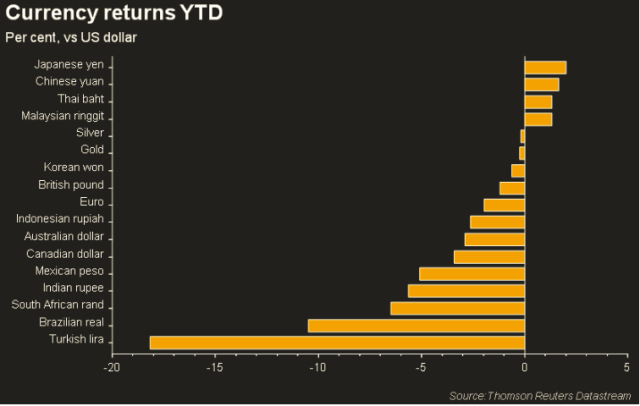
EM currencies were stronger today x/ Mexican Peso, which may now be a “trade war” proxy.

Havens sold off.

Financial markets want to be bullish.


SwanLake_Table


Posted in Black Swan Watch, Eurozone Sovereign Spreads, Uncategorized | Tagged , , , , , , | Leave a comment

Really, How Was That Employment Report?

Summary

  • Friday’s payroll numbers were very good, slightly above the trend increase over the past 92 months, but does not live up to the hype
  • Job creation during President Trump’s first 16 payroll reports is almost 500k lower than under President Obama, or 14 percent fewer jobs created
  • Private sector job creation is 237k lower, or 7 percent fewer jobs created
  • Lower job growth with stronger growth reflects increasing labor productivity and a tighter labor market
  • Average hourly earnings have grown 3.58 percent under President Trump, slightly outpacing the previous administration’s sample by 11 bps
  • Mining sector employment has rebounded sharply under President Trump, primarily the result of employment increases in support activities for oil and gas operations, much of which can be attributed to higher oil prices
  • Employment gains in food manufacturing, and breweries and wineries make up 25 percent of the manufacturing job increases under President Trump
  • Fabricated metals and machinery manufacturing total almost 60 percent of the jobs created in manufacturing over the past 16 months
  • Portfolio managers, bricklayers, construction workers, truckers, plumbers, and WalMart workers are experiencing robust wage gains under President Trump, though retail warehouse clubs and supercenters have suffered job losses
  • The jury is still out on the effects of the tax cut on employment but hardly lives up to the administration’s hype

Wow!  That was one hot employment number on Friday, no?   The best ever?

Here’s a tweet from the New York Times today citing a post on the paper’s TheUpshot blog.  President Trump was all over it in his tweetfest today.

Yikes!  Those euphoric headlines signal an economic top to us, they always do.  Furthermore, they are completely absurd.

We perceive the Friday data as “this is about as good as it gets.”

How Good? 

So, really, how good were the numbers?   Relative to what, we ask?

In an absolute sense, the Friday’s jobs data were very good.  They were extra tasty because the report outperformed expectations by 35k nonfarm payroll jobs.  And who wouldn’t like a 3.8 percent unemployment rate?

The Trend Continues

Relative to the almost eight-year trend of 92 straight months of positive job creation?  Slightly above average.

The chart below illustrates Friday’s  223k increase in nonfarm payrolls was 24k above the 199k average monthly change of nonfarm payrolls since October 2010.


Jun3_Payrolls Chart

The sweet spot?

We worry the economy is starting to run up against labor constraints, and our concerns are magnified by the propensity or leanings of this administration to introduce distortions into the economy, such as trade tariffs.   The sweet spot was during a period of more slack in the labor market.

President Trump’s Comps

Listen carefully to President’s Trump informal presser after his meeting with the North Korean spy chief on Friday, and you will hear his comparables are almost always relative to previous administrations.  It is the case whether it on the economy or with respect to foreign policy.

Therefore we compare the data in President Trump’s first 16 payroll reports (February 2017 to May 2018) with the last 16 reports of President Obama’s administration  (October 2015 to January 2017).  Our analysis is an extension of last month’s comprehensive post,  Deconstructing The U.S. Jobs Market.

Now we let the data speak.

Total Nonfarm Jobs Created 

During the first 16 months of President Trump,  the economy has created 2.966 million new jobs compared to President Obama’s 3.452 million, or 486k fewer jobs  The private sector under President Trump has created 2.953 million jobs versus 3.180 million in the previous administration.

Even though the economy has grown almost 1 percent faster on an annual basis during the first five quarters under President Trump,  job creation is lower.  The positive is that the labor productivity must be increasing.   However, it may be an indication the economy is also running up against labor constraints.

Average hourly earnings growth over the two 16-month periods have roughly been the same, with President Trump’s 3.58 percent earnings growth outperforming by 11 bps.


Jun3_Payrolls Table

Industry Job Creation 

Job creation during President’ Trump tenure has outperformed in 6 of the 13 private sector industries, most notably in the mining and the manufacturing sector.

Most of the recovery in the mining sector is the result of higher oil prices, and almost all the gains have occurred in support activities for oil and gas operations.   This was the same sector that lost most of the mining jobs during the Obama sample due to an ugly bear market in crude oil.

President Trump’s economy has underperformed with respect to average hourly earnings growth in 9 of the 13 private sector industry groups.  Wage growth in financial activities has significantly outperformed under Trump and all other sectors.   The populist tension between Wall Street and Main Street continues.


Jun3_Payrolls Growth Table


Manufacturing and Mining

At a more micro level,  almost 25 percent of the manufacturing job increases under President Trump has been in food manufacturing, and beer pubs and wineries.  About 60 percent of manufacturing employment increases has been in fabricated metals and machinery.

There has been de minimis job creation in the poster children of manufacturing, such as the steel industry, and actual job losses in the auto industry.

Note also the 20k increase in oil and gas machinery, which reflects a further boost to job creation of high oil prices.

However, a higher oil price is a zero-sum game as it reduces employment in other sectors, primarily related to the consumer, as real incomes decline.  We estimate the average driver will pay an additional $400 per year for gas if prices remain up here, which consumes almost of the net income gain from the tax cuts.

There have been only 2,500 new coal mining jobs created under President Trump but this does represent a reversal of the job losses under President Obama.


Jun3_Selected Industry Job Creation


Who Is Getting A Raise?

The following table illustrates the average hourly earnings increase in various industry groups.  Portfolio managers and their entourage are happy as are bricklayers, construction workers, truck drivers and plumbers who are experiencing robust wage growth.

The 5 percent average hourly earnings growth at general merchandise stores, such as WalMart,  the largest private sector employer in many states, corresponds with a 12.4k loss in jobs at warehouse clubs and supercenters (see above table).  This either indicates a very tight labor market,  the impact of minimum wage increases,  social and political pressures on wages, technology, and the Amazon effect, or all of the above.

The auto worker continues to get hammered.  It could be one reason why President Trump is taking such a hard line in the NAFTA negotiations, and an indicator that compromise is not going to be an option.


Jun3_Avg Hourly Earnings Growth


Tax Cuts 

Finally, we take a quick look at the macroeconomic impact of the tax cut.

Thus far, it is mixed, and hardly lives up to the hype we see some in administration touting.  It is still early in the game, however.

Nevertheless,  job growth in the first five months of 2018 is doing better than the prior two years, but lower than 2015.   Average hourly earnings growth, though higher than the first five months of 2017, is lower than the last two years of the Obama administration.

Jun3_Tax Cut Payroll Growth


Jun3_Tax Cut Average Hourly Earnings Growth


Posted in Employment, Uncategorized | Tagged , , , | 18 Comments

QOTD: Emerson On Trading

Internalizing this Ralph Waldo Emerson quote is essential for every successful trader.

QOTD_Emerson

Posted in Quote of the Day, Uncategorized | Tagged , | Leave a comment

The Cycle of Market Emojis

Love this.  Based on the cycle of market emotions.

Wonder if there is an algo out there that trades on emojis?  Would not doubt it.

Hat tip Kazonomics!

Long Only

Emoji_Longs

Short Sellers

Emoji_Shorts

Posted in Algos, Equities, Uncategorized | Tagged , | Leave a comment

Week In Review – June 1

Summary

  • The week began with a spike in volatility on Italian politics, then again on Thursday on trade war fears
  • Stocks remain resilient, firming up Friday with the solid employment numbers
  • S&P500 continues to trade in a 40-point range, stuck between the 31.8 Fibo on the upside and the 100-day on the downside
  • Italian and the euro periphery bonds rebounded sharply after Monday selloff
  • Brazil and Mexico 10-year yields up 37 and 20 bps, respectively
  • Corporate credit a bit weaker
  • Latin currencies weaker
  • Dollar index (60% Euro) flat
  • Turkish lira recovered slightly
  • Global equities flat to weakfish
  • NASDAQ and U.S. small caps continue to outperform
  • Banks weaker and may be worried of spillover from Europe and decline in Deutsche Bank shares
  • Crude oil weaker

Upshot:  The U.S. stock market wants to trade higher but being buffeted by tighter U.S. monetary policy and the gathering macroo swans.  Strategy – Rental longs only with strong predisposition to sell and short at higher prices.  Could get a nice run to 2800 if the S&P500 breaks above 2743.  Patiently waiting for the break.

Week_Chart_1


SwanLake_Table


Week_2018_ETFs

Week_Table

Posted in Black Swan Watch, Uncategorized, Week in Review | Tagged , , , , , , , | Leave a comment

G7 finance ministers speak out against U.S. trade tariffs

Canada’s Finance Minister says tariffs will hurt citizens in US and in Canada… READ MORE : http://www.euronews.com/2018/06/02/g7…

Posted in Economics, Trade War, Uncategorized | Tagged , | Leave a comment