Sources of U.S. Petroleum Imports

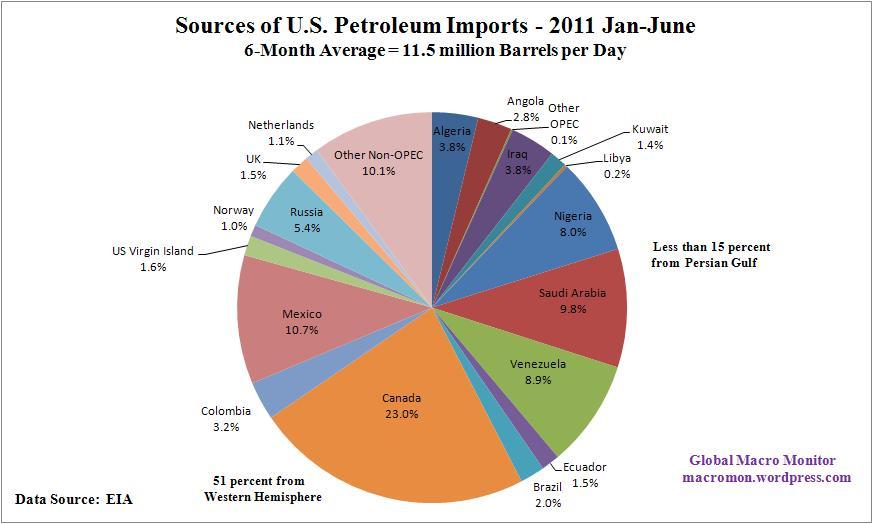
Ask most Americans the major source of U.S. crude oil imports and they will probably respond the Persian Gulf.   Wrong!  The chart below shows the U.S. imports less than 15 percent from the Gulf.  More than 5o percent of petroleum imports come from the Western Hemisphere and is sure to grow.

(click here if chart is not observable)

Posted in Charts, Crude Oil | Tagged , , , | 2 Comments

Short-term Tricks for a Long-term Structural Crisis

Good interview with Jeffrey Sachs on CNBC today.  He nails it 1:26  into the interview:

We are fighting a long-term structural crisis with short-term tricks, like stimulus and temporary tax cuts. It’s not working…. The solution is actually to pull back from all of this Keynesian talk and how can we tweak aggregate demand, to stop thinking about this as a little blip.  

Sound familiar?

Posted in Earnings, Fiscal Policy, Monetary Policy, Quotes | Tagged , , | Leave a comment

Brazil’s Roussef warns Europe on austerity

(click here if video is not observable)

Posted in Black Swan Watch, BRICs, Euro, PIIGS, Policy, Sovereign Debt, Sovereign Risk | Tagged , , , | Leave a comment

Apple’s Textbook Bounce Saves the Market

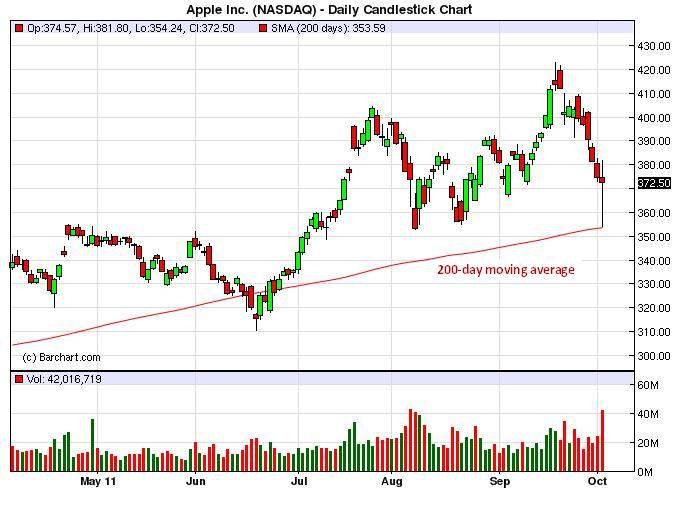
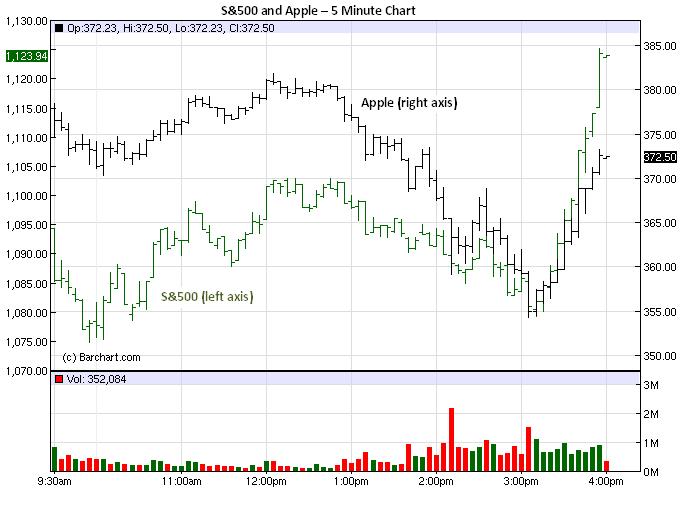
To those who “don’t believe in the technicals” we suggest they take a look at today’s Apple chart. Like a superstar baseball player who consistently hits 75 home runs per year and is considered to have a “bad year” with 65 home runs,  today’s introduction of the new iPhone appeared to disappoint the tech set and they sold it down hard.   The stock is a darling of the fast money crowd and largest position of many of the well known hedge funds.

The bulls were waiting to pounce at the 200-day moving average, however, and were able to rally the stock $18 into the close.  The classic technical bounce rescued the S&P5oo from its afternoon swoon and failed rally.  The shorts were forced to cover generating a nutcracking 40 point S&P rally in the last 45 minutes of trading.

News from Europe the cause of the bounce?  Possibly, but we don’t think so.  In fact, we saw what a bank bailout by a national government did to the sovereign credit of Ireland.   The Europeans  really need to get the banking capitalization right or this mess is going to drag on and drag us down for a long time.    The core Euro countries have to be careful as they move to recap their banks and insure it does not cause their sovereign credit rating to deteriorate.

So there you have it, folks.    The key metrics on the downside are now S&P500 1075 and Apple’s 200-day moving average.  All else is noise, in our book.

That’s our take.

(click here if charts are not observable)

Posted in Apple, Equities, Technology | Tagged , , , | 6 Comments

Spiegel: Obama “like a doctor caught prescribing performance-enhancing drugs”

Go no further than the Der Spiegel piece, Why Europe Is Right and Obama Is Wrong, to understand the fundamental differences between American and German thinking on fiscal and monetary stimulus. Michael Sauga, the author, writes,

American economists, central bankers and fiscal policy makers have reinterpreted British economist John Maynard Keynes’s clever idea that government spending is the best way to counteract a serious economic downturn — and have turned it into a permanent prescription. In their version of the Keynesian theory, declining growth or tumbling stock prices should prompt central banks to lower interest rates and governments to come to the rescue with economic stimulus programs. US economists call this “kick-starting” the economy.

Laying the Groundwork for the Next Crash

The only problem is that this method of encouraging growth has not stimulated the US economy in recent years, but in fact has put it on a crash course. From the Asian economic crisis to the Internet and subprime mortgage bubbles, economic stimulus programs by monetary and fiscal policy makers have regularly laid the groundwork for the next crash instead of encouraging sustainable growth. In the last decade, the volume of lending in the United States grew five times as fast as the real economy.

It gets better,

Cheap money created the fertilizer for the excesses of the US financial industry. Low interest rates seduced mortgage providers into talking even the homeless into taking out mortgages. And the same low rates made it easier for investment banks and hedge funds, using increasingly risky loan structures, to transform the once-leisurely insurance and bond markets into casinos.

Now the bubble has burst. This has not, however, prompted the US government to conclude that its prescriptions could have been wrong. On the contrary, now it wants to increase the dose. Obama plans to follow the largely unsuccessful 2008 economic stimulus program with a new program this year. Meanwhile, Federal Reserve Chairman Ben Bernanke says that he intends to flood the economy with cheap liquidity — for years, if necessary.

The “prescriptions could have wrong…and now it wants to increase the dose.”   Sound familiar?  Here’s the upshot,

The real problem, though, is a different one. The US economy doesn’t lack money. Rather, it lacks products that can compete in the global marketplace. The country has a deep trade deficit, yet the Obama administration is borrowing money at the same rate as near-bankrupt Greece.

Posted in Black Swan Watch, Fiscal Policy, Geopolitical, Monetary Policy, Policy, Sovereign Debt, Sovereign Risk | Tagged , , , | Leave a comment

Greek Haircuts: A Clarification

The media and some pseudo-analysts,  and, surprisingly,  even some investors,  still don’t understand what the 21 percent haircut in the Greece bond restructuring is all about.   The 21 percent touted about is simply the hypothetical secondary market discount of the various bond options assuming they trade at a 9 percent Greek sovereign yield.   This is totally arbitrary as it is unlikely that the new bonds will trade at a 9 percent Greek yield.   Nevertheless, this is where the banks are writing down or reserving against their Greece exposure –  79 cents on the euro.

It is NOT – we repeat NOT — the amount that Greece will have its debt reduced.  In fact, using the first term sheet of the Institute of International Finance, the actual debt reduction Greece would secure, on a present value basis, is only about 6 percent.

The follow-up term sheet stated the interest rates on the new bonds would not be set until the deal was ready to close and the coupon rates would be determined to insure the present value of the new bond, discounted at a 9 percent Greece sovereign yield, would be equivalent to 79 percent of face value – that is, a 21 percent discount.   With the spike in the value of the zero coupon bond collateral, these  interest rates will be much lower than those of the first term sheet.

Therefore, Greece and the EU do not yet know the amount the debt will be reduced under the PSI deal.   Furthermore, the collapse in long-term yields will add around Euro 8 billion to the cost of the zero coupon bond collateral which will back the new bonds.    Greece will now have to borrow around Euro 50 billion from the EFSF to close the deal, while only reducing its bond debt by a de minimis amount.

No wonder there is talk in Europe of reopening the terms of the deal, which the banks adamantly oppose.   The ambiguity over such a simple term “haircut” with respect to Greece is emblematic of the Eurozone’s leadership and political problems.  We are not certain if each member understands the difference between a haircut on banks balance sheet versus debt relief granted to the country.

Most of the commentators on CNBC do not.  Does Merkel, Sarkozy, and Trichet?   Surely Trichet must.  Like JP Morgan during the 1980’s, who had reserved 100 percent on the LDC Debt portfolio before granting debt relief to the countries,  the banks can take a 50 percent haircut by writing down or reserves their Greek exposure by 50 percent and still not grant 1 cent of debt relief to sovereign government, which is not far off from what they have attempted in the current bond restructuring or PSI deal.

So what does it mean to say Greece needs a 50 percent haircut?  Is it the banks need to write down or reserve against their Greece exposure by 50 percent or does it mean the banks and bond holders need to reduce Greece’s debt stock by 50 percent?  If it is the later, the new new bonds will trade much lower than where they are today unless they are backed by the 30-year zero coupon bonds in the original term sheet.

It is clear, at least to us, and we could be wrong, the Greeks didn’t have a seat at the table when negotiating the terms of the PSI deal.  Welcome Neocolonialism 2.0.

https://macromon.wordpress.com/2011/10/03/greek-haircuts-a-clarification/

Posted in Black Swan Watch, Euro, PIIGS, Sovereign Debt, Sovereign Risk | Tagged , , | Leave a comment

Nobel Peace Prize for Egypt’s “Google Ghandi”?

The Peace Research Institute Oslo predicts many of the cyber activists in the youth movements which led revolutions  in Tunisia and Egypt earlier this year are  candidates to win the Nobel Peace Price.   The winner will be announced this Friday.

France24 writes Egypt’s “Google Ghandi” (see our post here)  has been nominated,

Cyber activist Wael Ghonim has also been named as another candidate. This former Google executive is the administrator of a Facebook page which was instrumental in starting the anti-Mubarak uprising in January. He was held in custody for 10 days during the revolution, and upon release he received a hero’s welcome in Tahrir Square.

It’s going to be interesting and if comes to pass,  can you imagine how it will inspire the Occupy Wall Street crowd?   Long moats and water cannons.

Posted in Demographics, Geopolitical | Tagged , , , , | Leave a comment

Hang Seng Down 5 percent in Morning Session

The Hang Seng is really taking it on the chin in the morning session.  Recall the Hong Kong index is one of our leading indicator species for global risk appetite.  We don’t know what the Hang Seng’s swan dive this morning is signalling and maybe it can recover a bit after reopening, but it is a huge flashing red light, in our book.  Be careful out there.

(click here if chart is not observable)
Posted in Black Swan Watch, China | Tagged | Leave a comment

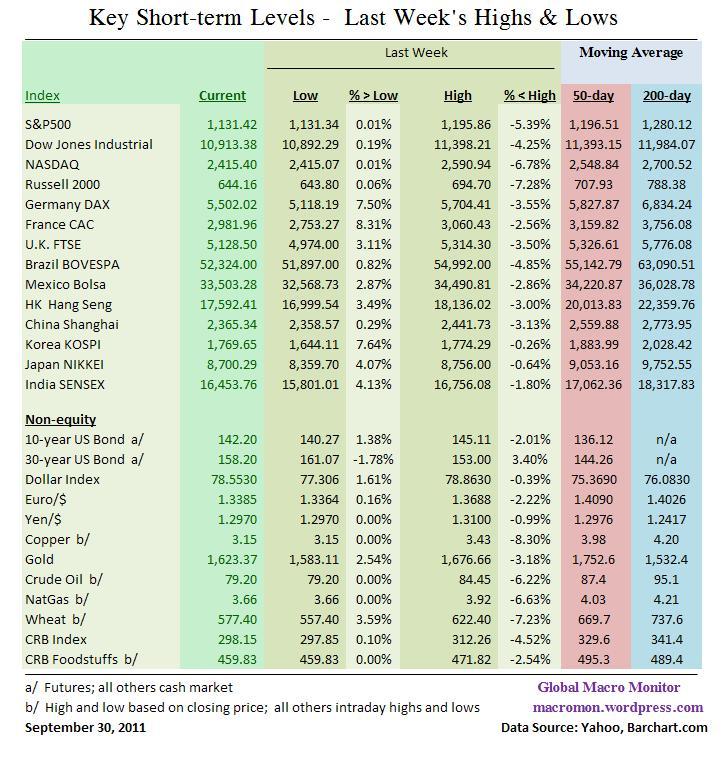
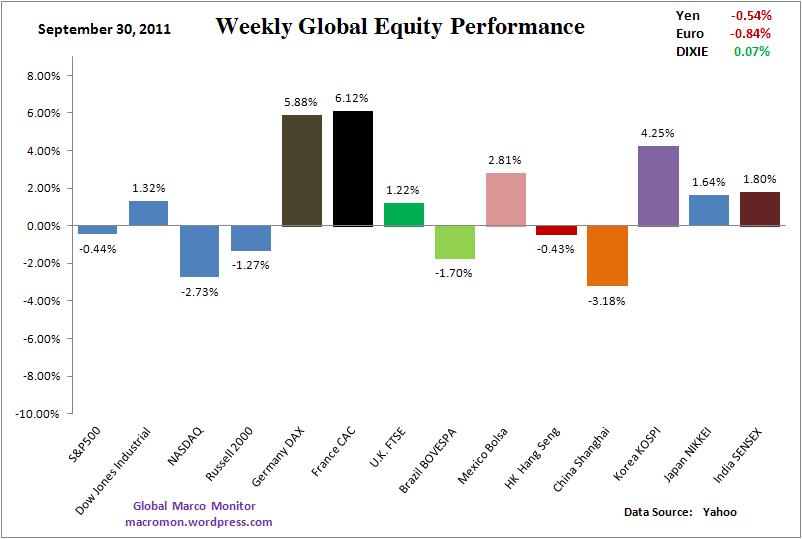
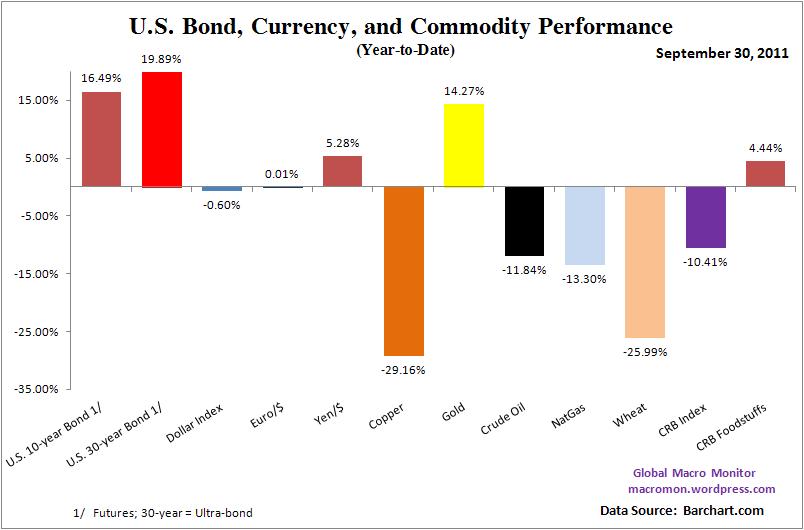
Week in Review: Mr. October Cometh

(click here if chart is not observable)
Posted in Week in Review | Tagged , , , , , , | Leave a comment

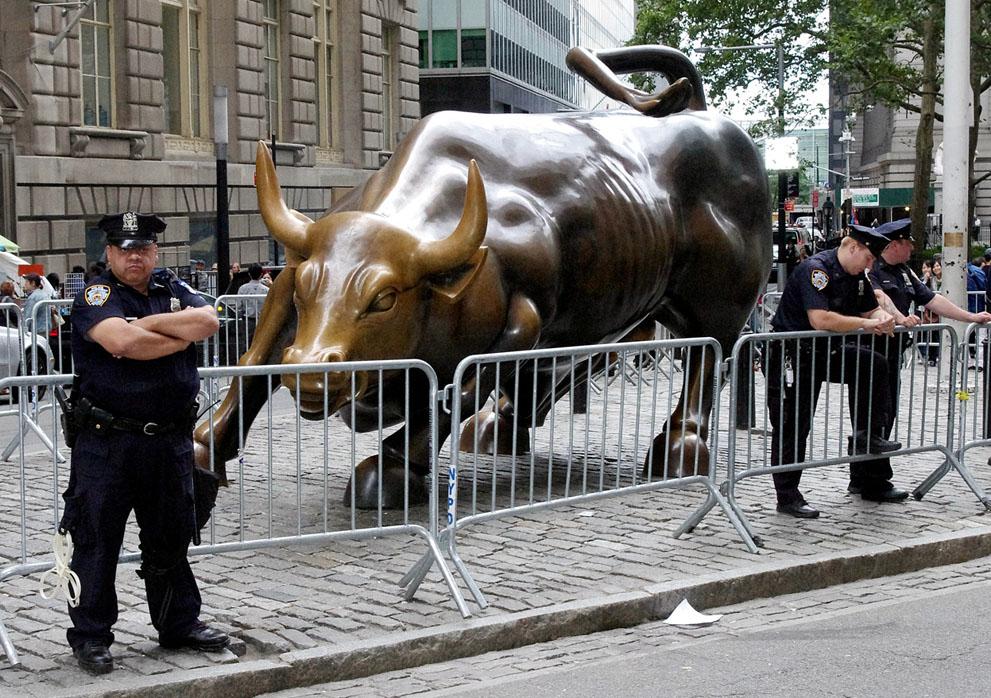
Picture of the Day: Wall Street & Bull Under Assault

This picture really captures the current market and social mood.  Three of New York’s finest having to guard Arturo Di Modica’s bronze sculpture of the Wall Street Bull  from protestors in Bowling Green Park near Wall Street in Manhattan.

The Occupy Wall Street movement (click here for live webcam) appears to be growing and becoming our Arab Spring.  If you didn’t catch the video making the rounds of the idjit Wall Streeters toasting the protesters, check it our here.   These guys and gals on the balcony certainly don’t get it.

Makes you think the moat building business is about to take off in Greenwich.  Stay tuned!

(click here if picture is not observable)

Posted in Black Swan Watch, Economics, Employment, Politics | Tagged , , | Leave a comment