We agree the world does need an international bankruptcy court for sovereign debt. Complicated to implement, however. Nevertheless, clear rules on recourse for creditors and relief for borrowers would limit the economic damage of sovereign panics.
Around the world protesters spent Debt Cancellation Day making a simple request — honest discussion regarding the moral legitimacy of the massive debt that is forcing widespread economic hardship. – Ramin Mazaheri, Press TV, Paris
Great piece by PBS NewsHour on divining the polls and predicting the next POTUS. Ray Fair’s economic model is fascinating.
BTW, Romney’s probability of becoming the next POTUS has doubled in the past few weeks at Intrade. The VEEP debate has not stopped the momentum as he has picked up another 3 points since Thursday.
With such a close presidential race, many would like to look to pollsters and their political crystal balls for predictions. But what stats are the most reliable and accurate for predicting what will happen come Election Day? Paul Solman examines how polls and election markets parse data to come up with a winner.
(click here if chart and video are not observable)
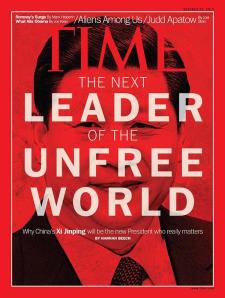
Two days after the U.S. chooses a new President another country will get its own new leadership in a decision that will likely prove just as momentous as the election of Barack Obama or Mitt Romney. On Nov. 8, at its 18th Party Congress, the Chinese Communist Party will begin a rare, once-in-a-decade transition of power. Current Party General Secretary Hu Jintao’s 10 years in charge will come to an end and Vice President Xi Jinping will almost certainly take his place as the leader of the world’s most populous nation. There’s a lot at stake for the country — and the rest of the world. As disparities in wealth continue to grow in China, public protests are on the increase and younger Chinese are becoming more vocal online, especially through social media. With increased affluence has come a desire among many Chinese for greater political freedom. That growing social unrest, along with slowing economic growth and recent scandals involving high-level officials, is challenging the Chinese leadership and its resolute defense of weiwen, or the maintenance of stability. Can China under Xi adapt to its population’s changing desires or will the Communist Party find itself in conflict with a growing number of its 1.3 billion citizens?
Stratfor is always a go to source on geopolitical issues. Here is their take,
“…They have reached the end of this economic model…”
Interesting take from Fareed that holidays can generate more consumer spending and the U.S. takes the least amount of holidays among the global community.
This brings up an interesting story about how FDR, in 1939, changed the Thanksgiving holiday from the last Thursday in November. The original date was set by President Lincoln as the national holiday, but President Roosevelt came under pressure by retailers to move Thanksgiving up one week to lengthen the Christmas shopping season.
Many states did not recognize FDR’s proclamation labeling the new date as “Franksgiving.” The Congress finally stepped in 1941 passing a joint resolution declaring the holiday as the the fourth Thursday in November.
On September 28, 1789, just before leaving for recess, the first Federal Congress passed a resolution asking that the President of the United States recommend to the nation a day of thanksgiving. A few days later, President George Washington issued a proclamation naming Thursday, November 26, 1789 as a “Day of Publick Thanksgivin” – the first time Thanksgiving was celebrated under the new Constitution. Subsequent presidents issued Thanksgiving Proclamations, but the dates and even months of the celebrations varied. It wasn’t until President Abraham Lincoln’s 1863 Proclamation that Thanksgiving was regularly commemorated each year on the last Thursday of November.
In 1939, however, the last Thursday in November fell on the last day of the month. Concerned that the shortened Christmas shopping season might dampen the economic recovery, President Franklin D. Roosevelt issued a Presidential Proclamation moving Thanksgiving to the second to last Thursday of November. As a result of the proclamation, 32 states issued similar proclamations while 16 states refused to accept the change and proclaimed Thanksgiving to be the last Thursday in November. For two years two days were celebrated as Thanksgiving – the President and part of the nation celebrated it on the second to last Thursday in November, while the rest of the country celebrated it the following week.
To end the confusion, Congress decided to set a fixed-date for the holiday. On October 6, 1941, the House passed a joint resolution declaring the last Thursday in November to be the legal Thanksgiving Day. The Senate, however, amended the resolution establishing the holiday as the fourth Thursday, which would take into account those years when November has five Thursdays. The House agreed to the amendment, and President Roosevelt signed the resolution on December 26, 1941, thus establishing the fourth Thursday in November as the Federal Thanksgiving Day holiday.
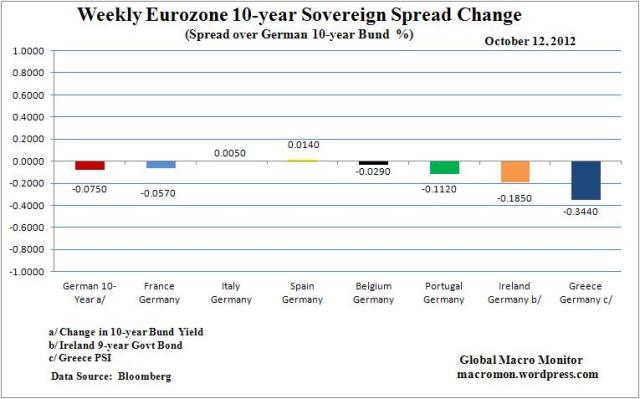
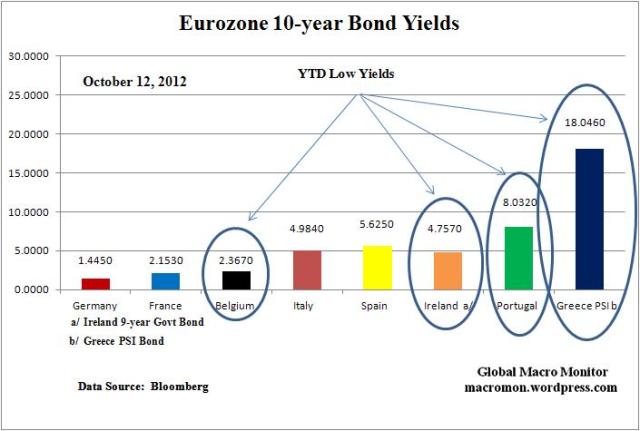
Key Data Points German 10-year Bund 8 bps lower;
France 6 bps tighter to the Bund;
Italy 10-year 1 bps wider;
Spain 1 bps wider;
Belgium 3 bps tighter;
Portugal 11 bps tighter;
Ireland 19 bps tighter;
Greece 35 bps tighter;
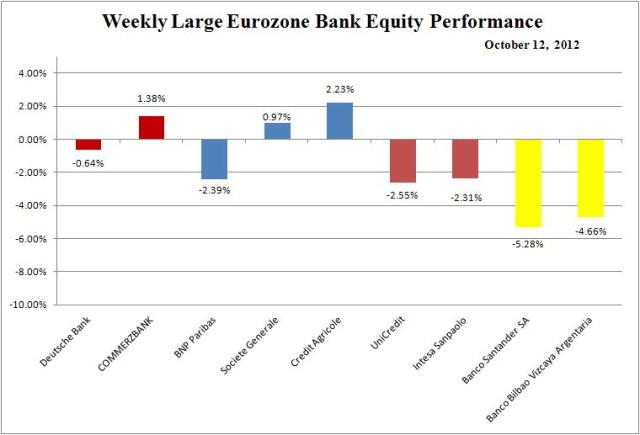
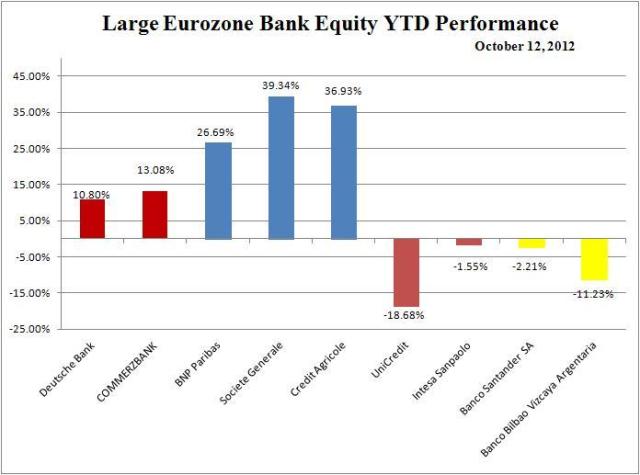
Large Eurozone banks down 0-5 percent;
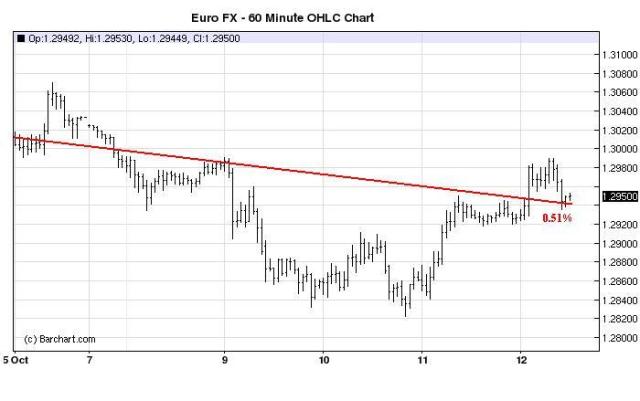
Euro$ down 0.51 percent.
Comments Belgium, Ireland, Portugal, and Greece 10-year yields at lowest weekly close of the year;
Citigroup revises down the probability of Greece leaving the eurozone;
Christine Lagarde and Wolfgang Schäuble+Olli Rehn disagree on austerity;
EU wins the Nobel Peace Prize.
The union and its forerunners have for over six decades contributed to the advancement of peace and reconciliation, democracy and human rights in Europe.
– Norwegian Nobel Committee
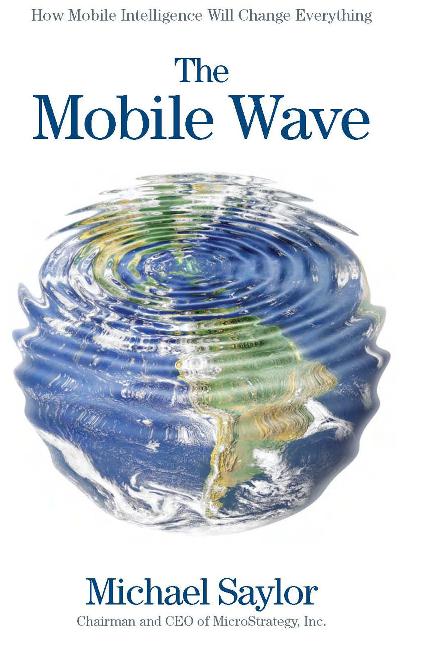
The Mobile Wave deals with one of our favorite trends we’ve been hammering on for the past few years. Here is USA Today,
The mobile wave is coming.
If you’re not ready to ride it, you’ll be swept away by a tsunami of change that will fundamentally alter the world.
That’s the theme of The Mobile Wave by software entrepreneur Michael Saylor. The book explores how mobile devices such as iPhones and iPads will change jobs, healthcare, banking, politics, law enforcement, and much more.
Consider what a trip to the doctor could mean. If you’re feeling ill, Saylor says, you might be able to connect with a doctor in India via your mobile device. He or she could diagnose and treat you for a fraction of the cost of visiting a doctor in the U.S.— maybe only $5 to $10.
Saylor is someone who also understands that unemployment may be more structural than cyclical and therefore his book is a must read for Chairman Bernanke.
He predicts that as many as 10% of U.S. service sector workers — roughly 12 million people — could be laid off in the next five years as a result of mobile efficiencies.
You thought the U.S. and Europe has problems? What a way to generate government revenue, no?
This doesn’t help the perception that China is a very stable place. More fuel for the Panda Bears.
Forced evictions in China have risen significantly in the past two years, Amnesty International said on Thursday. The group says it’s because local officials and property developers colluded to seize and sell land to pay off government debt. – NTDTV
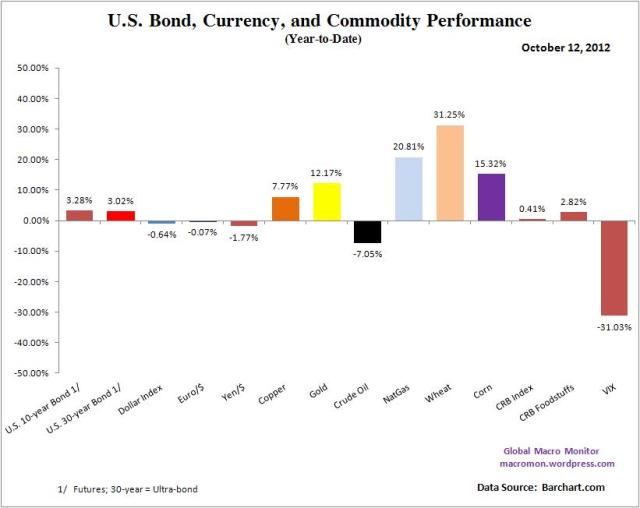
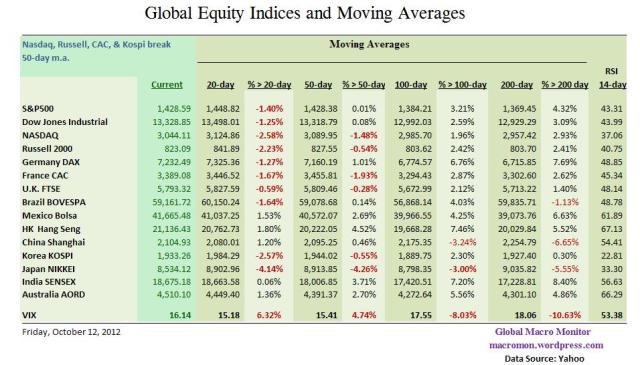
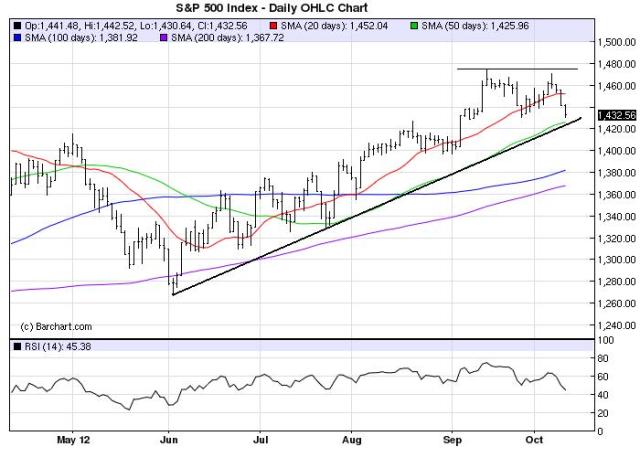
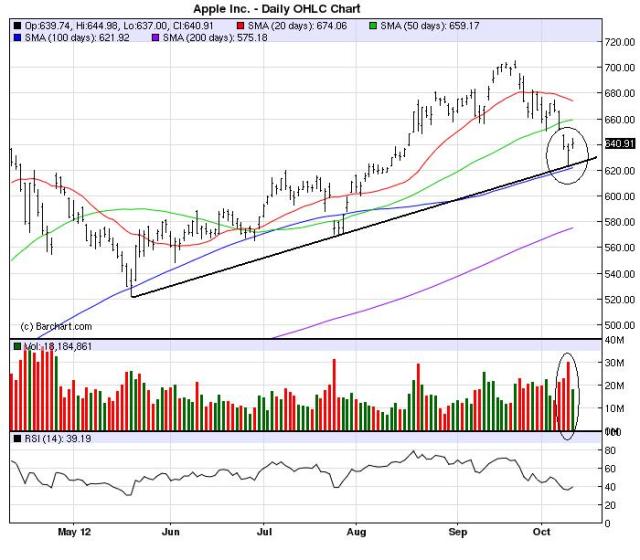
We’ve been out (golf trip) and totally unplugged for the past few days and come back to yesterday’s major reversal in Apple (see chart) and a big flip in the polls in favor of Governor Romney. Equities are selling off and approaching short term trend support with the Nasdaq already breaking its 50-day moving average.
We are in watching mode. The growth fundamentals stink but the power of zero (interest rates) and the printing presses are keeping equities buoyant, which makes the technicals that much more important. As one of our old bosses, who will be portrayed in Michael Lewis’ new movie, Liar’s Poker, use to say, “I don’t like being long when the fundamentals aren’t there. The bottom can fall out.”
We are also watching the presidential polls carefully as markets may begin to internalize the momentum moving in favor of Romney, which could spark a decent rally into the election. Stay tuned.