
This makes you wanna buy. Naw…. not until a resolution is in sight. Hat tip to King David!
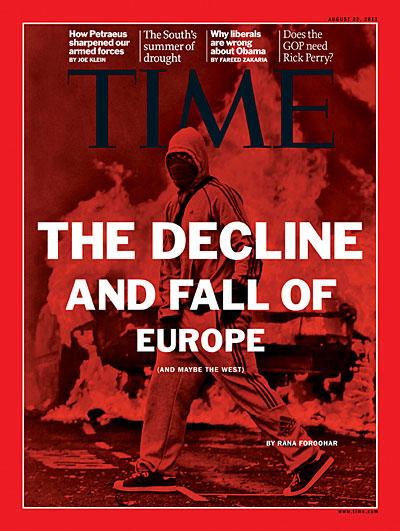 (click here if chart is not observable)
We find this Bloomberg piece very interesting. Maybe this is where some of the panic buying in gold is coming from. We’ve been pounding the table on this trade. See here and here. Bloomberg writes,
China should urgently assess risks from being the main foreign investor in U.S. debt and diversify its foreign-currency reserves more quickly, the Financial News reported today, citing Xia Bin, a central bank adviser…
China should buy more non-financial assets with its reserves to diversify risks, Xia wrote, adding that the country should also pursue national strategic interests, and seek to globalize the yuan. He previously said that China should use its reserves to increase holdings of gold and some other precious metals.
If China’s central bank does get serious about diversifying its reserve assets into gold the price move is just getting started. Take a look at the table we put together last December.
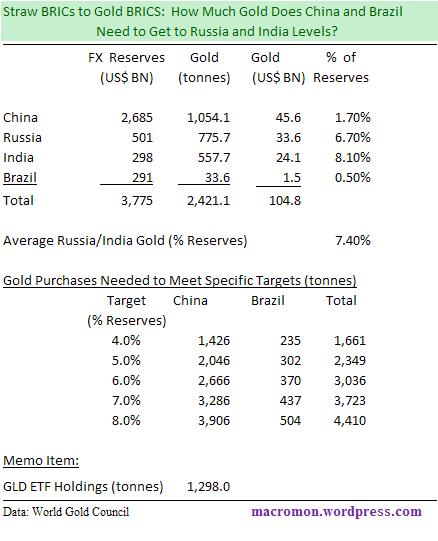 Granted the data are a little dated (Dec 2010) as you don’t pay us enough to pull all-nighters to produce it on a more timely basis. But it does show that if China increased its gold holdings from 1.70 percent to 5.0 percent of reserves, the PBOC would have to buy over 2,000 tonnes, which was almost double what the GLD, the gold ETF, held at the time And that’s just China. Stunning.
(click here if table is not observable)
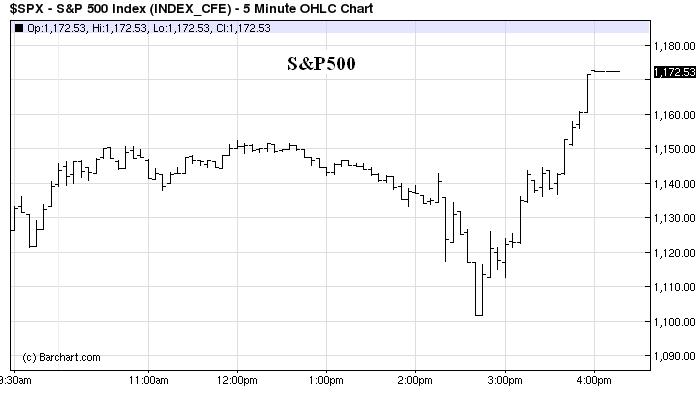
 Wow! What a day. Incredible moves. Scared markets. Capital stampeding like buffalo not knowing where to go. Great if you’re on the right side of the volatility, but you still needed a neck brace from the whiplash. It’s gonna take a few days before this all to settle out, in our opinion, and then let the panic for yield and return begin. Here is what got it going,
To promote the ongoing economic recovery and to help ensure that inflation, over time, is at levels consistent with its mandate, the Committee decided today to keep the target range for the federal funds rate at 0 to 1/4 percent. The Committee currently anticipates that economic conditions–including low rates of resource utilization and a subdued outlook for inflation over the medium run–are likely to warrant exceptionally low levels for the federal funds rate at least through mid-2013. The Committee also will maintain its existing policy of reinvesting principal payments from its securities holdings. The Committee will regularly review the size and composition of its securities holdings and is prepared to adjust those holdings as appropriate.


 (click here if charts are not observable)
We point you to our piece posted last month here at the Global Macro Monitor,
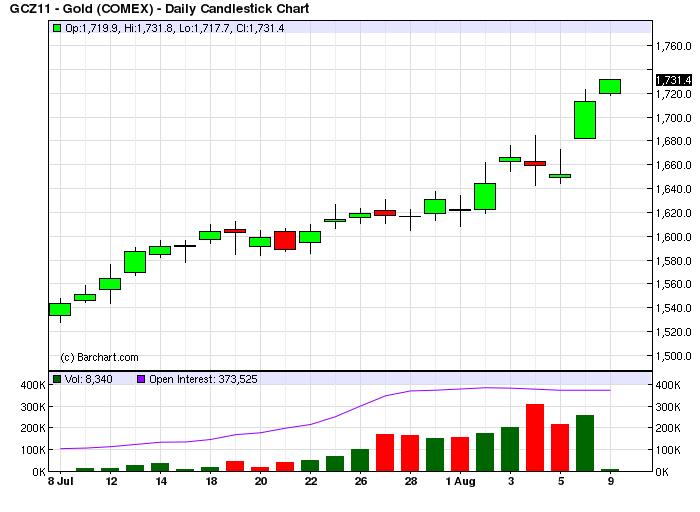
Gold’s Perfect Storm? Nears All-time Closing High
Posted on July 12, 2011 by macromonGold is creeping higher as many believe it is the only place to hide. Cash gold is near its all-time closing high of 1563.20 on April 29th and closing in on its May 2nd intraday high of 1575.10. We find it interesting many want to sell it here just at the time a perfect storm is brewing for the yellow metal.
If the situation in Europe continues to deteriorate, our bet is gold goes parabolic as the ECB will have no choice but to crank up the printing press to backstop the financial system. There is already talk of the ECB buying sovereign bonds. Rather than hanging on to their Euros or buying dollars, gold could and should be the first choice of capital flight from Europe. Gold is extremely difficult to trade as it really has no clear valuation metric and moves, primarily, on the second derivative of the perception of future monetary policy. We may be wrong and remain disciplined.
We’re not taking a victory lap here but think gold is now in the midst of a massive repricing as a legit global currency/store of value. Central banks are buying even at prices north of $1,500 per ounce. These are strong hands and not the flippers that can take it down $200 in a nanosecond.
The main risk we see to gold in the short term is that its gains could be tapped for margin calls to cover bad positions by, say, the levered set or other stressed institutional investors. A spike in real short term interest rates due to sovereign credit concerns in the major countries, for example, is another major risk, but we don’t this as an issue for sometime.
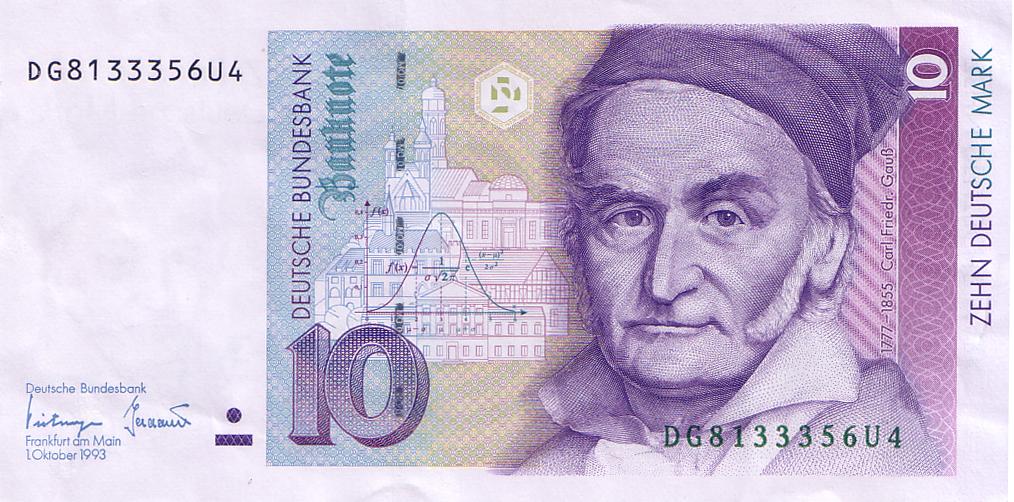
The loss of faith in the leadership in Europe and the U.S. — we stress in both political parties — should keep gold well bid. Coupled with the prospect of more monetized bank runs in Europe and declining faith in the long-term prospects for the Euro, gold is becoming the new Deutsche Mark, at least for now, and this with our usual disclaimer that we could be wrong.
It’s time for Washington to discard politics and start leading. The prospects for economic growth grow bleaker as each dollar and euro flees to gold. Everyone must pitch in and sacrifice in a long term plan to fix the deficit and address the structural issues which are keeping employment weak. The Europeans need to quickly overcome the institutional constraints that are preventing their leaders from taking bold and decisive action to address the crisis that could take down even some of the core European economies. This is China’s moment to show the world its ready and willing for a global leadership role. No more dithering while the global economy burns. Just do it.
 (click here if chart is not observable)
 (click here if chart is not observable)
We have no idea how the S&P downgrade of the U.S. is going to play out but one thing that does come to mind is the “end of fake.” The end of fake demand generated by monetary and fiscal stimulus to replace the fake demand generated by fake wealth generated by negative real interest rates and policy induced asset inflation; and the end of fake confidence of the policymakers who believed they had a blank check for endless stimulus and bailouts. This is true not just in the U.S. but across all countries.
At the end of the day this should be extremely deflationary and we hope the politicos and policymakers will learn that wealth and ultimately demand can only be created and sustained by increasing productivity. But, you never know how they will respond and if the big sovereigns, including the U.S., start having problems rolling over their debt and are forced to rely on their central banks, the end game is an entirely different story. No wonder the gold price is over $1,700.
There are so many moving parts in this crisis. Will the world’s leaders continue to dither? What about France’s sovereign rating? How much leverage is in the system? Who and how many will blow up? How much financial wealth will be destroyed before the markets hit bottom? What is the fate of the dollar’s reserve currency status? Will the next quantitative easing in the U.S. include the outright purchase of equities? Buckle up.
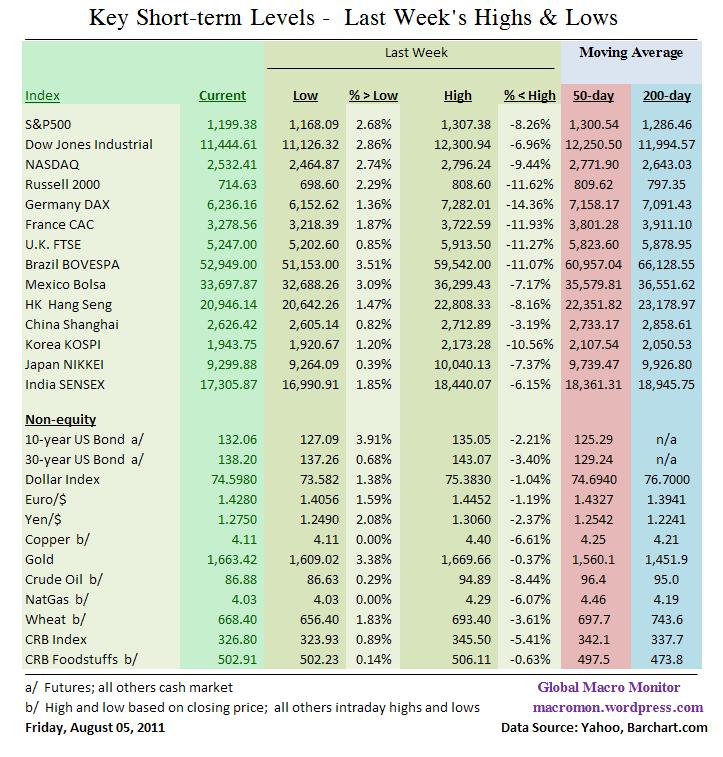
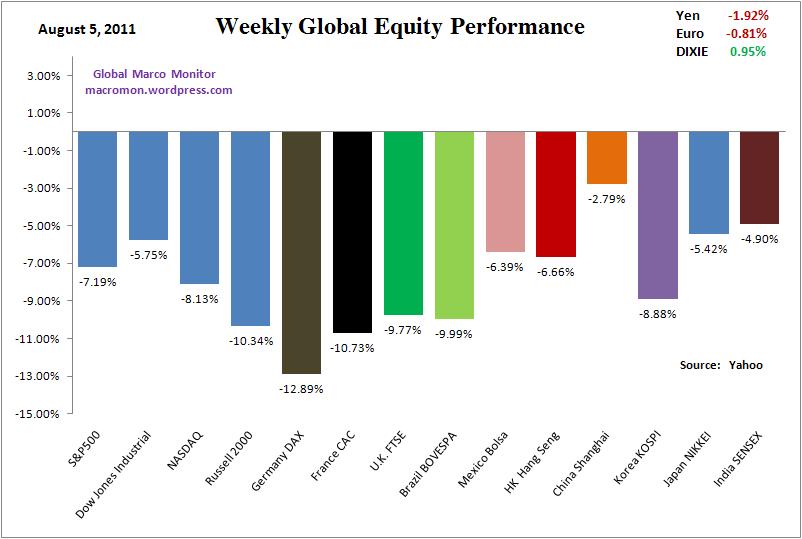
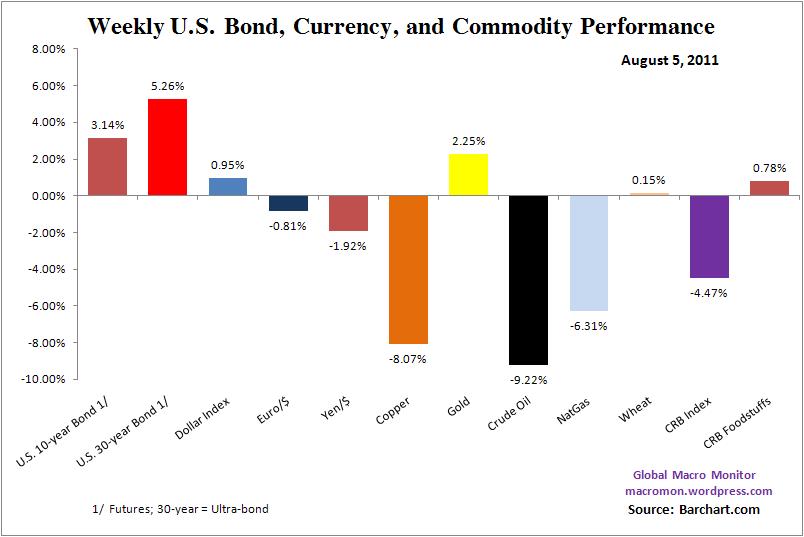
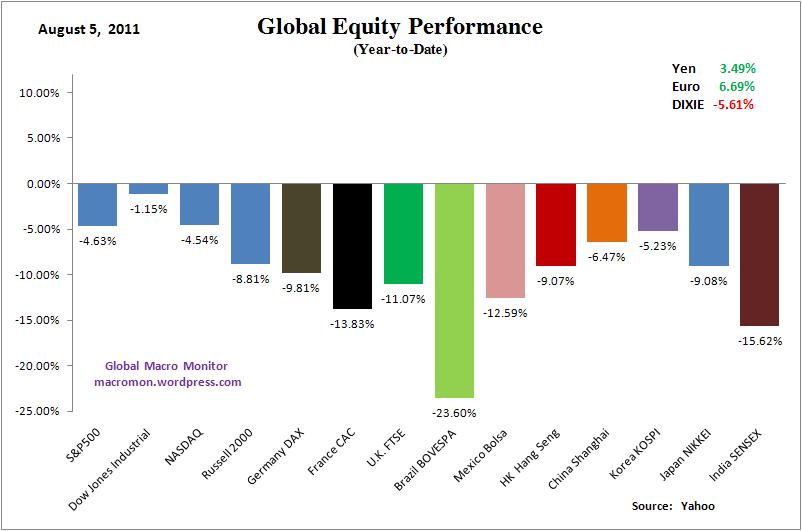
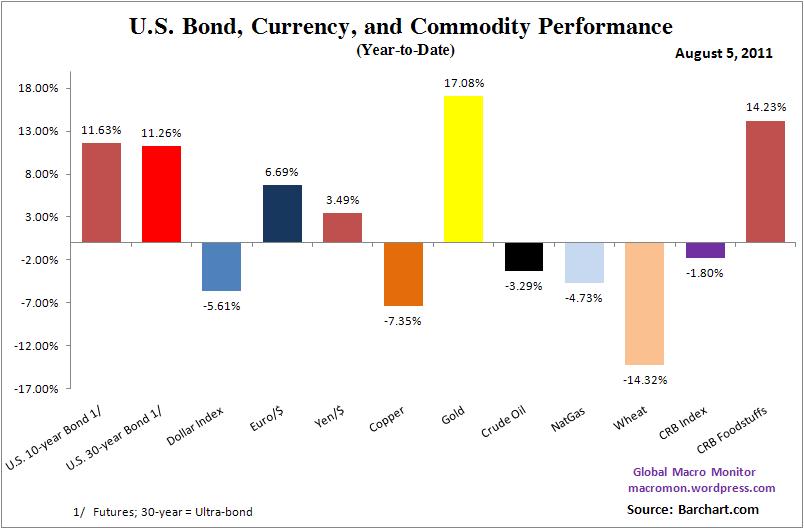 (click here if charts are not observable)
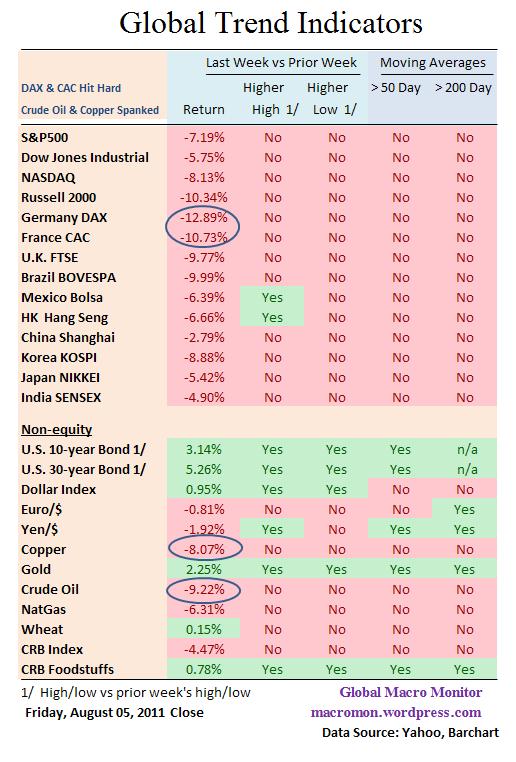

(click here if tables are not observable)
We were at Borders books today as they liquidate the last of their inventory. They’re literally selling the furniture, including the local store’s commercial espresso maker for $3,000. The place was fairly busy, which goes to show robust spending is out there if the price is right.
It did make us ponder the state of the U.S. labor market as 11,000 Borders employees have already lost or will lose their jobs when doors finally close. This is not because of cyclical forces but the powerful structural changes that are taking place due to rapid technological advances. The internet, the Kindle, and the iPad are rendering the traditional bookstore obsolete.
According to the BLS,
Retail salespersons and cashiers were the occupations with the highest employment in 2010. These two occupations combined made up nearly 6 percent of total U.S. employment.
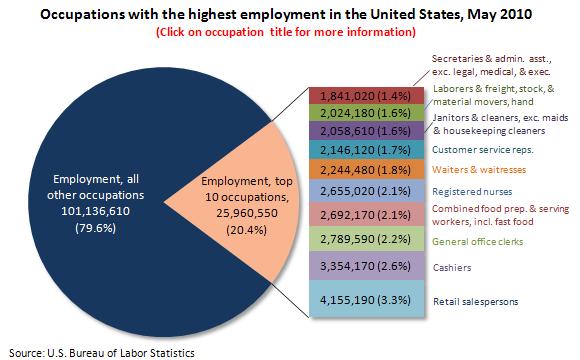
Imagine the impact on the U.S. labor market as mobile payment technology really takes flight. Coupled with globalization, the past twenty years has seen the hollowing out of the U.S. middle class with finance and technology at the high end and retail and healthcare at the low end. What is the “New Economy” for some is the the “McJobs economy” for others.
The current state of the two Americas is best characterized in today’s FT,
Steven Burd, chief executive of Safeway, a grocery chain, last month characterised the wealthiest 25 per cent of his customers as “recession’s over with, times are good, spending as they always did”.
But the other 75 per cent were “really very cautious and very concerned”. That is no surprise as they are stalked by falling house values, rising petrol prices, personal debts and job losses.
The structural changes taking place in U.S. labor market may or may not show up in the employment data to be released in a few hours. But one thing is certain, structural problems cannot be addressed with cyclical solutions. Doing so may create temporary and illusive wealth, but the consequences, as we are currently experiencing are painful and lasting.
(click here if chart is not observable)
Europe’s sovereign debt crisis and concerns over a global double dip sparked a dash for cash and hammered just about everything, including crude oil, corn, emerging equities, developed equities, and even orange juice. O.J.? Down 4 percent today? Did the weather change in Florida overnight?
To better understand Europe’s problem we point you to a piece posted on this site in April,
The EU is in a destabilizing feedback loop that it cannot control. Sovereign credit is deteriorating and this is reducing confidence in national banking systems, causing or increasing the likelihood that sovereigns will have to assume bank liabilities. This further impairs the sovereign credit and increases the lack of confidence in the banks.
The stocks of many of Europe’s biggest banks were down big today adding to fears – and we emphasize that fears are often perceptions and not facts — of capital inadequacy and potential or hidden losses. Those fears have moved to Italy.
 Though the IMF forecasts Italy’s general government budget deficit to be around 4.3 percent of GDP this year, lower than the 4.8 weighted average for the EU, the markets are growing increasing concerned about the feedback loop. The government’s 2011 gross financing needs – maturing debt plus the budget deficit — are relatively high, estimated by IMF at 22.8 percent of GDP, but are lower that of the United States, estimated at 28.8 percent of GDP.
The U.S., however, has a central bank willing, able, and proven to help fill any financing gap and provide liquidity to a banking system under stress. The European policymakers need to be more forceful and make it clear to the markets they will step up and do the same. This crisis can be contained but today’s ECB press conference was not helpful. Italy is not Germany or Greece, but they do have the same currency and central bank and there’s the rub.
(click here if chart is not observable)
In the spring of 1720 Isaac Newton stated: ‘I can calculate the motions of the heavenly bodies, but not the madness of people.’ On April 20, accordingly, he sold his shares in the South Sea Company at a 100 percent profit of £7000. Later an infection from the mania gripping the world that spring and summer caused him to buy a larger number of shares near the market top and he lost £20,000. In the irrational habit of so many who experience financial disaster, he put it out of his mind and never for the rest of his life could he bear to hear the name South Sea.
– Manias, Panics, and Crashes



