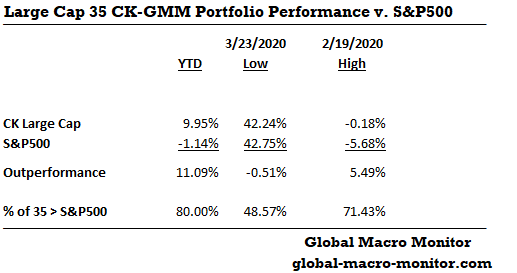
We have been teasing you over the past month about rolling out the CK-35 portfolio of GMM’s new crack stock picker, Carol K. The CK-35 has a nice ring to it, no? Kinda the like the NIkkei 225?
Huge Outperformance
We feel fortunate to have Carol on board because she is a much-needed voice to balance our macro views and brings a very unique and strong set of analytical skills, a vast amount of experience in investing, and a pretty damn good track record.
Health Issues
Carol has some ongoing health issues she’s currently battling — nothing a former USMC Captain can’t lick — and would be presenting and writing this post herself if not for feeling under the weather. We have also disagreed on whether GMM should try and monetize this information.
Carol wants to provide to it our readers for no charge but given my greedy capitalist instincts, I thought GMM should get paid for such quality work. She won but if you feel inclined you can make a donation clicking the widget on the right side of the webpage.
Portfolio Changes
We are rolling it out tonight because Carol is considering tweaking the portfolio and making some changes. This way you will have the original picks and can go back and recreate the returns we began posting and revealed a few months ago. Our credibility remains intact and you know we are not promoting some mystery valise of supercharged stocks
100 percent of Carol’s Work
This is all Carol’s work and nobody else at the Global Macro Monitor has anything to do with it. She deserves full credit, not only because of the massive YTD outperformance relative to the S&P but, what impresses us even more. is the outperformance on the downside since the February high.
These stock picks are just Carol’s opinions and favorites, which she may or may not own in her own personal account, and are not recommendations or investment advice.
Find A Good Investment Manager
If you’re looking for advice, I suggest — not Carol speaking — you find a good manager that is experienced and knows how to manage left-tail risk. I can think of a few.
I also don’t think passive investing or a 60/40 portfolio are going to fare well over the next few years.
Feel free to contact us if you have any questions.
Note the exact returns may differ a few bps as some data sources may have a slightly different December 31st prices
The information in this post represents our own personal opinions and are not investment recommendations. We may or may not hold positions or other interests in securities mentioned in the post or have acted upon what has been written.
All information posted is believed to be reliable and has been obtained from public sources believed to be reliable. We make no representation as to the accuracy or completeness of such information.
Microsoft was a great company in 1999. $MSFT was still a great company in 2017 – it would take you 18 years for you to break even if you bought it in 1999. Valuation, the price you pay matters even for a great company. pic.twitter.com/Z0f8jwz2A5
Bloomberg QuickTake Originals
Research shows that our brains are designed to be distracted. Scientists from Princeton University and the University of California found that our brain refocuses our attention four times every second. So as you read this sentence your brain is periodically scanning your surroundings to see if there is a more important location to focus on.
Panic buying is a type of behavior marked by a rapid increase in purchase volume, typically causing the price of a good or security to increase. From a macro perspective, panic buying reduces supply and creates higher demand, leading to higher price inflation. On a micro level (e.g. in investment markets), fear of missing out (FOMO) or buying triggered by a short squeeze can exacerbate panic buying, into a so-called melt-up. – Investopedia
This whole FOMO thingy is kind of perplexing to us.
We maintain Issac Newton learned the real lesson of gravity in a FOMO trade gone bad,
Back in the spring of 1720, Sir Isaac Newton owned shares in the South Sea Company, the hottest stock in England. Sensing that the market was getting out of hand, the great physicist muttered that he ‘could calculate the motions of the heavenly bodies, but not the madness of the people.’ Newton dumped his South Sea shares, pocketing a 100% profit totaling £7,000. But just months later, swept up in the wild enthusiasm of the market, Newton jumped back in at a much higher price — and lost £20,000 (or more than $3 million in [2002-2003’s] money. For the rest of his life, he forbade anyone to speak the words ‘South Sea’ in his presence. – Open Culture
Then, again, we don’t bother trying to understand the markets anymore as they are no longer markets, and have been essentially nationalized and now tools of the state.
Nevertheless, let us pontificate one more time.
We Get FOMO
Yes, I get it and recall my hedge funds days of missing out or being caught on the wrong side of a big rally. In fact, it resulted in me leaving the industry.
Here’s the short of it:
Venezuela Migraine
I was in Venezuela pre-Chavez for a week to do some due diligence, “kick the tires,” and meet with government officials. After arriving at the Caracas airport (long drive over the hill from downtown) for my return to NYC, with connecting flights through San Juan/Miami, I called my favorite salesman for a market update.
He proclaimed excitedly, “the market is screaming, some bonds are even up 5 percent on the week.”
I had learned, through many expensive lessons, to trim down my long positions when I traveled.
Upon hearing my bond sales guy, I instantly came down with a massive migraine and with no ibuprofen. I missed another big move, which I thought was unwarranted, but knew I had to go back to the office and explain to my boss, a Master of the Universe legend, why I was now underperforming.
Making the three connections back to New York, I spent much of my time in the air in the restroom doing the technicolor-yawn. After touching down at JFK, I had made up my mind to leave the business and venture out on my own. True story.
Anyone who thinks trading or investing, especially other people’s money (OPM) is easy, why aren’t you on your yacht in the Caribbean reading this post?
Career Risk Of Missing Out
We understand and have experienced first hand the “career risk” and fear that professional traders and portfolio managers face missing big FOMO rallies, even if they are fully cognizant the moves are unwarranted and unsustainable. So, dear readers, spare us the email lectures.
Chasing The Titantic Rally
But this rally? Almost everyone knows it’s absurd yet some still chase.
It reminds us of passengers chasing down the Titanic, knowing full well it is going to sink before docking at the Chelsea Pier on New York’s West Side but just can’t resist the four days of partying and world-class cuisine. Seriously?
If you have been around the block a few times, this isn’t the first time you witnessed a Chasing The Titantic rally.
This is exactly what I was warning of in the May 1st Afternoon Audit. Day trading replacing sports betting / gambling as America’s past time. This is material retail volume. Partly explains disconnect between economy and the stock market. Be skeptical of current prices. pic.twitter.com/C04dezRuzL
We keep every market we follow or trade, in the context: Is it cheap, is it expensive?
For some markets, such as commodities, which trade purely on supply and demand it’s not a relevant query.
Though my background is a trader, one of the first principles I learned as a Wall Street newbie was from my boss who sat me down before bestowing the firm’s capital to my trading book,
“I don’t like being long anything that is expensive without being girded by strong fundamentals.” – Tom ____
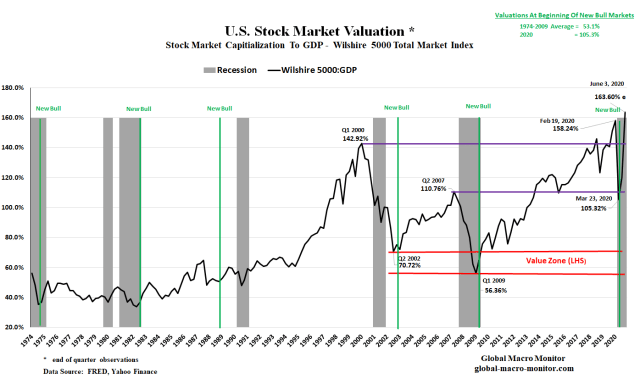
The current U.S. stock market is at its most extreme valuation levels in history measured by our and Warren Buffet’s favorite metric — total stock market capitalization-to-GDP. We now estimate (based on a Q2 GDP estimate) the metric at 164 percent, which is 20 points higher than the dot.com bubble peak, almost 15 percent on a proportional basis.
Initial Valuations Of New Bull Markets
In addition, the beginning valuation of the new bull market, which began on March 23rd was 105.3 percent, almost double the average starting valuations of all prior bull markets since 1974 of 53.1 percent. Not a stellar initial condition for a sustainable and stable bull market.
Moreover, the fundamentals are horrendous.
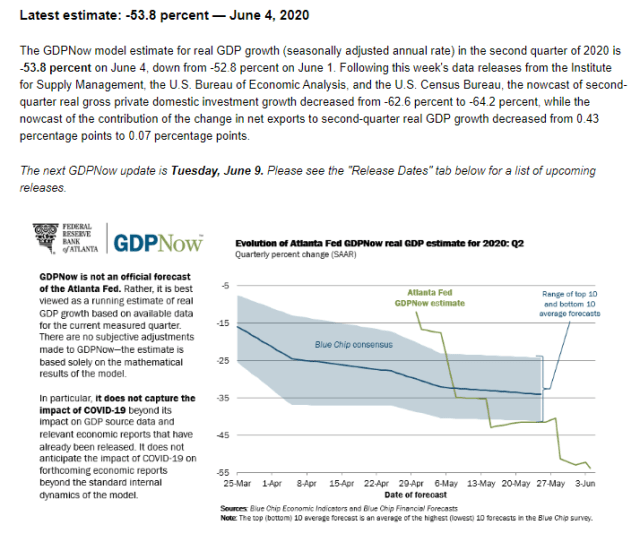
We recognize the current GDP now Q2 estimate of -53.8 percent does not reflect the true underlying fundamentals of the economy. But nobody knows and can measure the economy’s health as we are still in the midst of the COVID hurricane. We are taking the under, however.
This is not news to anyone but if you really believe the fundamentals are priced, well, good for you!
We also can’t understand how the President’s advisers think a stock market close to its record highs, coupled with depression level unemployment makes for good politics? Voters may question again, as they did in 2016, who really got bailed out: Wall Street or Main Street?
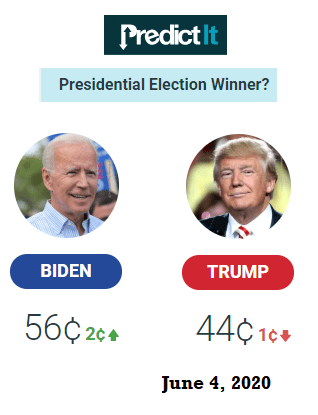
We are also looking forward to taking several Benjamins and Grovers from our friends who make their political bets, based purely on emotion. We made a few bets before the 2016 election that Trump would win the electoral college and Clinton would take the popular vote. One friend responded to our election eve email, “sure you didn’t make a typo?”
We didn’t bet with our emotion or political bias but based on the analysis of how the Hispanic vote was dispersed throughout the country and an approval rating for Congress, which was less than 10 percent, if our memory is correct.
Here’s to hoping a Democratic government will realize they can only achieve their objectives with a strong economy driven primarily by a healthy and dynamic private sector. The hard left of the Party still doesn’t seem to get it. You can’t spend and print your way to prosperity.
Watch The Next Two GDP Prints
Some argue the market rally is pricing in the “recovery.”
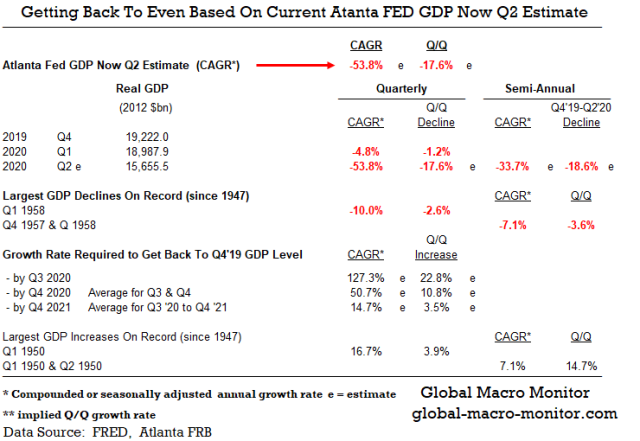
There is no doubt a record Q3 GDP growth print is coming, quite possibly by a factor 2x the largest post-war quarterly growth Q1 1950 print of 16.7 percent. Note the headline number is the annualized Q/Q growth.
The Atlanta Fed GDP now just marked down their estimate today of Q2 growth to — are you sitting down? — -53.8 percent, which translates to a Q/Q decline of 17.6 percent.
That would put real output at the end of June almost 19 percent below its Q4 2019 level.
Even if headline Q3 GDP comes at a whopping plus 30 percent, the real economy would still be 13 percent below its 2019 end-of-year output.
We estimate the quarterly GDP prints needed to get the economy back to even in the table below assuming the latest GDP now estimate holds. For example, for a full V-shaped rebound by Q3 2020, the headline number for Q3 would have to print at 127.3 percent. Not likely.
To get back to even (Q4 2019 levels), the quarterly GDP headline number would have to average 14.7 percent over the six quarters beginning in Q3 2020. Not likely.
Do you really think the stock market is pricing a V-shaped economic recovery or even understands and has internalized the following scenarios in the table?
Our answer? NFW!
Upshot
Setting aside the fact the stock market is no longer driven by market forces, including and especially fundamentals, the only sense we can make of the recent price action is that it signals the beginning of the Venezuelan model.
That is, stocks are sniffing out some big-time future inflation and are now the inflation hedge of choice. Not a zero probability but kind of a stretch at this point.
What is most likely occurring, in our opinion, and I haven’t run this piece by our crack stock picker, Carol, who has a much longer time horizon, is the asset bubbles were only partially allowed to deflate before being reinflated by the largest monetary stimulus in the history of the world.
Even still, unless the market is morphing into the Venezuela model, the stock market in a macro sense is at dangerously high levels and I, personally wouldn’t touch it even with your 50-foot pole.
Carol always reminds us, however, money can still be made in individual stocks and not everybody has the flexibility or the desire to wait patiently in an all-cash/gold position.
One Last Point
If you have been reading GMM over the years, you know we are big fans of Robert Shiller,
We think Shiller’s best work was Market Volatilityand specifically the following,
The Ambiguity of Stock Value
Stock prices are likely to be among the prices that are relatively vulnerable to purely social movements because there is no accepted theory by which to understand the worth of stocks….investors have no model or at best a very incomplete model of behavior of prices, dividend, or earnings, of speculative assets.
Shiller nails it here. Stock values are ambiguous as there are no models to determine their “true” price.
Macro Ambiguity
Currently, nobody knows the long-term damage that the COVID crisis has done to the economy, how robust the recovery will be or how much hysteresis will exist as the economy fully reopens,
Hysteresis in the field of economics refers to an event in the economy that persists into the future, even after the factors that led to that event have been removed. – Investopedia
In other words, there’s a lot of macro ambiguity and uncertainty out there.
Asset bubbles thrive in an environment of ambiguity and easy money.
The passive crowd, quants, technicians, and algos couldn’t spot a bubble if it smacked them square in the face. Most are just way too myopic and have no context of valuation.
To rationalize this price action is their world? The market is going up because it’s going up.
One of the most profound quotes I have come across recently from a best friend, fellow economist, and member of my Socratic Club, a debating society I have belonged for over twenty years. If you are not following his blog or on Twitter, what are you waiting for?
Click on the link for context. Context is everything, ya’ know.
We live in a beautiful and a bleak America. Which you see depends on your zip code, your parents, good and bad luck, government policies, human nature and you. Yes, you. Do the right thing and America won’t be bleak, it will be beautiful. — Think In The Morning
We are reposting a piece from June 1st as we concerned about the stability of the American Street and where the country was headed. We were worried about a future full of “peril,” and after the events of last Wednesday, some of which illustrated below, the times are now pretty damn perilous.
The Conversation: When I Knew America Was In Deep Shit
In early February, I drove to San Diego to attend a trade show. I stayed overnight in the beautiful beach town of San Clemente, the home of President Richard Nixon’s Western White House.
I awoke on Super Bowl Sunday and headed down to the ocean to grab some breakfast before driving down to San Diego to pick up my good friend and colleague at the airport and to prepare to watch my 49ers give an ass-kicking to the Chiefs. Wrong!
Bear Coast Coffee
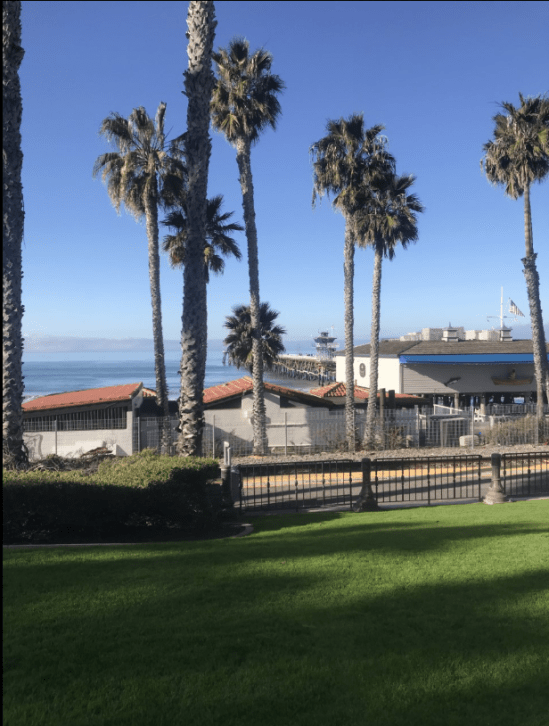
I had been pretty bearish on the market at the time and thought how appropriate it was to eat at the Bear Coast Coffee. I do believe in omens, by the way. This was about two weeks before the market peaked on February 19th [and experienced it’s the sharpest and quickest drop in history, falling 35.4 percent over the next 24 trading days before a multi-trillion-dollar bailout].
I snapped this picture and even thought about posting it while I was eating breakfast.
San Clemente, February 2, 2020
Clean & Pristine San Clemente
San Clemente wreaks of wealth (ranked 11th wealthiest city in the country), multi-million dollar ocean view homes, and I was very impressed by the clean and pristine character of the city. I thought what a great summer vacation spot for my daughter and me. Sat next to and had a great convo with a nice couple, who said their son commuted on the Amtrak to high school into Santa Ana. Great morning.
San Clemente, February 2, 2020
San Diego Convention Center
After nursing the wounds of the 49ers fourth-quarter collapse, we were about two days into the trade show when an elderly gentleman stopped in our booth and began to chat with my colleague.
Let’s call him Joe and my colleague Jim. After exchanging niceties, the conversation went something like this.
Joe:Can you believe what is happening to the world? The homeless are overrunning the country. Shitting in public. You can’t even walk in San Francisco now without stepping in human feces! Those god damn liberals can’t run anything. The homeless have even overrun my town of San Clemente. God damn it!
Jim (from back east): No, haven’t really thought about or noticed it.
[I found out later Joe’s net worth puts him in the Top 1 percent and couldn’t really confirm if he was a college graduate. I almost jumped in and told Joe he was full of shit and had been sniffing too much Faux News. I was primed for such a debate as I’ve had many similar Twitter debates with people making the same argument about San Francisco but have, you guessed it, never set foot in the town. Their perception was all painted by hard alt-right pundits.
In fact, I was in San Francisco just the prior week and snapped the following picture to use in my Twitter debates. If anyone can find a human turd in the photo, I will send you $1000. The same goes for the pictures of San Clemente. No photoshopping.
San Francisco, January 2020
Of course, every city has a homeless problem and San Francisco’s is more acute than most. But the problem is not as ubiquitous as Faux News portrays.
I also wanted to wrap Joe on the knuckles with the fact that the People’s Republic Of SF sports the most billionaires per capita by a factor 8x the second-highest, NYC, and the city has the highest rents in the nation, which might help explain, in part, its homeless problem. See our post here. I bit my tongue and kept quiet.]
The Bombshell
Then the convo turned very ugly.
Joe:My wife told me the other day she wanted to buy a gun. I said, “honey, why do you need a gun? I have several and we have a very good and expensive alarm system for the house. What’s up.” She told me, “I don’t want a gun for protection, I want one to shoot the liberals!”
WTF?
O.M.G!
I thought WTF is wrong with this guy? I am almost certain he was 100 percent serious. The dude is not a poor uneducated cracker from some “‘Podunk’ Town In The Middle Of Nowhere” He’s a one-percenter and lives in the 11th wealthiest city in the nation.
How could this be? Didn’t he realize he could just have been easily born a crack baby in Harlem if not for being born into the Lucky Sperm Club?
Whatever happened to the noblesse obligepracticed by the likes of the Kennedy clan and George H.W. Bush, the unwritten obligation of people of means to act honorably and generously to others of lesser means?
Right then and there, I realized the country was near a very ominous tipping point.
What Next?
If you think the instability in the American Street is going away anytime soon, think again.
There may be an ebb and flow of calm and violence but unless the underlying issues discussed above are addressed and mitigated the country has crossed the Rubicon into failed state territory.
Trump can continue to talk tough and even send the M1 tanks into the streets but it won’t make a damn bit of difference but to make matters worse.
It’s time to get to work and begin to really address the issues at their very core, America.
All of us united, even if the goal is to save what’s left of our own personal and selfish interests. The alternative is peril.
First, let me state unequivocally I am NOT a Microsoft (MSFT) product fangirl. Since 2005, I have only purchased Apple (AAPL) products for myself and my children.
Nevertheless, as an investor, it would be short-sighted to ignore the radical transformation Microsoft has undergone under the stellar leadership of Satya Nadella, who succeeded Steve Balmer as Microsoft’s CEO in 2014. I evaluate potential investments based on facts and do not allow personal preferences and tastes to distort my analysis of a company’s growth potential and future returns.
Azure
I could go on forever about Microsoft as a multinational technology company, but I digress for the sake of brevity. The well-informed investor is probably already aware of some exciting and highly relevant developments taking place in Microsoft’s Azure platform.
Azure is Microsoft’s Intelligent Cloud platform, and a growing contributor to Microsoft’s bottom line, where the company now derives approximately 35 percent of its revenues.
I am fully aware Microsoft Azure trails it’s rival, Amazon Web Services (AWS), in terms of penetrating the enterprise cloud computing segment. However, I’ve become aware of some specific applications of Intelligent Cloud and want to share it with our readers.
AI/Machine Learning
These applications involve the power of Microsoft’s artificial intelligence (AI) and machine learning components of the Azure Intelligent Cloud, which are helping biotechnology companies trying to understand Covid-19.
One company, ImmunityBio (privately held) is utilizing Azure’s capabilities in performing computational analysis to gain insight into the complex protein structure of Covid-19. It is now able to build models in a fraction of the time, in days, which usually took months of the routine computations and analysis.
COVID Vaccine
Why is this important?
Any vaccine or antibody therapy will depend on this viral protein structure, and the ability to fully understand it is critical to accelerating the development of a vaccine.
Microsoft’s machine learning application is being used by Adaptive Biotechnologies (ADPT) to collect, sequence, and analyze information on the human immune response to COVID from blood samples of patients who have recovered from COVID. This collection and analysis of immune response data will also be critical in a successful vaccine.
Valuation Issue
We do have concerns about Microsoft’s current stock valuation, however.
This is exactly what I was warning of in the May 1st Afternoon Audit. Day trading replacing sports betting / gambling as America’s past time. This is material retail volume. Partly explains disconnect between economy and the stock market. Be skeptical of current prices. pic.twitter.com/C04dezRuzL
Microsoft stock is not cheap when valued by traditional metrics.
Most great companies command a premium valuation, however, and going forward, I believe Microsoft is one such company.
AAA Rating
Not only is it is well-positioned for the high-tech future, but it is also one of the best companies on the planet. Microsoft is only one of two companies in the S&P 500, which sports a AAA credit rating from Standard and Poor’s, Johnson & Johnson the other.
The company also has a fortress balance sheet and its CEO, Satya Nadella, is generally recognized as one of the most visionary CEOs in the world.
My opinion, which is never intended to be investment advice, is MSFT should be a core position in any stock portfolio and accumulated pullbacks
The Macro Heads at GMM believes another big sell-off is in the works before any new and real long-term bull market can commence. I am making sure Microsoft is at the top of my buy list if, and when that occurs.
A significant correction would also provide an excellent opportunity to accumulate and build an overweight position in the stock.
If they are wrong about the market and it keeps heading higher, with commission-free trading offered at most discount brokerages, nibbling or buying a few shares at a time, will be an alternative strategy.
Posts Will Be Sporadic
Finally, let me express how thrilled and honored I am to now be part of the group at Global Macro Monitor (GMM). I commit to doing my best in sharing what has worked for me as a private investor over the years in selecting individual stocks, which has provided considerable alpha to my portfolios in the past, and, hopefully in the coming years.
I have had a little health setback recently, but nothing this former Marine Captain can’t kick in the ass, so my posts may be a bit sporadic in the next few months.
Disclaimer
**I own full positions of MSFT and AAPL and have no plans to buy more shares or sell any shares within the next three trading days.
The information in this post represents our own personal opinions and are not investment recommendations. We may or may not hold positions or other interests in securities mentioned in the post or have acted upon what has been written.
All information posted is believed to be reliable and has been obtained from public sources believed to be reliable. We make no representation as to the accuracy or completeness of such information.
I used to go home every night as a young Wall Street trader worried about how instability on the “Arab Street” would adversely impact my long unhedged positions. If you have been a reader of the Global Macro Monitor over the past few years, you know we have been concerned about U.S. political stability.
All good traders worth their salt worry 24/7 about just about any and everything, which, by the way, was one of the first traits I would look for in hiring a new trader. A high propensity to worry about losing money but not afraid to pull the trigger.
POTUS Gone Wild
Now we are really getting worried
I can’t stand back & watch this happen to a great American City, Minneapolis. A total lack of leadership. Either the very weak Radical Left Mayor, Jacob Frey, get his act together and bring the City under control, or I will send in the National Guard & get the job done right…..
Rather than being a stabilizing force and a voice of reason and calm, the President of the United States delights in stoking the divisions and tensions in the country while spewing his conspiratorial garbage 24/7.
In the words of Anderson Cooper, “Man, we are in trouble.”
As Twitter enables fact-checking on Trump's tweets, @AndersonCooper calls him "a little, little man."
He's "raising conspiracy theories…about a dead woman, though her family is begging Twitter to take them down…You start to think this is just normal…Man we are in trouble." pic.twitter.com/vSIFknxU65
It’s totally outrageous and moves the country closer to a critical tipping point.
November To Remember
Here’s to hoping we can limp to a fair election in November. Let’s not let the Russian GRU and China’s MSS take a victory lap, America.
We owe it to the men and women in uniform making great sacrifices for us and what America has stood for, and, more importantly, to our children and grandchildren.
Fear The Street
It’s time for investors to fear the “American Street” or to, at the very least, keep it on your radar. If that is, markets are still a market and not a tool of the state, which is becoming increasingly debatable.
Stay tuned, folks
What is this bullshit?
OBAMAGATE MAKES WATERGATE LOOK LIKE SMALL POTATOES!
One of readers was incredibly perceptive to pick up a line in our last post, Cue The Economic Recovery, and attribute it to this Lennon song. Gaaawd, John was good!
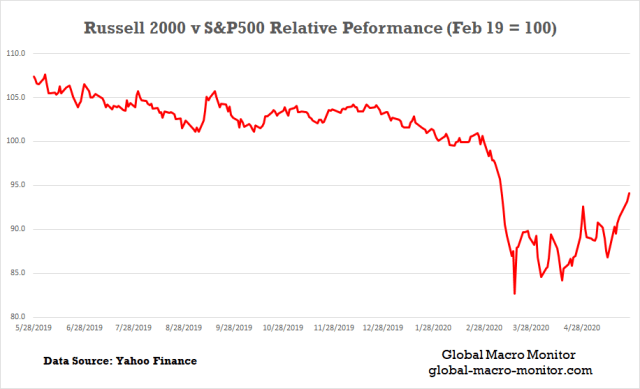
The Russell 2000’s relative performance is now sniffing out the economic recovery, which will be reflected in a record Q3 GDP print, a bounce from the record first-half economic collapse
It is not unreasonable that we will see a record 20-30 percent GDP print in Q3
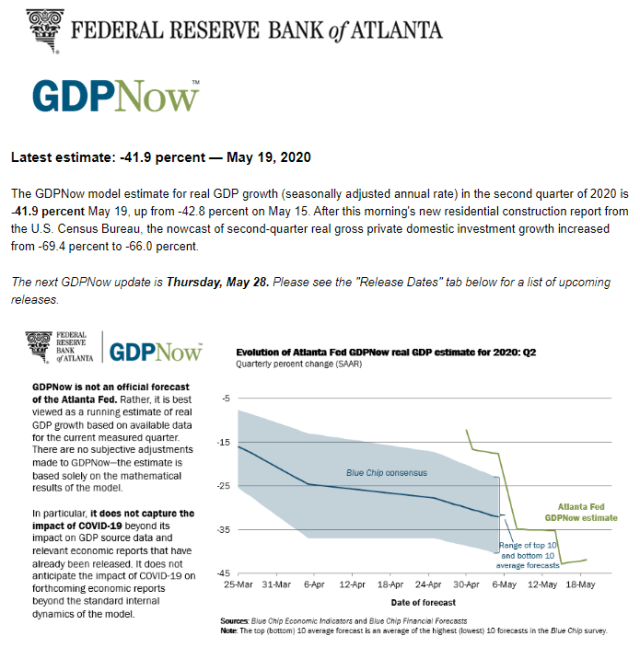
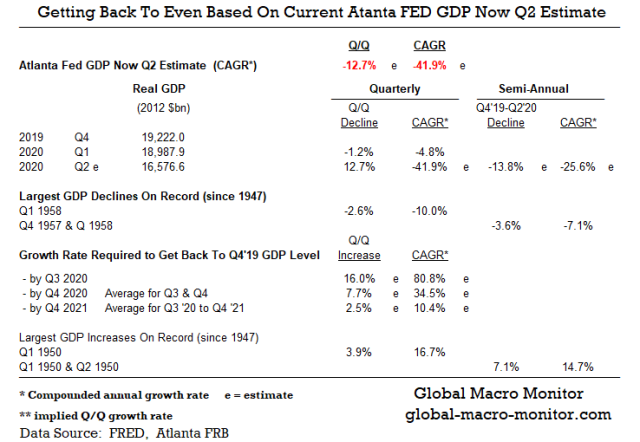
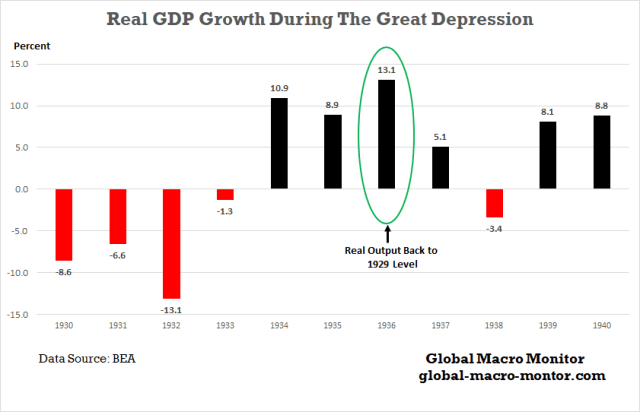
Atlanta Fed GDP Now is estimating a stunning 41.9 percent annualized decline in Q2, which translates into an over 12 percent Q/Q decline, almost as bad as the largest annual GDP decline during the Great Depression
Given the huge fiscal and monetary expansion, coupled with the massive market intervention by the Federal Reserve, markets are divorced from their fundamentals and economic reality now more than ever
The stock market recovery is not indicative of an impending “rip your face off” economic recovery but more a reflection the markets have been almost completely been nationalized
Stock market valuations are at historic and record levels
GDP growth will have to average an annualized 10.4 percent every quarter until Q4 2021 for U.S. real output to return to its Q 2019 level
The markets, or what’s left of them, are starting to sniff out the economic recovery.
We see this in one of the very few market signals we still have a modicum of confidence in — the Russell 2000 small-cap index relative performance to the S&P500, which bottomed in late March and, though volatile over the past two months is now starting to trend higher.
These are strange times for economists and market watchers. It’s not only difficult to get a grip on how much economic damage has been done by the COVID crisis and lockdown but also to assess what the economy will look like on the other side of the pandemic and how robust the recovery will be.
Moreover, the massive fiscal and monetary expansion, coupled with the extreme financial market intervention by the Fed has rendered almost all market signals useless, in our opinion. It is next to impossible to derive much information or economic signal from the stock market recovery, for example, because the stock market itself has now become a de facto tool of the state.
Stock Bailout
The stock market, in as macro sense, is supposed to reflect current and future discounted residual cashflows (profits) of the private sector after all liabilities are paid. The Federal Reserve’s recent, and almost blanket guarantee of those liabilities has resulted, in effect, a bailout of the stock market. Chairman Jerome Powell didn’t have to buy one stock with the Fed’s printed “digital money” to prevent stocks from moving to a much lower level, which would better reflect a more realistic assessment of the economy and future prospects for corporate profits. C’est la vie.
Economic Rebound
The stock market recovery, then, unless it is pricing an imminent announcement of a COVID vaccine, reflects nothing more than all of the above, in our opinion, and is not a signal of an impending “rip your face off” economic recovery. Our best guess is that the rebound, which will be recorded in the Q3 GDP growth number will set a modern-day record in Q/Q and annualized terms, only because of the record economic collapse in the first half.
Don’t be surprised if a 20 or 30 plus percent headline number prints in Q3. Know thy context, however, that the record number is only the result of the unprecedented economic decline in the first half. The economy will still have a massive uphill recovery to get back to even and beware of politicians touting “the greatest economic recovery in history.”
More Observations
We are not going into the weeds here but want to point out a few of our observations and best guesses.
The Atlanta Fed’s GDP Now forecast for Q2 output has been revised down to a stunning -41.9 percent, or Q/Q decline of 12.7 percent, which almost tops the Great Depression’s largest annual decline of 13.1 percent in 1932 (see chart below). The Now forecast will change with incoming data, and will be updated tomorrow.
If the –41.9 percent annualized growth estimate for Q2 holds, in order for the real output to recover fully to the Q4 2019 level:
by Q3 ’19 – growth would have to print at 80 percent
by Q4 – Q3 & Q4 2019 growth will have to average 34.5 percent
by Q4 2021 – GDP growth will have to print 10.4 percent for six consecutive quarters. Good luck with that one.
Upshot
Expect a snapback in Q3, with a headline growth number printing at a record level and multiple of its prior highest. Unless we find a vaccine sometime soon, stocks are extremely expensive, in fact, at record high valuations, but we have missed this rally and if you want or need to own stocks we refer you to someone with a better track recond, our stock picker Coach Carol.